
From Monterey County to the Bay Area, a quiet revolution is transforming California's backyards. Driven by the realities of our climate, homeowners are trading thirsty lawns for landscapes that are not only beautiful but also resilient, water-wise, and intelligent. This is a fundamental rethinking of the California yard—a shift toward outdoor spaces that work with our environment, not against it.
The New California Yard: A 2025 Revolution
The classic image of a perfect, emerald-green lawn is fading fast. As we look toward 2025, California homeowners are adapting to climate realities like persistent drought and extreme weather. Sustainability is no longer a buzzword; it’s the practical, intelligent choice for any outdoor space.
This new mindset is about creating landscapes in tune with our local ecology. It means moving away from the constant battle of watering, mowing, and fertilizing. Instead, we're embracing designs that thrive naturally, requiring far less from us and our precious resources.
Embracing Resilience and Smart Design
A modern California yard is more than just pretty; it's a savvy investment that proves you can have a stunning outdoor space that is also ecologically sound. This transition is being pushed forward by a few key realities that are changing how we all look at our property.
The table below breaks down the main forces compelling homeowners to make the switch.
Key Drivers of California's Sustainable Landscaping Shift in 2025
| Driving Factor | Impact on Landscaping Choices | Example Practice |
|---|---|---|
| Climate Adaptation | Homeowners need yards that can handle intense heat and minimal rain without dying off. | Planting native, drought-tolerant species like California poppies or Ceanothus. |
| Water Conservation Mandates | Strict local and state rules on water use make water-wise landscaping a necessity, not just a preference. | Installing smart irrigation controllers that adjust to weather conditions. |
| Economic Sense | People are tired of sky-high water bills and the cost of constant upkeep for traditional lawns. | Replacing a lawn with decomposed granite and mulch beds, cutting water use by 70% or more. |
| Increased Property Value | A beautiful, low-maintenance yard is a huge selling point that boosts curb appeal and attracts savvy buyers. | A well-designed xeriscape that looks great year-round adds significant value. |
These factors are creating a new standard for what a residential landscape should be: beautiful, tough, and intelligently managed.
This trend is especially strong in communities from Salinas to the Bay Area, where homeowners are actively seeking responsible ways to create incredible outdoor living areas. They're reaching out to local pros for guidance on Monterey County landscape design and construction that reflects these modern priorities.
By combining native plants, water-saving tech, and eco-friendly materials, we're building yards that don't just survive our climate—they flourish in it.
Choosing Native Plants for a Thriving California Garden
Imagine a garden that works with California's unique climate, not against it. That’s the whole idea behind designing with native and drought-tolerant plants, a cornerstone of how sustainable landscaping is completely reshaping California yards in 2025. This isn't about sterile landscapes of rocks and cacti—that's an outdated myth.
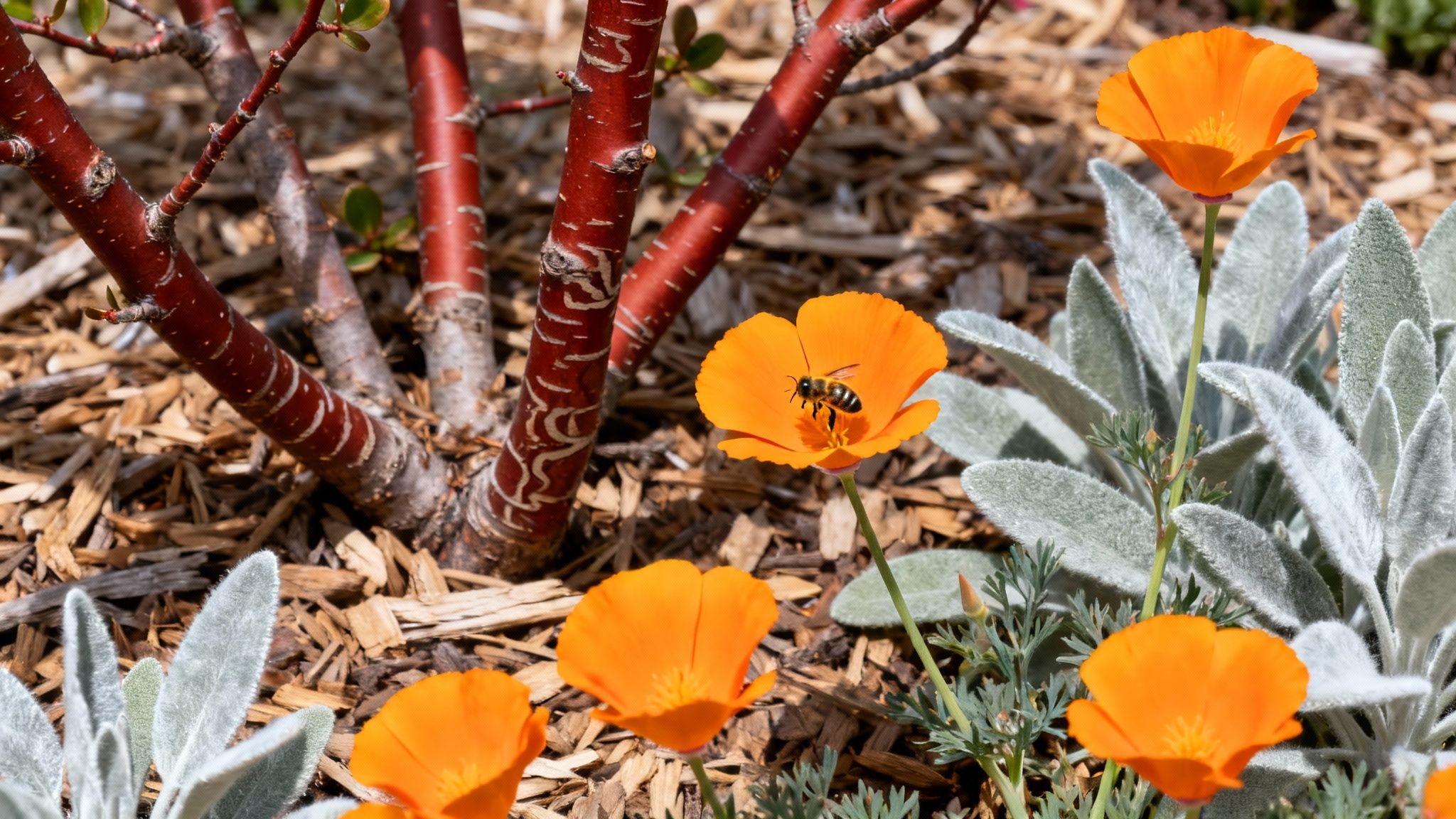
Instead, a modern, sustainable garden is a riot of life and color. Think of evergreen Manzanita, vibrant California Poppies, and fragrant Cleveland Sage. These plants create a dynamic, year-round display while sipping a tiny fraction of the water a traditional lawn guzzles down.
It helps to think of a native garden as a self-sufficient ecosystem that naturally supports local pollinators and wildlife. A conventional lawn, on the other hand, is on constant life support, demanding endless water, fertilizer, and weekly maintenance just to survive.
Why Native Plants Are the Smart Choice
Picking plants that are already adapted to your local environment is the single most powerful move you can make for a sustainable landscape. They've spent thousands of years evolving to handle California’s specific soil and rainfall, making them incredibly resilient and refreshingly low-maintenance.
They're also the bedrock of a healthy local ecosystem. When you plant natives, you're essentially rolling out the welcome mat for bees, butterflies, hummingbirds, and other crucial pollinators. This creates a garden that’s not just beautiful, but alive and actively helping the environment around it.
Drought-tolerant and native plant designs are increasingly popular, not just for compliance but for aesthetics and long-term cost savings. Many property owners are replacing traditional lawns with native species, permeable pavers, and smart irrigation systems, reflecting a statewide shift toward sustainable outdoor living that balances form, function, and ecology.
We’re seeing more and more property owners tear out thirsty old lawns. They're replacing them with a smart mix of native species, functional permeable pavers, and efficient smart irrigation—a statewide move toward sustainable outdoor living that beautifully balances aesthetics, function, and ecological health.
Popular Native and Drought-Tolerant Plants for California Yards
You don't have to sacrifice color to save water. A well-planned garden layers different plants to make sure something is always blooming, providing interest from one season to the next.
Here are a few powerhouse choices for a stunning California yard:
- California Lilac (Ceanothus): A real showstopper, this versatile shrub explodes with clusters of blue or purple flowers in the spring and is a magnet for pollinators.
- Manzanita (Arctostaphylos): Known for its gorgeous reddish bark and delicate winter flowers, Manzanita is a tough, evergreen choice that gives your garden great structure.
- Deer Grass (Muhlenbergia rigens): This graceful ornamental grass adds texture and movement, creating a soft, natural look with almost no water once it’s established.
- Yarrow (Achillea millefolium): A resilient perennial with flat-topped flower clusters, Yarrow comes in tons of colors and is perfect for filling in those sunny spots.
- Cleveland Sage (Salvia clevelandii): Famous for its incredible fragrance and whorls of lavender-blue flowers, this sage is a favorite of hummingbirds and homeowners alike.
Reducing Maintenance and Increasing Value
One of the best perks of a native garden is how much less work it is. Once these plants get settled in, they pretty much take care of themselves.
That means you can finally say goodbye to the weekend ritual of mowing, the cost of fertilizers, and the constant stress of wondering if you’re watering too much or too little. It’s a huge time-saver.
This low-maintenance appeal also translates directly into higher property value. A thoughtfully designed, sustainable landscape is a huge selling point. It tells potential buyers that this is a home that’s not only beautiful but also affordable to maintain. It's a smart investment that pays you back in both curb appeal and long-term savings.
To protect that investment, understanding the right Monterey County landscape maintenance and plant care ensures these resilient gardens thrive for years. Ultimately, a native California garden is a landscape that works for you, not one you have to work for.
Using Smart Technology to Conserve Water Effortlessly
The secret to a thriving, sustainable landscape isn't just about what you plant—it’s about how you water it. Technology has become a powerful partner in this mission, making modern water conservation both simple and incredibly effective. Forget the days of setting a manual sprinkler timer and just hoping for the best.
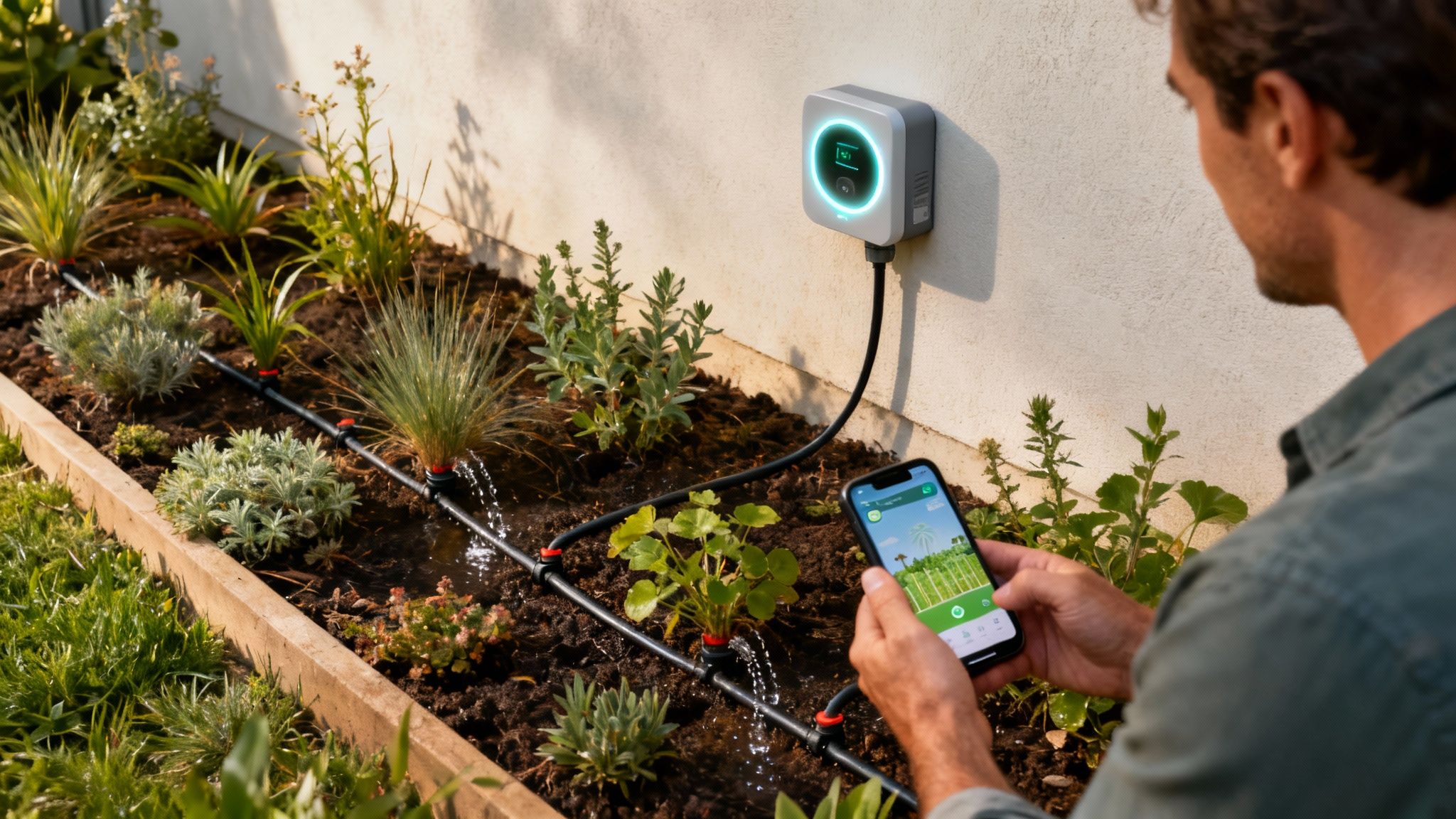
Today’s smart irrigation controllers are a total game-changer for California yards. Think of one as a personal weather station for your garden. These systems tap into local weather data, automatically tweaking watering schedules based on real-time rain, humidity, and temperature. This means your landscape gets the exact sip of water it needs, right when it needs it, taking all the guesswork out of the equation.
This kind of precision is a huge part of how sustainable landscaping is reshaping California yards in 2025. We're moving away from reactive watering and embracing intelligent, proactive water management.
Drip Irrigation: The Root of Efficiency
If a smart controller is the brain of the operation, then drip irrigation is the highly efficient delivery system. Traditional spray sprinklers are notoriously wasteful. They throw a lot of water into the air, where much of it is lost to wind and evaporation before ever reaching the soil—a huge problem on a hot, dry California afternoon.
Drip irrigation gets around this by delivering water slowly and directly to the base of each plant. This simple change has some major advantages:
- Minimized Evaporation: Water goes straight into the soil where it belongs. This can cut water loss by up to 90% compared to old-school sprinklers.
- Healthier Plants: By keeping the leaves dry, drip systems help prevent common fungal diseases. The slow, deep watering also encourages stronger, more resilient root growth.
- Fewer Weeds: You’re only watering the plants you actually want to grow. The surrounding soil stays drier, which naturally keeps weeds from sprouting.
This targeted approach makes sure every last drop counts, making it a cornerstone of any water-wise landscape. If you're looking to make the switch, getting familiar with professional Monterey County irrigation and outdoor lighting services is a great way to understand what goes into designing a truly efficient system.
Capturing and Reusing Every Drop
Beyond just watering efficiently, sustainable landscaping in 2025 is all about turning stormwater from a problem into a resource. Instead of letting all that precious rainwater rush off your property and into storm drains, modern designs have clever features to capture and use it.
Smart water management is really a two-part strategy: use less water with efficient irrigation, and capture the free water that nature provides. That combination creates a landscape that’s truly resilient and more self-sufficient.
Permeable pavers are a perfect example. Unlike solid concrete, these pavers have small gaps that allow rainwater to soak right through into the ground below. This recharges groundwater, reduces runoff, and even helps filter out pollutants. You get the function of a beautiful patio or walkway that also acts like a sponge for your yard.
Rain barrels are another simple but powerful tool. Hook them up to your downspouts, and they’ll collect rooftop runoff that you can use later for your container plants or garden beds. It’s a straightforward way to ease your reliance on municipal water while giving your plants the naturally soft, chlorine-free water they love. By bringing these elements together, you create a landscape that doesn't just survive—it thrives by working with California's climate, not against it.
Maximizing Your Investment with State Rebates and Regulations
Going sustainable with your landscape isn't just a win for the environment—it's a smart financial move, especially here in California. State and local programs are actively rewarding homeowners for making water-wise choices, helping you get ahead of climate shifts and rising utility bills. When you know how to tap into these resources, you can seriously cut down the upfront cost of a landscape overhaul, making it an investment that pays you back faster.
The rules themselves are pushing this change forward. Think of regulations like the CALGreen code, which now sets strict water efficiency standards for new construction. This kind of forward-thinking policy is shaping how landscapes are designed across the state, ensuring they're built for resilience right from the get-go.
Navigating Key California Regulations
One of the biggest shifts we're seeing is the move away from gas-powered landscaping equipment. With California’s ban on new gas-powered equipment sales taking effect in 2024, the ripple effects are reshaping the industry. Homeowners increasingly choose service providers who use quiet, battery-powered tools that align with local ordinances and their own environmental values, giving forward-thinking firms a competitive edge.
On top of that, many cities and counties have their own rules about water use, approved plant lists, and even tree protection. These can get tricky to navigate on your own. For example, a new planting design might run up against a local tree preservation ordinance. It’s critical to understand the local requirements, which is why we help clients manage things like Monterey County tree health reports and permits to keep every project compliant from start to finish.
Unlocking Financial Rebates for Your Project
The most exciting financial perk for homeowners comes from turf replacement rebate programs. These are your local water district's way of paying you to tear out that thirsty, high-maintenance lawn.
It's a simple, powerful idea: replace your lawn with a beautiful, water-wise alternative, and you don't just save on your monthly water bill—you get a check to help cover the cost. These programs make a sustainable yard a reality for so many people.
While the exact process and rebate amounts differ depending on where you live, they all work on the same principle. Here are the most common incentives you'll find:
- Turf Removal Rebates: This is the big one. Most programs pay by the square foot of lawn you remove, usually somewhere between $2 to $5. For a typical yard, that can easily add up to thousands of dollars, putting a huge dent in the project cost.
- Smart Irrigation Controller Rebates: Water agencies love these. They’ll often give you a big discount or even a full rebate on a smart, weather-based irrigation controller, which can cut your outdoor water use by 30-50%.
- High-Efficiency Sprinkler Nozzles: You can also get cash back for swapping out old, wasteful sprinkler heads for new multi-stream nozzles that water more slowly and effectively, reducing runoff.
At California Landscape & Tree Pros, part of our job is to hunt down every single rebate and incentive available for our clients in Monterey County, Salinas, and the Bay Area. We work these savings directly into our proposals, so you see the true net cost and start maximizing your return on investment before we even break ground.
The California Landscape & Tree Pros Advantage
Choosing the right partner for a major landscaping project is a big decision. With sustainable design becoming the new standard for California yards in 2025, the team you hire makes all the difference. Plenty of crews can lay sod or build a patio, but a truly successful and lasting landscape demands a much deeper skill set—a mix of real horticultural science, modern design tools, and a process built completely around you.
At California Landscape & Tree Pros, we don’t just deliver a finished yard. We guide you through a collaborative, insightful process from the first conversation to the final walkthrough. Our goal is simple: to create a custom landscape that’s as smart and valuable as it is beautiful.
A Tech-Forward, Consultative Approach
Everything we do starts with a detailed on-site consultation. This isn't just about taking measurements. We're there to really understand your property's unique challenges and opportunities—its specific microclimate, soil type, and sun patterns—and, most importantly, how your family truly wants to live in the space. This is the bedrock of any great design.
From that conversation, we bring your vision to life using sophisticated design software. This creates a crystal-clear visual presentation, letting you see exactly how your new sustainable landscape will look and feel before we even break ground. You’ll be able to see the texture of a permeable walkway, imagine how native grasses will look in the evening sun, and get a true sense of your new outdoor living space.
Unlike some industry peers that offer standard installations, California Landscape & Tree Pros integrates advanced design technology and eco-conscious materials into each project. Their process—from in-person consultation to tailored design presentations—helps clients visualize how sustainable landscapes can reduce water use and maintenance while increasing property value.
This modern approach takes all the guesswork out of the equation. It closes the gap between the idea in your head and the reality on the ground, giving you total confidence in your investment.
More Than a Contractor, We Are Your Partner
We’re here to build lasting relationships built on trust and genuine expertise. Our team is with you every step of the way, from figuring out local regulations and helping you secure those valuable turf removal rebates to choosing the perfect drought-tolerant plants that will look great for years to come. We bring together boots-on-the-ground experience with a commitment to smart, sustainable practices.
It’s this blend of personal service, technical skill, and a proven process that makes us different. We’re truly passionate about creating landscapes that are resilient, water-wise, and a perfect fit for the California lifestyle. When you work with us, you’re not just hiring a contractor; you’re partnering with a team that’s fully invested in your property's beauty, function, and long-term value. Discover more about our company's mission and professional commitment by reading about our team and process. We’re dedicated to delivering an exceptional experience for every single client.
Measuring the Return on Your Sustainable Landscape
Going green in your yard is about more than just doing the right thing for the environment; it’s a smart financial move that pays real dividends. As we head into 2025, California homeowners are getting serious about how their yards affect their wallets. Moving away from thirsty, high-maintenance lawns to resilient, native gardens isn't just a trend—it's a strategy that creates significant savings on water bills and slashes long-term upkeep.
This financial upside is a huge part of why sustainable landscaping is becoming the new normal. Instead of constantly spending money on watering, fertilizing, and mowing, you’re creating an asset that pretty much takes care of itself. The savings add up, year after year, eventually paying back what you put in and then some.
Boosting Property Value and Curb Appeal
On top of the monthly savings, a well-designed sustainable landscape gives your property value a serious boost. Think about it: a gorgeous, easy-to-care-for outdoor space is a huge draw for potential buyers, especially in a market where people are more eco-conscious than ever.
The process for creating these valuable spaces is straightforward. We work closely with you to turn your ideas into a real-world asset that delivers a high return.
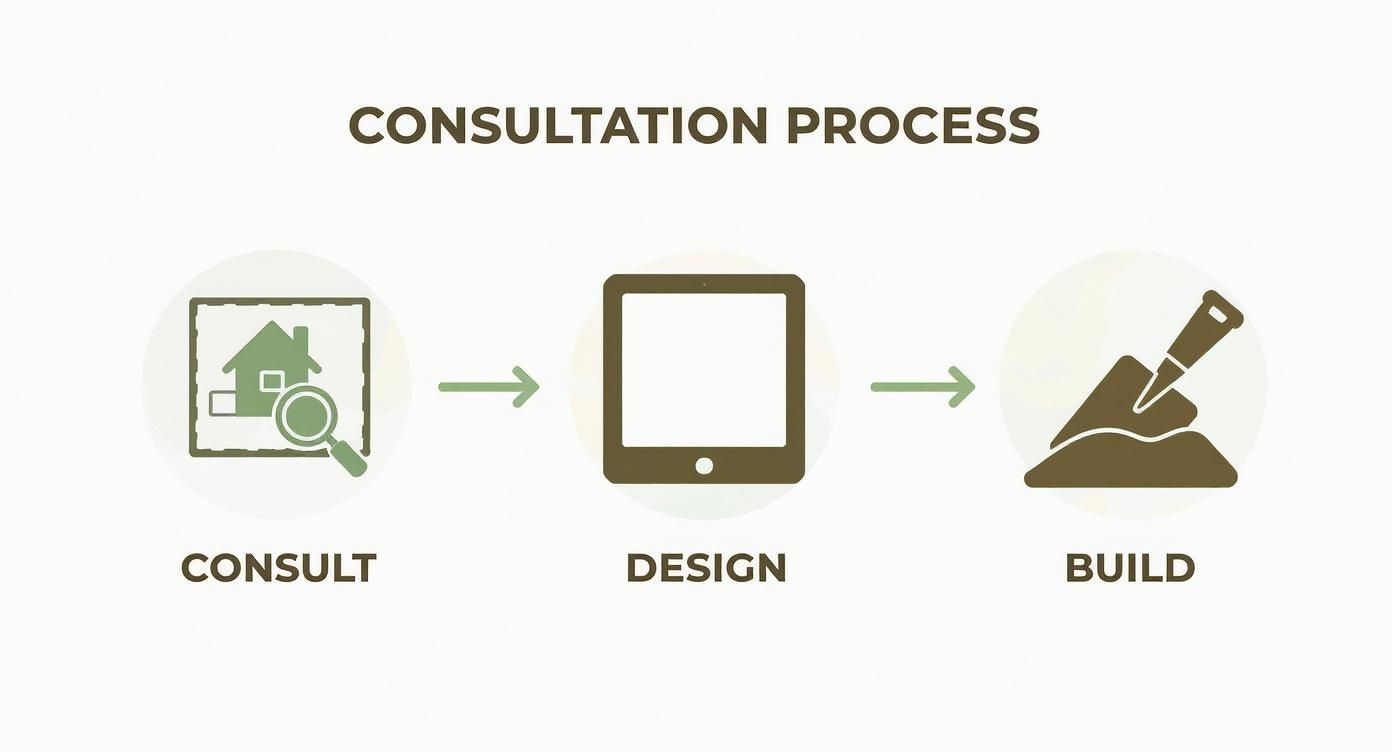
This simple, hands-on approach ensures every part of the design adds to the beauty and the long-term financial payoff, making your home stand out. A yard that looks fantastic all year without a ton of work is exactly what buyers are looking for.
This isn't just a hunch; the data backs it up. According to national and regional data, over 54% of homeowners want to understand the environmental impact of their landscapes, and nearly one-third plan to expand outdoor living areas for comfort and property appeal.
Those numbers point to a clear opportunity. By investing in a beautiful, water-wise space, you’re hitting the sweet spot of what today's buyers want: a yard that’s both sustainable and a joy to live in.
A Clear Comparison of Long-Term Costs and Benefits
To really see the financial difference, it helps to put a traditional lawn head-to-head with a sustainable landscape over a five-year period. Yes, the initial cost for a sustainable design can be higher, but the long-term savings on water and maintenance quickly make up for it and put you ahead.
This table breaks down the estimated costs for a typical California yard, showing you how the numbers really stack up.
Cost & Benefit Comparison Traditional Lawn vs. Sustainable Yard
| Expense/Benefit | Traditional Turf Lawn (Estimated 5-Year Cost/Benefit) | Sustainable Native Landscape (Estimated 5-Year Cost/Benefit) |
|---|---|---|
| Water Costs | High and climbing, thanks to drought and rate increases. | Dramatically Lower, often cutting outdoor water use by 50-70%. |
| Maintenance Labor | Significant Costs for weekly mowing, edging, and seasonal aeration. | Minimal Costs for occasional pruning and a bit of seasonal cleanup. |
| Material Costs | Ongoing Expenses for fertilizers, pesticides, herbicides, and reseeding. | Very Low Costs with almost no need for soil amendments or pest control. |
| Property Value | Modest impact. The high maintenance needs can even be a turn-off for buyers. | Significant Increase, as beautiful, low-maintenance yards are a major selling point. |
| Rebates | Generally not applicable. | Substantial Financial Gain from turf removal and smart irrigation rebates. |
The takeaway here is pretty clear. A sustainable landscape isn't an expense—it's an investment. It pays for itself through direct savings and by increasing your home's value, delivering a powerful return that makes sense for your bank account and the planet.
Your Top Sustainable Landscaping Questions, Answered
Thinking about a major yard overhaul naturally brings up a lot of questions. We get it. Here, we’ll tackle some of the most common concerns we hear from California homeowners, giving you the clear, straightforward answers you need to feel confident about making a change. Let's dig in.
What's the Real Cost to Convert to a Sustainable Landscape in California?
There’s no one-size-fits-all answer, as the final price tag depends on your yard's size, the plants you choose, and any hardscaping features you want. But here's the good news: generous turf replacement rebates—often between $2 to $5 per square foot—can seriously offset that initial investment.
Yes, the upfront cost might be more than just rolling out new sod, but the long-term savings are where you really win. With drastically lower water bills and minimal maintenance, most projects pay for themselves in about 5-7 years. We always build a detailed quote that includes every rebate you qualify for, so you see your true net cost right from the start.
Will My Yard Look Like a Barren Desert with Drought-Tolerant Plants?
That's probably the biggest misconception out there! A thoughtfully designed sustainable landscape is anything but barren—it’s bursting with life, color, and texture. California's native plant palette is incredibly diverse, offering everything from brilliant flowering perennials and succulents to deep green shrubs and shade trees.
Our design philosophy is all about layering. We create combinations of plants that provide year-round visual interest and continuous blooms, resulting in a vibrant garden that celebrates California’s natural beauty, not a sparse desert scene.
Honestly, How Much Upkeep Does a Native California Garden Need?
Once it’s established, a native garden is significantly less work than a traditional lawn. Say goodbye to the weekly ritual of mowing, fertilizing, and endless watering. Your focus shifts to simple, seasonal tasks—a bit of pruning here and there, occasional light weeding, and making sure the drip irrigation system is working properly.
It’s about creating a smart, resilient ecosystem that pretty much takes care of itself, freeing up your time and saving you money.
Can I Still Have a Play Area for My Kids and Dog?
Absolutely! Going sustainable is about designing smarter, not making sacrifices. We can easily integrate beautiful and functional spaces for the whole family. Think permeable patios for entertaining, tough groundcovers like Dymondia that can handle foot traffic, or even small patches of new, drought-tolerant turf alternatives for a soft place to play.
Our job is to create a landscape that fits how you actually live, all while slashing your water consumption. Function and sustainability really do go hand-in-hand.
I'm Ready. How Do I Start Planning My Yard Transformation?
The best first move is to schedule a professional consultation. Having an expert walk your property is invaluable. They can analyze your specific site conditions (sun, shade, soil), listen to what you want to achieve, and map out a clear, actionable plan. This initial conversation is key to designing a landscape that is both beautiful and hyper-efficient.
For property owners in Monterey County, Salinas, or the Bay Area, now is the perfect time to plan a landscape that’s both beautiful and sustainable. A pro can guide you through every step, from the first sketch to the final planting, ensuring you get it right.
Ready to turn your yard into a beautiful, water-wise oasis? Contact California Landscape & Tree Pros to explore design options that protect your investment and our environment. Schedule your consultation today.