
Are you seeking a driveway solution that combines natural elegance with rugged durability? A crushed granite driveway offers the perfect blend of rustic charm and modern performance, creating a stable, permeable surface that beautifully complements the California landscape. Unlike rounded gravel that shifts and rolls, the angular pieces of crushed granite lock together, forming a firm foundation that is both attractive and eco-friendly.
What Exactly Is A Crushed Granite Driveway?
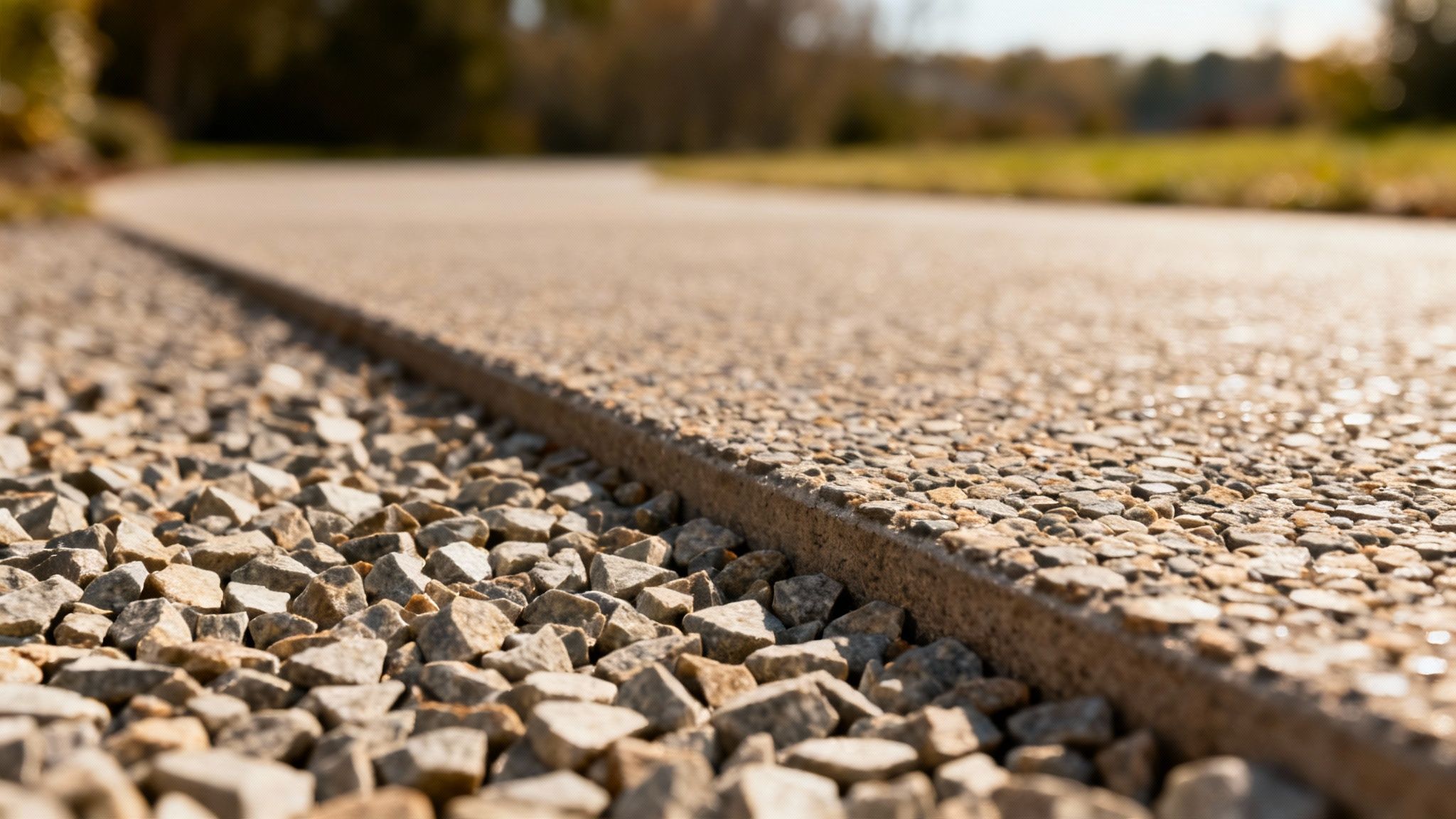
Simply put, a crushed granite driveway is made from rock that's been mechanically broken down and then sifted to a specific size, usually somewhere between ⅜ and ¾ of an inch. This process creates small, jagged stones. When they're spread out and compacted, they interlock tightly, creating a surface that's solid but still lets water pass through.
It’s like a puzzle where every piece fits snugly against its neighbor. This prevents the annoying shifting and rolling you get with something like rounded pea gravel.
Don't confuse crushed granite with its finer relative, decomposed granite (DG). DG is much more sand-like and is a better fit for garden paths, not for holding the weight of a car. The sharp, angular nature of crushed granite is what gives it the backbone for daily traffic while keeping that rustic, yet polished, look.
The Core Components of a Professional Installation
A well-built crushed granite driveway is far more than just a layer of rock. It’s an engineered system with several layers, all working together to ensure it lasts. A professional job will always include these key elements:
- A Solid Sub-Base: This is the foundation. It's typically made of a larger, compacted aggregate that provides the real structural muscle for the driveway.
- Geotextile Fabric: This special fabric is laid down between the native soil and the sub-base. It’s a game-changer for stopping weeds and keeping the different layers from mixing together over time.
- The Crushed Granite Top Layer: This is the part you see and drive on. It's carefully spread and compacted to give you a smooth, functional, and great-looking finish.
- Durable Edging: To keep everything contained and looking sharp, edging made from materials like steel, stone, or brick is installed around the perimeter.
This layered approach is what turns a pile of loose stone into a solid, dependable surface. It's why so many homeowners are turning to crushed granite—it offers that perfect blend of natural appeal and smart engineering. This is a common feature in high-quality Monterey County hardscape and outdoor structure projects.
Exploring The Benefits Of Crushed Granite
When you're thinking about a new driveway, it often feels like a choice between looks and practicality. But with crushed granite, you really don't have to compromise. This material gives you the best of both worlds: a beautiful, natural aesthetic and a tough, functional surface that’s become a go-to for California properties.
The perks go well beyond just curb appeal. Crushed granite makes a strong argument against traditional paving, from its environmental advantages to its excellent long-term value. Let's break down exactly what makes it such a compelling option.
Superior Drainage and Environmental Responsibility
One of the biggest wins for a crushed granite driveway is its permeability. Think about it: a hard concrete or asphalt slab forces rainwater to run off, often carrying pollutants into storm drains. Crushed granite does the opposite. It lets water trickle right through, soaking back into the ground where it belongs.
This simple function has a huge positive impact. It helps recharge local groundwater, which is a massive benefit in a water-conscious state like California. In fact, a 2021 EPA report showed that permeable surfaces can reduce stormwater runoff by an incredible 60-95%. That means less strain on city drainage and cleaner local waterways.
At the end of the day, this natural filtration means fewer puddles on your driveway and a healthier ecosystem right under your feet. It’s a driveway that works with nature, not against it.
Unmatched Aesthetic Versatility
Crushed granite has this rich, organic look that just works with so many home styles, whether you have a classic ranch house or a sleek, modern build. Its natural color palette—from warm tans and soft pinks to timeless grays—blends right into the surrounding landscape for a look that feels both intentional and effortless.
This design flexibility is a huge reason homeowners love it. You can achieve a relaxed, rustic feel or something more polished and contemporary, just by choosing the right color and size. With smart landscape planning, the driveway becomes a key part of your property’s overall design. To get a better sense of how materials tie into a bigger picture, you can see how professionals approach Monterey County landscape design and construction to make everything feel cohesive.
Cost-Effectiveness and Long-Term Value
While the initial installation cost for a crushed granite driveway is often less than high-end patterned concrete, the real savings come over time. You can forget about the expensive, repeated sealing that asphalt demands or the frustrating crack repairs that plague concrete.
Upkeep is simple and affordable. A bit of raking now and then and adding a fresh top layer every few years is usually all it takes. This easy maintenance, combined with its sheer durability, makes crushed granite a smart financial move that adds real, lasting value to your home.
Crushed Granite Compared To Traditional Driveway Materials
To really see where crushed granite shines, it helps to put it head-to-head with the usual suspects. While every material has its pros and cons, crushed granite often comes out on top for homeowners who care about permeability, aesthetics, and sustainable value.
This table breaks down the key differences to help you see the full picture.
| Feature | Crushed Granite | Asphalt | Concrete | Loose Gravel |
|---|---|---|---|---|
| Drainage | Excellent (Permeable) | Poor (Impermeable) | Poor (Impermeable) | Good (Permeable) |
| Aesthetics | Natural, earthy, versatile colors | Uniform black, industrial look | Can be stamped, but looks manufactured | Basic, can look untidy |
| Durability | High, with proper base | Good, but needs sealing | High, but prone to cracking | Low, prone to ruts and displacement |
| Maintenance | Low (occasional raking/topping off) | High (requires regular sealing) | Moderate (crack repair) | Very High (constant raking and refilling) |
| Eco-Friendly | High (replenishes groundwater) | Low (petroleum-based) | Low (high carbon footprint) | Moderate (natural material) |
| Cost | Moderate initial cost, low long-term cost | Moderate initial cost, high long-term cost | High initial cost, moderate long-term cost | Low initial cost, high long-term cost |
As you can see, when you look at the whole package—from environmental impact to long-term cost—crushed granite presents a well-rounded and attractive alternative to more conventional driveway materials.
The Professional Driveway Installation Process
A beautiful, long-lasting crushed granite driveway doesn't just happen by chance. It's the end product of a careful, multi-step process that builds strength right from the ground up. Think of it like building a house—if you skimp on the foundation, you’re just asking for problems down the road. When you understand how the pros build these driveways, you'll know exactly what to look for and what questions to ask to make sure your project is built to last.
The whole thing is an engineered system. Each layer has a specific job, whether it's providing stability, handling drainage, or creating a durable surface that can take the daily grind of cars for years to come. From digging the first scoop of dirt to the final pass of the compactor, every single step is critical.
The infographic below breaks down the core benefits you get from a professional installation, zeroing in on drainage, eco-friendliness, and sheer durability.
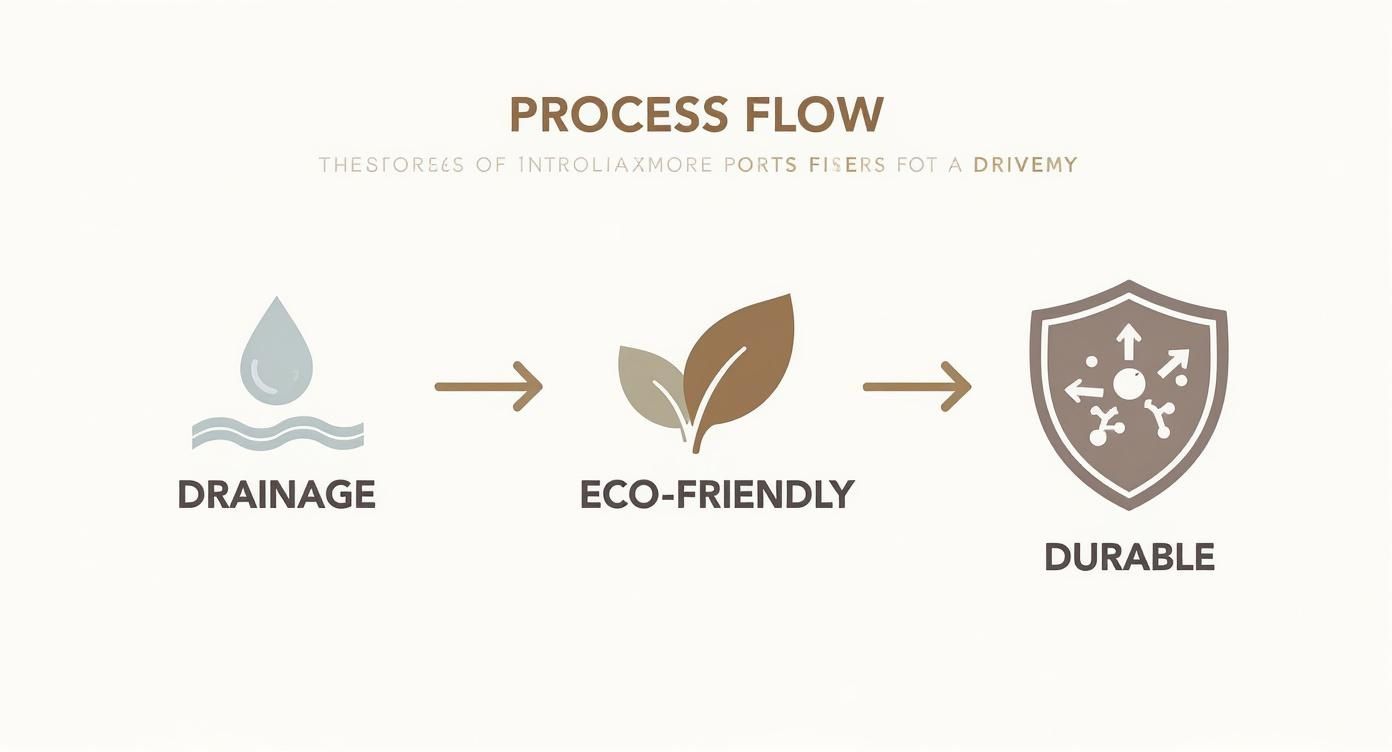
As you can see, a proper install directly results in a driveway that not only looks fantastic but also performs beautifully, especially when it comes to managing water and standing up to wear and tear.
Phase 1: Site Preparation and Excavation
The first, and arguably most important, phase is all about prepping the site. A professional crew will start by excavating the driveway area to a depth of 6 to 10 inches. How deep they go really depends on your local soil and what kind of vehicles you'll be parking. Soft, clay-heavy soils, for instance, often need a deeper dig to build a truly solid foundation.
During this stage, the ground is also meticulously graded. This means creating a very subtle slope—usually just 1-2%—that guides water away from your house and garage. This is absolutely essential for preventing puddles and protecting your driveway's integrity, especially during those heavy California downpours.
Phase 2: Building The Sub-Base
With the site dug out and graded, it’s time to build the sub-base. This is the unseen workhorse of your entire driveway. We lay down a thick layer of larger crushed stone, often called base rock, spreading it evenly across the excavated area until it's at least 4 to 6 inches deep.
Next, we bring in the heavy machinery—a plate compactor or a roller—to compact this layer. This process creates an incredibly dense and stable foundation that spreads the weight of your vehicles evenly. It's what stops ruts and soft spots from ever forming.
A geotextile fabric is often laid down before the sub-base is installed. This specialized landscape fabric acts as a barrier, preventing weeds from growing up from the soil below and stopping the sub-base from mixing with the native earth, which maintains the integrity of the drainage system.
Phase 3: Edging and Containment
Before we even think about adding the top layer of granite, we have to install sturdy edging around the entire perimeter. This is a non-negotiable step. It physically holds the crushed granite in place, keeping it out of your lawn and garden beds, while also creating a crisp, clean, and defined border that just looks fantastic.
Common materials for edging include:
- Steel Edging: Gives you a modern, minimalist look and is incredibly durable.
- Stone or Brick Pavers: Offer a classic, decorative border that can tie in with your home's architecture.
- Treated Wood: Creates a more rustic, natural feel that blends in beautifully with the landscape.
The right edging truly frames your driveway, turning it from a simple path into a deliberate design feature. You can see some great examples of how professional edging elevates a project in our online portfolio.
Phase 4: Spreading and Compacting The Granite
Now for the main event. With the foundation set and the edging locked in, it’s time for the crushed granite. We spread the material in thin 2-inch layers. Why so thin? Because it allows for much better compaction, ensuring every one of those angular stones locks together tightly.
After each layer is spread, it's wetted down and compacted again with a heavy roller or plate compactor. We repeat this process—spread, water, compact—until we reach the final desired depth of 3 to 4 inches. This painstaking layering is what creates that signature firm, stable surface you want in a crushed granite driveway.
Phase 5: Applying A Stabilizer (Optional)
For anyone worried about dust or dealing with a sloped driveway, applying a stabilizing binder is the perfect finishing touch. This is a liquid polymer that we can either mix into the top layer of granite or spray right over the finished surface.
The stabilizer acts like a glue, bonding the tiny granite particles together. You end up with a surface that’s still permeable to water but is significantly firmer, which cuts down on dust and keeps the stones from shifting. It’s a smart upgrade that boosts durability and makes maintenance even easier.
Figuring Out Your Project Cost in Monterey County
When you're budgeting for a new driveway, it's about more than just a single price tag. You're really investing in a whole system of materials and skilled work, and every piece of that puzzle affects the final cost and how well your driveway holds up over the years. Getting a handle on these expenses from the start is the best way to plan a project that you're happy with and that fits your budget.
The final quote you get should break down a few key things: the raw materials, the hands-on labor needed for a solid installation, and any extras you might pick to boost the look or durability.
Breaking Down The Main Expenses
The biggest slice of your budget will almost always be the materials. First up is the crushed granite itself, which is sold by the ton. The price can shift a bit depending on the color you go with—more unique shades can sometimes cost a little more. Underneath that top layer is the base rock, a less glamorous but absolutely essential aggregate that creates the driveway's sturdy foundation.
Next up is labor, and this is where the skill comes in. It's not just a matter of tossing some rocks around. This cost covers crucial, expert work like:
- Excavation and Grading: Digging out the area correctly and shaping the land to ensure water drains away properly.
- Compaction: Using heavy-duty machinery to pack down the base and top layers until they are rock-solid and stable.
- Edging Installation: Carefully setting the steel, stone, or paver borders that frame the driveway and keep everything in place.
The cost of equipment, like a skid steer or a heavy roller compactor, is usually rolled into the labor figure. You can't get professional-grade compaction without these tools, and that compaction is what makes a driveway last.
As a ballpark figure, a professionally installed crushed granite driveway in California typically runs between $4 to $7 per square foot. This estimate generally covers the sub-base, granite, labor, and standard edging. The final number really hinges on your property's specific conditions and the materials you choose.
What Can Make Your Final Quote Change?
While that per-square-foot average is a great starting point, a few things can nudge your project's cost up or down. Knowing what they are helps you see the full picture and make smarter choices.
- Driveway Size and Shape: It makes sense that a long, curvy driveway will cost more than a short, straight one. It simply requires more material and more time to build.
- Getting to the Site: If your property is on a steep slope or has tight access that makes it hard to bring in heavy machinery, it might take more manual labor, which can bump up the cost.
- The Dirt Underneath: If you've got heavy clay soil that doesn't drain well, we might need to dig deeper and add a thicker sub-base to compensate. That means more materials and labor.
- Optional Upgrades: Opting for a premium steel edging instead of a standard one, or adding a stabilizing binder to the granite to keep dust down and prevent washout, will also affect the final price.
This is exactly why a one-size-fits-all price just doesn't work. The only way to get a truly accurate number is to have a professional come out and take a look at your specific property.
How to Get a Clear and Accurate Estimate
A good quote is a transparent one. It should break everything down line by line so you know exactly what you’re paying for—how many tons of granite and base rock, how many linear feet of edging, and the total hours for labor. That kind of detail lets you compare different bids fairly and see the real value you're getting.
The best way to nail down your budget is with a professional consultation. A site visit lets a contractor measure everything, check out the soil and access, and talk with you about materials and design. It ensures the estimate is built just for your project.
To get a detailed, no-obligation breakdown for your property, you can easily request a quote from our team of experts. We believe in transparent pricing to help you plan your new crushed granite driveway with complete confidence.
Simple Maintenance For Lasting Beauty
One of the best things about a crushed granite driveway is how little work it takes to keep it looking great. It's a long-term investment in your home's curb appeal, and thankfully, protecting that investment is surprisingly straightforward.
Forget about the constant sealing that asphalt demands or the inevitable cracking that plagues concrete. Crushed granite is a different beast altogether, offering incredible durability with just a bit of simple, common-sense care.
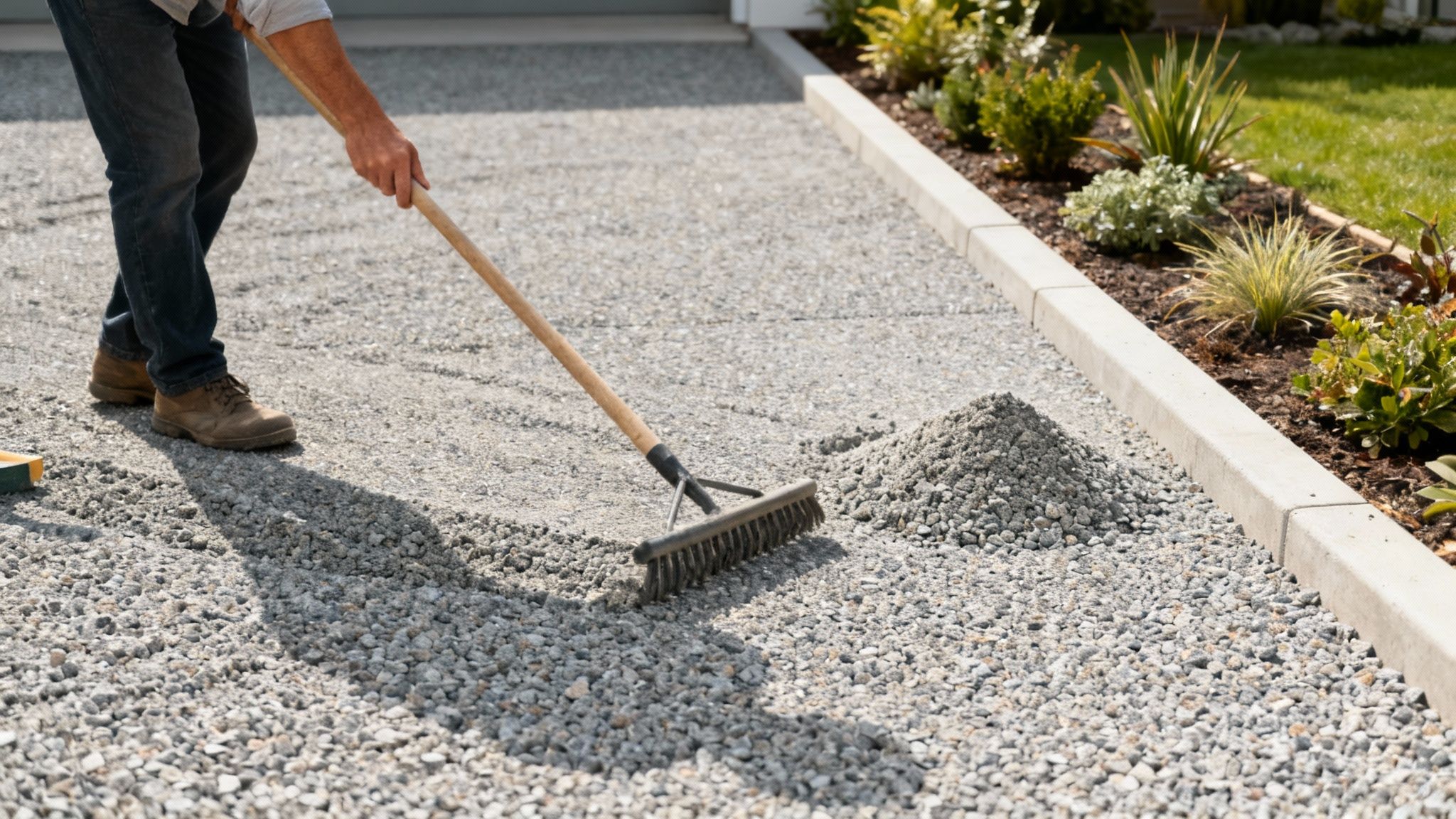
The secret is in the way it's built. Those angular stones interlock to create a firm, stable surface, yet they aren't a solid slab. This design is what prevents the major headaches you see with other materials. A little attention here and there is all it takes to keep your driveway looking sharp for decades.
Routine Upkeep Tasks
Most of the time, maintaining your driveway just means doing a few quick seasonal jobs. Think of it as a quick spruce-up that stops small issues before they even start.
- Occasional Raking: A few times a year, grab a good landscape rake and smooth out the surface. This is a five-minute job that evens out any minor dips or ruts from tires and keeps the granite looking fresh.
- Weed Management: Since the surface is permeable, an airborne seed might occasionally try to take root. But a professionally installed geotextile fabric barrier underneath stops any serious weeds from pushing through. Any surface-level stragglers are easy to pull by hand or treat with a natural, pet-safe herbicide.
- Edge Inspection: Take a walk around the perimeter every season. You just want to make sure your edging is still firm and holding the granite in place. This is what keeps those crisp, clean lines that define the driveway's look.
These simple tasks don't take much time at all, but they make a huge difference in keeping your driveway looking polished and well-maintained.
Long-Term Care And Refreshing
While the day-to-day is easy, there are a couple of things you'll want to do every few years to ensure your driveway lasts a lifetime.
The most common long-term task is simply topping off the granite. After 5-7 years of use, you might notice the top layer has compacted a bit. All it takes is adding a fresh 1-2 inch layer of crushed granite right over the top to completely revitalize it.
This quick "top-off" brings back the original depth and color, making the whole driveway look brand new again. It’s a world away from the cost and hassle of having to resurface an entire asphalt driveway or jackhammer out and re-pour cracked concrete.
Expert Insight: The simplicity of this upkeep is a huge selling point. The global market for construction aggregates is projected to grow at a 7.9% CAGR between 2025 and 2029, partly due to the demand for low-maintenance, sustainable materials like crushed granite for residential projects. (Source: Persistence Market Research)
For homeowners who want a completely hands-off solution, integrating this care into a regular maintenance plan is a great option. Our professional Monterey County landscape maintenance and plant care crews can easily handle these tasks as part of their routine visits, making sure your driveway and your entire landscape are always in pristine condition.
Frequently Asked Questions About Crushed Granite Driveways
Making a big decision like choosing a new driveway always comes with questions. When it comes to crushed granite, homeowners often want to know about real-world performance, maintenance, and long-term satisfaction. We've gathered the most common questions to give you straight, clear answers so you can feel confident in your choice.
1. Is a crushed granite driveway messy or dusty?
Right after installation, you might notice a little fine dust, but once it's professionally compacted and rinsed, that settles down fast. The angular stones lock together to form a surface that's far more stable than typical loose gravel. For those concerned about dust, applying an optional stabilizing binder can lock particles in place, creating an even firmer, dust-free surface.
2. How does crushed granite handle heavy vehicles and snow?
When built on a solid, compacted sub-base of at least 4 to 6 inches, a crushed granite driveway has no problem supporting standard cars and SUVs. For heavier vehicles, the sub-base is simply engineered to be deeper. In snowy areas, the textured surface provides better traction than slick pavement. As snow melts, water drains right through, which dramatically cuts down on dangerous ice patches.
3. Will weeds grow through the driveway?
Not with a professional installation. We lay a high-quality geotextile fabric between the soil and the sub-base layer. This creates a tough physical barrier that stops weeds from ever pushing up from below. Any occasional airborne seed that sprouts on the surface is easily pulled by hand.
4. What happens during heavy rain?
This is where crushed granite truly excels. Unlike solid surfaces that create stormwater runoff, a crushed granite driveway is completely permeable. Rainwater flows through the surface and soaks naturally into the ground, preventing puddles, reducing erosion, and helping recharge local groundwater—a massive benefit here in California.
5. How does it compare to decomposed granite (DG)?
Though the names are similar, they serve different purposes. Decomposed granite (DG) is much finer, like coarse sand, and is best for garden paths. Crushed granite is mechanically crushed into angular pieces that interlock tightly when compacted. This interlocking process creates a stable, durable surface engineered to handle vehicle weight, making it the superior choice for driveways.
Ready to see how a crushed granite driveway could transform your Monterey County property? The team at California Landscape & Tree Pros specializes in designing and building beautiful, long-lasting driveways that complement your home's landscape.
Contact us today to set up an on-site consultation and get a detailed, transparent quote for your project. Visit our website at https://californialandscapeandtreepros.com or call our team to get started.