
Each winter, Monterey County and surrounding coastal areas experience high winds, heavy rain, and flooding that can strain local landscapes. With unpredictable storm patterns returning this season, property owners are prioritizing prevention to avoid damage and costly repairs. This guide offers smart, actionable strategies to fortify your trees and outdoor spaces before the first storm hits.
1. Strategic Tree Pruning and Crown Reduction
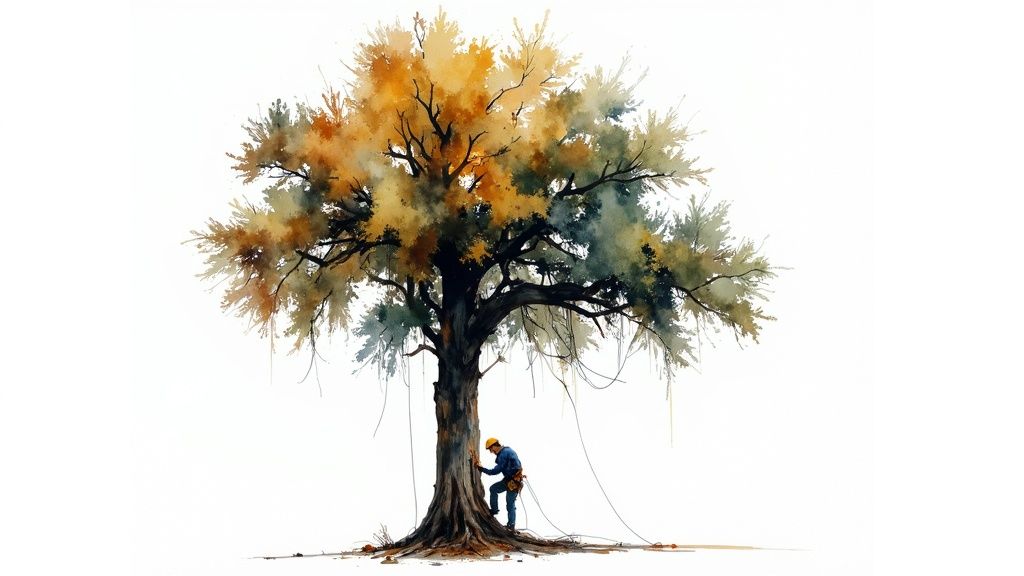
One of the most effective ways to weatherproof your landscape is to proactively manage the canopies of your largest trees. Strategic tree pruning and crown reduction are specialized techniques that reduce a tree’s vulnerability to high winds, significantly lowering the risk of branch failure during storms common to the Monterey Bay area. This isn't just cutting branches; it's a science-backed approach to improving a tree's structural integrity.
Proper pruning involves selectively removing dead, weak, or crossing branches to create a more stable, wind-permeable structure. Crown reduction carefully shortens branches at the outer edge of the canopy to reduce the "sail effect," where dense foliage catches wind and places immense stress on the trunk and roots. By thinning the canopy, you allow wind to pass through more easily, which is crucial for protecting your property.
Why Proper Pruning is Non-Negotiable
Improper techniques like "tree topping" cause more harm than good, creating weak sprouts prone to breaking in future storms. Following established arboricultural standards is essential for long-term tree health and safety.
- Hire a Professional: Always engage an ISA-Certified Arborist who follows ANSI A300 standards. They can identify hazardous limbs an untrained eye might miss.
- Time it Right: Schedule pruning before the storm season begins. This allows cuts to heal properly, minimizing stress on the tree.
- Focus on Structure: The goal is removing deadwood, weak attachments, and overcrowded branches to improve airflow and weight distribution.
- Avoid Over-Pruning: A professional will never remove more than 25% of a tree's living crown in a single year.
For homeowners in Salinas, Seaside, and other coastal communities, professional tree care is a critical first step. Explore professional tree pruning and hazard reduction services to safeguard your landscape this season.
2. Tree Support Systems and Cabling
For heritage trees or those with structural weaknesses, pruning alone may not be enough. Tree support systems, including high-strength cables and bracing rods, offer a crucial layer of protection by providing mechanical reinforcement to vulnerable limbs and trunks. This professional technique redistributes weight and reduces stress on weak points, preventing failure during the intense winds and heavy rains common in Monterey County.
These systems are custom-designed by certified arborists to address specific defects. Cables in the upper canopy limit the movement of heavy limbs, while rigid bracing rods reinforce weak forks lower down. For local multi-trunked oaks, these supports are essential for maintaining integrity through powerful storm seasons.
Why Professional Installation is Crucial
Improperly installed systems can damage a tree, making it more hazardous. Professional installation ensures the hardware is correctly sized and placed, providing support without compromising long-term health.
Key Insight: According to professional arboricultural standards, modern "dynamic" cabling systems are often preferred. Dynamic systems allow for more natural tree movement, which encourages the tree to build supportive wood while still providing critical protection against extreme forces.
- Consult a Certified Arborist: Only an ISA-Certified Arborist can properly assess a tree's needs and design an effective support system.
- Combine with Pruning: Cabling is most effective when used with strategic pruning to reduce end-weight on supported limbs.
- Schedule Annual Inspections: Support systems require regular inspection by an arborist to check for wear and proper tension.
For property managers with significant trees, understanding these advanced options is key. You can learn more about professional tree pruning and hazard reduction services to ensure your landscape is secure.
3. Windbreak and Shelter Belt Installation
Beyond managing individual trees, you can weatherproof your landscape by planting a natural barrier against harsh winds. A windbreak, or shelter belt, involves planting trees and shrubs in rows to create a living shield that deflects and slows powerful winds. This protects more vulnerable plants, outdoor living spaces, and even your home.
This technique is a cornerstone of land management, used everywhere from Great Plains farms to coastal properties mitigating salt spray. For properties in Monterey County, a well-designed windbreak can mean the difference between minor leaf litter and major structural damage during a storm.
Why a Living Barrier is a Smart Investment
A windbreak does more than block wind; it creates a stable microclimate, reduces soil moisture loss, and can even lower heating costs. It's a long-term, sustainable solution for safeguarding your outdoor spaces.
Key Insight: The USDA Natural Resources Conservation Service (NRCS) has documented that a well-designed windbreak can reduce wind speed for a distance of up to 30 times the height of the trees, creating a large zone of protection.
- Plan for Prevailing Winds: Design planting rows perpendicular to the direction of the strongest prevailing winds.
- Use Native and Adapted Species: Select a mix of evergreen and deciduous species native to the Monterey Bay area, as they are better adapted to local conditions.
- Proper Spacing is Crucial: For optimal density, space trees about 15-20 feet apart. If planting multiple rows, stagger the trees.
4. Reinforce Soil and Manage Drainage
A tree’s resilience begins below the surface. Proactive soil stabilization and drainage optimization are critical for preventing erosion and uprooting, especially on sloped yards or in areas with saturated ground. During Monterey Bay storms, waterlogged soil loses its integrity, making even healthy trees vulnerable.
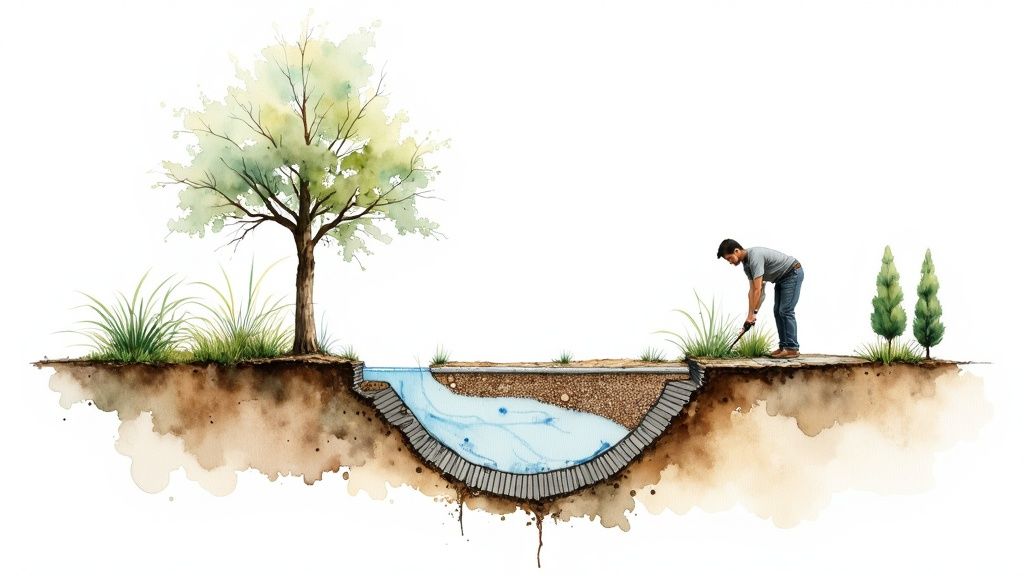
Addressing these vulnerabilities early is key to preventing emergencies. Strategic grading, retaining walls, and engineered solutions like French drains create clear pathways for excess water to move away from critical areas. A landscape designed to manage storm runoff effectively is inherently more resilient.
Why a Strong Foundation is Your Best Defense
Unmanaged soil and poor drainage create unstable conditions. Improving soil structure and managing water flow are essential for engineering a safer, more storm-ready landscape.
Key Insight: According to the U.S. Environmental Protection Agency’s WaterSense program, effective landscape drainage and water management can reduce storm runoff by over 80%, protecting both property and local watersheds.
- Clear Gutters and Drains: Regularly remove debris from gutters and drains to prevent blockages and overflows that lead to soil saturation near foundations.
- Reinforce Soil: On slopes, use proper grading, retaining features, or groundcovers to prevent soil instability and erosion.
- Choose Deep-Rooted Plants: Selecting drought-tolerant, native plants with deep root systems can improve soil stability year-round.
Effective soil and water management is a cornerstone of a resilient landscape. For expert guidance, discover more about professional landscape maintenance and plant care to prepare your property from the ground up.
5. Strategic Plant Selection for Storm Resistance
An often-overlooked yet powerful way to weatherproof your landscape is to build resilience from the ground up through strategic plant selection. Choosing trees and shrubs with inherent storm-resistant qualities—strong wood, flexible branches, and deep root systems—creates a landscape naturally better equipped to handle high winds and saturated soils.
By selecting plants adapted to Monterey County, you create a more stable ecosystem. Species with low profiles and sturdy structures are less susceptible to the "sail effect" that can topple weaker plants. This proactive method not only reduces storm damage risk but also minimizes future maintenance.
Why the Right Plant in the Right Place Matters
Planting a weak-wooded tree next to your home or a shallow-rooted species on a slope creates a significant hazard. The right selection ensures your landscape works with nature, not against it.
Key Insight: According to the Arbor Day Foundation, native plants are often superior choices for storm-prone areas because they have evolved to thrive in local soil and climate conditions, including seasonal storms. Their deep root systems also play a crucial role in preventing soil erosion.
- Prioritize Native Species: Select plants native to the Monterey County area. They are hardier, more stable, and better adapted to local rainfall patterns.
- Assess Mature Size: Before planting, consider a tree's full mature size to ensure adequate space away from structures and power lines.
- Avoid Weak-Wooded Trees: Steer clear of species known for brittle wood like silver maples. Opt for durable choices like native oaks or Deodar cedars.
- Promote Biodiversity: A diverse range of species prevents a single pest from wiping out your landscape and creates a more resilient defense against storm impacts.
Learn more about building a resilient landscape with water-wise design strategies for California homeowners.
Preparing Your Property for Storm Season
Proactive measures are essential for protecting your property from the high winds and heavy rains of Monterey County's storm season. Homeowners, HOAs, and commercial property managers face increased risks of tree failure and drainage issues from saturated ground. Addressing these vulnerabilities early prevents emergencies and protects property value.
Recent seasons have shown how even moderate storms can cause fallen limbs and blocked drains across Salinas, Seaside, and other coastal communities. Proactive maintenance—especially for mature trees and sloped yards—has become essential.
Your Pre-Storm Checklist:
- Schedule a Tree Inspection: Have a certified arborist assess your trees for deadwood, weak branches, and structural issues before the storm season begins.
- Clear Drains and Gutters: Ensure all drainage paths are free of leaves and debris to prevent water from pooling near foundations or tree roots.
- Secure Outdoor Items: Store or secure outdoor furniture, tools, and decorative items that could become projectiles in high winds.
- Reinforce Soil: Use mulch or groundcover to protect soil on slopes and in garden beds from heavy rain and erosion.
- Have an Emergency Plan: Know who to call for emergency tree services if a storm causes damage. Keep contact information for a professional service handy.
For property owners in Monterey County, knowing when a tree has become a liability is essential. If you suspect a tree is compromised, act before the next storm. Learn more about professional hazard assessment and emergency tree services.
Frequently Asked Questions (FAQs)
1. When is the best time to prune trees for storm preparation in Monterey County?
The best time is during the late fall or early winter, well before the peak storm season arrives. This allows the tree time to heal from pruning cuts, making it stronger and more resilient against high winds and heavy rain.
2. How can I tell if a tree on my property is a hazard?
Look for signs like large dead branches, cracks or splits in the trunk, significant leaning, or fungus growing at the base. However, many structural issues are not visible to the untrained eye. An inspection by an ISA-Certified Arborist is the most reliable way to assess a tree’s risk.
3. What are the most storm-resistant trees for the Monterey Bay area?
Native species like Coast Live Oak (Quercus agrifolia) and Monterey Cypress (Hesperocyparis macrocarpa) are well-adapted to our coastal conditions. When selecting new trees, prioritize those with strong wood, deep root systems, and a form that is not overly dense.
4. Can I install tree cables myself?
No. Tree cabling and bracing are complex arboricultural practices that require specialized knowledge and equipment. Improper installation can severely damage the tree and create a greater hazard. Always hire a certified professional for this type of work.
5. How do I improve drainage in my yard to prevent soil saturation?
Start by ensuring gutters and downspouts direct water away from your home and landscape beds. For persistent issues, consider installing a French drain, creating a rain garden to absorb runoff, or regrading the area to promote better flow.
Get Your Landscape Storm-Ready with Professional Help
The difference between a secure property and a vulnerable one lies in proactive preparation. The certified arborists and landscape experts at California Landscape & Tree Pros provide comprehensive storm-readiness solutions—from professional tree pruning and risk assessments to drainage improvements and emergency response. Their licensed crews are trained to identify potential hazards before they become major problems, ensuring your property is secure and resilient.
Monterey County residents can contact California Landscape & Tree Pros for a seasonal property check or tree safety inspection to ensure their outdoor spaces are prepared and protected before the next storm arrives.
Ready to take the next step and ensure your property is professionally prepared for the unpredictable California weather? Secure your landscape by scheduling a professional consultation today with California Landscape & Tree Pros.
Sources:
- International Society of Arboriculture (ISA). (n.d.). Tree Pruning. Retrieved from isa-arbor.com.
- USDA Natural Resources Conservation Service (NRCS). (n.d.). Windbreaks. Retrieved from nrcs.usda.gov.
- U.S. Environmental Protection Agency (EPA). (n.d.). WaterSense Program. Retrieved from epa.gov/watersense.
- Arbor Day Foundation. (n.d.). The Right Tree in the Right Place. Retrieved from arborday.org.
- Local Expertise: California Landscape & Tree Pros, serving Monterey County, including Salinas, Seaside, and coastal communities.