
The majestic oak tree on your commercial property is more than just a landmark—it's a significant asset and a potential liability. For property managers in the Monterey Bay and Bay Area, understanding the nuances of commercial tree maintenance isn't just about aesthetics; it's a critical component of risk management, safety, and brand reputation. This guide will walk you through how a proactive tree care program protects your investment, keeps people safe, and enhances your property's value.
Why Proactive Tree Care Is a Must for Commercial Properties
If you manage an HOA, a business park, or a retail center, your responsibilities extend far beyond curb appeal. Mature trees, while beautiful, can quickly become major hazards without consistent, professional care. A single storm-weakened branch can cause thousands in property damage, trigger a messy insurance claim, or, in a worst-case scenario, lead to serious injury.
This is why a forward-thinking maintenance strategy is non-negotiable. It’s about shifting from a reactive, emergency-based mindset to a proactive one that identifies and resolves potential problems before they become costly disasters.
Protecting People and Property
First and foremost, commercial tree care is about safety. Trees weakened by storms, stressed by drought, or compromised by disease can pose an ongoing threat. In fact, a storm-damaged tree can remain a ticking time bomb long after the sun comes out, posing significant risks of falling limbs and structural failure. This underscores the critical importance of routine pruning, hazard assessments, and post-storm inspections.
Regular inspections and preventative pruning are your best defense against these hidden dangers.
A documented maintenance program also demonstrates due diligence, which is invaluable for reducing liability and managing insurance costs. To learn more, explore our guide to weatherproofing your landscape during storm season.
Enhancing Brand Image and Value
Safety is paramount, but the benefits don't stop there. A well-maintained landscape directly impacts your property's value and brand image. Healthy, vibrant trees create a welcoming, professional atmosphere for tenants, customers, and visitors. It sends a clear message that management is responsible and attentive to detail.
A proactive approach transforms your landscape from a potential risk into a safe, valuable, and thriving asset. It demonstrates a commitment to safety and excellence that tenants and customers notice.
Ultimately, investing in routine commercial tree maintenance isn't just another budget line item. It’s a crucial investment in the safety, appeal, and long-term value of your entire property.
What Does a Commercial Tree Maintenance Plan Actually Include?
A commercial tree maintenance plan is a comprehensive wellness program for your property’s most valuable green assets. It’s a strategic approach to tree health, safety, and long-term stability that minimizes risk and protects your investment.
At its core, every plan is built on routine, expert pruning conducted by a certified arborist. This is where real expertise comes in, as pruning for a commercial property is first and foremost about safety. An arborist doesn't just cut branches; they use specific techniques to achieve clear goals that protect people, cars, and buildings.
Foundational Pruning and Health Check-Ups
Proper pruning is all about strategy. An arborist might perform a crown thinning to allow wind to pass through the canopy more easily, reducing the risk of the tree toppling in a storm. Or they might focus on crown raising, clearing lower branches to create safe passage over sidewalks and parking spots. For a closer look at how the pros handle these tasks, you can see how professional tree pruning and removal in Monterey County is done.
Beyond physical trimming, routine health assessments are critical. A skilled arborist inspects trees for early signs of disease, pests, or structural weaknesses, stopping small issues from becoming expensive emergencies. Catching something like root rot early can save a mature tree that might otherwise require a costly removal.
This proactive approach directly supports the three pillars of smart commercial property management: safety, brand, and budget.
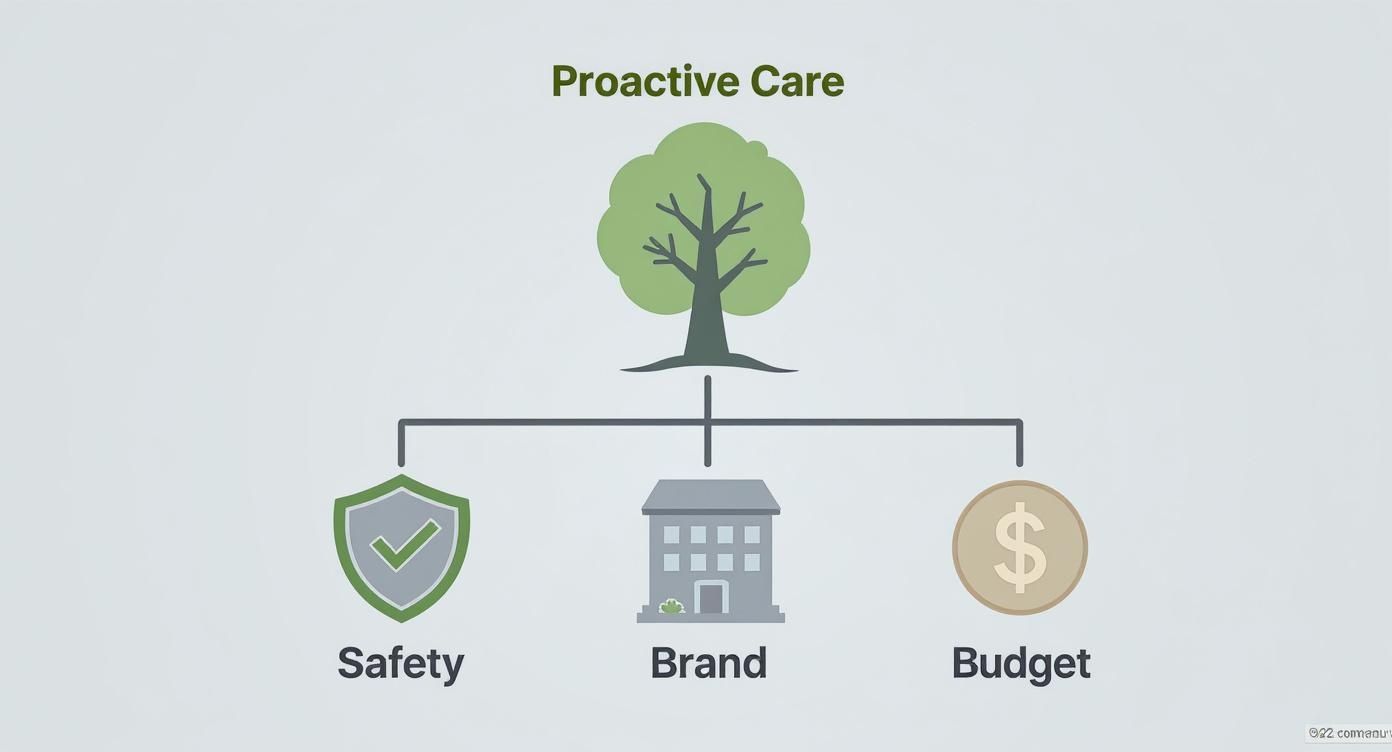
As you can see, a single, forward-thinking strategy pays dividends across the board—keeping people safe, enhancing your property's image, and protecting your bottom line.
Year-Round Care: A Seasonal Approach
Trees have different needs depending on the time of year. A well-designed maintenance plan accounts for this seasonal rhythm, scheduling tasks when they will be most effective. This proactive scheduling prevents last-minute scrambles and ensures consistent care.
Seasonal Tree Maintenance Checklist for Commercial Properties
| Season | Primary Focus | Key Maintenance Tasks |
|---|---|---|
| Winter | Structure & Safety | Prune dormant deciduous trees to correct structure, remove hazardous deadwood, and clear branches from buildings and walkways. Conduct detailed hazard assessments. |
| Spring | Health & Growth | Inspect for new pest or disease activity as trees leaf out. Apply fertilizers or soil treatments. Plant new trees. |
| Summer | Risk Mitigation & Health Monitoring | Monitor for drought stress and water as needed. Perform light pruning to manage storm risk. Inspect for limb cracks or pest infestations that thrive in warm weather. |
| Fall | Preparation & Cleanup | Prune trees to reduce risk from winter storms. Remove dead or dying trees before winter weather hits. Apply treatments for certain pests and diseases. |
Advanced Care for Long-Term Health
For mature, high-value trees, a maintenance plan often needs to go a step further. Advanced solutions are brought in to ensure they thrive for decades to come.
Businesses, like homeowners, are relying more on professionals due to safety, compliance, and liability considerations. Data shows that 65% of homeowners hire professionals for major outdoor projects, a trend that reflects a broader public trust in experts for complex work like tree care. (Source: 2024 Green Industry Report)
This reliance on expertise shows up in key services:
- Soil Management and Fertilization: An arborist can test soil and prescribe treatments like deep root fertilization to boost a tree’s natural defenses.
- Pest and Disease Control: Integrated Pest Management (IPM) uses smart, targeted treatments to manage pests without overuse of chemicals, which is essential for public-facing properties.
- Structural Support Systems: For majestic, older trees, arborists can install support systems like cables and braces to redistribute weight and prevent catastrophic failure.
Hazard Assessments and Emergency Readiness
Finally, any legitimate commercial tree plan must include a formal hazard assessment. A certified arborist systematically evaluates each tree for risks and documents their findings. This report is your proof of due diligence, which is critical for managing liability.
Because storms are unpredictable, a comprehensive plan also includes an emergency response strategy. Having a trusted tree care partner on speed dial ensures that when a tree fails, the situation is handled quickly and safely.
Staying Ahead of Risk: Why Safety and Compliance are Non-Negotiable
For any commercial property manager, “liability” is a constant concern. Your property's trees are a huge asset, but they can also be a significant source of risk if not managed correctly. A professional, well-documented tree maintenance program is your best defense against accidents, property damage, and legal headaches.
The goal is to identify and address hazards before they become emergencies. On a commercial property, potential problems are everywhere: a dead branch hanging over a parking lot, roots buckling a sidewalk, or a diseased tree waiting for the next storm. Ignoring these is a gamble you cannot afford to lose.
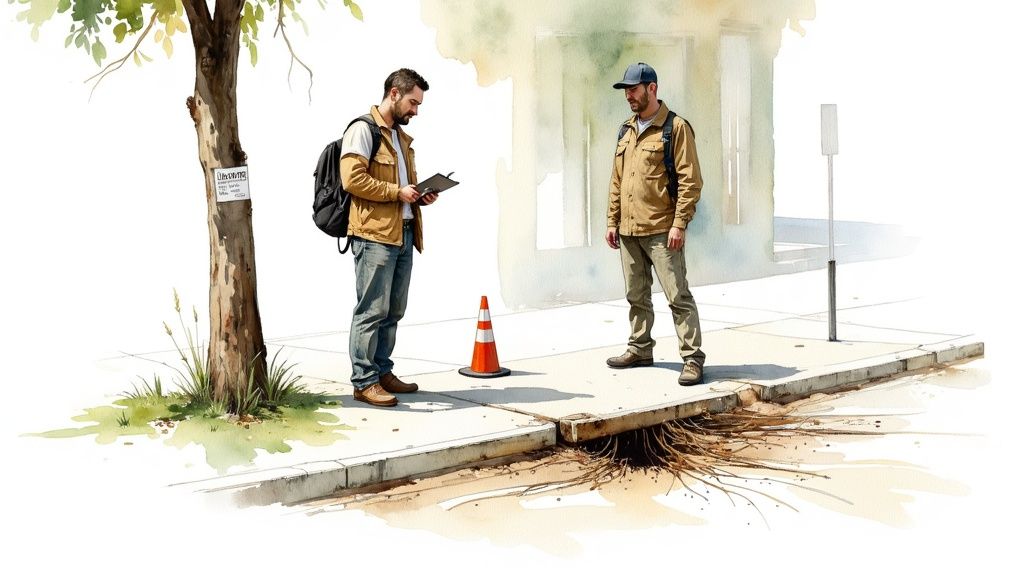
What a Certified Hazard Assessment Really Does for You
A formal tree hazard assessment is the foundation of a solid risk management plan. A certified arborist methodically inspects each tree's health, structure, and location to pinpoint potential points of failure, compiling findings into a detailed report.
This documentation is incredibly powerful:
- It provides a clear action plan to prioritize urgent risks.
- It demonstrates proactive care to your insurance carrier.
- It serves as a legal defense, proving you took reasonable steps to keep the property safe.
A hazard assessment moves your tree care from guesswork to a documented, defensible strategy. This is especially vital for navigating local regulations, something we cover in our guide to Monterey County tree health reports and permits.
Playing by the Rules: Industry Standards and Local Laws
Professional tree care is guided by strict industry standards, with the ANSI A300 being the gold standard. When you hire a company that works to ANSI A300 standards, you know the job is being done safely and correctly.
A documented maintenance plan, backed by certified hazard assessments and adherence to ANSI A300 standards, reframes professional tree care. It becomes a non-negotiable investment in operational safety, asset protection, and long-term financial stability.
Beyond industry best practices, you must adhere to local ordinances. Many cities in Monterey County and the Bay Area have rules to protect certain trees or require permits for removal. A professional partner handles this compliance, keeping you clear of fines and legal trouble.
Why Preventative Maintenance is Really a Financial Strategy
Managing liability is simply smart financial planning. The predictable cost of routine maintenance is minimal compared to the massive, unexpected costs of an emergency. A single failed tree can cause catastrophic damage, leading to eye-watering repair bills and insurance claims.
This is why hazard pruning is a key strategy for reducing insurance claims. By investing in routine care, you are actively reducing your financial risk and protecting your bottom line.
Smart Budgeting for Your Tree Maintenance Program
Creating a tree maintenance budget for a commercial property requires a clear financial roadmap. A solid budget isn't just about numbers; it’s about showing the long-term value of being proactive and protecting your investment from the sudden, steep costs of neglect.
Several factors influence the price of tree work. Tree size, species, and site accessibility are major variables. Trees in tight spaces or near power lines require specialized equipment and extra safety measures, which increases the price.
Proactive Planning vs. Reactive Spending
The strongest case for a structured budget is the massive cost gap between proactive care and reactive emergencies.
- Predictable Costs: A multi-year maintenance plan turns tree care into a scheduled, predictable expense, simplifying cash flow management.
- Unpredictable Expenses: Emergency tree work is always expensive. A fallen tree comes with a premium price tag for removal and can trigger a cascade of other costs, from building repairs to business interruption.
By presenting a budget that prioritizes preventative care, you demonstrate a clear return on investment. The modest, consistent cost of upkeep is far easier to manage than the financial shock of an emergency.
Proactive maintenance is a cost-control strategy. It transforms your tree care spending from a reactive, unpredictable expense into a manageable, planned investment that directly reduces long-term financial risk.
Evaluating Quotes and Finding the Right Partner
When evaluating quotes, the cheapest option is rarely the best value and can expose your property to serious liability. A professional quote should be detailed and transparent.
Ensure any contractor has their credentials in order: a valid California C-27 contractor's license, general liability insurance, and workers' compensation coverage. If they lack proper insurance, an accident on your property could become your financial problem.
The need for qualified professionals is growing. The global tree services market is projected to hit $2.51 billion by 2029. You can discover more insights about this growing market and see why professional standards are more critical than ever.
Structuring a Multi-Year Financial Plan
A multi-year budget makes the most sense for commercial properties. Not every tree needs the same work every year. An arborist can help map out a staggered schedule that prioritizes urgent needs while spreading costs over several years, ensuring every tree receives the expert care it needs to stay healthy, safe, and beautiful.
Adopting Sustainable and Modern Tree Care Practices
In California, sustainability is a core business strategy. For commercial properties, modern, sustainable tree maintenance is an expectation from tenants, customers, and the community. This shift delivers real benefits, from regulatory compliance to an enhanced brand reputation.
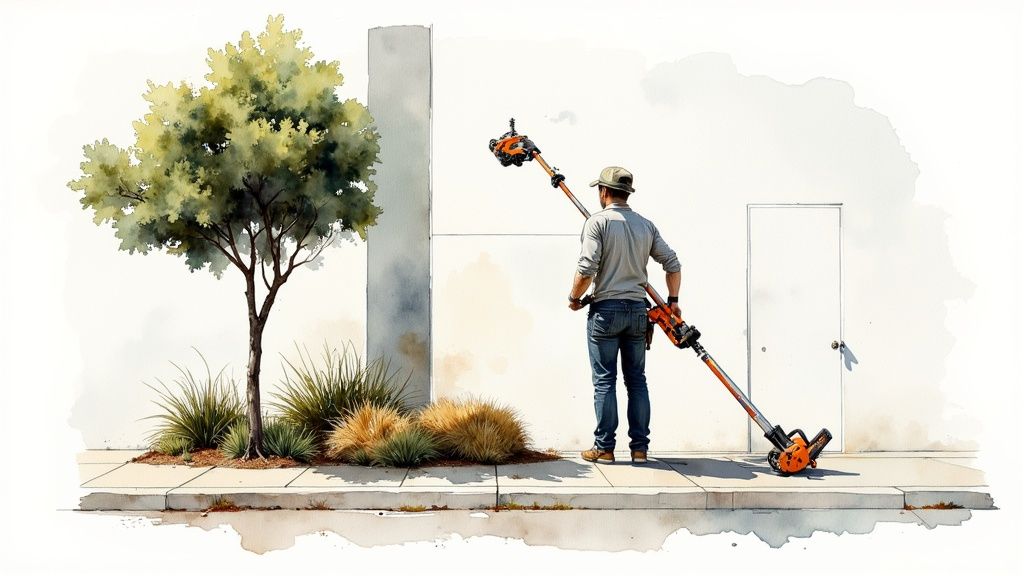
The most visible change is the move away from loud, gas-guzzling equipment. As California phases out gas-powered tools, the industry is shifting toward quieter, cleaner electric alternatives.
Quieter, Cleaner, and Client-Approved
Battery-powered equipment is becoming the professional standard. The numbers back this up: 33% of maintenance customers now specifically seek out companies using battery-powered tools, according to the 2024 Green Industry Report. This trend shows a clear public demand for eco-friendly service providers.
This shift benefits your property by:
- Reducing Disruption: Quieter tools mean less disturbance for tenants and customers.
- Improving Air Quality: No gas emissions create a healthier environment.
- Enhancing Brand Image: Partnering with an eco-conscious company shows your business is a responsible community player.
Smart Tree Selection for a Resilient Landscape
True sustainability begins with the trees themselves. Facing California's drought and changing climate, strategic planting is crucial. The key is to prioritize species adapted to our local environment.
Sustainable landscaping is "gaining significant momentum nationwide," and for good reason. In the Monterey Bay and Bay Area, choosing native, drought-tolerant, and fire-resistant trees means you get a triple win: they require less irrigation, lower your water bills, and have much higher survival rates during drought stress.
This approach creates a landscape that works with the local climate. It conserves resources and slashes the long-term costs of tree replacement and intensive care. For a closer look, see our guide on how sustainable landscaping is transforming California yards.
Adopting modern, sustainable tree care is a savvy business move that lowers operating costs, reduces environmental risks, and aligns your property with the values of a modern, eco-aware clientele.
How to Choose the Right Tree Care Partner
Selecting a commercial tree care contractor is a critical decision that impacts your budget, safety, and legal liability. You must look beyond the price tag and thoroughly vet potential partners.
It’s no surprise that outsourcing complex outdoor work is the norm. While about 65% of homeowners call in professionals for big jobs, the stakes are even higher for businesses where safety and compliance are paramount. When you hire a tree care partner, you’re entrusting them with the health and safety of your most valuable landscape assets.
Verifying Essential Credentials
Before reviewing a proposal, check for non-negotiable credentials. An unqualified or uninsured worker on your property is a significant risk.
Ensure your evaluation checklist includes:
- California C-27 Contractor's License: Verify it’s active and in good standing.
- General Liability Insurance: Ask for a current certificate of insurance.
- Workers' Compensation Insurance: This is an absolute deal-breaker. Without it, you could be financially liable for injuries.
Any legitimate company will provide this documentation without hesitation.
Looking for True Expertise
Beyond licenses and insurance, look for signs of true arboricultural expertise. A company that employs ISA (International Society of Arboriculture) Certified Arborists brings a scientific understanding of tree health, biology, and risk. That level of knowledge separates a trimming crew from genuine tree care professionals.
A reliable tree care partner is a proactive risk manager for your landscape. They don’t just trim branches; they identify and fix hazards, ensure compliance with local ordinances, and provide the documentation needed to prove due diligence.
When you’re ready to find a team that meets these high standards, review our comprehensive commercial services to see how a professional approach can protect and elevate your property.
Key Questions to Ask During the Bidding Process
The bidding process is your chance to dig deeper. How a contractor answers your questions reveals their professionalism and process.
Be sure to ask these critical questions:
- Can you walk me through your safety program? A professional company will have a well-documented safety protocol.
- How familiar are you with local ordinances in our city? This is crucial for avoiding fines and staying compliant.
- Will a Certified Arborist directly oversee the work on our property? Ensure an expert is in charge on-site.
- What is your emergency response plan after a major storm? Their answer reveals their readiness to support you when you need it most.
Using this framework, you can confidently choose a tree care partner who will protect your assets, limit your liability, and help your landscape thrive.
Frequently Asked Questions
When it comes to managing the trees on a commercial property, knowledge is key to protecting your investment and making smart financial decisions. Here are some of the most common questions we get from property managers.
How Often Should Our Commercial Property Trees Be Inspected?
For most commercial properties in California, we recommend a certified arborist inspects the site at least once a year. However, for high-traffic properties, those with many mature trees, or in areas prone to storms, an inspection twice a year is a safer bet. A follow-up inspection after any major storm is an absolute must.
What’s the Difference Between a Tree Trimmer and a Certified Arborist?
A tree trimmer knows how to use the tools, but a certified arborist understands the science of tree care. An arborist is trained in tree biology, pest diagnosis, and complex structural risk assessments. For a commercial property where safety and liability are paramount, partnering with a company that has certified arborists ensures you receive expert-level care and can demonstrate due diligence.
Does Regular Tree Maintenance Actually Save Money?
Yes, absolutely. Proactive maintenance is always cheaper than reactive emergency work. The predictable, budgeted cost of routine pruning helps you avoid catastrophic branch failures that can damage buildings or cause injuries. The cost of prevention is a fraction of the cost of an emergency, and healthy trees live longer, saving you the expense of removal and replacement.
How Do Protected Trees Affect Our Maintenance Plan?
In places like Monterey County and the Bay Area, many cities have strict ordinances protecting specific trees, such as heritage oaks. Violating these rules can lead to hefty fines. A professional commercial tree care partner will know these local regulations, handle all necessary permits, and ensure all work is compliant, keeping you out of trouble with the city.
What Should a Commercial Tree Maintenance Contract Include?
A good contract should clearly outline the full scope of work, including service frequency, specific tasks (pruning, fertilization), and emergency response protocols. Most importantly, it must include proof of insurance (general liability and workers’ compensation), a valid C-27 contractor's license, arborist certifications, and transparent pricing. This level of detail protects your property by setting clear expectations.
A well-managed landscape is a sign of a well-managed property. To ensure your trees are safe, healthy, and compliant, partner with the certified professionals at California Landscape & Tree Pros.
Schedule a consultation to build your commercial tree maintenance plan today.