
For California homeowners, especially in areas like Monterey Bay and Salinas, creating a beautiful landscape is no longer just about aesthetics—it's about smart, sustainable choices. As we look toward 2026, statewide drought cycles and new environmental regulations are making sustainability a leading factor in landscaping decisions. The future of landscaping is here, and it’s greener, quieter, and more water-wise than ever before.
This article breaks down the 4 green landscaping trends growing in 2026 that are defining modern, climate-resilient outdoor spaces. We'll move beyond generic advice and provide actionable strategies for each trend, including native plant restoration, smart water management, permeable hardscaping, and regenerative garden design. For those looking to implement these ideas, a deeper dive into sustainable gardening practices is essential, and you can explore more through a comprehensive guide to sustainable gardening which offers foundational knowledge for any homeowner.
1. Native & Pollinator-Friendly Gardens Offer Big Payoffs
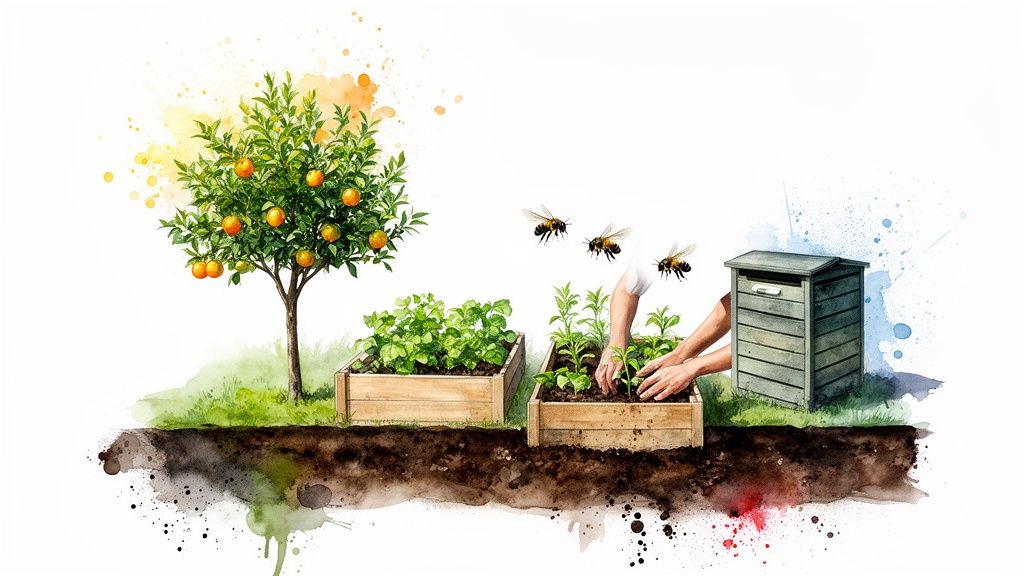
One of the most impactful and fastest-growing green landscaping trends is the shift toward native plant restoration and dedicated pollinator gardens. This approach focuses on building resilient, self-sustaining ecosystems using plants that have evolved in California’s specific regional climates. From the coastal fog of Monterey to the sun-drenched valleys of Salinas, these landscapes require less water, fewer fertilizers, and less maintenance because they are perfectly adapted to the local soil and weather patterns.
This trend is a direct response to California's biodiversity and water conservation goals. By planting regional species, these gardens become vital habitats for bees, butterflies, hummingbirds, and other essential pollinators, helping to support struggling local wildlife.
Key Benefits of Native and Pollinator-Friendly Gardens
- Reduced Water Consumption: Native plants are naturally drought-tolerant, drastically cutting irrigation needs and lowering water bills.
- Lower Maintenance Costs: Once established, native gardens thrive without constant intervention, resisting local pests and diseases and reducing long-term plant replacement costs.
- Enhanced Biodiversity: According to the National Audubon Society, native oak trees can support over 500 species of caterpillars, whereas a non-native ginkgo tree supports fewer than five. This demonstrates the power of native planting.
Practical Implementation Tips
Creating a successful native garden requires a thoughtful approach. Start with a soil analysis and microclimate assessment to understand your property's unique conditions. Group plants with similar water needs together, a practice known as hydrozoning, for highly efficient irrigation. Finally, design in layers to mimic a natural habitat, using groundcovers, mid-level shrubs like Ceanothus (California Lilac), and a canopy layer of native trees such as Coast Live Oak.
2. Water-Wise Design and Smart Irrigation Continue to Rise
Another transformative green landscaping trend for 2026 is the widespread adoption of smart irrigation and water-wise design. This technology moves away from outdated, fixed-schedule sprinklers and embraces a data-driven approach to watering, leveraging real-time weather data and advanced soil moisture sensors. For property owners across California, this means eliminating waste while ensuring plant health. Paired with design elements like drip irrigation and rock mulch, it helps residents meet local guidelines and drastically lower water usage.
This trend is a direct answer to California's persistent drought cycles and increasingly stringent water usage regulations. These systems can be controlled and monitored via mobile apps, providing unprecedented control and insight into water consumption.
Key Benefits of Smart Irrigation Technology
- Drastic Water Reduction: According to the U.S. Environmental Protection Agency, smart irrigation systems can reduce outdoor water use by up to 50%. This translates directly into lower utility bills and effortless compliance with local water restrictions.
- Improved Landscape Health: By preventing overwatering and underwatering, these systems promote deeper root growth and more resilient, drought-tolerant plants.
- Remote Management and Control: Homeowners can adjust schedules, run system tests, and receive leak alerts directly on their smartphones, which is invaluable for managing a property.
Practical Implementation Tips
Transitioning to a smart irrigation system is most effective when done strategically. Begin with a comprehensive irrigation audit of your existing system to identify broken heads, leaks, and areas with poor coverage. Design the landscape with hydrozoning in mind, grouping plants with similar water requirements together to allow for tailored watering.
3. Sustainable Hardscapes Support Climate Resilience
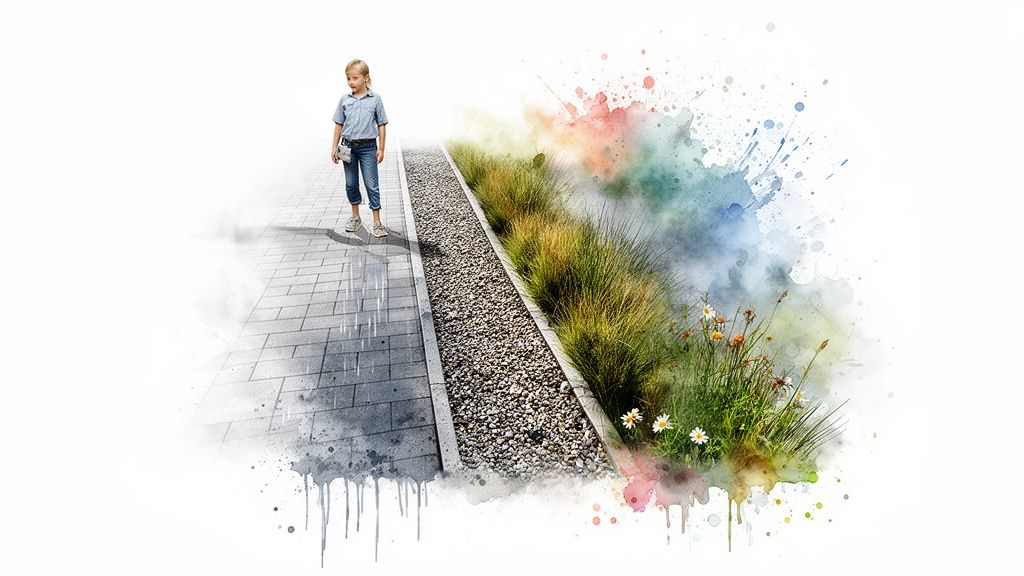
Another transformative green landscaping trend for 2026 is the adoption of sustainable hardscapes that support climate resilience. This approach rethinks how we handle rainfall, turning surfaces like driveways and patios from stormwater liabilities into environmental assets. Instead of using impervious materials like solid concrete that force water into storm drains, this method uses permeable pavers and rain gardens that allow rainwater to soak naturally into the ground.
This trend is a direct answer to California's dual challenges of prolonged drought and intense storms. Permeable surfaces help recharge precious local groundwater aquifers, filter pollutants from runoff, and reduce flooding. Fire-resistant materials are also becoming a key component of resilient design in wildfire-risk areas.
Key Benefits of Sustainable Hardscapes
- Groundwater Recharge and Water Quality: By allowing water to infiltrate the soil, permeable surfaces naturally replenish local water tables and filter pollutants before they can contaminate nearby creeks and the Monterey Bay.
- Reduced Flooding and Erosion: During heavy winter rains, permeable systems prevent the rapid runoff that causes localized flooding and soil erosion, protecting your landscape and foundation.
- Mitigation of Urban Heat Island Effect: Light-colored permeable pavers reflect more sunlight and allow moisture to evaporate, creating a cooler microclimate on your property.
Practical Implementation Tips
Successfully integrating permeable hardscaping requires a holistic site design strategy. Begin with a professional site grading and drainage analysis to map how water moves across your property. Choose the right material for the job, such as permeable pavers, porous concrete, or decomposed granite. Integrate hardscaping with softscaping by pairing permeable patios with adjacent rain gardens or bioswales to maximize water capture.
4. Battery-Powered Equipment Becomes the Norm
A significant operational shift in green landscaping is the move to battery-powered equipment. With California's ban on the sale of new gas-powered landscaping tools now in effect, more residents prefer contractors who use cleaner, quieter electric tools. This is especially true in dense neighborhoods where the noise and emissions from traditional equipment are a major concern.
This trend reflects a broader shift toward eco-smart landscape management. Professional-grade electric mowers, blowers, and trimmers now offer performance comparable to their gas counterparts without the pollution, making them a practical and environmentally responsible choice.
Key Benefits of Battery-Powered Equipment
- Reduced Noise Pollution: Electric tools are significantly quieter, creating a more peaceful environment for homeowners and their neighbors.
- Zero Emissions: Battery-powered equipment eliminates harmful exhaust fumes, improving local air quality and reducing the carbon footprint of landscape maintenance.
- Lower Operating Costs: With no need for gasoline and less maintenance required, electric tools offer long-term savings for landscaping professionals.
- Regulatory Compliance: Using battery-powered equipment ensures compliance with state regulations and positions contractors as forward-thinking, environmentally conscious providers.
Practical Implementation for Homeowners
When hiring a landscape maintenance provider, ask about the equipment they use. Choosing a company that has invested in a fully electric fleet demonstrates a commitment to sustainable practices that benefit both your property and the community. For those interested in advanced outdoor tech, exploring topics like designing timers and schedules with a smart solar garden can provide further insights into modern, eco-friendly yard management.
Frequently Asked Questions (FAQs)
1. What are the best native plants for the Monterey Bay area?
Some excellent choices for this region include California Lilac (Ceanothus), Manzanita (Arctostaphylos), Coast Live Oak (Quercus agrifolia), and various sages (Salvia). These are drought-tolerant and provide critical habitat for local wildlife.
2. How much can I really save with a smart irrigation system?
On average, homeowners can reduce their outdoor water usage by 20% to 50% after installing a weather-based smart irrigation controller. This can translate into significant savings on your water bill, especially during dry seasons.
3. Are permeable pavers as durable as traditional concrete?
Yes, modern permeable pavers are engineered to be extremely durable and can withstand vehicle traffic on driveways. They are designed to meet or exceed the performance standards of conventional paving materials while providing superior environmental benefits.
4. Why is using battery-powered landscaping equipment important in California?
California has banned the sale of new gas-powered small off-road engines (SOREs), including those used in lawn equipment, to reduce noise and air pollution. Choosing contractors who use electric tools supports this environmental goal and creates a quieter, healthier community.
5. What is a rain garden?
A rain garden is a shallow, vegetated depression designed to temporarily hold and soak in rainwater runoff from roofs, driveways, or patios. It is planted with water-loving native species and helps filter pollutants while recharging groundwater.
Cultivate Your Sustainable California Landscape
As we look toward 2026, these green landscaping trends represent a fundamental shift in how we interact with our outdoor spaces. They transform our yards from high-maintenance burdens into resilient, productive, and life-sustaining ecosystems. This evolution is driven by necessity and desire—in a state where water conservation and environmental health are paramount, these practices offer practical solutions.
Embracing these 4 green landscaping trends growing in 2026 is a strategic investment in your property's future. By integrating these concepts, you create a landscape that is beautiful, economically savvy, and environmentally responsible. Your property can be a vibrant part of this positive change, a testament to how modern design and ecological wisdom can create spaces that are truly built to last.
Want to create a greener yard in 2026? Monterey Bay and Salinas homeowners can explore sustainable design options tailored to local climate needs. The experts at California Landscape & Tree Pros specialize in creating beautiful, resilient landscapes that align with the unique ecological needs of the region. Contact us today to schedule a consultation.