
Dreaming of a perfect backyard often means picturing a cozy fire pit, stylish patio, or elegant lighting. But true quality goes deeper than surface-level trends. For Monterey Bay and Salinas homeowners, creating an outdoor space that endures coastal winds, fog, and uneven terrain requires more than just good looks; it demands expert engineering from the ground up.
This guide moves beyond aesthetics to explore the advanced strategies that turn a simple yard into a valuable, enduring extension of your home.
The Foundation of a Lasting Outdoor Space
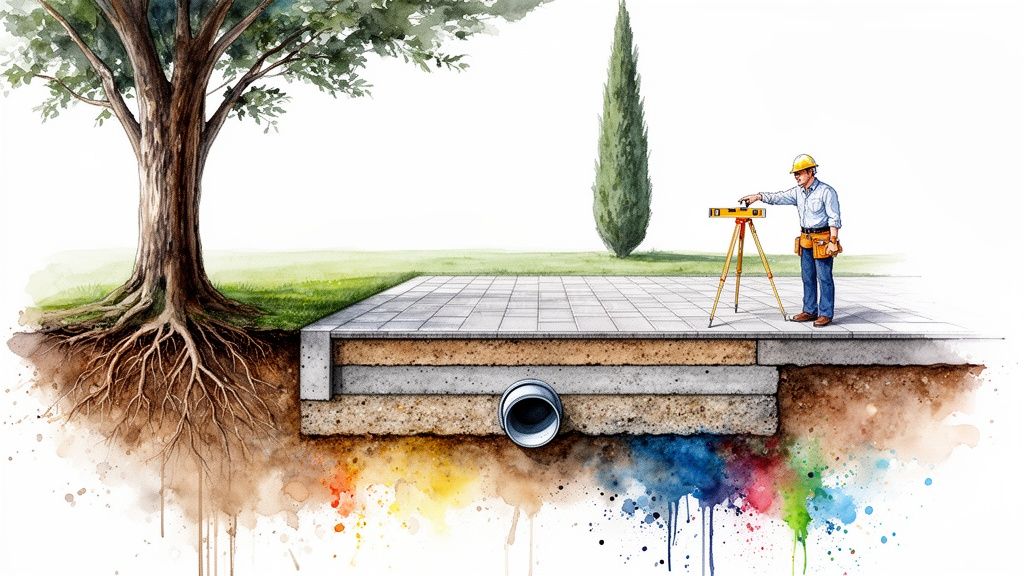
It’s easy to get caught up in trendy features—the fire pits, lighting, and plant pairings. While these elements bring daily enjoyment, they are just the final layer. Industry peers often focus on these aesthetics without evaluating the critical structural needs beneath. The conversation often stops at the surface, overlooking the engineering required to support it all.
Our research shows a significant gap: most providers fail to address functional design factors like root conflicts, drainage planning, material longevity, or shade and wind exposure. This oversight results in outdoor spaces that deteriorate quickly or are uncomfortable for most of the year.
The Overlooked Structural Essentials
It's a frustratingly common story. A beautiful new outdoor space starts showing signs of failure within just a few years because the foundational planning was skipped. Suddenly, you're facing unexpected and expensive repairs. These issues almost always stem from poor initial design and a failure to address the site's unique challenges.
Here are a few of the most frequent culprits:
- Root Conflicts: When a patio or walkway is installed too close to a mature tree, its powerful roots can heave and crack the hardscaping, creating structural damage and serious tripping hazards.
- Poor Drainage: Without proper grading and drainage systems, water will pool on hardscapes, flood planting beds, and even threaten your home’s foundation. This leads to eroded materials and dead plants.
- Material Degradation: Choosing materials that aren't suited for our local climate is a recipe for disaster. Wood warps, stone cracks, and metal corrodes, forcing you into a cycle of premature replacements.
- Year-Round Usability Issues: A patio that’s perfect on a calm, sunny day can become completely unusable when the wind picks up or the summer sun beats down without adequate shade.
Rigorously planned spaces withstand weather, integrate seamlessly with existing trees and terrain, conserve water, and offer year-round utility—maximizing property value and reducing future repair costs.
This is especially critical for homeowners in Monterey Bay and Salinas. Our region presents a unique mix of coastal winds, persistent fog, hilly terrain, and gorgeous old-growth trees. Here, an expertly engineered outdoor plan isn't a luxury; it’s an absolute necessity for ensuring your space is comfortable, safe, and built to last.
True, lasting value comes from an integrated approach that blends arborist expertise with a strategic design-build process. By integrating a tree impact assessment before placing hardscapes and using tech-driven design previews to model year-round usability, we make smarter landscape design choices that are as durable as they are beautiful.
Why a Professional Site Assessment Is Non-Negotiable
The success of your outdoor living space is decided long before the first shovel hits the dirt. A thorough site assessment is the single most important step, the true foundation for a project that will stand the test of time. It goes way beyond simple measurements or talking about where you’d like the patio to be.
Skipping this step? It's like building a house without checking the ground it's on first. This isn’t just about making a plan; it’s about understanding the unique personality of your property. We're talking about an in-depth look at all the invisible forces that will affect your investment for years to come.
Mapping Your Property’s Invisible Forces
Think of your yard as its own little ecosystem, with its own set of rules. A site assessment is all about figuring out those rules so your new outdoor space can work with nature instead of fighting a losing battle against it. It's how we spot potential disasters before they become expensive headaches.
A proper assessment always covers these key areas:
- Soil Composition Analysis: What are we working with? Sandy soil, heavy clay, or a nice loam? The answer directly impacts how your new hardscape will shift, settle, or heave over the years.
- Drainage and Topography Mapping: Water is the biggest enemy of any landscape project. We need to map out exactly how water moves across your property, pinpointing low spots where it will pool and high areas that could create erosion problems.
- Microclimate Evaluation: Here on the Central Coast, one property can have several different microclimates. The corner by the fence might get baked by the afternoon sun, while the area near the house stays cool and damp from the coastal fog.
The Critical Role of a Tree Impact Assessment
If your property is blessed with mature trees, a specialized tree impact assessment isn't just a good idea—it's essential. This is a core part of the California Landscape & Tree Pros (CLTP) process, where we integrate arborist insight directly into our design-build strategy. Those beautiful, established trees are incredible assets, but their powerful root systems and sprawling canopies can create major headaches for new construction if not handled correctly.
An arborist-led assessment isn't just about avoiding roots. It's about protecting the health, safety, and long-term stability of your property's most valuable natural features. This is where smart construction meets responsible environmental stewardship.
This vital step involves mapping out the Critical Root Zone (CRZ) for each major tree. This is the area of ground around the trunk that absolutely must be left untouched to keep the tree healthy. Building inside this zone can cause a slow, painful death for the tree, leading to hazards like falling limbs or, eventually, roots that heave and destroy your beautiful new patio.
Concerned about the stability of your trees, especially before winter storms? It's smart to learn how to spot potential dangers ahead of time. You can learn more in our guide to storm-proofing your landscape.
By getting this assessment done before a single design is drawn, we can work around these critical zones. This ensures your trees stay healthy and your investment remains secure. A professional site assessment, sometimes enhanced by modern tools like drone operations transforming land surveying, is the bedrock of any outdoor space built to last.
Choosing Materials Designed for the Monterey Coast
When you're building an outdoor space in the Monterey Bay area, picking the right materials is about so much more than just looks. Our salty air, persistent fog, and coastal temperature swings create an environment that can be incredibly tough on building materials. If you choose based on aesthetics alone, you’re often signing up for premature decay, warping, and expensive repairs down the road.
True durability comes from choosing materials that were specifically designed to handle these coastal pressures. For homeowners in Monterey and Salinas, this practical mindset is the secret to building an outdoor living area that actually lasts.
Hardscape Materials Built for Coastal Conditions
The foundation of any great outdoor space is its hardscape—the patios, walkways, and retaining walls that give it structure and function. Before you can even think about materials, though, you have to know what your property is working with. A proper site assessment is the non-negotiable first step. This simple decision tree shows how we start the process.
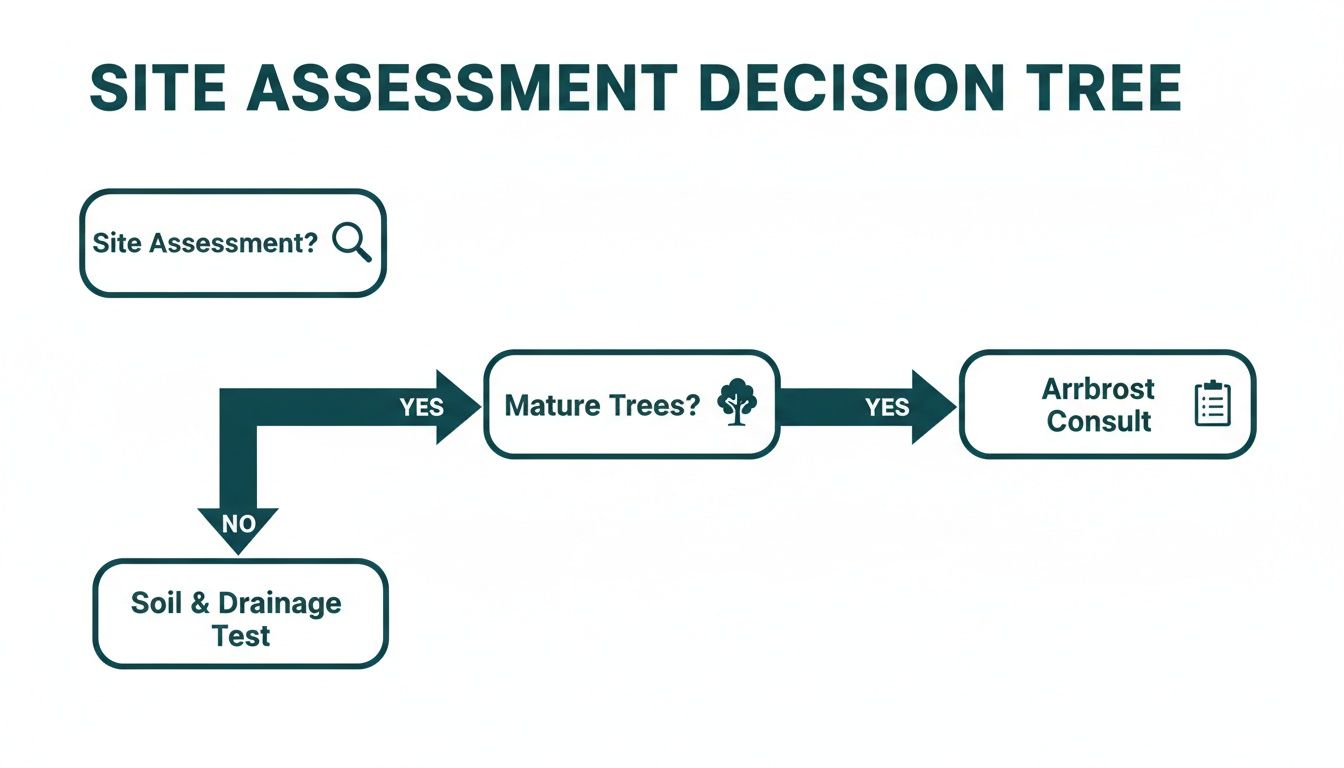
As you can see, every solid plan begins by looking at existing conditions like mature trees and soil drainage. Once you have that information, you can make an informed choice on materials.
For our local climate, some materials just perform better than others. Here’s a quick comparison to help you weigh your options.
Hardscape Material Durability Comparison For Coastal California
| Material | Average Lifespan | Maintenance Level | Best For |
|---|---|---|---|
| Natural Stone | 50-100+ years | Low to Medium | Patios and walkways where a timeless, high-end look is desired. Must be sealed. |
| Concrete Pavers | 25-50 years | Low | Driveways and high-traffic areas; their interlocking design resists cracking. |
| Poured Concrete | 20-40 years | Medium | Budget-conscious projects; requires diligent sealing to prevent surface pitting from salt. |
| Clay Pavers | 40-75+ years | Low | Walkways and patios where vibrant, lasting color is a priority. |
This table gives you a starting point, but remember that longevity is tied directly to proper installation—a well-laid paver patio will easily outlast a poorly poured concrete slab.
Decking That Defies Moisture and Decay
When it comes to decks and elevated platforms, the fight against moisture is even more critical. Wood is a classic, beautiful choice, but in our damp climate, it demands a serious commitment to upkeep to fend off rot, mildew, and warping.
Here are a couple of popular decking choices:
- Composite Decking: This is a fantastic investment for coastal homes. Made from a mix of wood fibers and recycled plastic, high-quality composites are incredibly resistant to moisture, rot, and insects.
- Redwood or Cedar: If your heart is set on natural wood, local species like redwood are great because they have a natural resistance to decay and pests. The key here is maintenance—they must be sealed regularly to protect their integrity.
Choosing the right material is only half the battle. Professional installation is what ensures those materials perform as intended. Even the highest-quality stone will fail if the base isn't properly prepared and compacted to ensure proper drainage.
Homeowners are increasingly viewing their outdoor spaces as a serious investment, and for good reason. According to the National Association of Landscape Professionals, 75% of homebuyers prefer homes with outdoor living spaces. This proves that functional, durable design matters more than trend-following. You can read more about the landscape industry's impressive statistics.
For more ideas specifically for our region, check out our guide on landscape design made simple for coastal homes.
Using Smart Technology for a Sustainable Landscape
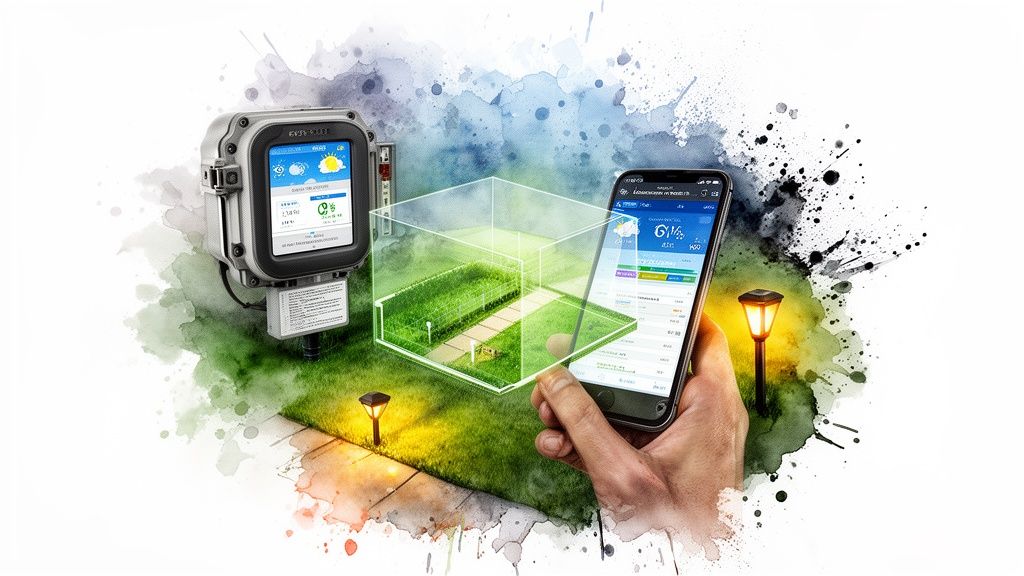
A truly durable outdoor space isn't just well-built; it's also intelligent. Modern tech lets us create landscapes that are more efficient, sustainable, and enjoyable. This is about bringing a level of control and resource management that’s essential for building a landscape that lasts, especially here in California.
When we integrate smart systems from the very beginning, we can design a landscape that actively conserves resources, cuts down on maintenance, and fits seamlessly into your daily life.
Smart Irrigation for a Water-Wise Future
In California, saving water isn't just a nice idea—it's a requirement. Smart irrigation is the answer, using real-time data to give your plants exactly the water they need, right when they need it. These systems tap into local weather forecasts and use on-site sensors to make adjustments on the fly.
- Weather-Based Adjustments: If a big storm is rolling in, the system knows to delay its watering schedule.
- Evapotranspiration (ET) Sensors: These measure how much water is naturally lost from the soil and plants, telling the system to run only when the landscape is truly thirsty.
- Zoned Control: We can create different watering schedules for your sunny lawn versus the shady ferns under the oak tree.
This precise approach can cut landscape water use by up to 50%. We get into the nitty-gritty of this in our guide on how smart landscaping starts with water-wise design.
Low-Voltage Lighting That Transforms Your Space
Good outdoor lighting does more than just light up a path. It extends the hours you can enjoy your space, boosts safety, and creates a magical atmosphere. Professionally designed low-voltage LED systems are the gold standard because they’re incredibly efficient, durable, and flexible.
Instead of harsh, energy-hogging floodlights, a well-designed LED system uses subtle techniques to highlight your landscape's best features like uplighting a mature tree, lighting a path for safety, or downlighting to create a moonlit feel.
Technology-driven design previews are a game-changer. By modeling year-round usability, we can identify and solve potential issues with sun, shade, and wind before a single stone is laid, ensuring your outdoor space is comfortable and functional in every season.
Visualizing the Future with 3D Modeling
One of the most powerful tools in our design kit is 3D modeling. This lets us create a virtual, photorealistic tour of your finished project before we even break ground. You can see exactly how the afternoon sun will hit your new patio in July or where the shadows will fall on a chilly December morning.
This goes way beyond just looks; it's a critical step in building an outdoor space that truly lasts because we get to test its functionality. This virtual walkthrough helps us perfect the layout, double-check material choices, and make sure the final design works for your family all year long.
Protecting Your Investment with Proactive Maintenance
Building a beautiful, durable outdoor space is a huge accomplishment. But the work isn't over once the last stone is set. To keep it looking great and structurally sound for years, you need a proactive maintenance plan. This isn't an afterthought; it should be part of the initial design conversation.
Think of it like owning a classic car. Your landscape is a living, breathing system that needs the same kind of regular attention to stay in top form. This scheduled care is the single best way to protect your investment and ensure your outdoor space remains a source of pride and enjoyment.
What a Real Maintenance Schedule Looks Like
For a property here in Monterey or Salinas, a comprehensive maintenance plan is about much more than just mowing the lawn. It has to tackle the specific challenges of our coastal climate and protect the unique materials you've chosen for your landscape.
Here’s what any professional schedule should cover:
- Hardscape Care: Regular cleaning is a must to keep mildew and stains from taking hold in our foggy weather. We also need to periodically inspect and reseal stone, pavers, and wood to guard against moisture and salty air. For an extra layer of defense, high-quality protective coatings can make a world of difference.
- Irrigation System Checks: A technician should be walking your property regularly, checking sprinkler heads, drip lines, and controllers. This simple step prevents a ton of wasted water and keeps your plants healthy.
- Seasonal Pruning: This is a job for trained professionals. Proper pruning isn't just about looks; it maintains the long-term health and structure of your trees and shrubs and removes hazardous limbs before a storm hits.
- Drainage System Upkeep: Keeping drains, channels, and catch basins clear of leaves and debris is absolutely critical. A clogged drain can quickly lead to water damage that undermines your hardscaping and even your home's foundation.
Investing in a quality build from the start, followed by a consistent, professional maintenance plan, is the only way to truly protect your property's value and keep your outdoor space beautiful, functional, and safe.
This diligent approach is the final piece of the puzzle in creating outdoor spaces that are built to last. When you work with a team that gets both advanced construction and long-term care, you're not just building a patio—you're creating an outdoor legacy. To learn more, check out our guide on how to weatherproof your landscape for the storm season.
Creating an Outdoor Space That Lasts
We've walked through the essentials in this guide, from assessing your site to choosing the right materials. The goal is to move beyond what's merely trendy and focus on what truly endures. A beautiful, high-value outdoor space isn't just about looks; it's a carefully engineered system built to thrive right here in the Monterey Bay area.
Real longevity isn't accidental. It comes from getting the fundamentals right. When you focus on these core pillars, you’re not just creating a landscape—you're building a lasting asset that will enrich your property and your life for decades.
Your Local Experts in Building for the Long Haul
For those of us living in Monterey Bay and Salinas, our properties come with a unique set of challenges. We deal with everything from hilly terrain and majestic old trees to the ever-present coastal fog. A professionally designed and built plan is the only way to ensure your outdoor space is safe, comfortable, and truly built to last.
This is where California Landscape & Tree Pros comes in. We combine the deep knowledge of certified arborists with smart, practical design-build strategies to create outdoor spaces that become a true extension of your home. Quality improvements can deliver 100% or more ROI on resale, which means functional, durable design matters more than ever.
Ready to build an outdoor space that you'll be proud of for years to come? Contact California Landscape & Tree Pros today for a consultation, and let's get started.
Frequently Asked Questions
Why is professional site assessment so important in the Monterey Bay area?
In Monterey Bay and Salinas, a professional site assessment is critical due to our unique local conditions. We contend with coastal winds, fog, uneven terrain, and mature trees. An expert evaluation identifies potential issues with drainage, soil stability, and microclimates before construction begins, ensuring your outdoor space is designed for comfort, safety, and longevity, preventing costly future repairs.
How does CLTP's approach differ from standard landscape design?
While standard designers focus on aesthetics like plant pairings and patio styles, California Landscape & Tree Pros (CLTP) integrates arborist insight with a design-build strategy. We conduct tree impact assessments before placing hardscapes and use tech-driven design previews to model year-round usability. This expert pivot addresses the functional gaps—root conflicts, drainage, and material durability—that others often miss.
What are the best hardscape materials for a coastal climate like Monterey's?
For the Monterey coast, durability against salt air and moisture is key. Natural stone and high-quality concrete or clay pavers are excellent for patios and walkways due to their longevity and low maintenance. For decking, composite materials offer superior resistance to rot and warping. If using natural wood, local species like redwood are ideal but require regular sealing to protect against the elements.
How can I ensure a new patio won't damage my existing mature trees?
The only way to guarantee harmony between new hardscaping and mature trees is to start with a Tree Impact Assessment from a certified arborist. This process maps the Critical Root Zone (CRZ) of each tree—the area that must remain undisturbed. By designing your patio and walkways around these protected zones, you prevent root damage, tree decline, and future hardscape heaving.
What kind of return on investment can I expect from a professionally built outdoor space?
The demand for high-quality outdoor living is skyrocketing. With 75% of homebuyers preferring properties with well-designed outdoor spaces, the return on investment can be significant. A professionally engineered, durable outdoor area can deliver a 100% or even higher ROI on resale because it adds functional, lasting value that buyers recognize and are willing to pay for.
By shifting your focus from pure aesthetics to the fundamentals of engineering, material science, and expert planning, you can create an outdoor space that becomes a true, lasting extension of your home. For homeowners in Monterey Bay and Salinas who value longevity, California Landscape & Tree Pros is ready to help you build an outdoor legacy.
Ready to transform your vision into a durable reality? Contact us for a professional consultation today.