
When a major storm rolls through Monterey County, your first actions can make all the difference for a safe recovery. After seeing the aftermath in Salinas and beyond, the natural urge is to grab a chainsaw, but that's not the right move. The critical first step in any storm damage tree cleanup is assessing immediate dangers, like downed power lines, from a safe distance, ensuring a smoother cleanup process from the start.
Your First Moves After a Storm Hits
The scene after a major storm can be chaotic, with debris everywhere and hidden dangers posing a real threat. Here in Monterey County, where wind and rain can be fierce, personal safety is the top priority. Before you worry about the trees, perform a quick visual scan of your property from a safe spot, like your porch or a window.
The biggest and most immediate danger is downed power lines. They can be incredibly hard to see, often hidden by fallen branches or lurking in standing water. The Electrical Safety Foundation International (ESFI) is clear: treat every downed power line as if it's live and extremely dangerous. Don't go near it, and don't touch anything it might be in contact with. If you spot one, keep a minimum of 35 feet away and call your local utility company and 911 right away.
This flowchart lays out those critical first steps perfectly: look for hazards, stay back if you find any, and then—and only then—start documenting the damage.
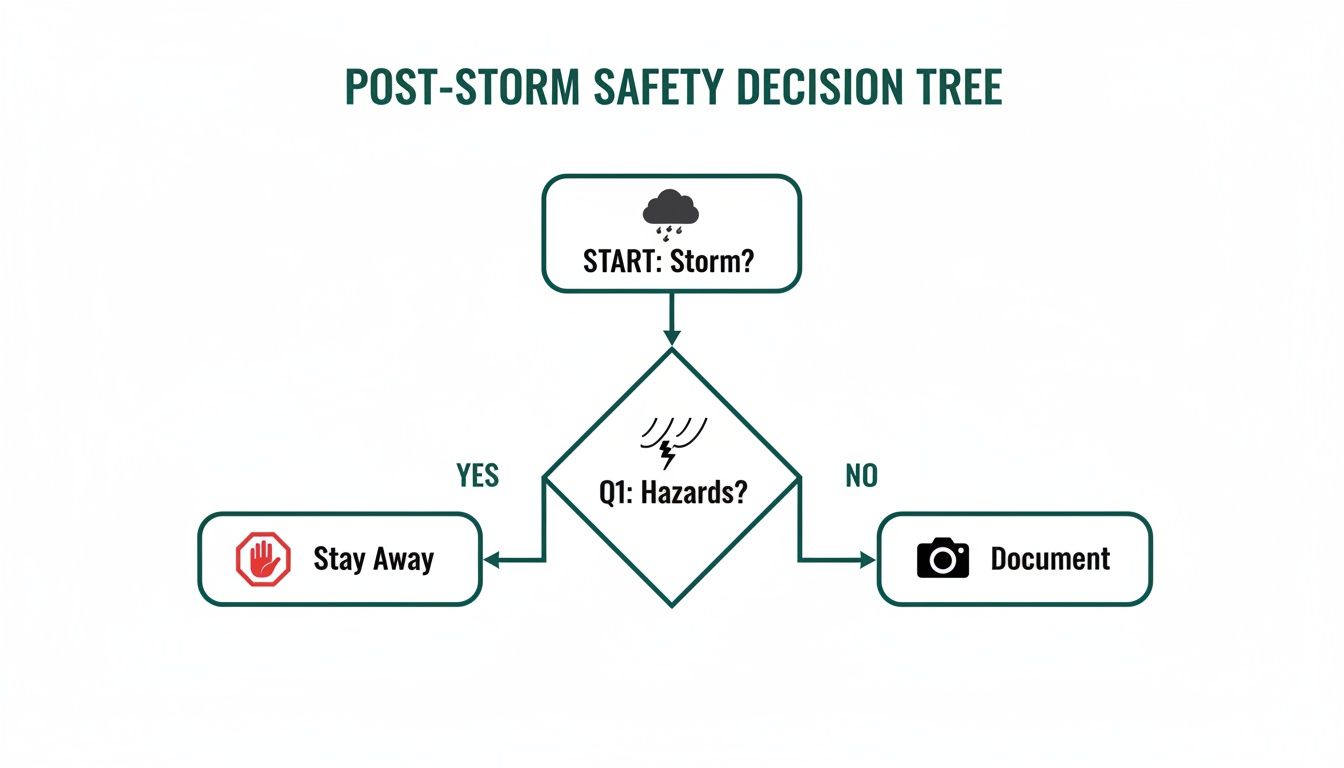
The takeaway is simple but crucial: documentation only happens after you're absolutely certain the area is clear of electrical hazards or unstable structures.
Document Everything First
Once you've confirmed the area is safe to enter, your next job is to pull out your phone and document every bit of the damage for your insurance company. I know the temptation is to start hauling branches, but skipping this step can cause major headaches with your claim later on.
Taking clear, comprehensive photos and videos of the damage before a single branch is moved gives your insurance provider undeniable proof. It creates a perfect "before" snapshot of the storm's impact on your property.
Get your smartphone out and capture the scene from every angle you can think of. You'll want a mix of wide shots showing the overall mess and tight close-ups on specific points of damage. Make sure to photograph:
- Any fallen trees or massive limbs, especially if they've landed on your house, garage, fence, or car.
- Visible cracks or deep splits in tree trunks that suggest the tree's structure is compromised.
- Damage to your roof, siding, or windows caused by falling debris.
- Uprooted trees, paying special attention to the exposed root ball.
This collection of photos and videos is the strongest evidence you have when you file a claim. You can also learn about other ways to protect your yard from storm damage to get ahead of the next one. By taking these initial safety and documentation steps seriously, you'll find the entire storm damage tree cleanup process is far less stressful.
How to Assess Your Trees for Hidden Damage
Once you're sure the immediate area is clear and safe, it’s time to take a closer look at your trees. The obvious stuff—a snapped limb lying on the lawn—is easy to spot. It’s the hidden damage, the kind that doesn't immediately stand out, that often poses the biggest long-term threat.
Knowing what to look for is what separates a simple cleanup from preventing a future disaster. A tree whose structural integrity has been secretly compromised is a ticking time bomb. You're looking for subtle signs of stress that could lead to a catastrophic failure days, weeks, or even months down the road.
Your Post-Storm Inspection Checklist
Get started by inspecting your trees from the ground up, beginning at the roots and slowly working your way to the top of the crown. A word of caution: always keep a safe distance from any tree that looks even slightly unstable.
Here are the critical warning signs you can't afford to miss:
- Hanging Branches: Look up into the canopy. Are there broken limbs still caught in the branches? We call these "widowmakers" for a reason. They can weigh hundreds of pounds and fall without any warning.
- Cracks and Splits: Carefully examine the trunk and the main limbs for deep cracks. A fresh split that goes deeper than 25% of the trunk's diameter is a five-alarm fire—it often means the tree is structurally finished.
- Leaning Trees: Some trees have a natural lean, but a new lean right after a storm is a huge red flag. This almost always points to root failure, meaning the tree's anchor is gone.
- Exposed or Heaved Roots: Check the soil around the base of the tree. If you see the ground is cracked or looks like it's been lifted up on one side, that’s a tell-tale sign the root system has been heaved out of the ground. That tree could topple at any moment.
While your primary focus is on your trees, it's smart to think about the bigger picture. To make sure you're not missing other potential issues on your property, a homeowner's guide to property damage assessment can offer a broader perspective.
DIY Cleanup vs. Calling a Professional
It’s crucial to know the difference between cosmetic damage and a genuine hazard. Small broken branches or some stripped leaves? That’s typically minor and something you might handle with some careful pruning. But major structural problems demand a professional, and fast.
Use this table to quickly gauge whether you can handle the cleanup yourself or if it's time to bring in a certified arborist.
| Cleanup Task | Safe DIY Action | When to Call a Professional |
|---|---|---|
| Small Debris | Picking up twigs, leaves, and small branches (under 2" diameter) from the ground. | Anything requiring a chainsaw or is too heavy to lift safely. |
| Low-Hanging Branches | Trimming small, accessible broken branches with a handsaw or pole pruner. | Any branch that requires a ladder or is near power lines. |
| Leaning Trees | None. Stay clear of the tree and the surrounding fall zone. | Immediately. A leaning tree is an emergency. |
| Trunk Damage | None. Do not attempt to repair or remove a tree with a cracked trunk. | If you see any new, deep splits or cracks in the main trunk. |
| Hanging Limbs | None. These "widowmakers" are extremely unpredictable and dangerous. | The moment you spot one. Do not stand or work underneath it. |
If the job requires a chainsaw or a ladder, or if the tree itself looks unstable, it's no longer a DIY project. To get better at spotting these issues before a storm hits, our guide on how to identify tree hazards before the next California wind event is a great resource.
Knowing when to call for help is just as important as knowing what to look for. If you see major cracks in the trunk, significant root upheaval, or a sudden lean, it’s time to contact a professional tree service.
Navigating Your Insurance Claim for Tree Damage
After a storm barrels through, dealing with your insurance company can be more daunting than the cleanup itself. If you're a homeowner in Monterey County, the first step is to understand what your policy says about storm damage tree cleanup. They all have very specific rules.
Here's the usual breakdown: if a storm knocks a tree onto an insured structure—your house, garage, even a fence—your policy will almost certainly cover the cost of removing that tree and fixing the damage. But if that same tree just falls over in the middle of your yard and doesn't hit a thing? Insurers often consider that routine maintenance, leaving you with the bill. For a deeper dive into what's typical, you can review details on general California home insurance policies.
Document Everything and Submit a Solid Claim
Your smartphone is your best friend in this situation. Before a single branch is moved, get out there and take photos and videos of everything. Get wide shots to show the whole scene, then move in for close-ups of every point of impact, like where a limb punched through the roof or a trunk flattened your fence.
Once you have your evidence, you'll need professional estimates. Your insurance company will require a detailed, itemized quote from a licensed and insured tree service. This quote needs to spell out the costs for tree removal, hauling away the debris, and any structural repairs needed.
A huge mistake people make is jumping on the first low offer an adjuster throws out. Get a real-world estimate from a reputable local tree company first. This gives you the leverage to ensure their settlement offer actually covers the full cost of a safe, professional cleanup.
Know Your Policy's Limits and Fine Print
It’s crucial to understand the limitations of your coverage. Most policies put a cap on how much they'll pay for tree debris removal, which often lands somewhere between $500 and $1,000 per storm. According to the Insurance Information Institute, standard homeowners policies typically cover tree removal up to this limit if the tree fell on a covered structure.
What if your neighbor's tree falls on your property? In most cases, it’s on you and your insurance to handle it. Storms are considered an "act of God," so your neighbor usually isn't liable. The only real exception is if you can prove they were negligent—meaning you had previously documented that the tree was a hazard and they did nothing about it.
For tricky situations where a tree's health is in question or you need formal documentation, getting an expert opinion is non-negotiable. You can find out more on our page covering Monterey County tree health reports and permits.
Finding a Reputable Tree Service in Monterey County
When a big storm hits, your first instinct is to get the mess cleaned up fast. But this is exactly when "storm chasers"—opportunistic, often unlicensed operators—prey on homeowners' urgency. Knowing how to spot a legitimate, local tree service in Monterey County isn't just a good idea; it's critical for protecting your property.
Choosing the right crew is about more than just hauling away branches. It’s about ensuring the job is done safely, protecting the long-term health of your remaining trees, and avoiding a massive liability headache. A true professional handles the storm damage tree cleanup correctly and gives you the paperwork you'll need for your insurance claim.
The Essential Vetting Checklist
Don't hesitate to ask a potential tree service some tough questions. Any legitimate company will have the answers ready and will expect you to ask.
Before you let anyone start a chainsaw on your property, make sure you verify these four things:
- California Contractor License: Ask for their CSLB license number. You can look it up in a minute on the California Contractors State License Board website. No license? No deal.
- Proof of Insurance: You need to see current certificates for both general liability insurance and workers' compensation. This protects you if a falling limb hits your roof or a crew member gets hurt on your property.
- Local References: Ask for a few names and numbers of recent clients right here in the Salinas or Monterey area. A company with deep local roots will have a list of happy customers ready to go.
- Certified Arborist on Staff: Having an ISA (International Society of Arboriculture) Certified Arborist on the team signals a much higher level of knowledge about tree health, risk, and proper care.
Red Flags to Watch Out For
The bad actors tend to use the same playbook. If you learn to recognize their tactics, you can steer clear of a disaster. Be very cautious of any contractor who:
- Pressures You for a Quick Decision: High-pressure sales tactics are a classic giveaway.
- Asks for Full Payment Upfront: In California, the legal limit for a deposit is 10% of the total cost or $1,000, whichever is less.
- Offers a "Too Good to Be True" Price: An extremely low bid almost always means they're cutting corners on insurance, equipment, or experience.
- Shows Up Unsolicited: Reputable companies are usually busy, especially after a storm. They don't need to go door-to-door.
If a contractor gets defensive or won't show you their license number and insurance certificates, that's your cue to walk away. Immediately. There is zero legitimate reason to hide that information.
Always get a detailed written estimate. It should spell out exactly what work will be done, the equipment involved, how debris will be handled, and the final cost. When time is critical, our team provides prompt and reliable Monterey County emergency tree services with clear, upfront pricing.
What to Expect from a Professional Cleanup Crew
When you hire a professional team for storm damage tree cleanup, you should feel a sense of relief, not more stress. A top-notch crew, like the ones we run here in Monterey County, operates with a system that's all about safety and efficiency.
The work starts the second we pull up. The crew lead immediately scopes out the entire scene, flagging every potential hazard—from wobbly limbs overhead to nearby power lines. They’ll map out the safest way to bring in any heavy equipment before gathering the team for a quick safety huddle. Everyone knows the plan and their role before a single cut is made.
A Systematic Approach to Removal
You’ll never see a true professional just start hacking away at a fallen tree. There's a strategy to it, especially when a tree is tangled up with your house or other structures. This methodical approach is crucial for preventing any further damage.
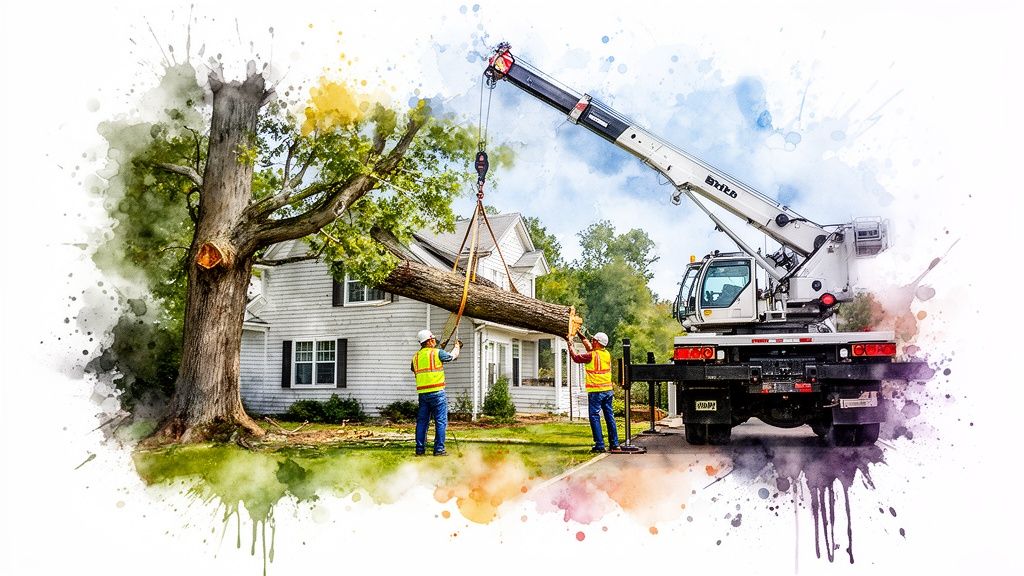
Think about a massive oak branch lying on your roof. An experienced crew will bring in specialized rigging, securing the limb with heavy-duty ropes and pulleys. This gives them total control, allowing them to lower it in smaller, manageable pieces without putting more pressure on your home.
A key sign of a professional operation is their calm, deliberate pace. Haste leads to accidents. Experienced crews work methodically, communicating constantly to execute each step of the removal plan safely.
The Right Tools for a Difficult Job
A pro service shows up with an arsenal of equipment that homeowners simply don't have access to. This is the gear that turns a dangerous, overwhelming job into something manageable and efficient.
Here's what you'll likely see on site:
- Cranes: Absolutely essential for giant trees or heavy limbs hanging over buildings.
- Wood Chippers: All that tangled brush and the smaller branches get fed into an industrial-strength chipper.
- Bucket Trucks: These give us a safe and stable platform to work from high up in the canopy.
The scale of tree loss from major weather events and other natural disasters is a growing problem. In fact, fires now burn more than twice as much tree cover across the globe as they did just 20 years ago, a trend you can read more about on the impact to global forest resources at WRI.org.
After all the dangerous wood has been safely removed, the crew switches gears to the final cleanup. They’ll rake everything up, use blowers to clear sawdust off your driveway and walkways, and haul away all the logs and debris. For properties that need more intensive restoration, we also provide comprehensive Monterey County stump grinding and lot clearing services to get your land back in shape.
Frequently Asked Questions About Storm Damage Cleanup
When the storm finally passes, the real work begins. Over the years, we've helped countless homeowners in Monterey County navigate the aftermath, and we've found that most people share the same immediate concerns.
1. What's the very first thing I should do after a storm?
Safety first. Before anything else, scan your property from a safe distance for downed power lines. Treat any fallen line as live and stay at least 35 feet away. Call 911 and your utility company immediately. Only after confirming the area is safe should you begin documenting the damage.
2. Is a fallen tree from my neighbor's yard my responsibility?
Yes, in most cases. In California, if a healthy tree falls due to a storm (an "act of God"), the responsibility for the storm damage tree cleanup lies where the tree lands. You are responsible for the portion on your property, and your insurance typically covers it. Liability only shifts to the neighbor if you can prove they were negligent regarding a known hazardous tree.
3. Will my homeowner's insurance cover tree removal?
It depends. If a tree or branch falls on an insured structure (your house, garage, or fence), your policy will almost always cover removal and repairs. However, if a tree falls in your yard without hitting anything, most policies consider it routine yard maintenance, and you'll likely have to pay for removal yourself.
4. Can my storm-damaged tree be saved?
Possibly. A certified arborist is the best person to make the assessment. Generally, if more than 50% of the tree's crown is gone, the main trunk is split, or the roots are heaved from the ground, removal is likely necessary. For less severe damage, strategic pruning or cabling might save the tree.
5. How can I spot a reputable tree service vs. a "storm chaser"?
A reputable company will be licensed (check their CSLB number), fully insured (ask for proof of general liability and workers' compensation), and have local Monterey County references. Be wary of anyone who pressures you, asks for full payment upfront, offers a suspiciously low price, or shows up at your door uninvited.
When you're dealing with storm damage in Salinas or anywhere in Monterey County, you need a team that's fast, safe, and professional. For emergency storm damage tree cleanup, you can count on the licensed and insured experts at California Landscape & Tree Pros. Contact us for a rapid-response assessment and a clear, upfront estimate.
Get Your Free Storm Cleanup Estimate Now
Sources:
- Electrical Safety Foundation International (ESFI). "Downed Power Line Safety." ESFI.org.
- Insurance Information Institute. "What is covered by homeowners insurance?" III.org.
- California Contractors State License Board. cslb.ca.gov.
- World Resources Institute. "Global Trends in Forest Fires." WRI.org.