
Most landscape installations in California yards fail for one simple reason: they chase a look while ignoring the reality of the ground beneath. Industry peers often publish trend lists and layout ideas, but a gorgeous design is worthless if it can’t handle our state’s relentless sun, dense clay soil, and specific microclimates. This is the truth about why beautiful garden dreams turn into expensive, frustrating nightmares.
The Real Reason Your Dream California Yard Is Failing
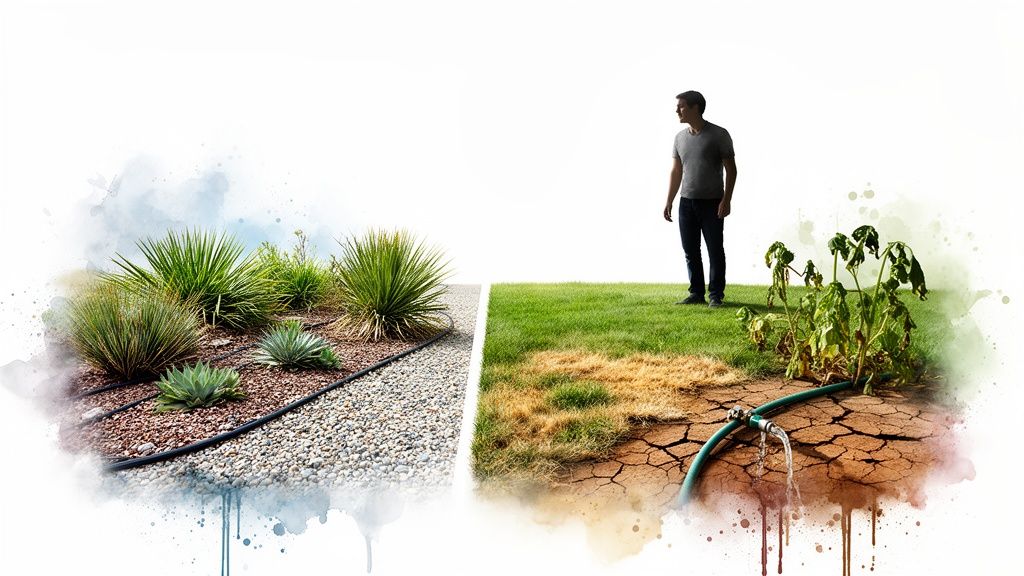
Many homeowners begin with inspiration—pinning layout ideas and watching generic "how-to" videos. But this approach skips the most fundamental step: understanding the unique constraints of your property. For Salinas and Monterey Bay homeowners navigating drought rules, shade patterns, and heritage tree ordinances, a locally informed, expert-led design ensures your installation thrives for decades—not just the first season.
Shifting Focus From "What's Pretty" to "What Works"
We’re seeing a massive change in what California homeowners want. A recent report confirms a major trend toward water-wise and native landscapes, showing that 77% of homeowners are now installing drought-tolerant plants. This isn’t a niche market; it’s a clear signal that functional, climate-driven design now outweighs aesthetics. Beauty is still the goal, but resilience and sustainability create real, lasting value.
The Missing Piece in Most Designs: Arborist Expertise
The core problem is a glaring omission: the absence of certified arborist expertise in design planning. Most providers fail to address tree placement, root conflict, irrigation needs, and long-term structural risk. This is the gap where most landscape failures are born.
- Tree Placement: A small tree today can become a massive problem tomorrow, interfering with your home or power lines.
- Root Conflict: Expanding roots can crack foundations, buckle patios, and destroy underground plumbing.
- Long-Term Risk: An arborist spots potential weaknesses that could become serious hazards down the road.
California Landscape & Tree Pros is different. We integrate certified arborist evaluations directly into the design phase, ensuring trees, roots, shade patterns, water needs, and soil conditions shape the plan—not the other way around. Blending arborist insight with tech-driven design prevents root damage, plant failure, and irrigation waste, reducing the total cost of ownership for our Monterey County clients.
To see how this expert-led process builds landscapes that last, you can explore our guide on smarter landscape design choices.
When Pretty Designs Clash With Harsh Realities
The number one reason landscape projects fail isn't a lack of good ideas; it's a great idea disconnected from reality. A client comes with stunning photos from a national magazine, dreaming of a lush oasis. The problem is, that beautiful design was created for a different climate, soil, and set of rules.
What looks perfect on paper can quickly turn into a costly disaster against the unique challenges here in Monterey County. A beautiful design that doesn't account for real-world conditions is just a recipe for failure.
Common Planning Mistakes That Doom a Design from Day One
Even carefully considered plans can fall apart if they ignore the basic science of the site. A landscape design is a blueprint for a living ecosystem. When you forget that, you end up with predictable and expensive problems.
Here are the classic mistakes we see all the time:
- Misjudging Sun and Shade: You can't just guess. A plan might call for sun-loving flowers in a spot that gets baked by the afternoon sun for two months but is shaded the rest of the year, scorching them to a crisp.
- Ignoring Radiant Heat: Hard surfaces are heat magnets. Concrete patios and stone walkways absorb and radiate tremendous heat. Planting delicate species next to them is like sticking them in an oven.
- Poor Plant Spacing: Homeowners often want an instantly full look, so plants are placed too close together. What seems balanced on day one becomes an overcrowded mess, as plants fight for light, water, and nutrients.
Your yard demands the same respect as your house—the conditions of your specific site are the foundation for everything else you build on it.
The Power of Seeing the Future With Tech-Driven Design
Thankfully, we don't have to rely on guesswork. We use tech-driven design tools to preview outcomes and prevent costly mistakes before installation begins. Using advanced software, we build a detailed 3D model of your property.
This lets us simulate exactly how things will play out. We can accurately map sun and shade patterns as they change throughout the seasons and show you how big that oak tree will be in ten years. It’s a proactive approach that ensures the plan works in the real world, not just on a screen. You can see more about how we use this process in our guide on building outdoor spaces that last.
Why Smart, Functional Design Always Wins
Homeowners across California are realizing that a successful yard is a resilient one. The data backs it up: 77% of homeowners are now installing drought-tolerant plants. This tells us that for most people, functional, climate-smart design is now more important than just chasing a particular look.
A beautiful design that fails within a year is not a success; it's a sunk cost. The smartest investment is in a plan that marries beauty with ecological intelligence, ensuring your landscape thrives for decades.
Even a great design can get derailed if the scope isn't managed well. Understanding good project scope creep management helps everyone stay on the same page, keeping the vision on track and on budget. Ultimately, the goal is to create a landscape that is both stunning and sustainable, adding real, lasting value to your home.
Why Trees Are The Root Of Landscape Success
Most landscape plans treat trees like an afterthought. This is arguably the single biggest reason so many projects in California end up failing. Trees aren't decorations; they are the living architecture of your yard, dictating everything from shade and water use to soil health.
The industry norm often pushes trendy plants without considering how a tree will behave on your property in five, ten, or twenty years. That gap between a pretty drawing and real-world science is where beautiful designs turn into expensive headaches.
The Hidden Risks of Planting Without an Arborist
Moving ahead without a certified arborist is like building a house without consulting a structural engineer. You're ignoring powerful, unseen forces that could cause serious problems. Skipping that expert input opens the door to severe risks that can undermine your investment.
- Destructive Root Conflicts: A tree's powerful root system can crush sewer lines, crack your home’s foundation, and turn expensive paver patios into a buckled mess.
- The Wrong Tree in the Wrong Place: That cute little sapling can grow into a monster that dwarfs your house, blocks sunlight, or drops messy debris all over your roof.
- Creating Unintended "Death Zones": As a new tree’s canopy expands, its deep shade can slowly kill off sun-loving plants, turning a vibrant garden bed into a barren patch of dirt.
Waiting until a tree becomes a problem is a reactive and expensive way to manage your property. A proactive, expert-led approach is the only way to get it right from the start.
Our Expert Pivot: Arborist-Integrated Design
This is where California Landscape & Tree Pros does things differently. We don’t just ask an arborist for an opinion; we integrate their expertise into the core of our design process from day one. This critical pivot ensures the reality of your property shapes the plan.
Our philosophy is simple: Let the trees lead the design. When you understand their long-term needs from the beginning, you create a landscape that works with nature instead of fighting against it.
A certified arborist analyzes your soil, predicts future shade patterns, calculates water needs, and identifies potential root conflicts before a blueprint is drawn. This crucial step prevents the expensive disasters that plague so many California yards. To get into the details, check out our advanced guide to tree risk assessment and what your yard really needs.
Using Technology to Prevent Costly Mistakes
Our commitment to planning is backed by another advantage: tech-driven design tools. We don’t just tell you what your landscape will look like; we show you. Using advanced software, we generate realistic previews that model tree growth, simulate shade movement, and give you a clear picture of the mature landscape.
This technology allows us to catch potential issues when they're still just pixels on a screen. For homeowners in Salinas and across Monterey Bay, navigating local drought rules and heritage tree ordinances requires a locally informed strategy. Blending arborist insight with precise design technology, we ensure your new landscape doesn't just survive its first year—it thrives for decades.
Navigating California's Triple Threat: Soil, Water, And Rules
Even the most beautiful, arborist-approved design is doomed if it ignores the hard realities of a California yard. Most landscape plans fail here due to a collision with three unavoidable forces: our soil, our water situation, and our rules. A plan that doesn't proactively solve for these isn't a plan—it's a gamble.
For homeowners in Monterey County, these are the invisible hurdles that turn a dream yard into a source of frustration. You can't fight heavy clay soil, wish away water restrictions, or bypass local ordinances. Real success requires a strategy built to handle this triple threat from day one.
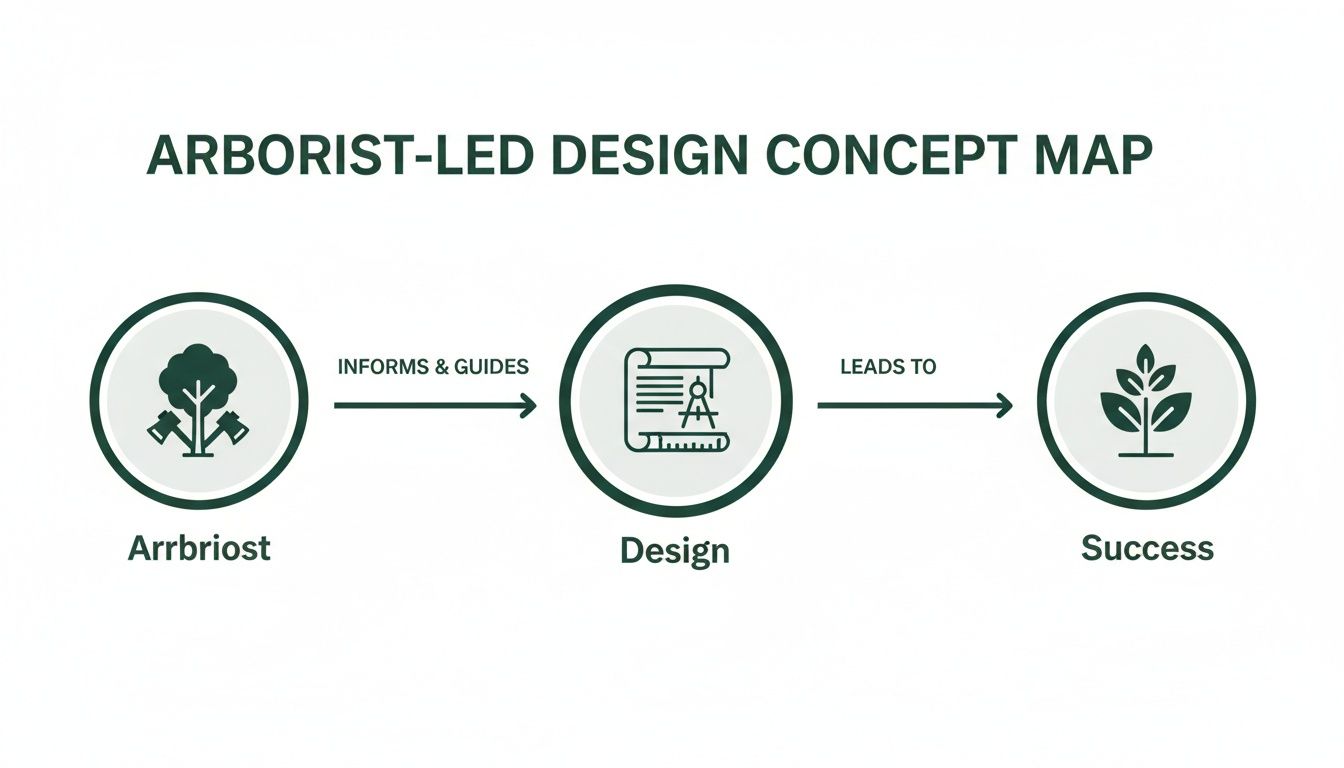
As you can see, putting an expert arborist's evaluation at the start of the design phase creates a direct path to a landscape that actually thrives.
The Foundation Problem: California Soil
Much of California sits on heavy clay soil. It’s dense, compacts easily, and drains terribly. For plants not adapted to it, this is a death sentence. When water can't drain, it pools around the roots, drowning the plant and creating the perfect environment for root rot.
A shocking number of generic landscape plans skip soil amendment as a critical step. A professional assessment, on the other hand, pinpoints the exact amendments needed—like organic compost—to break up that clay, improve drainage, and give roots the oxygen they need.
California's Constant Water Woes
Water is the second make-or-break factor. Our state's cyclical droughts and strict local water rules make inefficient irrigation a recipe for disaster. According to the Public Policy Institute of California, nearly two-thirds of Californians (63%) believe the water supply will be inadequate to meet future demands.
A successful California landscape doesn’t fight our climate; it adapts to it. This means choosing water-wise plants and installing smart, efficient irrigation systems that deliver the right amount of water directly to the root zone, eliminating waste.
This isn't just about saving water—it's about creating a resilient, sustainable ecosystem. As water regulations inevitably get tighter, a landscape designed for efficiency will continue to flourish. You can learn more about how new water rules are changing landscape design in our detailed guide.
The Maze of Local Rules And Regulations
Finally, a landscape plan can be stopped by a tangled web of local regulations, from strict HOA guidelines to municipal ordinances protecting heritage trees. Ignoring these rules is a costly mistake.
Understanding specific retaining wall regulations and approvals, for example, can prevent major headaches. For homeowners in Monterey and Salinas, this is particularly important, as local codes can be stringent. An expert-led design process includes researching and complying with all rules from the beginning, ensuring the project moves forward smoothly without surprise delays or fines.
Common Landscape Failures And Expert Solutions
This table contrasts typical missteps with the proactive solutions that prevent them.
| Common Failure Point | Typical Failed Approach | The Expert Solution |
|---|---|---|
| Soil Compaction & Poor Drainage | Planting directly into unamended heavy clay soil, leading to root rot and plant death. | Conducting a soil analysis and incorporating specific organic amendments to improve aeration and drainage. |
| Inefficient Water Use | Installing generic sprinkler systems that waste water on sidewalks and create runoff. | Designing a zoned, drip irrigation system with smart controllers that deliver water precisely to plant roots. |
| Ignoring Local Climate | Using water-thirsty plants like traditional turfgrass that are ill-suited for California's dry seasons. | Selecting a palette of beautiful, drought-tolerant native and climate-appropriate plants that thrive with less water. |
| Regulatory Non-Compliance | Starting construction without checking local ordinances or HOA rules, resulting in fines and mandatory rework. | Performing upfront due diligence on all municipal codes, permits, and HOA guidelines to integrate them into the design. |
As the table shows, success isn't about luck; it's about anticipating challenges and building solutions directly into the plan.
The High Cost Of Hiring The Wrong Crew
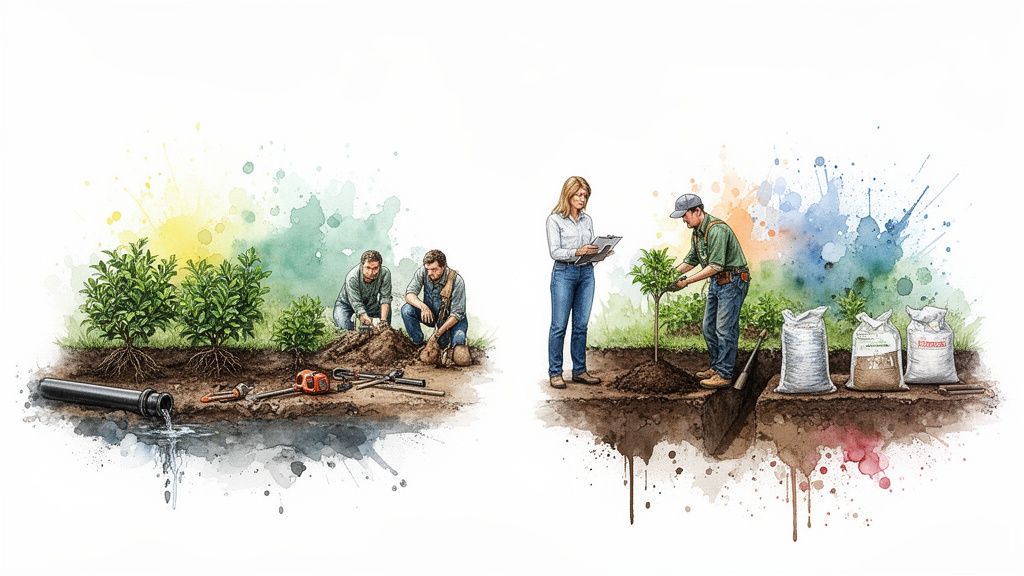
You can have the most breathtaking landscape plan in the world, but it’s just paper until someone brings it to life. The moment shovels hit the dirt, your project's success rests on the skill and accountability of the installation crew. An unqualified contractor can turn a brilliant design into a costly nightmare. The dream yard you invested in can quickly become a source of dead plants, wasted water, and expensive fixes.
Common Installation Errors That Wreck Landscapes
Time and again, we see the same critical mistakes made by crews that lack proper training. These blunders aren't always obvious at first. They fester underground, revealing themselves months later as your beautiful new landscape starts to struggle and die.
Here are the most damaging installation mistakes we’ve had to fix in Monterey County:
- Planting at the Wrong Depth: Burying a tree’s root flare too deep is a slow-motion death sentence—it suffocates the plant. Planting it too high leaves roots exposed and unstable.
- Failing to Amend Soil: Many crews just dig a hole, drop in a plant, and call it a day. In California’s heavy clay soil, this is a disaster. Without amendment, water pools, roots can't breathe, and the plant essentially drowns.
- Faulty Irrigation Installation: A rushed irrigation job is a recipe for trouble. We see hidden leaks that waste thousands of gallons, poor sprinkler coverage that creates dead patches, and mismatched emitters that either overwater or underwater plants.
It’s a harsh truth, but 70% of landscaping projects fail within 18 months because of amateur crews who lack proper licensing and skill. In California, there are 52,682 landscaping businesses—the second most in the nation—and with no single company holding more than 5% of the market, it’s flooded with cut-rate operators. These crews often skip the most important steps to get the job done cheap and fast. If you're curious about environmental trends in the state, the latest PPIC statewide survey offers some great insights.
Protecting Your Investment Through Professional Accountability
Going with the lowest bid is often the most expensive mistake. A rock-bottom price is usually a red flag for cut corners, no insurance, and a lack of accountability. When problems pop up, those operators are long gone, leaving you holding the bag.
Verifying a contractor’s credentials isn't just a good idea; it's essential. A legitimate, professional company will have no problem showing you their California State License Board (CSLB) license, general liability insurance, and workers' compensation coverage.
The Security Of A Professional Process
Contrast that risk with the peace of mind from a professional, structured process. At California Landscape & Tree Pros, we build every project on a foundation of quality control and open communication. We ensure the integrity of your design is honored from the first dig to the final planting.
Our process isn't a secret—it's just good, honest work:
- Expert Supervision: Our experienced project managers are on-site, ensuring every task is done according to proven best practices.
- Quality Materials: We source healthy, vibrant plants suited for our climate and use only top-tier irrigation and hardscaping materials built to last.
- Final Walkthrough: Before we consider a job finished, we walk the entire property with you to ensure you’re completely satisfied and know how to care for your new landscape.
This methodical approach takes the guesswork out of the equation and protects your investment for years to come.
Your Blueprint For A Thriving Monterey Bay Landscape
A stunning California landscape doesn't happen by accident. It's the result of a smart process that respects our local environment from the start. The real reason most landscape projects fail is simple: they skip the crucial groundwork of site-specific planning and professional guidance.
The road to a lasting outdoor space is paved with a few core principles. It starts with a deep dive into your property, followed by the trained eye of a certified arborist to ensure trees become long-term assets. This naturally leads to a focus on water-wise and native plants—a smart shift now embraced by 77% of homeowners.
Invest in a Plan Built to Last
For homeowners in Salinas and Monterey navigating local drought restrictions and complex heritage tree ordinances, this blueprint is essential. It’s how you sidestep root damage, withering plants, and wasted water, dramatically cutting your long-term costs. Don't settle for a yard that only looks good for a season. You can build one that thrives for decades, becoming an investment that grows more valuable over time.
The difference between a thriving landscape and a failed one isn't luck—it's the quality of the initial plan. Investing in expertise upfront guarantees a beautiful, sustainable result that endures California's toughest conditions.
Your beautiful, resilient landscape is waiting. Contact California Landscape & Tree Pros to schedule a consultation and start building a yard designed for lasting success.
Frequently Asked Questions About California Landscape Installation
Understanding why so many landscape plans fail in California is the first step. Here, we tackle the most common concerns we hear from homeowners to help you start your next project with confidence.
1. Why is a Certified Arborist so important for landscape design?
A certified arborist acts as the structural engineer for the living parts of your landscape. Their value comes before installation begins. They can assess a tree's health, determine if its roots pose a future threat to your foundation, and predict how its canopy will cast shade over the next 20 years. This upfront investment prevents massive headaches and expenses down the road.
2. What are the biggest mistakes homeowners make when planning a new yard?
The most common mistake is falling in love with a plant at a nursery and trying to force it to work in an unsuitable yard. People often choose plants based on looks, ignoring their site’s reality—like California's dense clay soil, brutal afternoon sun, or local water ordinances. The second biggest error is hiring an unqualified or unlicensed contractor to save money, which almost always leads to shoddy work and project failure.
3. How much more does a professionally designed landscape cost?
While professional design has an upfront cost, it almost always lowers the total cost of ownership over time. A plan guided by expertise is your best insurance against expensive problems like replacing dead plants, fixing hidden water leaks, or redoing a failed section of the yard. It's the cost of getting it right the first time.
4. Are drought-tolerant or native plants my only option in California?
Not at all, though they are fantastic choices. While 77% of homeowners are choosing drought-tolerant plants, a skilled designer can work with a much wider palette. The key is a smart strategy: grouping plants with similar water needs (hydrozoning), preparing the soil properly, and using efficient drip irrigation. This approach allows for a lush, diverse garden that is still fundamentally water-wise.
5. What should I look for when hiring a landscape contractor in the Monterey Bay area?
Always verify their credentials first. Ask to see their California contractor's license (ours is CSLB #1107800), proof of full insurance, and a portfolio of local work. Then, ask about their process. How do they test soil? Do they consult with an arborist? A true professional will have a clear, step-by-step process focused on the long-term health of your yard, not just getting the job done quickly.
Your dream landscape is within reach when built on a foundation of genuine expertise. At California Landscape & Tree Pros, we merge arborist-led insights with professional design and installation to create beautiful, sustainable outdoor spaces for you to enjoy for decades.
Ready to invest in a landscape that lasts? Visit us online to schedule your consultation.