
Quick Answer
Stump grinding removes the visible stump below grade, but it doesn't remove the root system. The grinder works through the stump and a shallow section of major roots, while the deeper lateral roots stay in the ground and break down over time. That matters because the area usually isn't ready for grass, replanting, or hardscape without proper site preparation.
You had a tree removed, the stump was ground out, and now the space looks usable. That’s where people get into trouble. Understanding why stump grinding doesn't remove the roots and why that matters for your yard can save you from failed grass, weak replanting, settling pavers, and a lot of avoidable rework.
In Salinas and across Monterey County, I see the same assumption all the time. The stump is gone, so the problem must be gone too. Underground, that usually isn’t the case.
How Stump Grinding Works and What It Leaves Behind
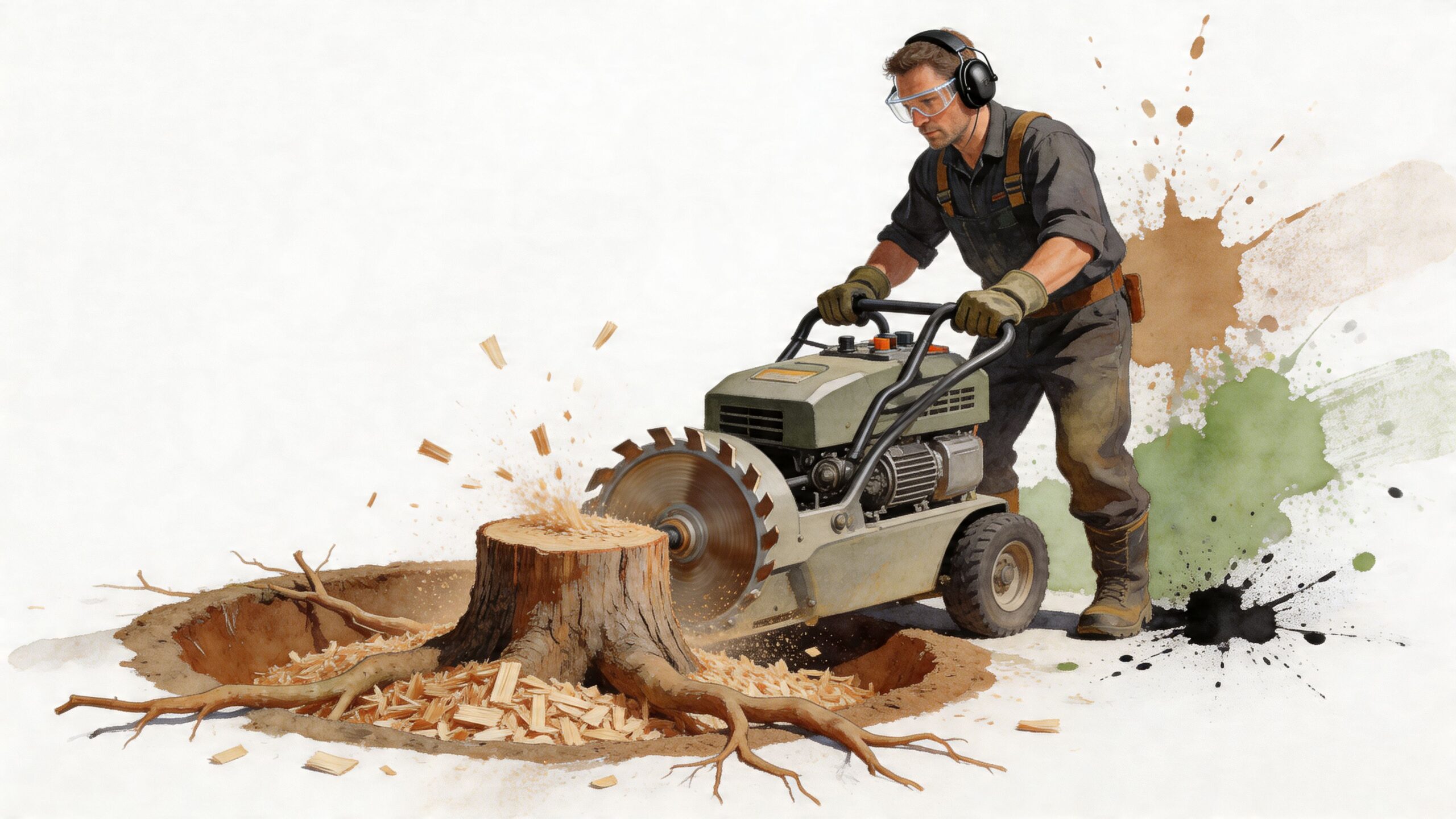
A lot of Salinas property owners see the stump disappear and assume the area is ready for the next job. That assumption causes expensive problems.
A stump grinder cuts and chews through the stump below grade. It also reaches some of the upper flare roots near the base. What it does not do is excavate the full root system across the yard. The machine is built to remove the visible obstruction with limited ground disturbance, not to trench out every root.
That distinction matters because the leftover material changes what you can do with the site next.
Why the machine stops where it stops
The grinding head works in a confined area around the stump. Operators can grind deeper or wider when the project calls for it, but there is still a practical limit. Roots often run well beyond the stump area, and chasing all of them would mean tearing up lawn, planting beds, irrigation lines, and sometimes nearby concrete or fencing.
In other words, stump grinding is a controlled surface-access service. Full root extraction is an excavation project.
For many yards, grinding is the right call because it clears the stump without opening a large hole or disturbing everything around it. That makes sense if the goal is basic lawn repair or removing a trip hazard. It is a very different setup from preparing for a new tree, a retaining wall, or pavers.
What is usually left after grinding
After the grinder is done, the hole is usually filled with a mix of shredded wood, old root material, and soil. That blend is loose, uneven, and high in organic matter. It does not behave like compacted fill or clean planting soil.
I see homeowners run into trouble when they treat that spot like finished grade. Grass struggles because the material dries out differently and settles. A replacement tree can fail because the old root zone is still crowded with decaying wood. A patio base can shift because buried organic material keeps breaking down under it.
Those are three different projects, and each one needs a different post-grinding plan.
What homeowners need to plan for before the grinder arrives
The best time to decide what happens after stump grinding is before the work starts. If you want sod, the prep is mostly about removing grindings, bringing in suitable soil, and restoring grade. If you want to plant a new tree, the issue is location and root-zone quality. If you want a patio or walkway, the question is whether the old root area should be excavated and rebuilt with compactable base material.
That is why I tell property owners to tie the stump work to the next use of the space, not just the tree removal itself.
If you are comparing options, this overview of reliable stump grinding and removal in Salinas can help you match the service to the project you plan to build.
Why the result looks more finished than it really is
A grinder leaves the area looking clean from the surface. That visual can be misleading. The stump is gone, but the site is still in a transition stage, especially if you have construction or replanting plans.
Homeowners who understand that early usually spend less. They prepare the area once, for the right purpose, instead of fixing a failed lawn patch or a settled patio later.
The Hidden Consequences of Decomposing Tree Roots
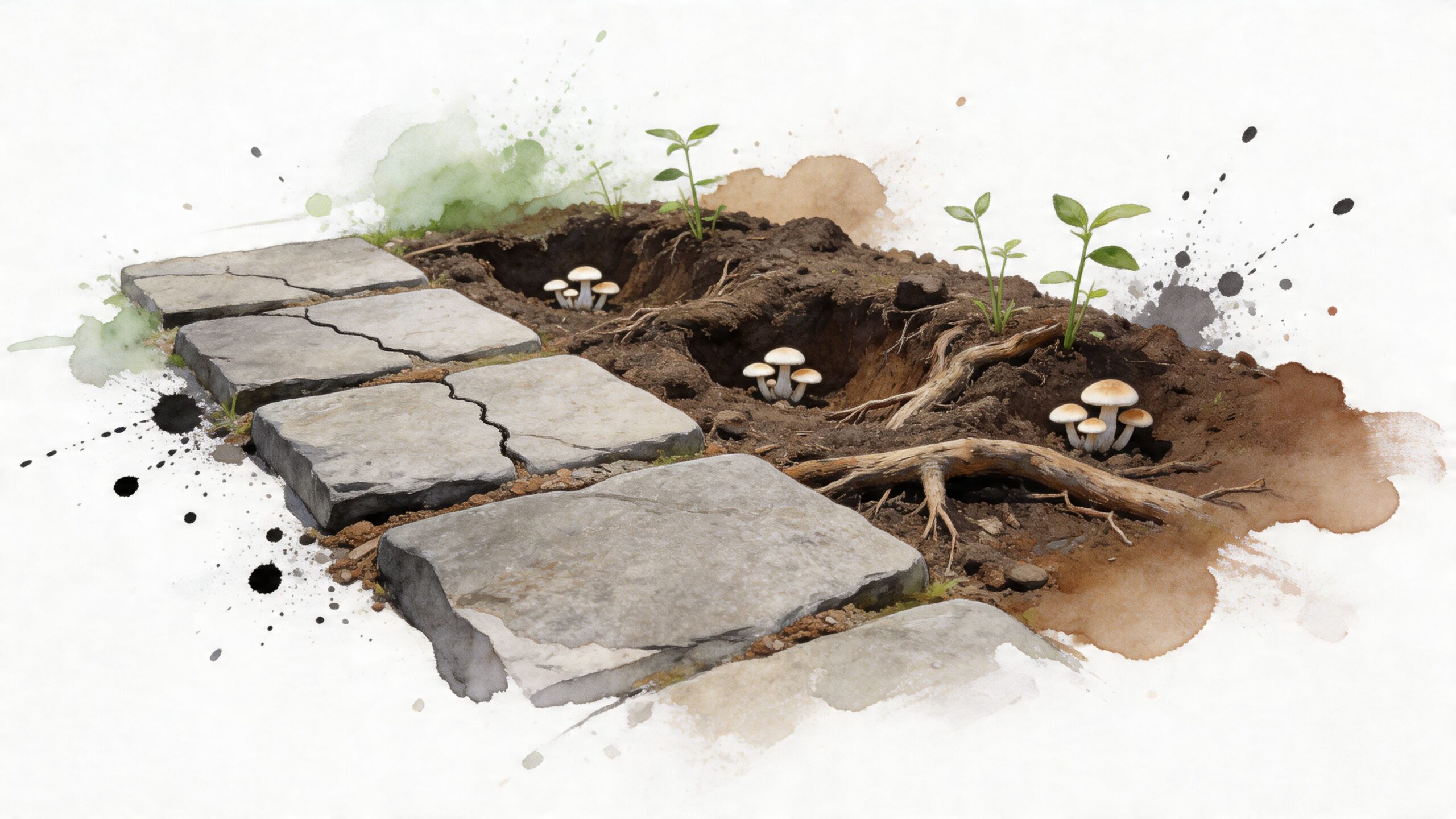
A stump can be ground out in one visit. The root zone stays active much longer.
That matters because the area does not behave like normal, undisturbed soil right after grinding. Buried roots keep decaying, old voids open up underground, and the chip-heavy fill in the stump hole keeps changing as it breaks down. If a homeowner treats that spot like finished ground too soon, the next project usually shows the problem first.
Settling soil and surface depressions
The most common issue is settling. As roots rot underground, the surrounding soil drops into the spaces they leave behind.
In a lawn, that usually means a soft low spot that scalps when you mow or holds water after irrigation. In a planting bed, it can leave a shallow basin around new plants. Under pavers, a walkway, or any other built surface, settling turns into a repair bill because the base no longer has uniform support.
I see this mistake a lot in Salinas yards. The surface looks clean after grinding, so the area gets topped off and covered. A season later, the dip comes back.
Root regrowth and suckers
Some trees are still capable of sending up shoots from the remaining root system after the stump is ground down. That is not rare enough to ignore, especially with aggressive species.
Catch those shoots early. If they keep growing, the root system stays alive longer and the area stays harder to rehabilitate for turf or planting. A few suckers in a lawn are annoying. Repeated shoot growth along a fence line, garden edge, or irrigation run becomes ongoing maintenance.
Pests and fungal activity in the old root zone
Decaying wood attracts activity below the surface. Some of that is part of normal breakdown, but homeowners should not assume the old root area is inert.
You may see fungal growth, mushrooms, soft pockets, insects feeding on dead wood, or soil that stays unevenly moist around the former stump. Near a patio, fence, shed, or heavily planted bed, that changing material deserves attention. It does not mean every ground stump causes a pest problem. It means the wood left underground is still part of the site conditions and should be factored into the plan.
Why new planting often struggles there
The stump hole is usually backfilled with grindings mixed with loose soil. That mix is poor planting media for most finish work.
Grass often comes in thin. Shrubs can sit without putting on much growth. A replacement tree planted too close to the old root zone may struggle because the soil structure is inconsistent and the area is still full of decomposing wood.
If the goal is turf, treat that spot as a repair area, not a ready-to-seed patch. Remove excess grindings, bring in real topsoil, and expect some follow-up leveling. Homeowners dealing with recurring thin grass or uneven grade can also use this guide to lawn maintenance for Monterey County homes and what matters to spot whether the issue is site prep or routine care.
Existing root damage can still affect the yard
Grinding removes the visible stump. It does not remove the full root system or reverse damage that already happened underground.
If roots had lifted pavers, pressed into an irrigation line area, crowded a planting strip, or created trouble near a retaining edge, those conditions may still need separate repair work. This is the trade-off homeowners need to understand. Grinding is usually the faster, less disruptive option, but the old root zone still has to be handled according to what you want to build or plant there next.
Planning Your Next Project After Stump Grinding
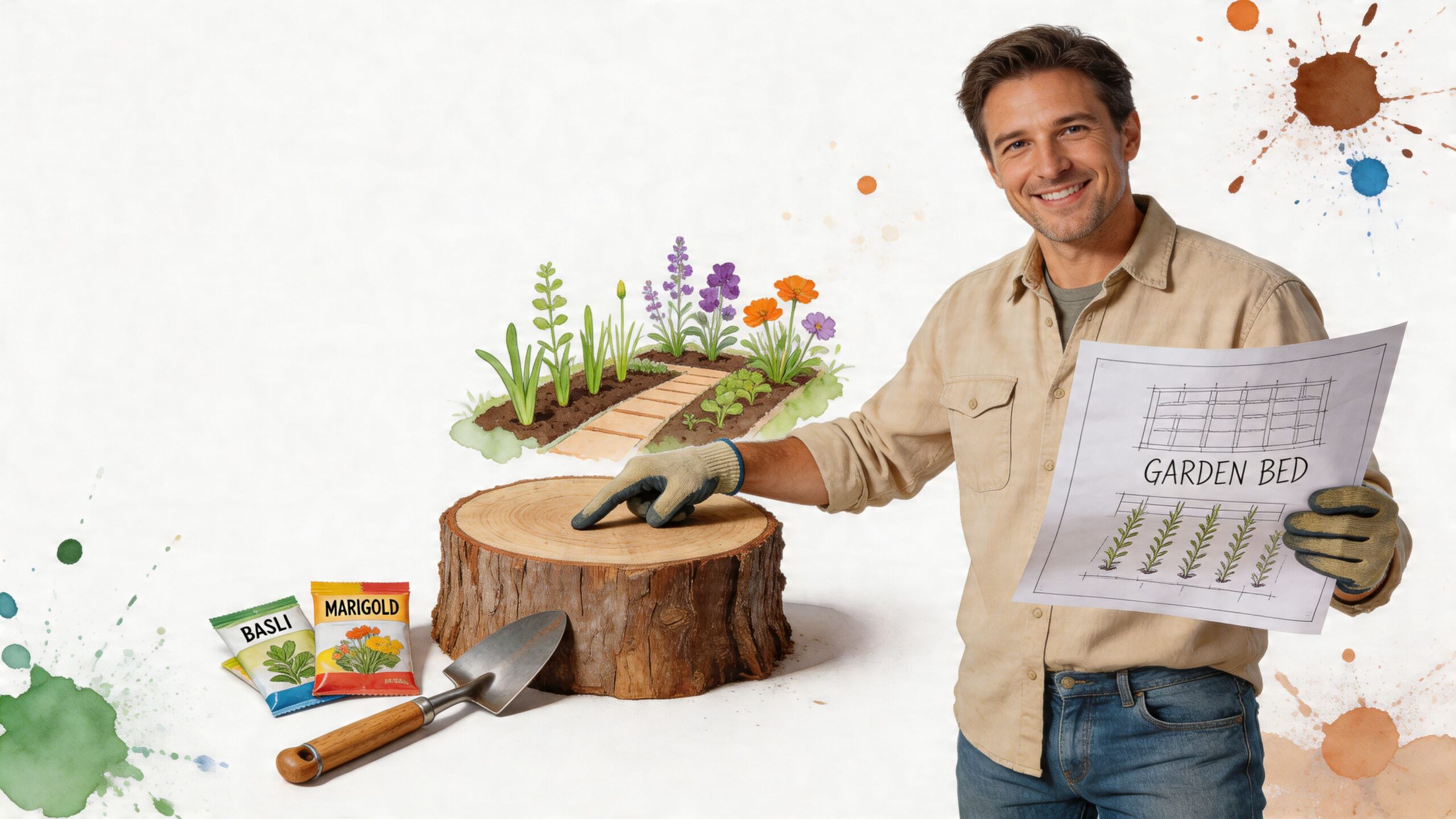
A lot of costly mistakes happen after the grinding is done, not during it.
I see the same pattern around Salinas. A homeowner grinds a stump, assumes the area is ready, then lays sod, plants a replacement tree, or starts base prep for pavers. A few months later, the lawn sinks, the new tree stalls, or the patio edge starts moving. The problem usually is not the grinding itself. The problem is using the site before it is prepared for the next job.
What should happen next depends on the project. Turf repair, replanting, and hardscape work each need different site prep. If you decide the end use early, the stump grinding can be planned around that goal instead of treated like a simple cleanup.
Replanting lawn or groundcover
For grass or low groundcover, the goal is a stable finished grade and real growing soil.
The area over a ground stump often contains a loose mix of chips and soil. That material settles unevenly and dries out differently than the surrounding yard. If sod or seed goes right on top of it, the patch often ends up thin, bumpy, or lower than the rest of the lawn.
Use a simple process:
- Remove excess grindings and chip-heavy fill.
- Add clean topsoil that matches the surrounding grade.
- Water and lightly compact the fill so you are not chasing major settlement later.
- Seed or sod only after the surface is even.
- Check the area over the next few irrigation cycles and top off low spots before they turn into a permanent dip.
This is repair work, not routine lawn installation. Treating it that way saves time.
Planting a new tree or large shrub
Planting another tree in the exact old stump zone is where property owners often waste money.
The issue is not just leftover roots. It is also the disturbed soil, buried wood, and inconsistent moisture in that part of the yard. A young tree needs uniform soil and room for new root growth. The old stump area usually gives it the opposite.
A better plan depends on your timing:
| Situation | Better choice |
|---|---|
| You want a new tree right away | Shift the planting hole outside the old root zone if space allows |
| You want the same spot | Wait, improve the soil, and reassess the area after more decomposition and settling |
| You need screening or structure now | Use shrubs or smaller plantings outside the old stump footprint |
Species matters too. Some root systems break down faster. Others stay woody and dense for years. In tighter Monterey County soils, especially where irrigation keeps the ground active, that old root zone can stay troublesome longer than expected.
Installing patios walkways or structures
This type of project needs the most discipline.
If the plan is a patio, walkway, shed pad, or similar surface, buried organic material is a problem because it keeps changing. Chips and decaying roots do not make a stable base. They shrink, soften, and leave voids. That is how pavers start rocking and edges start dropping.
Before any base material goes in, remove the chip-heavy fill and inspect how deep the soft area goes. Some sites only need shallow cleanup and rebuilt base. Others need deeper excavation because the original stump and major roots sat right where the finished surface will carry weight.
For most hardscape work, the sequence is straightforward:
- Excavate grindings and loose organic material.
- Cut out unstable soil if it has mixed heavily with decomposed wood.
- Rebuild with suitable base material.
- Compact in lifts based on the surface being installed.
If you are still sorting out the bigger property plan, this guide on planning a patio or outdoor structure after tree removal will help you line up tree work with the rest of the yard design. For slab-related prep, how to level ground for a concrete slab is also worth reviewing because the same principle applies here. The finished surface is only as good as the material under it.
Two checks before you build or plant
Do these first.
- Check what is in the hole. If the area is mostly grindings, remove and replace that material before planting or building.
- Check for nearby utilities and irrigation. If the next phase involves digging, call 811 and locate any lines before excavation starts.
That extra planning step is what keeps a stump grinding job from turning into a lawn repair problem, a failed planting, or a hardscape repair bill. California & Tree Pros handles this kind of post-grinding site assessment when a property owner plans to reuse the area for planting, lawn recovery, or outdoor construction.
Stump Grinding vs Full Stump Removal A Comparison
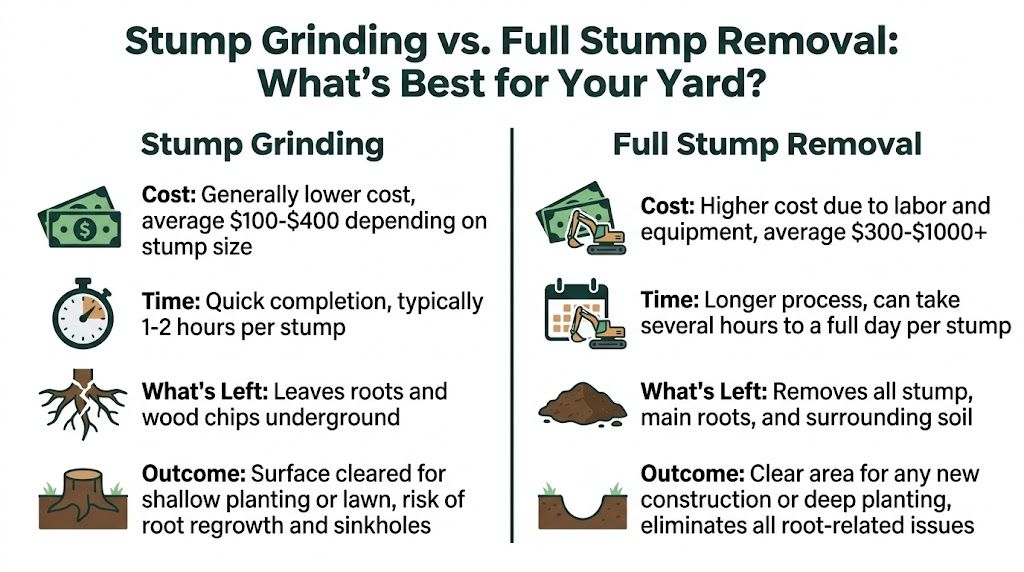
A lot of Salinas homeowners make this decision too late. They grind the stump, then decide they want a new tree, a lawn patch that matches the rest of the yard, or a patio extension in the same spot. By then, the critical question is no longer which service sounds cheaper. The question is whether the ground is ready for the next job.
Stump grinding and full stump removal solve different problems.
Grinding cuts the stump down below grade and leaves much of the root system in place. Full removal digs out the stump and the main root mass through excavation. One method handles the surface. The other resets the site more completely.
Side by side trade-offs
| Factor | Stump grinding | Full stump removal |
|---|---|---|
| What gets removed | Visible stump and some material below grade | Stump, root ball, and more underground wood |
| Yard disruption | Lower | Higher |
| Soil disturbance | Limited to the stump area | Wider excavation and repair |
| Best fit | Lawn repair, general cleanup, lower-impact stump clearance | New construction, trenching, drainage work, patio base prep, major replanting |
| What you still need to plan for | Chip removal, soil replacement, settling, possible sprouts | Backfilling, compaction, grade correction |
In practice, grinding is usually the right call when the goal is to get rid of the stump without tearing up the whole yard. Full removal is the better choice when buried wood, root flare, or future excavation will cause problems if left in place.
When grinding is the better choice
Choose grinding if the stump is the main problem and the area is headed for lighter use.
That usually means:
- restoring lawn after proper cleanup,
- improving appearance,
- reducing a trip hazard,
- keeping disturbance lower around irrigation, fencing, or nearby plantings.
I recommend grinding often for established residential yards where access is tight and the owner wants the surface cleaned up without a large excavation scar.
When full removal is the better choice
Full removal makes more sense when the next project depends on stable, wood-free soil.
That includes:
- a patio, walkway, or slab area,
- drainage improvements,
- utility trenching,
- a replacement tree in nearly the same location,
- root conflicts that have already affected paving, pipes, or foundations.
If you expect to build in that area, the site usually needs excavation and compaction standards that go beyond a basic stump grinding job. This guide on how to level ground for a concrete slab explains the kind of base preparation that matters once buried organic material is involved.
A practical way to choose
Start with the next use of the space.
If the area only needs to look clean and grow grass again, grinding is often enough if you also remove excess grindings and rebuild the surface with soil. If the area needs to support a tree, pavers, concrete, or any project that depends on predictable subgrade conditions, full removal is often the safer path.
I tell property owners to decide backward from the finished project. That approach avoids a common mistake. Paying for grinding first, then paying again to excavate the same spot because the buried roots and wood are still in the way.
If you are still comparing scope before scheduling the work, this guide on what to know before hiring a tree removal company in Monterey County will help you ask better questions about access, cleanup, root removal, and what the site needs afterward.
The main difference is simple. Grinding removes the stump you see. Full removal addresses the underground material that can affect what you build or plant next.
Frequently Asked Questions About Stump Grinding
How long do roots take to die after stump grinding
Roots do not disappear after the stump is ground. Underground wood and roots break down gradually, and the timing depends on the tree species, soil moisture, and how much root mass is still in the ground.
For a homeowner, the bigger concern is usually not whether the roots are technically dead. It is what that buried material does to the area over time. Soil can settle, low spots can form, and the surface may stop behaving like the rest of the yard.
Can roots grow back after the stump is ground
Some trees can still send up shoots from the remaining roots. I see this more often with species that sucker aggressively.
Handle sprouts early. A few small shoots are easy to remove. A neglected patch can turn into repeated cleanup and a longer restoration job.
Can I plant grass right over the stump grindings
Grass usually struggles in a chip-heavy stump hole. The area often dries out differently, settles unevenly, and grows thinner than the surrounding lawn.
If your goal is a clean lawn repair, remove excess grindings, bring in soil, and grade the area to match the yard. That prep work matters more than the grinding itself if you want the patch to disappear instead of showing up every summer.
Can I plant a new tree in the exact same spot
You can, but it is often a poor planting site right after grinding. The old root zone is crowded with decaying wood, and the soil in that spot is rarely the best place to establish a new tree.
A nearby offset location usually gives the replacement tree a better start. If the location cannot change, have the planting area checked first so you know whether more excavation is needed.
What should I do with the pile of wood chips after grinding
Use clean grindings as mulch in beds or around established plants, but do not treat the stump hole as finished grade just because it is full. That chip mix is not good support for new sod, a new tree root ball, pavers, or a patio base.
I tell Salinas property owners to decide this based on the next project. Lawn repair, replanting, and hardscape all need a different level of cleanup.
Is stump grinding enough if roots were already damaging my yard
Usually no. If roots have already lifted pavers, crowded irrigation, affected drainage, or interfered with a walkway, grinding only addresses the stump at the surface.
At that point, the central question is scope. Do you need cosmetic cleanup, or do you need excavation because the underground roots are still part of the problem? This comparison of Stump Grinding vs Removal gives a useful outside overview, and this guide on questions to ask before hiring a tree removal company in Monterey County will help you pin down what cleanup and site prep are included.
Is stump grinding noisy and messy
Yes. The machine throws chips, the work area needs to be controlled, and cleanup is part of a proper job.
The mess during grinding is temporary. The part that affects your yard long term is what stays below grade, especially if you plan to replant, regrade, or build over that area.
Get a Professional Plan for Your Post-Removal Project
The ground left after stump grinding is not a blank slate. It’s a site with buried roots, organic fill, and a future use that needs to be planned correctly. That’s why why stump grinding doesn't remove the roots and why that matters for your yard isn’t just a tree question. It affects your lawn, planting plan, drainage, and any hardscape work that comes next.
If you’re unsure whether the area should be restored with topsoil, left to settle, replanted elsewhere, or excavated further, a site review is the smart next step. If you want more background on tree decision-making before moving ahead, this article on whether a certified arborist is worth it is worth reading.
Sources
Tree Trimmers LLC. "Do Tree Roots Die After Stump Grinding?" 2025. https://treetrimmersllc.com/2025/07/25/do-tree-roots-die-after-stump-grinding/
Heartwood Tree Company. "Pros & Cons of Stump Grinding, Rotting, Pricing, Cleanup." https://www.heartwoodtree.com/pros-cons-of-stump-grinding-rotting-pricing-cleanup/
Angi. "Things to Know About Stump Grinding." https://www.angi.com/articles/things-to-know-about-stump-grinding.htm
Haman Tree Service. "Stump Grinding vs. Stump Removal, What's the Difference?" https://hamantreeservice.com/stump-grinding-vs-stump-removal-whats-the-difference/
If you're not sure what the space left after stump grinding can realistically support, a site assessment can prevent expensive rework later. California Landscape & Tree Pros works with homeowners, HOAs, and property managers in Salinas and throughout Monterey County on stump grinding, tree removal, grounds improvement, lawn restoration, hardscape planning, and drainage-related site prep. Call (831) 998-7964 in Salinas or (831) 905-8018 in Monterey, or visit 1184 Monroe St., Suite 6, Salinas, CA 93906 or californialandscapeandtreepros.com to discuss the next step.