
That generic, one-size-fits-all lawn care advice you see online? It just doesn’t work here. Monterey County is a world of its own, with a unique mix of coastal fog, scorching inland heat, and some of the strictest water regulations in the state. What makes a lawn thrive in other parts of the country can leave you with a brown, patchy mess and a sky-high water bill.
Real, lasting success in lawn maintenance for Monterey County homes isn't about fighting our environment; it's about creating a hyper-local strategy that works with our specific climate, soil, and water realities. This guide delivers practical, region-specific expertise to help you build a landscape that is both beautiful and resilient.
Your Guide to a Thriving Monterey County Lawn
If you want a lush, resilient lawn in a place like Salinas, Carmel, or anywhere in between, you have to think beyond just mowing and fertilizing. Following a generic guide is a recipe for frustration because it completely ignores the local challenges that define our landscape—from drought cycles and coastal soil to local watering rules.
This guide is different. It’s built from the ground up with our specific conditions in mind, offering practical decision-making help rather than just simple definitions. Forget fighting nature—we'll show you how to partner with it.
Embracing a Localized Approach
It all starts with a change in mindset. More and more, homeowners are looking for beautiful, sustainable outdoor spaces that can stand up to our climate. It’s no surprise that thoughtful outdoor living upgrades remain one of the most in-demand renovations, especially among Gen X and Millennials here in Monterey County who value both beauty and climate resilience.
A smart, local-first approach boils down to a few key principles:
- Climate-Adaptive Design: This means choosing grasses and plants that are actually built to handle our Mediterranean climate, from the damp coastal air to the dry inland heat of Salinas.
- Smart Water Management: It’s about using modern irrigation technology to stay compliant with local rules and protect our most valuable resource, lowering long-term costs.
- Holistic Landscape Integration: A healthy lawn doesn't exist in a vacuum. It works in concert with proper drainage, well-placed landscape lighting, and safety-focused tree care to create a complete, thriving ecosystem.
We’ll walk you through each of these pillars, step by step. You'll get specific maintenance schedules for our coastal climate, discover the real benefits of drought-tolerant landscapes, and learn how to create a stunning yard that adds value to your home. For homeowners in Salinas, Monterey, and the surrounding areas, this is the blueprint for a landscape that's not just beautiful, but incredibly smart.
Getting to Know Monterey County's Climate and Soil
If you want a great lawn in Monterey County, you have to start by understanding our unique environment. It’s not a one-size-fits-all situation. A lawn in foggy Carmel-by-the-Sea has completely different needs than one baking in the Salinas Valley sun. These little pockets, or microclimates, really run the show, dictating everything from your watering schedule to the type of grass that will actually grow.
Trying to use the same game plan across the entire county is just asking for a dead lawn. The coast gets that persistent marine layer, which keeps things cool and humid. That's great for mild temps, but it also creates the perfect breeding ground for fungal diseases if you're not careful. Head just a few miles inland, and it's a totally different world of intense sun and heat, where your strategy has to shift to holding onto every drop of moisture.
So, the very first step is to get familiar with your own backyard. Do you get blasted by the afternoon sun, or are you usually wrapped in a cool coastal mist? Knowing these local patterns is the absolute bedrock of a healthy, resilient lawn.
Our Unique Soil: The Good and The Bad
It’s not just about what’s happening in the air; the ground beneath our feet adds another layer of challenge. A huge part of Monterey County, especially along the coast, sits on sandy or sandy loam soils. On the plus side, this type of soil drains incredibly well, which is great for preventing root rot during our wet winters.
But there's a catch. Think of sandy soil like a colander. Water and any fertilizer you apply run right through it, giving your lawn's roots very little time to grab what they need. This is why lawns in places like Monterey and Pacific Grove can dry out so fast and often look underfed.
This is exactly why a generic, high-water fertilization plan so often fails here. Most of the water and expensive nutrients just wash straight past the roots, leading to waste, runoff, and a struggling lawn.
The key to fixing this is to build better soil. Working in organic matter like compost is non-negotiable. It acts like a sponge, helping the sand particles hold onto moisture and nutrients right where the roots can get to them. Honestly, this one step can make a massive difference, cutting down your water bill and giving your turf a much stronger foundation to grow from.
How Your Microclimate Changes the Rules
Where you live in the county sets a very specific rulebook for your lawn. The difference between a coastal yard and an inland one is night and day, and your approach has to reflect that.
Coastal Zone (Carmel, Monterey, Pacific Grove)
Here, you're dealing with lots of fog, higher humidity, and cooler temperatures. Lawns need water less often, but you absolutely must have good air circulation and drainage to keep fungal problems like red thread or rust from taking over. Mowing just a little bit higher can also help the grass blades dry out faster after a foggy morning.
Inland Zone (Salinas, Gonzales)
This is the land of hot, dry summers and big temperature swings. The name of the game is water conservation and heat tolerance. Choosing a drought-resistant grass variety is a must. You'll also want to water deeply but infrequently to train the roots to dig down deep, which makes the whole lawn tougher during a heatwave.
By figuring out which microclimate you're in, you can stop fighting nature and start working with it. This local knowledge is the secret to a landscape that doesn't just hang on for dear life but actually thrives. For anyone looking to get ahead of the curve, learning how to build a climate-smart yard provides some fantastic, practical steps. It’s all about creating an outdoor space that’s designed for our local conditions, ensuring it stays healthy for years to come.
Smart Watering: The Secret to a Thriving Monterey County Lawn
Here in Monterey County, water isn't just a utility—it's liquid gold. Getting a lawn to look great isn't about drenching it with water; it's about being clever. The old-school method of "set it and forget it" sprinklers just doesn't cut it anymore. We have to work with our unique Mediterranean climate, not against it, to create lawns that are as resilient as they are beautiful.
This starts with a simple but powerful idea: climate-adaptive landscaping. Think of it as putting the right player in the right position. Instead of planting thirsty grass types that were never meant for our dry summers, we focus on native and drought-tolerant options. Grasses like fescue are naturals here; their deep roots are built to find moisture and thrive, keeping them green with a fraction of the water.
Let Technology Do the Heavy Lifting with Smart Irrigation
This is where things get really interesting. Modern tech gives us an incredible advantage in water efficiency. Smart irrigation systems are a total game-changer, bringing the same kind of precision to your backyard that revolutionized our local farms. These systems are more than just fancy timers.
A smart controller is like having a personal weather forecaster for your lawn. It taps into local weather data and uses on-site sensors to check soil moisture. It knows it rained yesterday. It knows a heatwave is on the way. It even knows when the coastal fog has delivered a nice, cool drink. By crunching all this data, the system delivers the perfect amount of water, right at the roots, only when needed. No more wasteful runoff, no more overwatering that invites fungus, and a much smaller water bill.
This infographic really drives home why a one-size-fits-all watering schedule is doomed to fail in our diverse county.
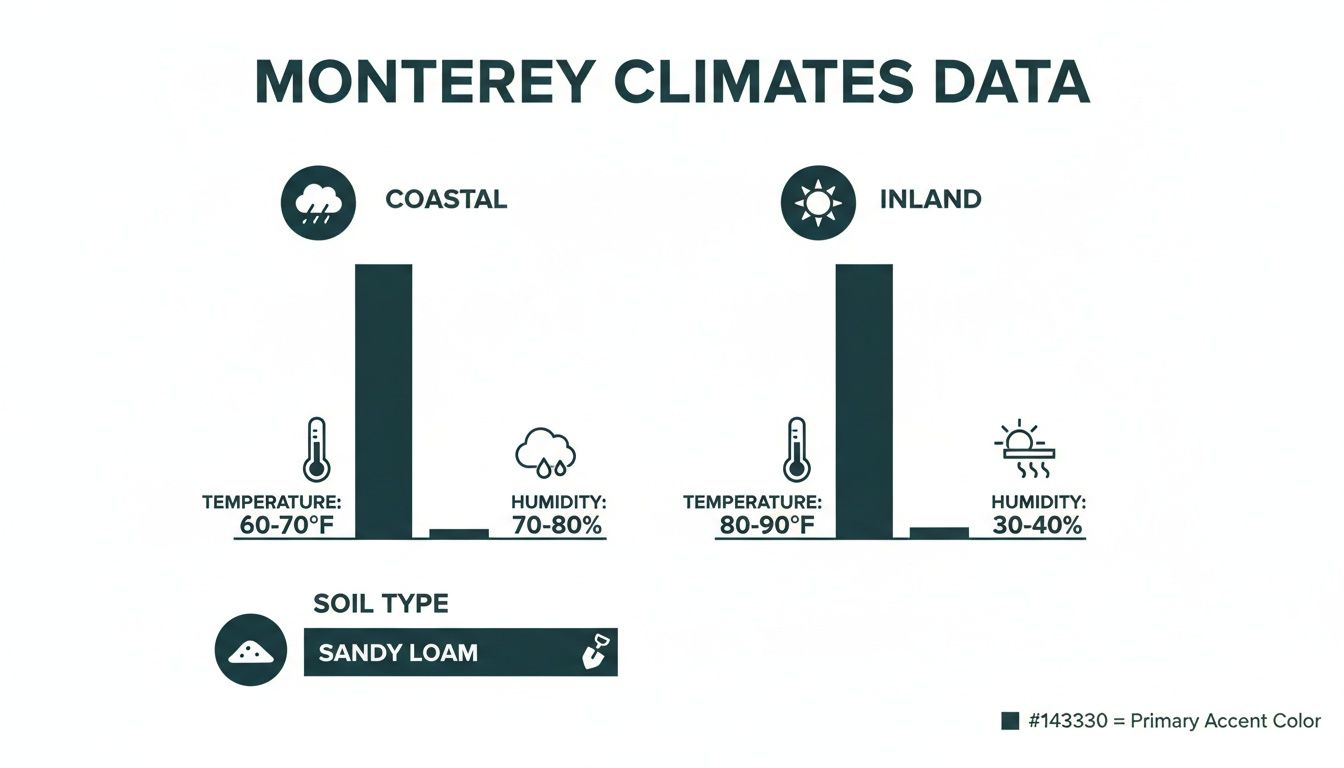
You can see the dramatic difference between the cool, misty coast and the hot, dry inland valleys. Each one demands a completely different approach.
Taking a Cue from Monterey's World-Class Farms
The best ideas for residential water conservation are often borrowed from our local agricultural heroes. Over the past 20 years, Monterey County farms have pulled off something amazing: they’ve slashed agricultural irrigation water use by 17% while boosting crop production value by a whopping 45%. How? By embracing technology like drip irrigation, now used on 72% of irrigated farmland. (Source: Monterey County Ag Commissioner's Office)
We can apply that same brilliant logic to our own yards. For homeowners in Salinas, Carmel, or anywhere in between, making smarter choices can have a huge impact. Just switching from a traditional, water-guzzling lawn to a low-water fescue can cut your landscape's water use by 50-70%.
Making smart choices is about comparing the old way with the new. This table breaks down the real-world difference between a traditional lawn setup and a water-wise approach.
Smart Water Choices for Monterey County Lawns
| Feature | Traditional Approach (e.g., Kentucky Bluegrass, Manual Sprinklers) | Water-Wise Approach (e.g., Fescue, Smart Irrigation) |
|---|---|---|
| Turf Selection | High-water needs, shallow roots, struggles in summer heat. | Low-water needs, deep roots, naturally heat and drought-tolerant. |
| Irrigation System | Runs on a fixed schedule, waters even if it's raining or cool. | Adjusts automatically based on real-time weather and soil moisture. |
| Water Waste | High potential for runoff, evaporation, and overwatering. | Delivers water directly to roots, minimizing waste by up to 60%. |
| Maintenance | Requires frequent watering, fertilization, and disease treatment. | Less watering, fewer pest problems, more resilient to stress. |
| Long-Term Cost | Higher water bills and ongoing costs for chemicals and repairs. | Lower water bills, reduced maintenance costs, and potential rebates. |
The takeaway is clear: a water-wise approach not only conserves a precious resource but also saves you time, money, and headaches in the long run.
Creating Your Own Drought-Tolerant Oasis
A sustainable lawn is just one piece of a bigger, smarter landscape. It's about designing an entire outdoor space that's built for our local environment—an ecosystem that works together. This is more than just swapping out a few sprinkler heads; it's a holistic approach to your yard.
By blending drought-tolerant plants, smart irrigation, and water-conscious hardscaping, you create a yard that’s not just beautiful and low-maintenance but also a responsible part of our community. This is where modern landscaping is headed.
If you're serious about creating a landscape that thrives in Monterey County, a great starting point is learning about designing a low maintenance, drought tolerant California garden. Pairing native plants with features like permeable pavers or gravel paths can shrink your lawn's footprint and its thirst for water even further.
Ultimately, smart water management is the key to having a lawn you can be proud of here. You can start with a simple irrigation audit or dive into a full landscape redesign. For those ready to see what's possible, understanding how smart landscaping starts with water-wise design is the perfect next step. With these strategies, your lawn won't just survive—it will flourish.
Your Seasonal Lawn Maintenance Calendar

A great-looking lawn in Monterey County doesn't happen by accident in the middle of summer. It’s the result of a thoughtful, year-round game plan. The real secret to successful lawn maintenance for Monterey County homes is working with our distinct seasons, not against them.
This calendar is designed to take the guesswork out of the equation. Think of it as a proactive strategy. Instead of scrambling to fix problems as they pop up, you’ll be giving your lawn exactly what it needs, when it needs it, to handle everything from our dry summers to our wet winters.
Spring Awakening: March to May
As the winter rains begin to fade, your lawn is waking up and ready to grow. This is your window of opportunity to help it recover and build strength for the tougher summer months ahead.
- Aerate and Overseed: Our heavy winter rains can leave soil feeling brick-hard and compacted. Aerating—punching small holes into the ground—is like opening the windows to let air, water, and nutrients get down to the roots where they’re needed most. Right after, overseed with a tough, drought-tolerant grass mix to patch up any thin spots.
- Fertilize Lightly: Give your lawn a gentle wake-up call with a balanced, slow-release fertilizer. This is especially key in our sandy coastal soils, which tend to let nutrients wash right through.
- Irrigation Tune-Up: Now is the time to check your sprinkler system, before you actually need it. Run a test cycle to spot any leaks, broken heads, or clogged nozzles. Make sure the coverage is even to avoid those frustrating brown patches later on.
Summer Resilience: June to August
For inland areas like Salinas, summer means serious heat. Along the coast, it’s more about managing the marine layer moisture and prepping for those warmer days. Either way, your focus has to shift from encouraging growth to managing stress.
Start by raising your mower blades. Taller grass provides more shade for the soil, keeping it cooler and slowing down evaporation. It’s a simple adjustment that makes a huge difference in protecting the roots from the summer sun.
Summer watering isn't about keeping the grass constantly damp. The real goal is to train the roots to dig deeper for moisture. Watering deeply but infrequently—say, two or three times a week in the early morning—builds a much stronger, more drought-resistant root system that can actually handle a heatwave.
This is also prime time for pests like grubs to get active in the warm soil. Keep an eye out for them, because catching an infestation early can save your entire lawn.
Fall Preparation: September to November
With cooler temperatures on the horizon and the rainy season approaching, it's time to help your lawn bounce back from summer stress. Fall is arguably the most important season for setting your lawn up for long-term health.
Dethatching—clearing out that thick layer of dead grass and debris at the soil level—is crucial right now. It allows water and nutrients to actually reach the soil before the winter rains hit. Follow that up with one last fertilizer application to give your lawn the energy reserves it needs to store for a powerful comeback next spring.
Your priorities will shift based on where you live. For everyone, preparing for winter rain is key. But for homes on rural hillsides, the focus shifts to fire safety. Creating defensible space by clearing away flammable vegetation is non-negotiable and can reduce wildfire risk by as much as 50%. You can find more specific advice in our guide on weather-proofing your yard for a Salinas winter.
Winter Caretaking: December to February
Your lawn might be growing slowly, but it’s not completely asleep, especially with our mild coastal winters. Winter care is all about protection and prevention.
Make sure to keep the lawn clear of fallen leaves and other debris. In our damp climate, a thick layer of leaves is an open invitation for fungal diseases to take hold. It’s also smart to keep foot traffic to a minimum on soggy, dormant grass to avoid compacting the soil and damaging the plant crowns. On a rainy day, this is the perfect time to head to the garage and sharpen your mower blades so you’re ready to hit the ground running in the spring.
The Real Cost and Value of Professional Lawn Care
Hiring a professional lawn care service isn't just about freeing up your weekends—it's a smart move to protect and enhance the value of your home here in Monterey County. While it’s easy to focus on the upfront cost, the real story is in the long-term savings and return on investment, especially in competitive real estate markets like Carmel and Monterey where landscape design ROI is significant.
So, what goes into the price tag? It mostly comes down to two things: the size of your property and the complexity of the job. A straightforward, level yard in Salinas is going to be less of an undertaking than a large, terraced property in the hills with elaborate garden beds and pathways. How often the crew comes out—weekly, bi-weekly, or monthly—also shapes the final cost.
Breaking Down the Numbers in Monterey County
Let's look at some figures to get a better handle on this. Statewide data gives us a good starting point. Across California, the same factors of size and frequency drive costs. For example, recent stats show that in a single month, over 42,064 lawns were mowed, with an average service price of $43. (Source: LawnStarter)
That price can swing from $24 to $56 based on the yard's footprint. A standard 1/8-acre yard might run you $40 for bi-weekly mowing, whereas a full acre could be closer to $52. For homeowners in Salinas wanting more than just a mow, an annual care plan for a 1/8 to 1/4-acre property can range from $110 to $475. This typically includes services like fertilization ($70-$390) and dethatching ($120-$255).
While these numbers provide a solid baseline, keep in mind that local factors in Monterey County—like our unique terrain, local material costs, and specific property needs—can push our costs a bit higher than the statewide average.
The True ROI of Professional Lawn Care
The real win with professional care isn't just about the time you get back. It's about boosting your home’s curb appeal, which directly impacts its market value. A beautifully maintained landscape is the first thing a potential buyer sees, and that first impression is powerful.
Beyond just looking good, professional care is a form of proactive maintenance for your entire property.
- Preventing Costly Problems: An expert eye can spot the early signs of a pest infestation or fungal disease long before it becomes a major, expensive headache.
- Maximizing Water Efficiency: With a professionally calibrated smart irrigation system, you stop wasting water, which means lower bills and easy compliance with local water rules.
- Improving Soil Health: The right fertilization and aeration schedule builds a strong, resilient lawn that needs less fuss and fewer inputs over time.
A healthy, professionally managed landscape isn’t a recurring expense; it's an asset that appreciates. It saves you money on water, prevents costly damage from pests and drainage issues, and adds tangible value to your property.
More Than Just Mowing
It's important to understand that top-tier professional care is a holistic service. The best companies offer a lot more than just a cut and blow. They provide integrated solutions that see your lawn as part of a bigger ecosystem, connecting its health to things like landscape lighting, proper drainage, and even tree safety. This comprehensive approach makes sure every element of your outdoor space is working together.
When you partner with a local expert, you’re not just hiring someone to cut the grass. You're bringing on a trusted advisor who gets the specific challenges and opportunities of our environment. For a closer look at what full-service care involves, our guide to Monterey County landscape maintenance and plant care breaks down all the services that create a thriving outdoor space. Ultimately, this kind of partnership is the smartest way to ensure your landscape remains a beautiful, valuable, and sustainable part of your home for years to come.
When It's Time to Call in a Pro
A lot of folks enjoy the hands-on work of basic lawn care, and that's fantastic. But Monterey County's unique challenges can sometimes throw a wrench in even the best DIY efforts. Knowing when to pass the torch to a professional is the key to protecting your investment and getting the beautiful, healthy landscape you really want.
So, what are the tell-tale signs? If you’re fighting persistent brown patches that just won’t green up no matter how much you water, or if pests have decided your lawn is their permanent home, it's probably time. Drainage issues that leave you with a swampy mess after every rain are another big red flag. These aren't just surface problems; they often point to deeper issues that a trained eye can spot and fix for good.
Moving Beyond Just Mowing and Watering
The most obvious time to partner with an expert is when your ambitions for your yard grow beyond just keeping the grass alive. Are you dreaming of a major landscape redesign? Thinking about adding a patio or some outdoor lighting? Maybe you're ready to combine maintenance with upgrades like drainage or hardscaping.
These aren't just weekend projects; they require a real strategy to make sure everything works together. It’s about creating an outdoor space that’s not only beautiful but also functional and built to last.
A professional doesn't just treat symptoms like brown spots. They provide a complete, structured solution. They see the big picture—how your lawn’s health connects with lighting, hardscaping, and even tree safety—to create a unified landscape that thrives in Monterey County.
Our five-step design and build process is built on this very idea, ensuring every single element, from the soil to the stonework, is in perfect harmony.
What a Holistic Approach Really Means
A truly great landscape is more than just a pretty lawn. It's a seamless blend of beauty, usability, and safety, and that’s where specialized expertise really shines. While many maintenance companies stop at the lawn and flowerbeds, a comprehensive partner looks at everything.
This includes:
- Safety-Focused Tree Care: Properly caring for mature trees is a specialized skill. It's about more than just aesthetics; it's about protecting your home and family.
- Climate-Adaptive Design: We build landscapes with a deep understanding of Monterey’s microclimates, which means they'll be more resilient and use far less water over the long haul.
- Outdoor Living Upgrades: Weaving in patios, walkways, and lighting requires a level of design and construction skill that goes way beyond basic yard work.
If you're thinking about hiring an expert, it helps to understand how landscaping companies bid on jobs so you can confidently evaluate your options. For homeowners in Salinas, Monterey, and the surrounding areas ready to take their outdoor space to the next level, we invite you to request a personalized quote. Let's talk about how our integrated approach can turn your vision into a reality.
Your Monterey County Lawn Care Questions, Answered
Taking care of a lawn here on the Central Coast comes with its own set of rules. Here are straightforward answers to the most common questions homeowners ask about keeping their grass healthy in Monterey County.
1. How often should I be watering my lawn in the summer?
This is the big one, and the guiding principle is to water deeply just two or three times per week, not a little bit every day. The best time to do it is always in the early morning before the sun gets high and starts stealing that moisture through evaporation. If you're right on the coast in Carmel, the marine layer is your friend, meaning you'll water less often. But head inland to Salinas, and the sun and heat will demand more. The best way to get this right is a smart irrigation controller that uses local weather data to adjust automatically.
2. What's the best type of grass for a place like Salinas or Carmel?
Hands down, the smartest choices for our area are drought-tolerant grasses. Think Tall Fescue blends and some of the amazing native California grass varieties. These are tough, built for our dry summers and often sandy soil, and they’ll stay green with far less water than something like a traditional Kentucky Bluegrass. Picking the right type of grass from the start is probably the single best decision you can make for a low-maintenance, good-looking lawn. You're setting yourself up to work with our local environment, not constantly fight against it.
3. Is it really worth paying for professional fertilization here?
Yes, and here's why: our coastal soils are mostly sand. That means nutrients and water drain right through them like a sieve. If you just grab a bag of generic fertilizer from the store, you’re likely wasting money and sending most of it straight into the runoff. A professional approach is completely different. We use balanced, slow-release formulas that are timed for the season and tailored to what your specific soil is missing. This isn't just about greening up the top; it's about building strong, deep roots that make your lawn more resilient.
4. How can I make my lawn more eco-friendly?
Going green with your lawn is much more straightforward than you might think, and it pays off in the long run. The biggest wins come from a few key changes:
- Go Native: Stick with native and drought-tolerant grasses and plants that are already adapted to our climate.
- Water Smarter: Install a smart irrigation system. It’s the single best way to cut water waste and stay compliant with local restrictions.
- Fertilize Organically: Feed the soil, not just the plant. Organic options build a healthier ecosystem from the ground up.
5. Why do I have these stubborn brown patches that won't go away?
Around here, those frustrating brown spots usually point to one of three things: underwatering, a fungal disease from watering at the wrong time (especially at night), or grubs chewing up the roots underground. You have to know what you're dealing with before you can fix it. A professional can diagnose the problem on the spot. Sometimes the fix is as simple as changing your sprinkler schedule to water more deeply. Other times, it might require a specific fungicide or a pest control plan.
Ready to have a landscape that actually works for you in Monterey County? Homeowners in Salinas, Monterey, and the surrounding areas can reach out to the team at California Landscape & Tree Pros for personalized landscape guidance, accurate cost estimates, or help planning a new design tailored to local climate and property needs.
Contact us today to request a quote and start planning your perfect outdoor space.