
As winter approaches on the Central Coast, homeowners in Salinas and Monterey are facing a new reality: more frequent and intense storms. Following years of unpredictable weather, local officials have cautioned homeowners about storm-weakened trees and drainage issues that can lead to flooding, erosion, and property damage. According to state safety agencies, storm-weakened trees can remain hazardous even months after major weather events, underscoring the critical need for homeowners to get ahead of potential problems before the first storm hits.
This seasonal shift is prompting homeowners to take proactive steps to protect their landscapes before the rain arrives. High winds, saturated soil, and fallen branches can cause costly damage to homes, fences, and vehicles. The key is to transition from a reactive cleanup mindset to a proactive strategy focused on resilience. This guide provides actionable, expert-backed strategies to weather-proof your yard, with smart landscaping tips specifically for Salinas and Monterey homeowners. By implementing these measures, you can fortify your landscape, prevent damage, and ensure your outdoor space remains a safe and beautiful asset throughout the winter.
1. Install Drainage Systems and Improve Soil Grade
The winter storms that characterize Salinas and Monterey can bring significant rainfall, turning unprepared yards into soggy, problematic landscapes. Proper drainage is not just a nicety; it’s the first line of defense in protecting your property from water damage, soil erosion, and costly foundation issues. Effectively managing this water flow is a critical step to weather-proof your yard: smart landscaping tips for Salinas and Monterey homeowners this winter start from the ground up.
Why Drainage and Grading are Essential
Without a clear path to exit your property, rainwater pools around your home’s foundation, saturates plant roots, and erodes valuable topsoil. Over time, this can lead to landscape instability, especially on the varied terrains of Monterey County. Proper grading creates a gentle, intentional slope that directs water away from structures, while drainage systems provide a subsurface pathway for excess water to be safely carried away.
A well-designed drainage system prevents:
- Foundation Damage: Standing water near your home can seep into the foundation, causing cracks and structural weakness.
- Soil Erosion: Uncontrolled runoff can strip away soil, destabilizing hillsides and garden beds.
- Plant Disease: Waterlogged soil deprives roots of oxygen, leading to root rot and other fungal diseases that can kill trees, shrubs, and lawns.
Pro Tip: A professional landscape assessment is crucial. An expert can identify low spots and drainage challenges unique to your property’s topography, ensuring the right solution is implemented before the first major storm.
Common Drainage Solutions for the Central Coast
For homeowners in coastal Monterey dealing with intense winter storms or Salinas Valley properties with clay-heavy soil, several effective systems can be implemented:
- French Drains: A trench containing a perforated pipe and filled with gravel, a French drain collects and redirects subsurface water away from critical areas like foundations and patios.
- Dry Wells: These underground structures collect excess runoff, allowing it to slowly percolate back into the groundwater table, which is an excellent solution for managing downspout discharge.
- Rain Gardens: These shallow, depressed gardens are planted with water-loving native plants that absorb and filter stormwater runoff, turning a drainage problem into a beautiful, functional landscape feature.
By integrating these features, you are making smart landscape design choices that provide lasting beauty and function. You can learn more about smarter landscape design choices to enhance your property's resilience.
2. Plant Winter-Hardy Native Species
Choosing the right plants is fundamental to creating a landscape that not only survives but thrives during the wet and cool Central Coast winters. Selecting winter-hardy native species is a strategic move that pays dividends in resilience, reduced maintenance, and ecological benefit. This approach to weather-proof your yard: smart landscaping tips for Salinas and Monterey homeowners this winter leverages nature's own design to build a stronger, more sustainable garden.

Why Native Plants are Your Best Winter Ally
California native plants have evolved over millennia to handle the specific climate patterns of Salinas and Monterey, including significant winter rainfall followed by dry summers. Their deep root systems are exceptionally effective at absorbing water, preventing soil erosion on slopes, and reducing runoff. This natural adaptation means they require less intervention, saving you time and resources.
A landscape featuring native plants offers numerous advantages:
- Superior Resilience: Species like Coast Live Oak and Coyote Brush are built to withstand local temperature fluctuations and soil conditions without extra protection.
- Erosion Control: The extensive root networks of native grasses and shrubs act as a natural net, holding soil in place during heavy downpours.
- Low Maintenance: Once established, native plants require minimal irrigation, fertilizer, or pest control, making them a cost-effective and environmentally friendly choice.
Pro Tip: Planting in the fall is ideal for native species. The cooler temperatures and winter rains give their root systems a full season to establish themselves before the stress of the dry spring and summer months arrives.
Top Native Plant Choices for the Central Coast
For homeowners looking to implement this strategy, local nurseries specializing in native flora are an invaluable resource. Consider these robust options for your Salinas or Monterey garden:
- California Buckwheat (Eriogonum fasciculatum): An excellent choice for stabilizing sunny slopes, its dense structure helps prevent soil loss while providing beautiful, long-lasting flowers.
- Coyote Brush (Baccharis pilularis): This incredibly tough evergreen shrub is a workhorse for erosion control and provides critical habitat for local wildlife through the winter.
- Monterey Pine and Coast Live Oak: These iconic trees provide a strong structural backbone to any landscape, offering windbreaks and deep root systems that anchor the soil.
By incorporating these and other native species, you are not just decorating your yard but building a resilient, living ecosystem. You can learn more about the modern approach to drought-tolerant landscaping that champions both beauty and sustainability.
3. Apply Strategic Mulching for Winter Protection
A simple layer of mulch is one of the most effective tools you have to weather-proof your yard: smart landscaping tips for Salinas and Monterey homeowners this winter are often grounded in simple, powerful techniques. Strategic mulching acts as a protective blanket for your soil and plant roots, shielding them from the harsh, fluctuating conditions of a Central Coast winter, from unexpected frosts in Salinas to heavy downpours in Monterey.
Why Mulching is a Winter Landscaping Essential
During winter, bare soil is vulnerable to erosion from heavy rain and compaction from foot traffic. Mulch provides a critical buffer, absorbing the impact of raindrops, preventing soil from washing away, and keeping the ground from becoming overly compacted. It also insulates the soil, protecting plant roots from potential freeze-thaw cycles that can heave plants out of the ground and damage their delicate root systems.
A proper mulch layer is crucial for:
- Soil Temperature Regulation: It keeps the soil warmer during cold snaps, protecting tender roots from frost damage.
- Moisture Management: Mulch helps soil absorb heavy winter rains more slowly, reducing runoff and erosion while preventing waterlogged conditions.
- Weed Suppression: A thick layer of mulch blocks sunlight, preventing winter weeds from germinating and competing with your plants for nutrients.
Pro Tip: Apply a 3- to 4-inch layer of organic mulch in late fall, after you’ve cleared away leaves and weeds but before the first significant rains arrive. This timing ensures your garden beds are protected right when they need it most.
Best Mulching Practices for Local Gardens
The type and application of mulch matter, especially in our unique coastal and valley microclimates. Different materials offer different benefits, and proper technique is key to avoiding common problems like trunk rot or pest infestations.
- Choose Organic Materials: Wood chips, bark, or compost are excellent choices. As they decompose over the winter, they enrich the soil with valuable organic matter, improving its structure and fertility for the spring growing season.
- Keep it Away from Stems and Trunks: Always leave a gap of 6 to 12 inches between the mulch and the base of trees and shrubs. Piling mulch directly against the bark, often called "volcano mulching," traps moisture and can lead to decay and disease.
- Use Locally Sourced Options: Consider using native materials like coast redwood or pine bark mulch. These are well-suited to the local environment and often more sustainable than products shipped from far away.
By applying mulch correctly, you are not just tidying up your garden for winter; you are actively investing in its long-term health and resilience, ensuring it emerges vibrant and strong in the spring.
4. Install Wind Breaks and Windrow Plantings
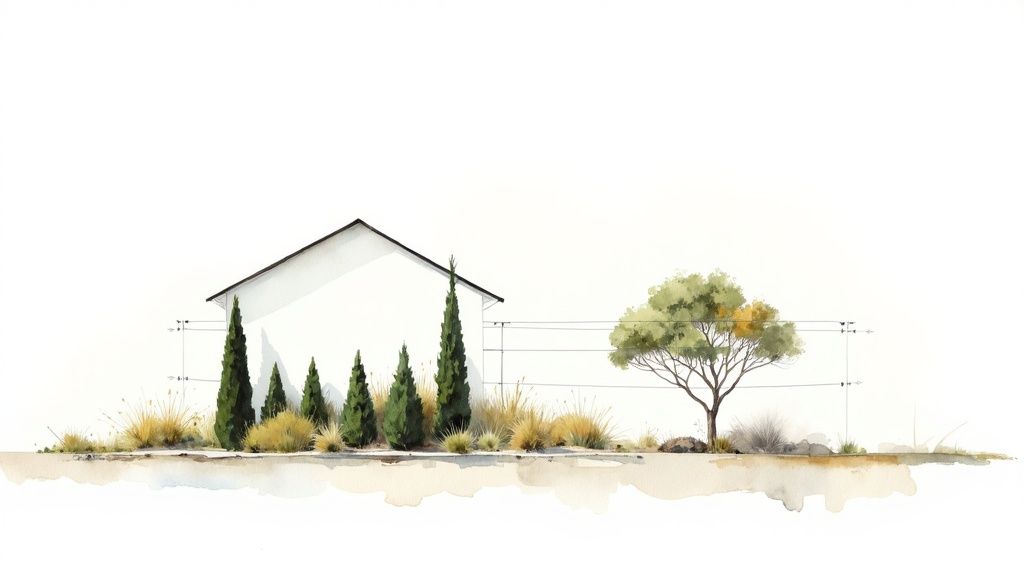
The coastal gusts in Monterey and the persistent valley winds in Salinas can be relentless during the winter, posing a significant threat to your landscape. Strong winds desiccate, or dry out, plants, increase the risk of frost damage, and can even topple vulnerable trees. Implementing strategic windbreaks is a key component of how to weather-proof your yard: smart landscaping tips for Salinas and Monterey homeowners this winter because it creates a calmer microclimate that shelters your property.
Why Windbreaks are Crucial for Local Landscapes
A well-designed windbreak doesn't stop the wind; it slows it down, reducing its velocity by 20-40% and dispersing its force. This protection is vital for preventing broken branches, windburn on evergreen foliage, and the toppling of newly planted trees. For Salinas Valley properties, this mimics the agricultural practice of using windrows to protect crops, a proven method for enhancing plant health and survival.
An effective windbreak provides several key benefits:
- Plant Protection: It shields tender plants from the damaging and drying effects of constant wind, reducing stress and promoting healthier growth.
- Reduced Soil Erosion: By slowing surface-level winds, windbreaks help prevent topsoil from blowing away, especially in bare garden beds.
- Energy Savings: A properly placed windbreak can reduce wind pressure against your home, potentially lowering heating costs during cold, windy months.
Pro Tip: The most effective windbreaks are semi-permeable, allowing some air to filter through. A solid wall can create damaging turbulence on the leeward side, whereas a slightly porous screen of plants gently slows the wind over a larger area.
Common Windbreak Solutions for the Central Coast
Homeowners from the Santa Lucia Highlands to coastal Monterey can choose from a variety of natural and structural options to tame the wind:
- Windrow Plantings: Rows of trees or large shrubs, like the iconic Monterey Cypress, are planted perpendicular to the prevailing wind direction. Using a mix of evergreens ensures year-round protection.
- Living Fences: Dense, hardy shrubs such as ceanothus or toyon can be planted closely together to form a "living fence" that is both beautiful and functional.
- Layered Plantings: Combining trees, shrubs, and perennials of varying heights creates a multi-layered barrier that gradually slows wind from the top down, offering more comprehensive protection for your entire garden.
- Structural Screens: Fences with spaced slats, lattices, or semi-transparent panels can serve as effective windbreaks for smaller spaces like patios or courtyards where a full row of trees is not feasible.
5. Create Rain Gardens and Bioswales for Water Management
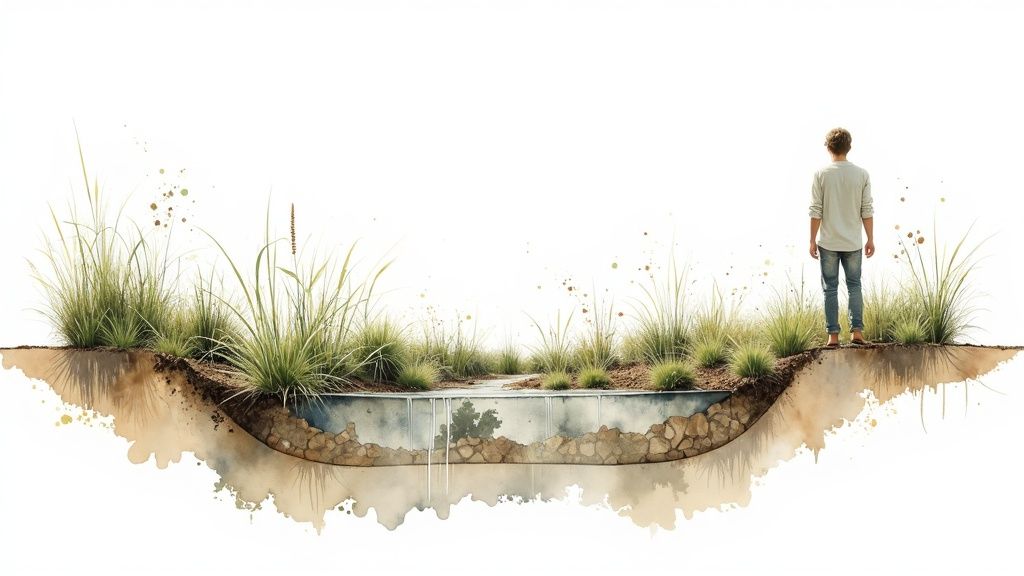
As Salinas and Monterey face more intense winter storms, managing the resulting runoff becomes a top priority. Instead of simply diverting water, you can transform this challenge into a beautiful, sustainable solution with rain gardens and bioswales. These features work with nature to slow, capture, and filter stormwater, making them an essential part of how to weather-proof your yard: smart landscaping tips for Salinas and Monterey homeowners this winter.
Why Rain Gardens and Bioswales are Essential
Rain gardens are strategically placed shallow depressions filled with native, water-loving plants that absorb runoff from roofs and driveways. Bioswales are similar but are designed as gently sloped, vegetated channels that slow and convey water, promoting infiltration along the way. Both features reduce the burden on municipal storm drains, prevent erosion, and filter pollutants before they reach Monterey Bay, all while creating a vibrant habitat for local wildlife.
A well-designed water management feature provides key benefits:
- Flood and Erosion Control: By slowing down and absorbing heavy rainfall, these features prevent destructive runoff from eroding slopes and overwhelming your landscape.
- Groundwater Recharge: Captured water slowly percolates into the soil, replenishing local groundwater supplies, which is a critical benefit for our drought-prone region.
- Pollutant Filtration: The plants and soil in rain gardens naturally filter out contaminants from fertilizers, pesticides, and vehicle fluids.
Pro Tip: Position rain gardens at least 10 feet away from your home’s foundation to ensure that captured water infiltrates safely without causing moisture issues. Professional design is key to ensuring proper function and placement.
Smart Implementation for the Central Coast
Integrating these systems requires thoughtful planning, especially given the clay-rich soils common in the Salinas Valley. Success stories can be seen across the region, from Monterey County parks using bioswales to manage trail runoff to new residential developments incorporating rain gardens as functional community amenities.
Follow these tips for a successful installation:
- Proper Sizing: Design the garden to capture the first 1-2 inches of rainfall from the intended surface area, adding an overflow swale for unusually heavy storms.
- Plant Selection: Choose native species like Juncus (Rush) or Mimulus (Monkeyflower) that can tolerate both periods of inundation and the dry summer months.
- Timely Installation: Aim to have your rain garden or bioswale installed and established 18-24 inches deep before the heavy winter rains begin.
These features are a perfect example of how smart landscaping starts with water-wise design, turning a potential problem into a functional, beautiful asset.
6. Prune and Prepare Trees Before Winter Storms
The powerful winter storms common to the Salinas and Monterey coastlines bring high winds and heavy rain, which can turn mature trees into significant hazards. Strategic pruning is a critical preventative measure, removing deadwood, weak branches, and excessive weight that could fail under pressure. Properly preparing your trees is a key part of how to weather-proof your yard: smart landscaping tips for Salinas and Monterey homeowners this winter, safeguarding both your property and your landscape's most valuable assets.
Why Pre-Storm Pruning is a Necessity
An overgrown or structurally unsound tree is a liability waiting to happen. Saturated soil loosens root systems, and strong winds can easily snap over-extended or compromised limbs, causing catastrophic damage to homes, vehicles, and fences. Proactive pruning improves a tree's structural integrity, allowing wind to pass through the canopy more easily and reducing the risk of catastrophic failure.
A well-timed tree maintenance plan prevents:
- Property Damage: Falling limbs are a primary cause of storm-related damage to roofs, power lines, and outdoor structures.
- Tree Failure: Corrective pruning can save a tree that might otherwise be lost completely during a severe weather event.
- Safety Hazards: Removing dead or dangling branches, often called "widow-makers," eliminates a serious risk to people on your property.
Pro Tip: Always hire an ISA Certified Arborist for any significant tree work. They are trained to identify potential hazards that are invisible to the untrained eye, such as internal decay or weak branch attachments, ensuring the work is done safely and correctly to preserve the tree's health.
Effective Pruning Techniques for Coastal Trees
Homeowners from coastal Monterey, who must prepare their iconic Monterey pines for fierce winter gales, to those in Salinas managing large orchard or shade trees, can benefit from these proven techniques:
- Canopy Thinning: This involves selectively removing branches to reduce the overall density of the tree's crown. This allows wind to pass through with less resistance, significantly lowering the risk of the tree being uprooted.
- Deadwood Removal: The first and most important step is to remove all dead, dying, or diseased branches, as these are the most likely to break off during a storm.
- Structural Pruning: This focuses on improving the tree's architecture by removing branches with weak, narrow crotch angles or those that are crossing and rubbing against each other.
By addressing potential weaknesses before the storm season begins, you make a smart investment in your property's safety and resilience. You can discover more ways to weatherproof your landscape and safeguard trees this storm season to ensure your outdoor spaces are fully prepared.
7. Install Hardscape Elements for Erosion Control and Stability
The dramatic hillsides of Monterey and the rolling landscapes of the Salinas Valley are beautiful but can be vulnerable to erosion during intense winter storms. Strategic hardscaping, such as retaining walls and permeable pavers, provides a powerful solution to stabilize soil and manage water. This is an essential way to weather-proof your yard: smart landscaping tips for Salinas and Monterey homeowners this winter because it integrates structural support with functional design.
Why Hardscaping is a Winter-Proofing Essential
Unchecked water runoff on sloped properties can quickly wash away valuable topsoil, undermine plant roots, and even threaten your home’s foundation. Hardscape elements act as structural barriers, slowing down water flow and holding soil in place. By creating terraces or installing permeable surfaces, you can transform a potential erosion problem into a stable, usable, and attractive part of your landscape.
Well-designed hardscape solutions deliver critical benefits:
- Slope Stabilization: Retaining walls and terraces turn unusable steep grades into functional, level areas for planting or patios, preventing landslides and soil slippage.
- Erosion Control: These structures effectively manage stormwater runoff, directing it safely away or allowing it to be absorbed, which protects both your landscape and local watersheds.
- Enhanced Usability: Hardscaping creates durable, all-weather surfaces like patios, walkways, and driveways that remain accessible even during the wettest months.
Pro Tip: For retaining walls over four feet in height, a licensed contractor and proper engineering are not just recommended, they are often legally required. Always check with Monterey County or Salinas city planning departments for permit requirements before beginning construction.
Common Hardscape Solutions for the Central Coast
Homeowners from coastal Monterey to inland Salinas can choose from several effective hardscape options that are perfectly suited to the region’s climate and aesthetics:
- Retaining Walls: Constructed from native stone, concrete blocks, or sustainable materials, these walls create level tiers on sloped properties. It is critical they are built with proper backfill and drainage systems to relieve hydrostatic pressure.
- Permeable Pavers: An excellent choice for driveways, walkways, and patios, these surfaces allow rainwater to seep through the joints into a gravel base below. This recharges groundwater and reduces surface runoff.
- Terraced Gardens: Combining retaining walls with strategic plantings, terraces break up long slopes into a series of smaller, manageable garden beds. This approach is both beautiful and highly effective at preventing soil erosion.
By integrating these functional structures, you can protect your property from winter storm damage while adding significant value and beauty. You can learn more about hardscape and outdoor structure options in Monterey County to find the right solution for your yard.
Frequently Asked Questions (FAQs)
1. When is the best time to start weather-proofing my yard for winter?
The ideal time is late fall, typically October through November. This allows you to complete pruning, clean gutters, and install drainage systems before the first major winter storms arrive.
2. How do I know if my trees are a hazard?
Look for warning signs like dead or hanging branches, cracks in the trunk or major limbs, significant leaning, or fungus growing at the base. For a reliable assessment, it’s always best to schedule a professional evaluation with a certified arborist.
3. Can I use any kind of mulch for winter protection?
Organic mulches like wood chips, bark, or compost are best. They not only insulate the soil but also enrich it as they decompose. Avoid piling mulch directly against tree trunks, as this can trap moisture and cause rot.
4. What is the most important first step to prevent flooding in my yard?
Start by cleaning your gutters and downspouts to ensure water can flow freely away from your home's foundation. Next, assess the grading of your landscape to identify any low spots where water might pool and address them with soil or drainage solutions.
5. Are native plants really better for handling winter rain?
Yes. Native California plants have evolved deep and extensive root systems specifically adapted to handle our wet winters and dry summers. These roots are excellent at absorbing excess water and holding soil in place, which helps prevent erosion and runoff.
Your Next Steps for a Storm-Ready Property
As winter approaches, transforming your yard from a potential liability into a resilient, storm-ready asset is a critical investment for any Salinas or Monterey homeowner. The increasingly volatile weather on the Central Coast means that reactive cleanup is no longer enough. By taking proactive steps now—from inspecting trees to cleaning drains and upgrading irrigation—you can prevent costly damage and protect your property's long-term health and value.
Practical Takeaways for Local Readers:
- Inspect trees for cracks, dead limbs, or leaning trunks before winter rains begin.
- Clean gutters, check drainage, and clear debris to prevent pooling water and flooding.
- Schedule a professional landscape evaluation to identify hazards and maintenance priorities.
- Consider upgrading to smart irrigation systems that adjust automatically to rainfall patterns, reducing waste and cost.
Residents in Salinas, Monterey, Seaside, and nearby communities can prepare now for storm season with professional help from California Landscape & Tree Pros. Whether it’s tree pruning, drainage repair, or post-storm cleanup, our licensed and insured team is ready to help homeowners and businesses protect their properties—safely, efficiently, and sustainably.
Don’t wait for the first storm to reveal your landscape’s vulnerabilities. The licensed and insured experts at California Landscape & Tree Pros specialize in creating storm-ready properties with professional tree pruning, drainage solutions, and comprehensive maintenance plans. Contact us today to schedule a professional evaluation and secure your peace of mind this winter.