
Creating a beautiful landscape for a coastal California home isn’t about fighting the elements—it's about working with them. Homeowners across the Central Coast are investing in outdoor living upgrades, seeking guidance on how to plan professional-looking landscapes that balance beauty, function, and sustainability. This guide translates complex design theory into simple, actionable steps, ensuring your garden doesn't just survive our unique climate; it thrives.
Creating Your Resilient Coastal Oasis
Life on the Central Coast is a dream, but it brings specific landscaping challenges. We see it all the time with homeowners from Monterey to the greater Bay Area who are ready to upgrade their outdoor living areas. They’re looking for professional advice that goes beyond cookie-cutter designs and gets real about our local climate.
Many industry peers focus only on generic design "principles" without addressing the realities of the Central Coast climate, like drought, corrosive salt air, and seasonal storm damage. This is where a team with local, hands-on experience makes all the difference.
A Modern, Local Approach to Coastal Design
At California Landscape & Tree Pros, we integrate water-wise planning, durable materials, and native plant design into every project. Our whole philosophy centers on combining modern design technology with real-world experience in Monterey County and Bay Area environments.
So, what does that actually look like? It means we focus on:
- Water-Wise Planning: We design with smart irrigation and plants that don't demand a lot of water—a must for our region.
- Durable Materials: Think hardscape elements like permeable pavers for drainage and resilient decking that stand up to salt and moisture.
- Native Plant Design: We build our plant palettes around flora already adapted to thrive in Monterey County’s unique conditions. You can dive deeper into how drought-tolerant landscaping offers a modern approach in our detailed guide.
This guide translates design theory into actionable steps: how to position patios for shade, use permeable pavers for drainage, or choose low-water plants that still deliver curb appeal.
According to recent data, over half of homeowners want to understand their landscape’s environmental impact. This is a huge shift. People are now actively looking for companies that use eco-friendly methods and tools.
We're right there with them. By using battery-powered equipment and installing advanced smart irrigation systems, California Landscape & Tree Pros delivers measurable eco-benefits without ever compromising on the quality of our work.
This guide is for our neighbors in Salinas, Monterey, and the surrounding communities who want a functional, gorgeous outdoor space built to last. When you’re ready for a personalized consultation to bring these ideas to life, our team is here to help.
Get to Know Your Coastal Property First
The real secret to a thriving coastal landscape isn't just picking pretty plants. It's about knowing your specific piece of land—intimately. Before you even dream of putting a shovel in the ground, a thorough site analysis is the single most important thing you can do. This groundwork prevents heartbreaking (and expensive) mistakes down the road.
Jumping straight into design without this deep dive is like building a house on sand, literally. You have to understand the unique challenges and hidden opportunities your property offers. Taking the time to do this up front ensures your investment in plants, materials, and labor will pay off for years to come.
Map the Sun and Shade
The sun's journey across your yard dictates everything. It determines where your plants will flourish and where you'll want to sip your morning coffee. The best way to learn this is to simply watch. Take a look at your yard in the morning, again at noon, and once more in the late afternoon. You'll quickly discover its unique microclimates.
Pay attention to which spots get baked by the intense afternoon sun and which areas stay in cool shade all day. Understanding these daily sun patterns helps you:
- Place patios and decks thoughtfully. Position them to catch the pleasant morning sun but offer a shady escape during the hottest part of the day.
- Group plants by their needs. Putting plants with similar light requirements together is a core principle of smart garden design.
- Plan for how you'll live outside. Carve out a sunny patch for a vegetable garden or find a shaded nook for a quiet reading bench.
This simple act of observation is the foundation for creating an outdoor space that actually works for you.
Assess Wind and Salt Air Exposure
Living on the coast means dealing with two constant companions: wind and salt spray. For properties right on the water, these elements are relentless. They can dry out and physically damage plants, not to mention corrode certain hardscape materials. Your first move is to figure out which direction the prevailing winds come from.
Once you know that, you can start creating sheltered pockets. A strategically placed hedge of tough, salt-tolerant natives like Toyon or Coffeeberry can work wonders as a natural windbreak. Behind it, you'll find a calmer microclimate, creating the perfect spot for more delicate plants or a cozy, protected seating area.
Understand Your Coastal Soil
Let's face it, most coastal soil is sandy. It drains water in the blink of an eye and is often short on the rich organic matter that plants need to thrive. A quick "squeeze test" will tell you what you're working with. Grab a handful of moist soil and make a fist. If it crumbles and falls apart the second you open your hand, you've got sand.
This isn't necessarily a bad thing—great drainage prevents root rot for many plants. But it also means water and nutrients wash right through. The single most important thing you can do for your garden's success is to amend that soil.
Adding high-quality compost and other organic matter is non-negotiable. It's what gives sandy soil structure, helps it hold onto precious water, and provides a slow release of essential nutrients. A great starting point for a new garden bed is to work a 3 to 4-inch layer of compost into the top foot of soil. This prep work creates a living foundation that will make your entire coastal landscape more resilient.
Select Plants And Materials Built For The Coast
Alright, this is where the fun really begins—choosing the plants and materials that bring your vision to life. For a coastal landscape, success isn't just about what looks good right now. It's about selecting plants and hardscape that can truly handle the unique pressures of living by the sea. Think of this as your playbook for creating a beautiful space that’s also tough as nails.
We're moving beyond what looks tempting at the nursery and focusing on what will actually thrive year after year. That means picking plants that shrug off salt spray and love sandy soil, and hardscape materials that won't corrode or weather away. A little foresight here saves you a ton of money and headaches down the road.
Building Your Coastal Plant Palette
The plants you choose are the living, breathing heart of your landscape. Here in Monterey County and the Bay Area, we're lucky to have an incredible variety of native plants that are already perfectly adapted to our climate. These are the true champions of a low-maintenance, water-wise garden.
A pro tip we always share is to practice hydrozoning. It sounds technical, but it’s simple: group plants together based on how much water they need. Mixing thirsty plants with drought-tolerant ones is a common mistake that leads to overwatering some and underwatering others.
Consider these proven performers for a Central Coast landscape:
- Coast Live Oak (Quercus agrifolia): An absolute icon. This tree provides incredible shade and habitat, giving your landscape a strong, sculptural anchor.
- California Lilac (Ceanothus): Famous for its brilliant blue and purple flowers, Ceanothus is a drought-tolerant workhorse that pollinators love.
- Sea Lavender (Limonium perezii): The name says it all. This plant is incredibly salt-tolerant and produces beautiful, airy clusters of purple flowers.
- Succulents and Agaves: Perfect for those hot, sun-blasted spots. Their bold, architectural shapes bring a modern feel and require very little water.
This is a great little reminder of the core elements—sun, wind, and soil—that should always guide your plant and material choices in a coastal environment.
Choosing Hardscape Materials That Last
Your hardscaping—patios, walkways, decks, retaining walls—is the skeleton of your outdoor living space. On the coast, material choice is absolutely critical. Salt air is relentlessly corrosive, and the constant dance of sun and moisture can destroy inferior products in no time.
You need materials engineered for this fight. While some better options might cost more upfront, the return on investment is huge when you're not replacing them every few years.
Here are some of the most reliable hardscape materials we use:
- Natural Stone: Materials like bluestone or flagstone are incredibly tough and have a timeless, organic look that feels right at home on the coast.
- High-Quality Pavers: Look for concrete or porcelain pavers specifically rated for outdoor use. Permeable pavers are an even smarter choice, as they help manage rainwater and reduce runoff.
- Composite Decking: This is a fantastic alternative to traditional wood. Modern composite materials resist rot, splintering, and insects, and they won't warp or fade like wood inevitably does in the salty air.
Coastal Plant & Material Durability Guide
This table breaks down some of our go-to choices, showing you exactly how they stack up against the harsh coastal elements of California.
| Element Type | Recommended Options | Salt Tolerance | Water Needs | Key Benefit |
|---|---|---|---|---|
| Plants | California Lilac (Ceanothus) | High | Low | Attracts pollinators, vibrant color |
| Plants | Sea Lavender (Limonium perezii) | Very High | Low | Year-round interest, extremely tough |
| Plants | Coast Live Oak (Quercus agrifolia) | Moderate | Low (once established) | Provides shade, habitat, and structure |
| Hardscape | Natural Stone (Bluestone, Flagstone) | Very High | N/A | Timeless look, ultimate durability |
| Hardscape | Composite Decking | Very High | N/A | Low maintenance, resists rot & fading |
| Hardscape | Permeable Pavers | High | N/A | Manages runoff, durable surface |
Choosing elements from this list ensures you're building a landscape that is prepared for the coastal climate from the ground up, giving you confidence that your investment is built to last.
By thoughtfully selecting both your plants and your materials, you create a landscape that feels cohesive and is genuinely resilient. The right choices ensure your outdoor space doesn't just survive—it thrives.
Sustainable design is no longer a trend; it's a necessity, especially on the coast. We're seeing a huge emphasis on biodiversity and creating landscapes that can handle our changing climate. This integrated approach is the key to creating an outdoor oasis that lasts. For a deeper dive, our guide on how water-wise landscapes add value and sustainability has even more great info.
Manage Water and Prevent Erosion Like a Pro
Living on the California coast, we're all about celebrating our incredible environment. A big part of that is being smart about water. In a coastal garden, managing water isn't just about turning off the sprinklers; it's also about taming its power to stop erosion—a real headache for properties in Salinas and Monterey, especially when winter storms roll in.
Good water management protects your home, saves you money, and helps our local ecosystem thrive. It's about creating a clever system where every drop counts and excess rain is guided safely away from your foundation.
Embrace Smart Irrigation Technology
The days of "set it and forget it" sprinkler timers are long gone. Modern irrigation tech gives you incredible control, making sure your landscape gets exactly the water it needs, and not a drop more. This is a must for any well-designed coastal garden.
Smart irrigation controllers are a total game-changer. These devices tap into local weather data, automatically tweaking watering schedules based on rain, fog, and temperature. That means your system won't kick on during a misty morning or right after a downpour.
Drip irrigation is another non-negotiable for coastal gardens. Traditional spray heads lose so much water to wind and evaporation—a constant battle here. Drip systems, on the other hand, deliver water slowly and directly to the base of the plant, right where it’s needed.
Tackle Erosion with Permeable Surfaces
Erosion is a constant threat for coastal properties. Our sandy soil and sloped yards can wash away in a hurry during a heavy rain. One of the best ways to fight back is to simply let rainwater soak into the ground where it falls.
This is where permeable pavers are your best friend. When you use them for patios, walkways, or even driveways, they're installed over a gravel base. The small gaps between the pavers allow rainwater to filter straight through into the soil below. This one choice makes a massive difference by reducing runoff, recharging groundwater, and preventing puddles.
Stabilize Slopes and Manage Runoff
If your property has any kind of slope, managing water flow becomes even more critical. The trick is to slow the water down and hold the soil in place.
Retaining walls are the classic solution for taming a hillside and creating level, usable terraces. When engineered correctly, they provide crucial support and can be designed to channel water to safe drainage points. But the real magic happens when you combine hardscape with smart planting. Putting deep-rooted native grasses and groundcovers on slopes is a fantastic, natural way to lock down the soil. Their dense root systems weave a net that holds the earth together. For more ideas on getting your property ready for the seasons, our guide on how to weather-proof your yard for Salinas and Monterey homeowners has some great tips.
Design Outdoor Spaces You Will Actually Use
Let's be honest, a beautiful landscape is nice, but a beautiful landscape you actually use is what it's all about. Your yard should be more than just a buffer between you and your neighbors; it ought to feel like a true extension of your home. The goal here is to stop thinking "backyard" and start thinking about functional outdoor 'rooms' built for how you live—whether that's relaxing, dining, or entertaining.
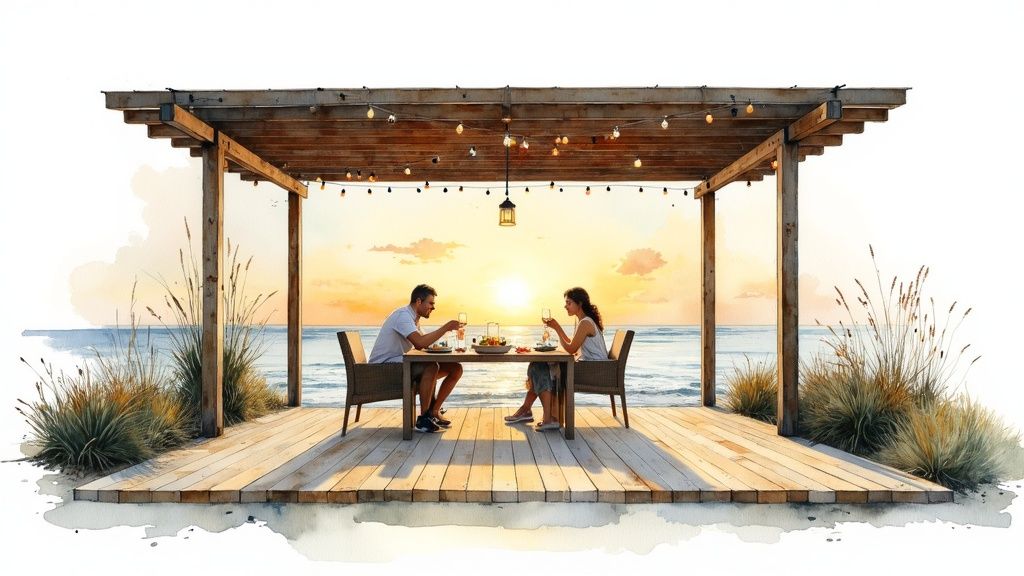
It all starts with a simple question: How do you want to live outside? Do you picture yourself hosting sunset dinners with friends? Maybe you just want a quiet corner for your morning coffee. Each of these activities points to a different kind of space and guides the layout and materials we'll need to bring it to life.
Creating Functional Outdoor Rooms
I often talk to clients about the "outdoor room" concept because it helps bring structure to an open yard. Just like inside your home, we can define different zones for specific jobs. It’s a simple shift in mindset that brings order and purpose to your property, making sure every square foot is pulling its weight.
For example, we might position a deck to catch those incredible sunset views, then add a stylish pergola to block the persistent onshore breeze—boom, you have a perfect dining spot. The real trick is to lay out these zones using what we learned from the site analysis, making the sun, shade, and wind work for you, not against you.
A well-designed landscape flows seamlessly, making the move from indoors to outdoors feel completely natural and inviting. It's about designing outdoor spaces that truly work for you and your family.
Setting the Mood with Outdoor Lighting
Once the sun goes down, the right lighting can completely change the game. It’s so much more than just a safety feature; good lighting adds a touch of drama, highlights beautiful textures, and easily doubles the amount of time you can spend enjoying your yard. A smart lighting plan isn't an afterthought—it's essential.
I like to layer different lighting techniques to build atmosphere:
- Path Lighting: Low-voltage lights along walkways and steps ensure nobody trips and cast a welcoming glow.
- Uplighting: Placing a light at the base of a sculptural tree or architectural feature creates a stunning focal point.
- Downlighting: Mounting fixtures high up in trees to mimic natural moonlight creates a soft, dappled light.
- String Lights: Fantastic for a relaxed, festive vibe over a pergola or dining area.
When you mix and match these, you create a landscape with real depth and character that’s just as gorgeous at night as it is during the day.
Selecting Furniture and Features That Endure
Now for the fun part: furnishing your new outdoor rooms. But along the Central Coast, this requires serious thought. That salty air we love is incredibly harsh. Choosing weather-resistant furniture isn't a splurge; it’s a must-do if you want your investment to last.
Look for materials that have a proven track record in coastal environments:
- Teak and Ipe: These dense hardwoods are packed with natural oils that make them resistant to rot and insects.
- Powder-Coated Aluminum: It’s lightweight, it won’t rust, and it comes in just about any style you can imagine.
- High-Quality Resin Wicker: Modern synthetic versions can handle sun and moisture without cracking or fading.
- Marine-Grade Polymers: This is the same durable plastic used on boats. If it can handle life on the water, it can handle your patio.
Bring Your Coastal Vision to Life with CLTP
You've now walked through the fundamentals of creating a landscape that not only survives but truly thrives by the coast. It all boils down to understanding your specific property, choosing the right materials from the start, and designing for both beauty and resilience. The real magic happens when you weave these ideas into a single, cohesive plan that fits your life.
That’s where we come in. At California Landscape & Tree Pros, we live and breathe this stuff. We blend modern design tools with years of hands-on experience right here in the Salinas, Monterey, and Bay Area.
Your Partner in Coastal Design
We’re seeing a huge shift in landscaping. In fact, projections show that by 2025, over 85% of residential projects will incorporate sustainable design principles. Homeowners are more aware than ever of what it takes to build a lasting landscape on the coast, and they're looking for pros who get it. You can see more on 2025 gardening trends at petruslandscape.com.
Our job is to help you make sense of it all, making sure your project is built to last. For a deeper dive into making your outdoor spaces truly functional, our guide on creating high-end outdoor living areas is packed with ideas.
For homeowners in Salinas, Monterey, and the surrounding communities, turning that vision into a reality is what we do best.
Ready to get started? Homeowners in Salinas, Monterey, and nearby areas can contact California Landscape & Tree Pros for a personalized consultation to bring these principles to life—efficiently, beautifully, and built to last.
Frequently Asked Questions About Coastal Landscaping
When you're thinking about a new landscape for your coastal home, a lot of questions come up. Here are straightforward answers to the ones we hear most often from homeowners right here on the California coast.
How Much Upkeep Does a Coastal Garden Really Need?
Honestly, a lot less than you might think—if it's designed correctly from the start. A smart coastal landscape that leans on native, salt-tolerant plants and tough hardscaping materials pretty much takes care of itself. When you work with plants that are already built for the Central Coast's wind and salty air, you're not constantly fighting nature. That means way less time spent watering, fertilizing, or replacing plants.
What's the Biggest Mistake People Make with Coastal Gardens?
By far, the most common pitfall is falling in love with a plant at the nursery without knowing if it can handle the coast. People pick plants purely for looks, not realizing that the constant salt spray and wind will decimate them. A close second is ignoring the soil. Most coastal soil is sandy, so taking the time to amend it with good organic compost is absolutely essential for giving your plants a fighting chance to thrive.
Can I Still Have a Lawn in a Coastal Landscape?
That's the million-dollar question! While a classic, thirsty turf lawn is a real struggle to keep alive here, you definitely have options. We're big fans of using gorgeous, drought-tolerant groundcovers like Dymondia or specific native grasses. They give you that lush, green carpet effect without the crazy water bills and constant maintenance. If you absolutely have your heart set on a traditional lawn, we can design a dedicated area with a super-efficient irrigation system.
How Do You Protect a New Landscape from Wind and Storms?
You have to think in layers. The first line of defense is creating natural windbreaks with hardy shrubs and trees like Toyon or Coffeeberry. These create a sheltered zone behind them, protecting more delicate plants and making your patio more pleasant. For sloped properties, erosion control is non-negotiable. This means using permeable pavers, building sturdy retaining walls, and planting native grasses with deep roots that act like a living net, stabilizing the hillside.
Is a Sustainable Coastal Landscape More Expensive?
The initial investment for some sustainable features, like a smart irrigation controller, can be higher than conventional options. But the long-term savings are significant. That system can pay for itself in lower water bills over just a few seasons. When you factor in the reduced water usage, eliminating the need for chemical fertilizers, and choosing durable materials that won't need replacing, a sustainable landscape is not only better for our local environment but also a smarter financial move.
Ready to see how these ideas could work on your property? The team at California Landscape & Tree Pros specializes in creating beautiful, durable, and sustainable outdoor spaces for homeowners in Salinas, Monterey, and all the surrounding communities.
Let's talk about what's possible.
Schedule Your Consultation with California Landscape & Tree Pros