
Your yard holds the potential to be more than just a patch of grass; it can be an everyday retreat and a genuine extension of your home. By designing functional, comfortable areas for dining, relaxing, and entertaining, California homeowners are transforming underused spaces into their favorite destinations. This guide explores how to create an outdoor living space that works for you year-round, blending beauty, function, and modern design.
The Modern California Dream Is an Outdoor Living Room
Here in Monterey County and across the Bay Area, the concept of a "dream home" is evolving beyond its four walls. More California homeowners—especially Gen X and Millennials—are treating their yards as extensions of their homes, blurring the line between indoors and out. This lifestyle shift is turning forgotten backyards into the most-loved parts of their property.
Patios, pergolas, fire pits, and outdoor kitchens are now considered essential living spaces, not luxury add-ons. According to the National Association of Home Builders, patios were included in 63% of new single-family homes in 2023, a clear indicator that outdoor living has become a core part of the modern California lifestyle. It’s the new family room where you eat dinner on a Tuesday or your go-to spot to unwind after a long week.
Year-Round Usability Is the Goal
With our varying coastal climates, the latest designs focus on functionality across all seasons. The goal is to create an outdoor space you can enjoy for dining, relaxing, and entertaining year-round, not just on perfect sunny days. Smart design makes this happen with features that make outdoor rooms comfortable no matter the season.
- Shade Structures: A well-placed pergola or a covered patio offers a break from the intense sun and a shield from light rain, meaning dinner outside doesn't get canceled.
- Integrated Heating: Built-in fire pits or subtle radiant heaters instantly turn a chilly evening into a cozy gathering, keeping the space inviting long after the sun goes down.
- Strategic Lighting: Good lighting is a game-changer. Layered, smart lighting sets the mood, makes the space safer, and allows you to entertain or just relax outside well into the night.
The best designs create a space that works as hard as it wows. It’s a place for hosting large gatherings but also for enjoying a slow morning with coffee. True value comes from creating a retreat you can use every single day.
Blending Beauty, Function, and Sustainability
This new outdoor lifestyle is deeply connected to sustainability. Modern outdoor living combines eco-friendly design with contemporary comfort, weaving in elements that are as practical as they are beautiful. Think permeable pavers that help manage stormwater, native plant borders that support local wildlife, and efficient irrigation systems that support both the environment and the homeowner’s lifestyle. These aren't just green choices; they reduce your environmental footprint and cut down on long-term maintenance.
As you start the process of creating high-end outdoor living areas that work year-round, remember that a professional can bring all these pieces together. They have the vision to ensure your new retreat is as responsible as it is relaxing.
Your Blueprint for a Year-Round Outdoor Retreat
Turning a patch of grass into your personal oasis doesn't just happen. The real magic begins long before the first shovel hits the dirt—it starts with a solid plan. Think of this initial phase as the blueprint that connects your vision for outdoor living with the realities of your property. It’s how you guarantee the finished space isn't just beautiful, but perfectly suited to your life.
This isn't just a trend; it's a fundamental shift in how we see our yards—as essential extensions of our homes. You can dive deeper into the data and explore the rise of outdoor patio design trends.
Assess Your Space Like a Professional
Before dreaming up fire pits and pergolas, you have to get to know your canvas. Every yard in the Bay Area has its own unique character—its microclimate, its sun patterns, its slopes. A pro-level assessment isn't just about taking measurements; it’s about becoming an observer of your own space.
Spend some time just watching your yard. Map out where the sun lands in the morning versus the harsh afternoon. Where does the wind whip around the corner? Where's that one surprisingly calm spot? These little details are gold. They’ll tell you exactly where to put a dining table so it’s not a wind tunnel, or where to place a lounge chair to soak up the last rays of sun.
This quick checklist can get you started on a more thorough assessment of your yard's potential.
Outdoor Space Assessment Checklist
| Assessment Area | Key Questions to Ask | Practical Tip |
|---|---|---|
| Sun and Shade | Where does the sun hit throughout the day? Are there existing trees or structures that provide shade? | Take photos at 9 AM, 12 PM, and 4 PM to create a simple "sun map." This will be invaluable for plant and patio placement. |
| Topography | Is the yard flat, sloped, or tiered? Are there drainage issues or areas where water pools? | After a rain, note where puddles form. A slight slope might be perfect for a tiered garden but could complicate a patio installation. |
| Existing Features | What stays and what goes? Note mature trees, existing hardscaping, and utility lines (gas, water, electrical). | Contact 811 (Call Before You Dig) to have utility lines marked for free before finalizing any plans. This is a critical safety step. |
| Privacy and Views | Where do you need to screen a view (like a neighbor's window)? What views do you want to highlight? | Stand in key spots (like where you'd put a dining table) and look around. This helps identify sightlines you might miss on a diagram. |
| Access and Flow | How will you get from the house to the yard? How will people move between different outdoor "rooms"? | Walk the path from your kitchen door to your proposed BBQ area. Is it direct and easy, or an awkward obstacle course? |
Running through these questions gives you a solid foundation, moving your project from a vague idea to a plan rooted in reality.
This simple diagram really captures the essence of the journey—from an empty, underused yard to a space that works for you every day.
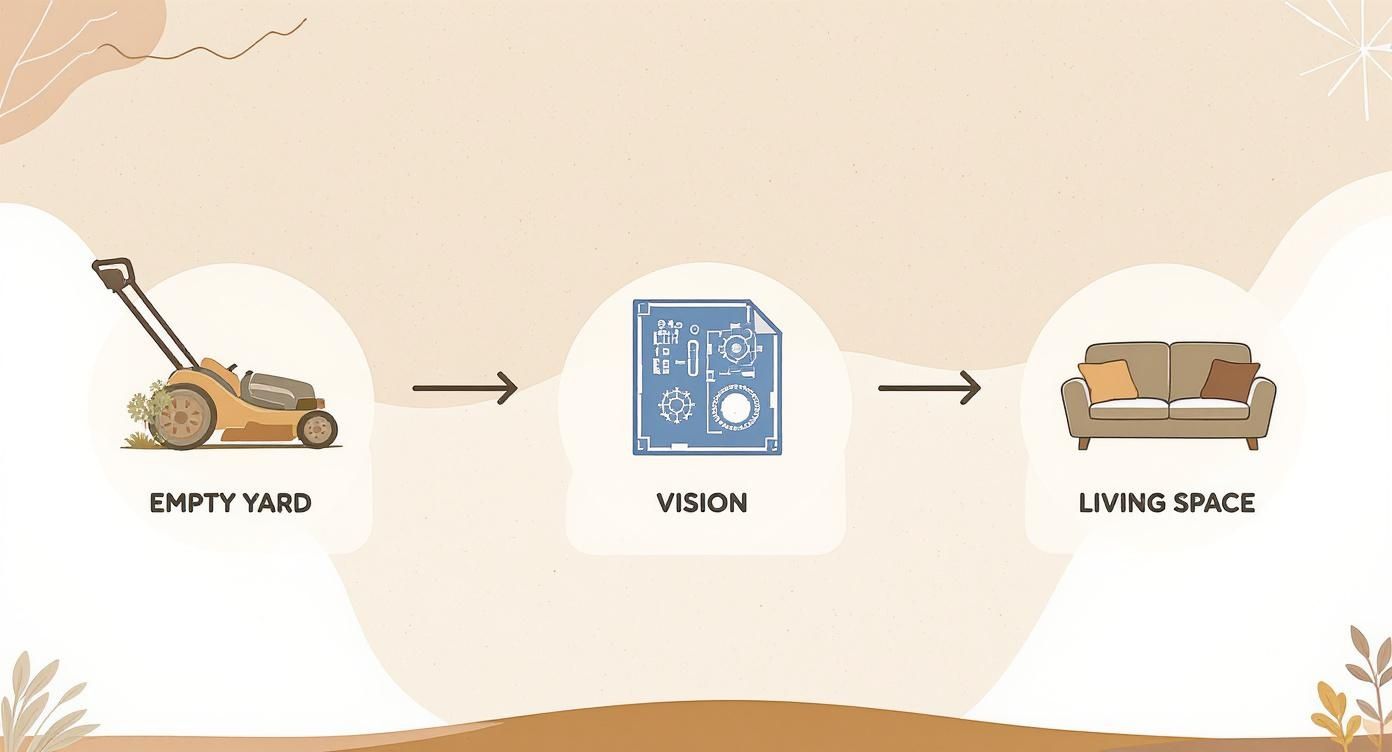
That middle step is everything. A clear vision and a well-thought-out plan are what separate a successful project from a frustrating one.
Creating Functional Zones for Your Lifestyle
With a good understanding of your yard's quirks, you can start carving it up into functional zones. This is the secret sauce for making an outdoor space feel right. Instead of a single, sprawling patio, you create distinct "rooms," each with its own job.
- The Social Hub: This is where everyone will gather, likely built around a fire pit or an outdoor kitchen. Make sure it’s easy to get to from the house and has enough room for comfortable seating for your usual crew.
- The Dining Area: Logic rules here—place it close to your indoor kitchen to avoid long trips with plates of food. Think about adding a pergola for shade and protection; it can make the space usable in more types of weather.
- The Quiet Corner: Every great yard needs a hideaway. It could be a simple bench tucked behind some greenery or a comfy chair perfect for reading. The key is to place it away from the main action.
Defining these zones brings an immediate sense of order and purpose. It ensures every square foot is pulling its weight to support the way you want to live.
A well-designed outdoor space doesn't try to be everything at once. It intelligently separates activities, creating a natural flow that makes the entire area feel larger, more organized, and infinitely more usable.
Visualizing the Transformation
This is where things get really exciting. Modern design tools and professional guidance can take your ideas from a sketch on a napkin to a photorealistic preview. At California Landscape & Tree Pros, we use digital design software to build a detailed model of your project. You get to see it all before we even start.
This process takes the guesswork out of the equation. You can see how the morning light will hit the pavers or how the landscape lighting will feel at night. It's your chance to tweak the layout, test materials, and make decisions with total confidence. Plus, it's the perfect time to build in smart, sustainable features. You can learn more about how sustainable landscaping is transforming California yards and find ideas in our dedicated guide.
Designing for Life With Core Functional Elements
With your foundational plan locked in, it's time for the fun part: bringing your outdoor space to life. This is where we go beyond a simple patch of grass and start thinking about the core elements that will define how you actually live out there. It’s all about creating a true extension of your home, a place built for dining, unwinding, and making memories year-round.
We're not just imagining this trend; the demand for fully loaded outdoor rooms is exploding, especially among younger homeowners who see their yards as indispensable living areas. The numbers don't lie. A recent Houzz survey showed that 33% of homeowners tackling outdoor projects are under 45. The global market for outdoor kitchens alone hit $24.45 billion in 2024 and is still climbing. You can dig deeper into these numbers and discover additional insights into outdoor living research to see just how big this movement is.
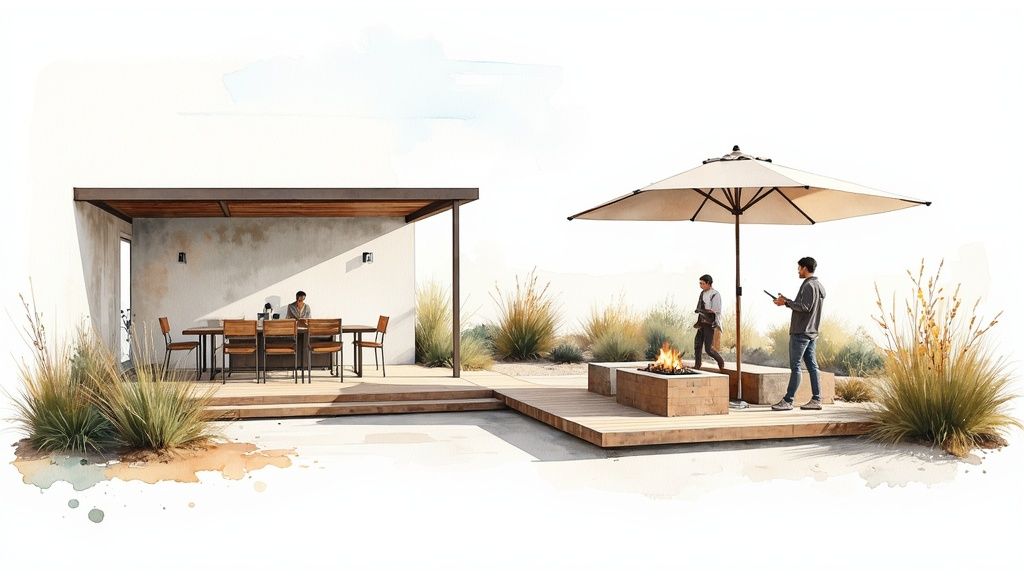
The Outdoor Kitchen as the New Social Hub
Let’s be honest, the outdoor kitchen is the heart of the modern backyard. It’s no longer just a lonely grill pushed into a corner; it's the natural gathering point that keeps the host in the middle of the party instead of shuttling back and forth to the house.
A truly functional outdoor kitchen requires a smart layout with distinct zones for prepping, cooking, and serving. Material choices are just as critical. Here on the Monterey Bay, you need surfaces that can take a beating from the elements—think durable stainless steel appliances, sleek concrete countertops, and rugged stone veneers.
The essentials usually include:
- A high-quality built-in grill: This is your anchor. Choose one based on the size you need and your preferred fuel type (gas, charcoal, or even a hybrid).
- Essential storage: Weatherproof cabinets are non-negotiable for keeping tools and supplies clean, dry, and organized.
- Functional countertops: Don't skimp on counter space. You need room to prep and plate, just like you have indoors.
- An outdoor-rated refrigerator: This is a game-changer. No more running inside for cold drinks or last-minute ingredients.
Creating All-Weather Comfort with Structures and Seating
To get the most out of your yard, you have to be able to manage the elements. This is where well-designed structures come in, giving you shelter while also defining different zones and adding a ton of architectural character.
A pergola, for example, can filter the harsh afternoon sun and can even be fitted with a retractable canopy for those drizzly days. Smart seating is another signature of a professionally designed space. Think about built-in benches that wrap around a fire pit or low retaining walls that double as casual perches for guests. These permanent features feel like they belong, cutting down on the clutter of extra furniture and creating a cozy, inviting atmosphere that encourages people to linger.
If you’re curious about what’s possible, exploring the various hardscape and outdoor structure options can give you a better feel for how these elements can shape your yard.
The best outdoor rooms are the ones that anticipate your needs. They offer a cool spot on a hot day, a warm place to gather on a chilly night, and a dry retreat during a light rain, ensuring you can be comfortable no matter the season.
The Foundation: Materials That Marry Durability and Style
The material you choose to put underfoot sets the tone for the entire space. It’s a delicate balance between finding something that looks great and something that will stand up to our coastal climate without demanding constant upkeep.
Here are a few of our go-to choices for modern outdoor living:
- Permeable Pavers: This is a stylish and eco-friendly move. They let rainwater soak back into the ground, which reduces runoff and helps our local groundwater supply. Plus, if one ever cracks, you can just pop it out and replace it.
- Composite Decking: You get the beautiful look of natural wood without all the sanding and sealing. Composite materials are fantastic at resisting rot, pests, and fading, making them a perfect solution for creating level patios on sloped properties.
- Weather-Resistant Metals: For things like pergolas, railings, and custom accents, you can't beat powder-coated aluminum and steel. They deliver a clean, modern aesthetic and are incredibly tough against the salt and sun.
Layered Lighting for Ambiance and Functionality
Finally, don't forget the lighting. A thoughtful lighting plan is what truly makes an outdoor space usable after the sun goes down. Good lighting is about so much more than just seeing where you’re going; it’s about creating an experience.
We always recommend a layered approach.
First, put task lighting where you need it most, like over the grill or the dining table. Next, add in ambient lighting—think string lights, post caps, or wall sconces—to cast a warm, welcoming glow over the whole area.
The finishing touch is accent lighting. Use it to uplight a beautiful old tree, highlight a water feature, or graze the texture of a stone wall. This layered combination not only keeps everyone safe but adds a touch of drama and sophistication that makes the space feel magical at night.
Blending Beauty with Sustainable Design
Creating a truly great outdoor space these days is about more than just looks. It’s about building a retreat that feels right at home in its environment. This doesn't mean you have to trade style for sustainability—quite the opposite. The smartest, most beautiful designs are often the ones that work with nature, not against it.
An eco-friendly approach results in a sophisticated, lower-maintenance yard that fits your life and respects our Monterey Bay ecosystem. It's the core philosophy we use when turning a blank slate into a personal oasis. You end up with a space that’s not just beautiful but also resilient and responsible.
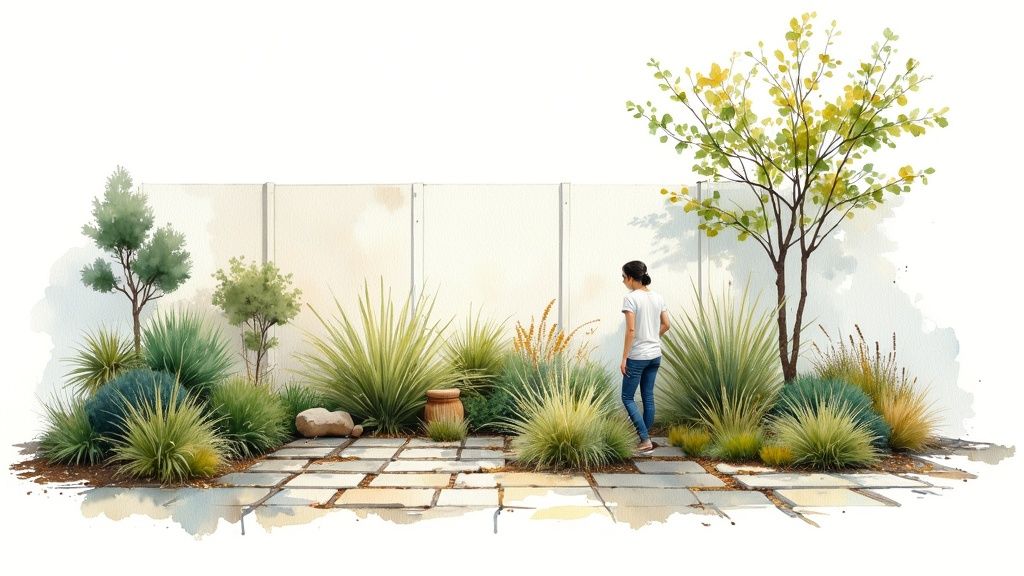
Embrace Native and Drought-Tolerant Plantings
The heart of any sustainable California garden is choosing plants that actually want to be here. When you work with natives and other drought-tolerant species, you're picking plants that are already adapted to our local soil and rainfall. Once they're established, they just don't need a lot of fuss—less water, less fertilizer, and less work for you.
Think about plants like California lilac (Ceanothus), manzanita, or some of the vibrant sages. They do more than just save water. They’re a critical source of food and shelter for local pollinators, bringing bees and butterflies into your yard. The garden feels alive, authentic to our region, and pops with natural color and texture.
Implement Water-Wise Irrigation Systems
You can have a lush, stunning landscape without the shocking water bill. The secret is getting water precisely where it needs to go, only when it's needed. Modern irrigation tech has made this incredibly achievable.
- Drip Irrigation: This is a game-changer. It slowly drips water right at the root zone, so you lose almost nothing to evaporation or runoff. It’s a far more efficient way to water garden beds, shrubs, and trees than old-school spray heads.
- Smart Controllers: These are amazing. They use real-time local weather data—temperature, recent rain, humidity—to automatically tweak the watering schedule. The EPA estimates that swapping a standard timer for a WaterSense labeled controller can save an average home nearly 7,600 gallons of water a year.
- Proper Zoning: This is a pro-level tip that makes a huge difference. We group plants with similar thirst levels onto the same irrigation valve. That way, your succulents aren't getting drowned and your thirstier plants aren't left high and dry.
I go into much more detail on this in our guide on how smart landscaping starts with water-wise design. It’s packed with more practical tips.
A sustainable design is a smart design. It reduces your long-term maintenance costs, conserves precious natural resources, and creates a healthier, more resilient outdoor environment that you can enjoy for years to come.
Manage Water Responsibly with Permeable Surfaces
Think about all the hard surfaces in a typical yard—concrete patios, asphalt driveways. When it rains, water just sheets off, picking up pollutants and overwhelming storm drains. It’s a massive problem, especially for our local waterways.
Permeable materials are the elegant solution. Things like permeable pavers, gravel pathways, or even composite decking designed with drainage gaps let rainwater pass right through. The water soaks into the ground naturally, which helps recharge groundwater, reduce erosion, and protect the health of the Monterey Bay.
Create Privacy with Natural, Layered Plantings
Before you default to a big, solid fence, consider using plants to create your privacy. A well-designed mix of evergreen shrubs, swaying ornamental grasses, and smaller trees can create a beautiful, effective screen that feels much more natural.
This "living fence" is so much softer and more interesting to look at than a static wall. Plus, it creates a habitat for birds, helps clean the air, and even absorbs sound, making your backyard a more peaceful and secluded retreat. It’s the perfect example of how blending beauty with smart, sustainable principles leads to a better outdoor space.
Why Professional Craftsmanship Is a Smart Investment
The temptation to save a few bucks with a DIY project or a low-cost contractor is understandable. But when it comes to turning an empty yard into a genuine outdoor retreat, the value of experience and craftsmanship truly pays for itself. Professional work isn't a luxury—it’s a critical investment that guarantees durability, quality, and compliance with local standards.
Professionally built outdoor spaces don’t just look better—they last longer and add measurable property value. It's the real-world difference between a patio that cracks and settles after a couple of winters and one that remains a beautiful, stable centerpiece of your home for decades.
CLTP’s Design-Build Expertise
California Landscape & Tree Pros delivers complete design and installation services that blend aesthetics with practicality. Instead of juggling separate designers, architects, and contractors, our design-build process keeps everything under one roof. Using advanced planning tools and personalized consultations, we help clients visualize their outdoor transformations before a single shovel hits the ground. This cohesive approach ensures your project stays on schedule, on budget, and true to your vision.
The True Cost of Cutting Corners
Going with inexperienced labor might look like a win on the initial invoice, but it almost always leads to bigger bills down the road. We’ve seen it more times than we can count: patios with poor drainage flooding a basement, retaining walls that start to buckle under pressure, and sketchy electrical work that’s a flat-out fire hazard. These aren't just minor mistakes; they are serious safety issues and huge financial headaches.
Navigating Local Codes and Standards
Any significant project in Monterey County or the Bay Area has to navigate a tangled web of local building codes, environmental rules, and permit requirements. These regulations dictate everything from how high a fence can be to the specific drainage system needed for a new patio. A professional design-build firm takes that entire burden off your shoulders.
- Permitting: We handle all the paperwork and get the necessary approvals so you don't have to.
- Code Compliance: We make sure every single detail of the construction meets or exceeds local standards.
- Safety: Our licensed and insured crews follow strict safety protocols, protecting your property, your family, and our team.
This built-in expertise saves you from the risk of fines, frustrating project delays, and the stress of trying to figure out a complex system on your own. You can explore our approach to Monterey County landscape design and construction and see the quality for yourself.
Investing in a professional team means you're not just buying a beautiful design; you're buying peace of mind. It's the assurance that your project is structurally sound, legally compliant, and built to last.
Frequently Asked Questions About Creating Your Outdoor Retreat
Thinking about transforming your yard is exciting, but it’s normal to have questions. Here are expert answers to some of the most common inquiries we hear from homeowners in Monterey County and the Bay Area.
How do I start designing my outdoor space?
The best first step is to assess your lifestyle and your property. Think about how you want to use the space—for dining, entertaining, relaxing, or playing. Then, observe your yard's natural conditions, like sun exposure and slopes. A professional consultation can help you merge your vision with practical design solutions, creating a solid plan before any work begins.
What outdoor features add the most value to a home?
Homeowners are investing in professional work that adds measurable property value. According to a recent industry survey, 98% of experts agree that a well-designed outdoor space boosts home value. Features like outdoor kitchens, pergolas, fire pits, and well-built patios offer the highest return on investment because they significantly enhance the home's usable living area. You can discover more insights on outdoor living trends for more data.
What’s a realistic budget for a functional outdoor space in the Bay Area?
Costs can vary widely based on the project's size, material choices, and features. A simple paver patio might be a modest investment, while a complete outdoor living area with a kitchen and custom structures will be more significant. The key to managing your budget is a detailed plan. A professional design consultation is crucial for establishing a clear scope and preventing surprise costs.
How do you design for year-round use in Monterey County's climate?
Our unique coastal climate calls for smart design. We create all-season comfort by layering key elements: shade structures like pergolas for sun and light rain protection, integrated heating sources like fire pits or radiant heaters for cool evenings, and strategic plantings or screens to serve as windbreaks. The goal is to make the space comfortable and inviting no matter the weather.
Why should I hire a design-build firm?
A design-build firm like California Landscape & Tree Pros offers a single point of accountability for your entire project, from initial concept to final installation. This integrated approach ensures seamless communication between the design and construction teams, preventing costly errors and delays. It results in a more efficient process, better cost control, and a final product that perfectly matches the original vision.
Monterey County and Bay Area residents ready to elevate their outdoor living experience can explore custom design solutions with local professionals. The team at California Landscape & Tree Pros brings vision, technology, and craftsmanship together to create functional, beautiful retreats that work for you.
Explore our custom landscape design and construction services today.
Sources:
- American Society of Landscape Architects. (2023). 2023 Trends Survey. https://www.asla.org/2023trends
- Environmental Protection Agency. (n.d.). WaterSense Labeled Controllers.
- National Association of Home Builders. (2024). Patios Remain Most Common Outdoor Feature. https://www.nahb.org/blog/2024/02/patios-remain-most-common-outdoor-feature