
As the dry season winds down on the Central Coast, the shift to our wetter winter months is on the horizon, making fall the most critical time for cleanup and preventative maintenance. Preparing your landscape isn't just a seasonal chore—it's a smart investment in your property's safety and value. A proactive fall cleanup is the best way to prepare your Monterey County landscape for the rainy season, preventing costly storm damage before it starts.
Why Fall Cleanup Is a Smart Investment in Monterey County
Many homeowners notice issues like poor drainage, compacted soil, and overgrown trees just as the first rains arrive. By that point, what would have been a simple maintenance task can turn into an emergency repair. A drain clogged with leaves becomes a flooded patio, and a weak tree branch neglected for months can lead to property damage during a storm.

The Unique Challenges We Face in Monterey and the Bay Area
Properties in Monterey County and the greater Bay Area deal with a specific set of environmental pressures. As the Central Coast transitions from dry autumn months to wetter winter weather, local landscapes face stress from changing soil conditions, temperature fluctuations, and early rain events.
- Coastal Winds: Strong, salt-heavy winds can weaken tree limbs, turning vulnerable branches into projectiles during winter storms.
- Clay-Heavy Soil: Common in our region, clay soil drains slowly. Once saturated by winter rains, it can lead to waterlogged lawns, root rot, and serious erosion, especially on sloped properties.
- Fluctuating Rainfall: Our rainy season is known for long dry spells broken by sudden, intense downpours. A significant portion of our annual rain can fall in just a few major storms, overwhelming an unprepared landscape.
According to the International Society of Arboriculture, proactive, professional pruning can reduce the risk of storm-related tree failure by as much as 60%. Getting ahead of local issues is the core of smart landscape management, saving you money, time, and stress.
How CLTP’s Expertise Addresses Local Needs
California Landscape & Tree Pros offers tailored fall and pre-winter maintenance services that prepare outdoor spaces for the coming season. Our regional experience means we understand how to protect landscapes from water runoff and soil erosion specific to Monterey's coastal winds and clay-heavy soil. We combine professional skill with local environmental knowledge to keep properties safe and functional.
Our crews don't just "clean up"; they prepare your landscape to withstand winter storms. This includes:
- Strategic Tree Pruning: We identify and remove weak or dead branches most likely to snap in high winds, ensuring the long-term health and stability of your trees.
- Debris and Drainage Clearing: We ensure water has a clear path to flow away from your home’s foundation and other critical areas.
- Irrigation Adjustments: We switch your system to its seasonal settings, preventing overwatering and protecting pipes from potential damage.
- Drainage Improvements: We can implement solutions like aeration or amendments to help our heavy clay soil handle intense rainfall more effectively.
Practical Takeaways for Homeowners
Scheduling fall tree trimming is crucial to prevent storm damage. It's also essential to clean out drainage systems before the first heavy rains and switch irrigation to seasonal settings. Adding a fresh layer of mulch or ground cover before the rainy season helps retain soil health and reduce winter maintenance. It's also a great time to consider smarter landscape design choices that can dramatically reduce future upkeep and boost your property's resilience.
Ultimately, a thorough fall cleanup is one of the wisest investments you can make. By tackling potential problems now, homeowners across Monterey County can ensure their yards are sustainable and ready for California's rainy season.
Getting a Handle on Water Before the Rains Arrive
In Monterey, water can be your landscape's best friend or its worst enemy—the difference is control. When heavy winter rains arrive with nowhere to go, you can face flooding, erosion, and even foundation damage. Managing water during the fall is one of the smartest moves you can make before the storms roll in.
Your first line of defense is the roofline. Clogged gutters and downspouts are a common cause of water damage. A handful of wet leaves can create a dam, forcing water to pour over the sides and saturate the ground next to your foundation, leading to expensive structural problems over time.
Start With Your Gutters And Drains
A proper inspection requires more than a quick look from the ground. You need to physically check your gutters for leaves, twigs, and sediment. Test your downspouts to ensure they are clear and direct water at least five to ten feet away from your foundation. Even a small blockage can cause a major backup during the first heavy downpour.
Here's a sobering fact: studies across California's coastal regions show that homes with well-maintained drainage systems have 40-60% fewer water-related damage claims during wet winters. When you consider that Monterey County can get 3-5 inches of rain per month in the thick of the season, you realize just how critical this simple task is. For a closer look at our local weather, check out the data on USClimateData.com.
This small bit of fall prep delivers a huge return on investment by protecting your property.
Tackling Clay Soil And Poor Grading
After addressing the roof, turn your attention to the ground. Monterey County's heavy, compacted clay soil doesn't absorb water quickly. When combined with poor grading—land that slopes toward your house instead of away—it creates a recipe for a swampy mess.
Thankfully, you have options depending on the severity of your drainage problem.
- Dig a Swale: A fantastic DIY-friendly fix for minor issues. A swale is a shallow channel that catches surface runoff, slows it down, and allows it to soak into the ground.
- Install a French Drain: For constantly waterlogged areas, a French drain is the professional-grade solution. This buried trench with a perforated pipe actively collects and channels water away from problem spots.
- Amend Your Soil: Don't underestimate the power of good soil health. Aerating your lawn and mixing in quality organic compost in the fall works wonders on our dense clay, breaking up compaction and allowing water to penetrate deep into the ground.
These aren't just fixes; they're essential parts of a water-wise landscape design that makes your property more resilient and sustainable.
Fall Water Management Checklist
To help you stay on track, here's a simple checklist for getting your property's drainage systems ready for winter.
| Task | Priority Level | Key Action | Professional Tip |
|---|---|---|---|
| Gutter & Downspout Cleaning | High | Remove all debris and flush with water to test flow. | While you're up there, check for loose brackets or leaks. Securing them now is much easier than during a windy storm. |
| Inspect Surface Drains | High | Clear grates of leaves and sediment in patios, driveways, and low-lying yard areas. | Pour a bucket of water down the drain. You want to see it flow freely, not back up. |
| Assess Landscape Grading | Medium | After the first light rain, walk your property. Note where water pools or flows toward your foundation. | A simple laser level from the hardware store can reveal subtle grading problems you can't see with the naked eye. |
| Check For Soil Compaction | Medium | Try pushing a long screwdriver into the ground. If it’s a struggle, your soil is probably compacted. | Get fall aeration on your calendar. It will dramatically improve water absorption before the ground gets totally saturated. |
By completing these tasks in the fall, you're proactively defending your home and landscape from the predictable challenges of a wet Monterey winter.
Strategic Tree And Shrub Pruning For Storm Safety
As the days get shorter, it's easy to overlook your trees and shrubs, but this is a critical mistake in Monterey County. When the winds pick up and rain starts falling, a majestic oak or dense cypress can quickly become a hazard.
Fall is the ideal time for this work. The active growing season is over, but the first big storm has yet to arrive. Learning to spot dead, diseased, or awkwardly growing branches is one of the smartest fall cleanup moves you can make.
Identifying High-Risk Limbs
First, you need to know what to look for. Walk around your property and inspect your largest trees from every angle, paying special attention to branches over your roof, driveway, or patio.
Here’s what should raise alarm bells:
- Deadwood: These brittle branches have no leaves and peeling bark. They are always the first to go in a storm.
- Diseased or Decaying Wood: Look for fungus, deep cracks, cavities, or sunken areas of dead bark called cankers. These indicate internal weakness.
- Poor Structure: Branches that cross and rub together create weak points. Also, be wary of limbs joining the trunk in a tight "V" shape, as they are more likely to split than wider, "U-shaped" attachments.
A study from the International Society of Arboriculture found that proactive, professional pruning can slash the risk of storm-related tree failure by as much as 60%. It’s a preventative measure that directly protects your property.
Why Professional Pruning Is A Smart Investment
While trimming small shrubs is a manageable DIY job, large, mature trees require an expert. A professional arborist who understands Monterey’s unique coastal conditions brings a level of safety and skill you can't replicate.
Hiring a pro is about more than just having the right equipment; it's about their deep knowledge of tree biology. They perform careful "structural pruning" to encourage a strong, balanced canopy, making the entire tree more resilient. This is a vital part of any plan to weatherproof your landscape and safeguard your trees.
This whole process—whether for drains or trees—boils down to a few core steps.
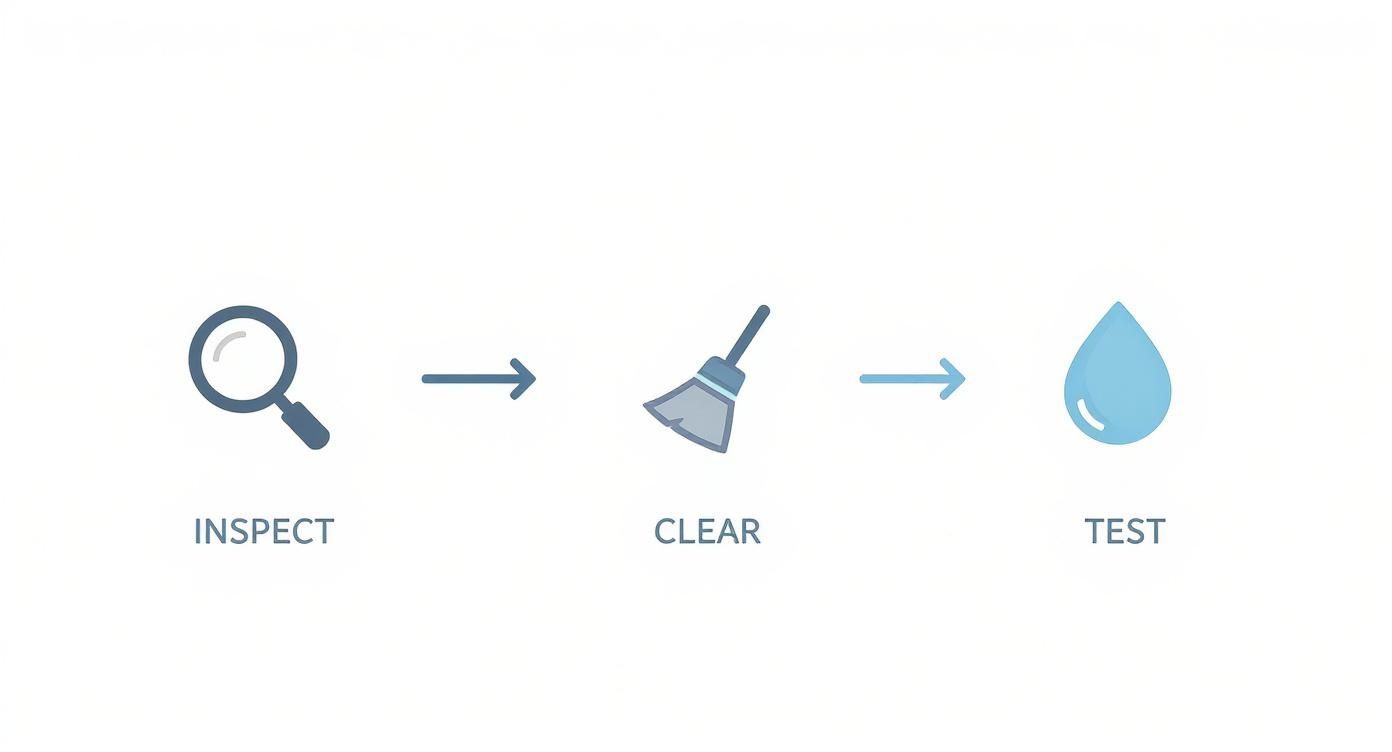
This simple flow drives the point home: you have to inspect and clear potential problems before the storm tests your landscape’s readiness. It’s a rule that applies just as much to tree canopies as it does to your drainage systems.
At California Landscape & Tree Pros, our crews strategically thin the canopy, allowing wind to flow through the branches instead of pushing against the tree like a giant sail. This protects your property and preserves the health of your trees, ensuring they're still standing tall when spring arrives.
Protecting And Nourishing Your Soil Through Winter
As Monterey's golden hills prepare for a green winter, it's easy to forget about the soil. Heavy winter rains can strip away precious topsoil and nutrients, especially on the sloped properties common in our area. The secret is to give your soil a protective blanket before the first big storm arrives.

This isn't just a hunch; the data backs it up. Monterey County typically gets 30-40% of its annual rain from November through January. This concentrated downpour is prime time for erosion. Studies show that unprotected soil can lose a staggering 2-3 tons of topsoil per acre during heavy rain events. From what we see in the field, properties that get proper fall maintenance—especially mulching—have plant survival rates that are 25-35% higher. If you're curious, you can dig into the historical Monterey County weather data to see these patterns for yourself.
Choosing The Right Mulch For Our Wet Climate
Not all mulch is created equal, especially for a wet Monterey winter. You need something that insulates roots and stops soil from washing away without becoming a soggy, compacted mess.
For our region, coarser mulches are the clear winner.
- Gorilla Hair (Shredded Redwood Bark): This is my go-to for hillsides. Its fibrous texture knits together, creating a stable mat that stays put even during heavy rain.
- Medium or Large Bark Chips: Fir or pine bark creates a durable layer with plenty of air pockets, preventing soil compaction and letting oxygen reach the roots.
Aim for a 2- to 3-inch layer of mulch. That’s the sweet spot—deep enough to suppress weeds and protect the soil, but not so thick it invites pests or causes rot. Always pull mulch back a few inches from tree trunks and plant stems.
Amending Clay Soil Before It Becomes Waterlogged
Many of us on the Central Coast deal with heavy clay soil. In the summer, it's like concrete; in the winter, it's a dense mud pit that can drown plant roots. Fall is the perfect opportunity to address this.
The best amendment for clay soil is organic compost. Working a good layer into your garden beds builds structure by forcing clay particles to clump together, creating crucial air pockets that boost drainage. Amending your soil is one of the most effective sustainable landscaping practices you can adopt, paying dividends for years with healthier plants and reduced water use.
The Role Of Fall Fertilizers
While fertilizing is often seen as a spring activity, the right kind of fall fertilizer is critical for preparing plants for winter dormancy. The goal is to encourage strong root growth, not tender new leaves that will be damaged by the cold.
Look for a fertilizer low in nitrogen and high in phosphorus. Phosphorus is the key nutrient for developing a robust root system. Applying it in the fall gives your plants the foundation they need to store energy all winter and explode with healthy growth in the spring.
Final Checks for Irrigation and Outdoor Living Spaces
You've tackled the big stuff—water management, tree care, and soil prep. Now it's time for the finishing touches: securing your irrigation system and outdoor living areas before winter rains set in. A little attention now can prevent major headaches down the road.
Winterizing Your Irrigation System
Once the rains arrive, your automated sprinkler system can quickly become a liability. A small, hidden leak that's a minor issue in August can become a huge problem when the ground is already saturated.
- Switch Off the Controller: As soon as seasonal rains begin, turn your irrigation controller to the "rain" or "off" position.
- Hunt for Leaks: Before powering down for the season, run each zone one last time. Look for sputtering heads, puddles, or unusually green patches—tell-tale signs of an underground leak that needs fixing.
- Drain the Lines: This is especially critical in colder, inland parts of Monterey County. Water trapped in pipes can freeze, expand, and crack lines or valves. A professional can blow out the system with compressed air to remove every drop.
If you need a little motivation, just look at the historical weather data. Records from our local airport show that the first significant storm after October usually rolls in between November 8th and 22nd. That’s a tight window. We've seen that properties buttoned up by mid-November have, on average, 60% fewer winter-related landscape damage incidents. You can check the local weather patterns on Forecast.Weather.gov yourself to see just how critical the timing is.
Securing Patios, Decks, and Fences
Your outdoor living spaces take a beating during winter storms. Coastal winds can turn lightweight furniture into projectiles, and constant moisture invites rot and decay.
Tuck away seasonal furniture, cushions, and umbrellas. Anything left outside should be heavy enough to withstand strong gusts or be securely tied down. Do a perimeter walk and check your fence posts for wobbling or signs of rot. A flimsy fence now is likely to fail during a February storm, leading to an expensive emergency repair.
For more inspiration on making these spaces resilient, see our guide on creating high-end outdoor living areas that work year-round. Once these final checks are complete, you can relax, knowing your property is ready for the rainy season.
Your Top Questions About Monterey County Fall Cleanups Answered
Every year, we get practical questions from homeowners trying to prepare their properties for the rainy season. Here are straightforward answers to the most common concerns.
When Is The Best Time For A Fall Cleanup In Monterey County?
Aim for the sweet spot between mid-October and mid-November. By then, most leaves have dropped, allowing for a thorough cleanup of dry debris. This timing ensures you're prepared before the first significant winter rains typically arrive in the latter half of November. Waiting too long means wrestling with muddy, saturated ground, which makes the work much harder and less effective.
Can I Prune My Own Trees, Or Should I Hire A Pro?
For small shrubs or low-hanging branches reachable from the ground, DIY pruning is fine. However, if a ladder is required, the tree is near power lines, or the branches are large and heavy, it's time to call a professional. Hiring a certified arborist ensures safety, as they are trained and insured for dangerous work. Their expertise allows them to spot weak limbs or disease an untrained eye would miss, and their knowledge of proper cutting techniques protects the tree's health, making it less likely to fail in a storm.
My Yard Gets Waterlogged Every Winter. What’s The Best Solution?
A swampy yard is a classic Monterey County issue due to our heavy rains and dense clay soil. For chronic, widespread pooling, a professionally installed French drain is the most reliable long-term solution. For less severe issues, aerating your lawn in the fall can break up compacted soil, improving water absorption. Amending garden beds with organic compost also enhances soil structure and drainage over time. A professional landscape assessment can help pinpoint the most effective and cost-efficient solution for your specific property.
What Is The Best Mulch For A Wet Monterey Winter?
The wrong mulch can become a soggy, compacted mess. We recommend a coarse-textured mulch like gorilla hair (shredded redwood) or medium fir bark. These materials allow water to pass through to the soil without becoming waterlogged. This protective layer insulates roots, suppresses weeds, and prevents heavy rain from eroding your topsoil. Spread a generous 2- to 3-inch layer, but keep it a few inches away from tree trunks and plant stems to prevent rot.
How Much Does A Professional Fall Cleanup Cost In The Monterey Bay Area?
Costs vary based on property size and the scope of work. A basic service for a standard residential lot—including leaf and debris removal, gutter cleaning, and hauling—might start in the low hundreds. A more comprehensive job with arborist pruning, a full drainage inspection, and mulching could range from several hundred to a few thousand dollars. Think of it as preventative maintenance; the money spent now can save you thousands in emergency repairs from flooding, storm damage, or a fallen tree. Always request a detailed, written estimate.
Don't wait for the first storm to reveal your landscape's weaknesses. Homeowners across Monterey County and the Bay Area can book a seasonal landscape check-up or cleanup with California Landscape & Tree Pros — ensuring their yards stay safe, sustainable, and storm-ready as California’s rainy season begins. Contact us for a consultation. https://californialandscapeandtreepros.com