
Quick Answer
For most trees and shrubs in Monterey County, when to prune comes down to plant type and purpose. Structural pruning is usually best in late winter to early spring, while spring-flowering plants should be pruned after bloom. If a branch is broken, dead, diseased, or unsafe, address it promptly. Seasonal storm concerns also matter in the Monterey County storm season.
You walk outside, look at an overgrown maple, a rhododendron that just finished blooming, and a hedge starting to crowd the walkway, and the same question comes up every year. Cut now, wait a month, or leave it alone?
That uncertainty is reasonable. When to prune matters as much as how you prune, especially on the Central Coast where cool marine influence, inland heat, and sheltered versus exposed sites can change the timing on the same property.
Understanding Why Pruning Timing Is Critical
Pruning at the right time protects plant health, preserves flowering, and reduces avoidable stress. Pruning at the wrong time can remove next season’s flower buds, push tender growth before heat or cold, or leave a tree more vulnerable than it needed to be.
On Monterey County properties, timing usually comes down to four goals. Health pruning removes dead, diseased, or damaged wood. Structural pruning builds a stable canopy and corrects weak growth. Aesthetic pruning manages size, appearance, and flowering habit. Safety pruning deals with limbs that threaten people, roofs, driveways, or walkways.
Practical rule: Don’t ask “What month should I prune?” first. Ask “What am I trying to accomplish with this plant?”
That answer tells you whether the job belongs in dormancy, after bloom, during a light summer touch-up, or immediately because a hazard is present.
Pruning Goals Define the Timing
A Carmel-by-the-Sea garden, a Salinas yard, and a wind-exposed property in Pacific Grove should not be pruned on the same schedule. The right timing starts with the job you need the plant to do.

Pruning for health
Health pruning happens when the plant needs it. Dead wood, broken limbs, cracked attachments, and diseased branches are not worth leaving in place just to wait for a preferred month.
On Monterey County properties, I often see delayed cleanup after winter wind, summer limb drop, or irrigation-related decline near the coast. Waiting usually gives decay, pests, or disease more time to spread into adjacent wood. The trade-off is simple. Prompt, limited cuts are usually safer for the plant than postponing obvious corrective work.
Keep this type of pruning narrow in scope. Remove the failed or infected part, then stop unless there is a clear reason to do more.
Pruning for structure
Structural pruning is planned work. Its purpose is to build a stronger branch framework, improve spacing, reduce weak unions, and guide young trees before defects become expensive to correct.
In the Monterey Bay area, timing depends partly on microclimate. Cooler coastal sites often hold growth back longer, so late winter cuts can line up well with spring recovery. Inland sites that warm earlier may call for an earlier work window, especially on deciduous trees that break dormancy fast. The goal is to prune while the tree is still quiet, but close enough to active growth that wound closure begins without a long delay.
That timing matters most on young trees. A few well-placed cuts early can prevent years of overextended limbs, co-dominant stems, and clearance problems over driveways or walkways.
Pruning for aesthetics
Appearance-driven pruning has the widest timing range because different plants store and set buds differently. Camellias, hydrangeas, roses, and hedge shrubs do not all respond the same way, and that is where generic advice causes problems on local properties.
For bloomers that set flower buds well before the season starts, prune after flowering so you do not cut off the next display. For plants that flower on new growth, a late-winter cut often gives better shape and stronger regrowth. In foggier coastal gardens, soft growth can linger longer into the season, so aggressive shearing may leave plants dense outside and bare inside. Inland, faster spring push can make shrubs outgrow a light trim quickly.
Good appearance pruning keeps the plant looking intentional without forcing it into a shape that fights its natural habit.
Pruning for safety
Safety pruning follows use patterns on the property as much as plant biology. A branch over a play area, entry walk, driveway, or roof edge gets a different priority than the same branch over an unused corner of the yard.
Urgency still does not mean overcutting. In many cases, selective reduction is the right answer. Sometimes the safer option is cabling, weight reduction, or a formal risk assessment on a large tree with weak attachments or long, end-weighted limbs. On coastal properties, salt wind and asymmetrical growth can make those decisions less obvious than they appear from the ground.
A safe tree is not just tidy. It has sound attachments, balanced structure, and clearance where people actually live, park, and walk.
The Monterey Bay Pruning Calendar
A pruning date that works in Carmel can be wrong in Salinas. Along the Monterey Bay, fog, wind exposure, and temperature swings change how quickly plants harden off, push new growth, and recover from cuts. Good timing comes from the plant, the site, and the local microclimate together.
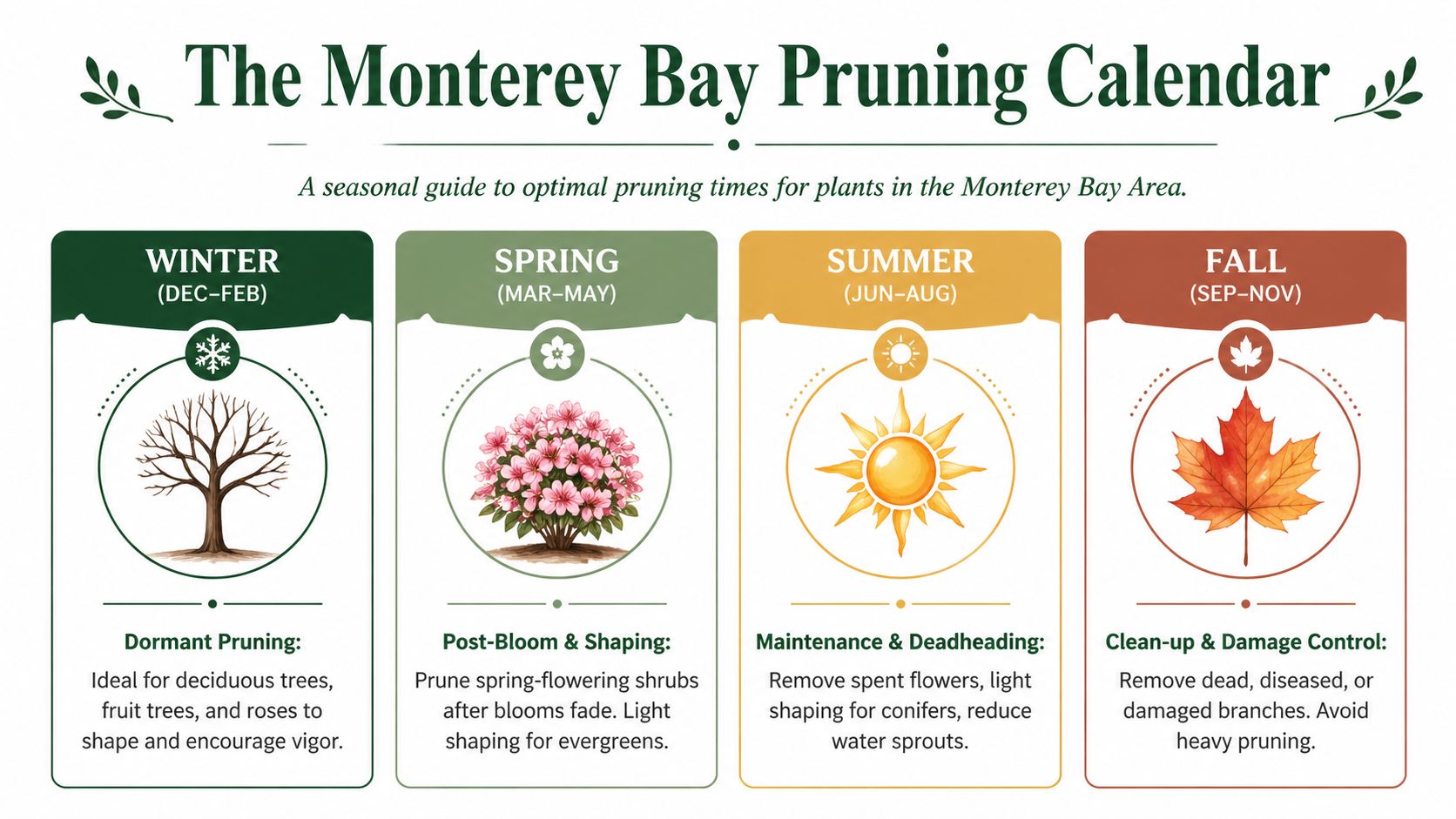
Late winter and early spring
For many Monterey County properties, this is the primary pruning window. Deciduous shade trees, fruit trees, and many dormant shrubs respond well when cuts are made before spring growth starts in earnest. On coastal sites, that window often stretches a bit later because cool weather lingers. Inland valleys usually move earlier.
This is the time I recommend for structural work. Correct branch spacing, reduce crowding, clean out deadwood, and make planned clearance cuts before the canopy leafs out. The branch framework is easier to read, and the plant usually directs spring energy into better-placed growth.
Oaks need tighter timing. For non-emergency work, keep oak pruning in winter and keep the cuts as limited as possible. That matters on high-value coast live oaks and valley oaks where disease pressure, wound size, and long-term structure all carry more weight than short-term appearance.
Spring
Spring is where timing mistakes are common because everything is growing fast and every overgrown shrub starts asking for attention. In Monterey, the better approach is to watch plant stage instead of the calendar date. A garden in Pacific Grove may still be cool and slow while a yard in a sunnier inland pocket is already pushing hard.
Flowering habit matters here. Trees and shrubs that bloom on old wood should usually be pruned after flowering if you want the next round of blooms. If you cut too early, you remove flower buds that were already set. Plants that bloom on new growth are often better handled before that spring flush, not in the middle of it.
Summer
Summer pruning has a place, but it should usually stay selective. Remove water sprouts, manage suckers, shorten fast-growing shoots, and make minor reductions where growth is crowding paths, windows, or rooflines.
That lighter approach fits Monterey Bay conditions well. Coastal fog can keep plants looking lush even when they are under stress, and inland heat can make heavy cutting harder for the plant to absorb. Irrigation often hides the problem. A plant may look fine from a distance and still have little margin for a hard summer reduction.
For most plantings, summer is for control and cleanup, not major restructuring.
Fall
Fall is the conservative season. Handle storm damage, deadwood, broken limbs, and obvious hazards, but postpone major reshaping on most trees and shrubs until the better pruning window returns.
The reason is simple. Fall cuts can encourage tender new growth at the wrong time, especially in sheltered coastal gardens where warm spells continue longer than expected. That new growth is more vulnerable, and the plant does not respond with the same strength you usually get from a late-winter pruning cycle.
A practical calendar for Monterey Bay properties looks like this:
| Season | Best uses in Monterey Bay | Usually avoid |
|---|---|---|
| Late winter to early spring | Structural pruning, dormant pruning, fruit tree work, planned reductions on many deciduous plants | Heavy cuts on spring bloomers that flower on old wood |
| Spring | Post-bloom pruning on camellias, rhododendrons, and other old-wood bloomers. Light shaping as growth declares itself | Cutting off flower buds before bloom finishes |
| Summer | Light size control, sucker removal, water sprout removal, selective clearance pruning | Heavy pruning during heat, drought stress, or prolonged dry wind |
| Fall | Hazard cleanup, deadwood removal, storm response | Major reshaping or cuts that trigger late soft growth |
For Monterey County, the best pruning calendar is not just seasonal. It is local. Foggy coastal gardens, windy ridge properties, and warmer inland sites all shift the timing, sometimes by weeks.
When to Prune Different Plant Types
A Monterey County property can include coast live oaks, pittosporum screens, roses, citrus, and a few palms in the same yard. They should not be pruned on the same schedule. Along the Monterey Bay, fog, wind exposure, and inland heat shift pruning windows enough that plant type and site conditions both matter.
Deciduous trees
For Japanese maples, ornamental pears, liquidambars, and other deciduous shade trees, late winter is usually the cleanest work window in our area. Branch structure is easier to read before spring flush, and the tree can put energy into closing pruning wounds as growth resumes.
Focus on structure, not just appearance. Remove crossing limbs, reduce codominant competition where appropriate, correct low clearance over driveways or roofs, and clean out dead interior twigs. On older trees, I usually recommend staged pruning over more than one visit. That protects canopy function and lowers the chance of sun exposure on limbs that have been shaded for years.
Oaks and other high-value trees
Coast live oaks and valley oaks deserve a tighter standard. In Monterey County, these are often the most valuable plants on the property, both biologically and financially.
Keep routine pruning conservative and scheduled during the lower-risk period for disease pressure. Limit work to deadwood removal, selective clearance, and minor end-weight reduction unless a certified arborist determines that larger corrections are justified. If an oak has overextended scaffold limbs, included bark, or branch unions over targets such as patios, walkways, or parking areas, the timing and scope need to be planned carefully.
Evergreens and pines
Evergreen timing depends on the species. Broadleaf evergreens such as magnolia, privet, and some pittosporum usually tolerate light shaping after a growth cycle hardens off, while conifers need a more disciplined approach.
Pines are the common mistake. New candle growth is the point to manage, not old bare wood. Extension guidance notes that pines respond best when candle growth is shortened before it fully extends, and that spring-blooming shrubs should be pruned after flowering while shrubs that bloom on new growth are better handled in late winter, as explained in this pruning timing reference for evergreens and flowering shrubs. On Monterey Bay sites, that often means a slightly later coastal window and an earlier inland one.
Flowering shrubs
This group gets mispruned more than any other. The reason is simple. Bloom time tells you which wood matters.
Camellias, azaleas, rhododendrons, and many spring-flowering shrubs set buds on older wood. Prune them soon after bloom, while there is still time for next season’s flower buds to form. Crape myrtle, abelia, and other shrubs that flower on current-season growth are better candidates for late-winter pruning.
A quick field check helps identify the right schedule:
- Visible flower buds before spring growth usually means the plant blooms on old wood.
- Summer bloom after a strong spring flush often points to flowering on new wood.
- Dense outer shell with dead interior growth usually means the shrub needs selective thinning cuts, not repeated shearing.
Hedges and screening plants
For ficus, podocarpus, eugenia, and pittosporum screens, timing matters less than method and frequency. Light reductions during active growth are easier on the plant than waiting until the hedge is oversized and then cutting deep into old wood.
Keep the base wider than the top. That shape lets light reach lower foliage and helps prevent the bare-legged look that shows up on neglected screens all over the Peninsula and in inland Salinas properties. On windy sites near the coast, avoid heavy thinning right before exposure to strong afternoon wind, because sudden interior exposure can scorch foliage that has lived in shade.
Roses, fruit trees, and palms
Roses are usually pruned in the dormant season, then cleaned up through the year with deadheading and removal of weak or crossing canes. Fruit trees are similar in one respect and different in another. They benefit from dormant structural work, but species such as apricot and cherry can require more caution around wet-season disease pressure, so timing should be matched to the tree, not forced into a one-date rule.
Small cuts still need proper technique. For repetitive hand pruning, compact tools such as brushless M12 pruner shears can reduce fatigue, but clean cut placement and disinfected tools matter more than speed.
Palms follow their own rules. They are not shaped like shade trees and should not be stripped for appearance. If you have palms on site, review this guide to what palm tree trimming should look like when it’s done right before any fronds come off.
Clear Signs Your Plants Need Pruning Now
Routine timing matters, but some conditions don’t wait. If you see these problems, the plant likely needs attention regardless of the season.
The three Ds
Start with the obvious. Dead, damaged, and diseased wood should be identified on every inspection. Dead wood is brittle and often leafless when the rest of the canopy is active. Damaged limbs may be split, hanging, or bark-torn. Diseased branches can show dieback, cankers, oozing, or unusual discoloration.
If you’re not sure whether the issue is just stress or something more serious, it’s smart to get a closer review. This advanced guide to tree risk assessment gives a good framework for looking at the broader picture.
Rubbing branches and weak attachments
Branches that cross and rub create wounds. Those wounds don’t stay minor for long. They become entry points for decay and can turn into structural problems later.
Watch for narrow V-shaped unions too, especially in younger trees that were never trained early. A branch with a poor attachment angle may look fine until wind, weight, or end-loading exposes the weakness.
Dense growth and poor airflow
When the canopy is too dense, interior foliage declines, airflow drops, and branch structure gets harder to read. You may also notice shrubs flowering only on the outside shell or trees developing cluttered interior shoots.
Use this short checklist:
- Interior dieback suggests the plant is too shaded inside.
- Branches hitting roofs, fences, or walkways need correction before abrasion or clearance issues worsen.
- Repeated storm breakage usually points to structure that should’ve been addressed earlier.
- Water sprouts and suckers often signal stress, previous over-pruning, or deferred maintenance.
If you can’t see through parts of the canopy at all, the plant may need selective thinning rather than another round of shearing.
Essential Pruning Rules and Common Mistakes
Good timing won’t save bad technique. A healthy pruning program depends on clean cuts, restraint, and knowing when to stop.
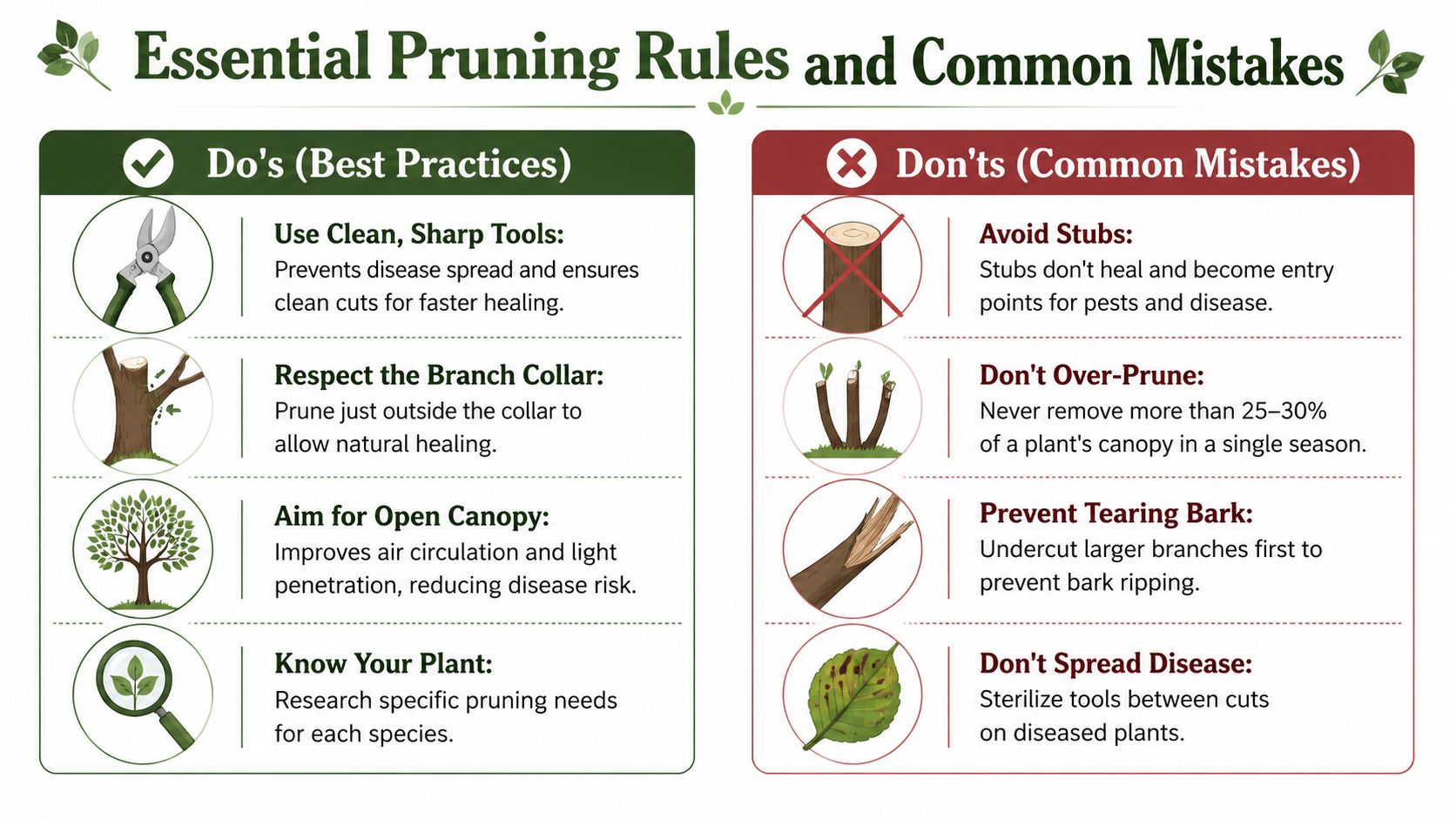
Rules worth following every time
Sharp, clean tools matter. Hand pruners, loppers, pruning saws, and pole saws all have their place, but dull blades crush tissue and dirty blades can move problems from one plant to another.
Cut placement matters just as much. On woody plants, cuts should respect the branch collar rather than slice flush into the trunk or leave a long stub. Larger limbs need a controlled cutting sequence so bark doesn’t tear down the parent branch.
The biggest rule is restraint. ANSI A300 recommends removing no more than 25% of a plant’s foliage in a single season, and over-pruning can cause a 40-60% increase in tree mortality from stress, epicormic sprouting, and pest entry, according to this ANSI-based pruning standard summary.
Mistakes that keep showing up
The first is over-pruning for a quick visual result. A freshly thinned tree may look “open” for a week, but if too much foliage is gone, the tree has to spend energy replacing what was removed instead of maintaining health.
The second is topping or arbitrary shortening. That creates weak regrowth, poor structure, and long-term maintenance headaches. The third is leaving stubs, which don’t close properly and often invite decay.
A fourth mistake is treating every struggling plant as a pruning problem. Sometimes irrigation, root disturbance, compaction, or poor siting is the actual issue. If the plant looks stressed overall, this expert guide to plant revival offers a useful broader checklist before more cuts are made.
For a look at current practice standards and where pruning decisions are heading, this overview of tree trimming trends homeowners should know is also helpful.
Clean cuts heal. Excess cuts create problems you end up paying to correct later.
When to Hire a Professional Arborist
Some pruning is well within the range of a careful homeowner. Small shrubs, reachable rose work, and minor deadwood removal on low plants are reasonable if the tools are right and the cuts are right.
Once ladders, chainsaws, large limbs, power lines, rooflines, or uncertain structural issues enter the picture, the work changes. So does the risk. A branch can fail differently than expected, decay can extend farther than it appears, and one bad cut on a major scaffold limb can’t be undone.
Hire a professional arborist when:
- The work leaves the ground and requires climbing or ladder use.
- Branches are over structures, driveways, or occupied areas where a mistake has consequences.
- The tree shows possible disease, decay, or major dieback and diagnosis matters.
- You’re managing multiple trees on a larger property, commercial site, or HOA and need a consistent pruning plan.
If you’re weighing whether professional evaluation is worth it, this guide on whether a certified arborist is worth it is a practical place to start.
The right arborist doesn’t just cut. They decide what should stay, what should go, and what shouldn’t be touched yet.
Frequently Asked Questions About Pruning
When is the best time to prune trees in Monterey County
For many deciduous trees, late winter to early spring is the preferred window for planned structural work. That said, spring-flowering trees and shrubs often need pruning after bloom, and hazard or damage-related cuts may need to happen sooner.
Can I prune shrubs in fall
You can remove dead, broken, or diseased growth in fall, but heavy pruning is usually a bad idea. On many plants, fall cuts can encourage growth at the wrong time and lead to weaker results going into winter.
How often should mature trees be pruned
That depends on species, age, condition, site use, and prior maintenance. Some trees can go several years between planned pruning cycles, while others on high-use properties need more regular inspection and selective work.
Will pruning make my plant grow back thicker
Sometimes it can, especially if cuts are too aggressive or placed incorrectly. Heading cuts and over-pruning often produce dense surface regrowth, while selective thinning usually gives a more natural and stable result.
Do I need a permit to prune a tree in Monterey County
Sometimes, yes. Permit requirements can depend on the species, local jurisdiction, whether the tree is protected, and how extensive the work is. It’s smart to check before major pruning, especially with native or regulated trees.
How much does pruning usually cost
Cost depends on tree size, access, risk, debris volume, equipment needs, and whether the work is simple maintenance or specialized arborist pruning. The most accurate way to price it is with an on-site estimate.
Is it okay to remove a large branch myself
Usually not, unless it’s small, fully accessible from the ground, and clear of targets. Large limbs carry weight in ways homeowners often underestimate, and bark tearing or uncontrolled failure can damage the tree and the property.
Get Expert Guidance on When to Prune Your Landscape
A January cut in Carmel Valley may be right for one tree and wrong for the same species a few miles away in Pacific Grove. Along the Monterey Bay, fog, wind, inland heat, and soil moisture change growth patterns enough that pruning dates should be set by plant type, site exposure, and current condition, not by a generic “winter is best” rule.
If you want a certified arborist to review pruning timing for your trees and shrubs in Salinas, Monterey, or elsewhere in Monterey County, contact California Landscape & Tree Pros. We can help you decide what should be pruned now, what should wait, and what should be left alone to avoid stress, weak regrowth, or unnecessary risk.
Call (831) 998-7964 in Salinas or (831) 905-8018 in Monterey, visit 1184 Monroe St., Suite 6, Salinas, CA 93906, or request a consultation at californialandscapeandtreepros.com.