
Residents of Monterey County know that winter storms can be unpredictable — and recent state reports show storm-weakened trees remain a major hazard with falling limbs and property damage risk. Strong coastal winds, saturated soils, and older heritage trees in Salinas, Seaside, and the wider Monterey Bay region mean that even healthy-looking trees may develop root instability or limb fractures after repeated storms. This guide provides actionable, locally-focused strategies to protect your home and landscape before the next storm hits.
1. Pre-Storm Tree Inspection and Risk Assessment
The single most effective strategy for mitigating storm damage is identifying potential hazards before the first winter winds arrive. A pre-storm tree inspection and risk assessment is a proactive, professional evaluation of every significant tree on your property. This isn't just a casual glance; it's a systematic check-up designed to spot structural weaknesses, diseases, and other dangerous conditions that high winds and saturated soil can exploit.
In Monterey County, this proactive step is essential. Our unique coastal climate, characterized by strong Pacific winds and intense atmospheric rivers, puts immense stress on trees. An arborist's assessment focuses on identifying compromised limbs, root system instability, and decay that might not be visible to an untrained eye. By pinpointing these issues in the dry season, you can schedule necessary pruning or removals, transforming a future emergency into a manageable, planned task.
Why a Proactive Inspection is Critical in Monterey County
Waiting until a storm is forecast is too late. The goal is to strengthen your trees' defenses well in advance. Consider these common local scenarios:
- Coastal Carmel and Pebble Beach Properties: Homeowners here often have mature Monterey Pines and Cypress trees constantly exposed to salt spray and wind. An arborist can identify wind-shear damage or disease-weakened limbs that are prime candidates for failure during a storm, protecting ocean-view homes and valuable landscapes.
- HOA Communities in Salinas and Marina: Many established neighborhoods feature beautiful, mature trees planted decades ago. An HOA-wide assessment in late summer can identify at-risk trees near common areas, parking lots, and residences, allowing the board to budget and schedule preventative maintenance that protects both property and residents.
Actionable Tips for Your Pre-Storm Assessment
To make your inspection effective, follow these guidelines, which are among the most crucial tree safety tips for Monterey County storm season:
- Schedule Early: Book your inspection in late summer or early fall (ideally August–September). This provides a clear window for any recommended work before the winter storm season peaks.
- Prioritize High-Risk Zones: Instruct your arborist to focus on trees located near your home, garage, driveway, utility lines, and fences. These are the trees with the highest potential to cause significant damage.
- Document Everything: Request a detailed report with photos from your arborist. This documentation is invaluable for tracking tree health over time and can be essential for insurance claims or HOA records if damage occurs later.
Expert Insight: Schedule a mid-winter or early-spring tree assessment. Look for signs like leaning trunks, cracked limbs, or soil heaving around the root zone — all amplified by Monterey County’s heavy storm cycles.
A professional evaluation provides a clear, prioritized action plan. Understanding the specific vulnerabilities of your trees is the foundation of any effective storm preparation strategy. For a deeper understanding of what professionals look for during this process, you can explore this detailed guide to tree risk assessment. Learn more about the comprehensive tree risk assessment process here.
2. Strategic Pruning to Reduce Wind Load and Improve Tree Structure
Beyond simple inspection, strategically pruning your trees is a physical defense against the powerful winds characteristic of Monterey County storms. This is not about indiscriminately cutting branches; it's a precise, arboricultural science that involves selectively removing deadwood, thinning the canopy, and correcting structural flaws. The goal is to reduce the "sail effect," where a dense canopy catches wind like a ship's sail, placing immense stress on the trunk and root system.
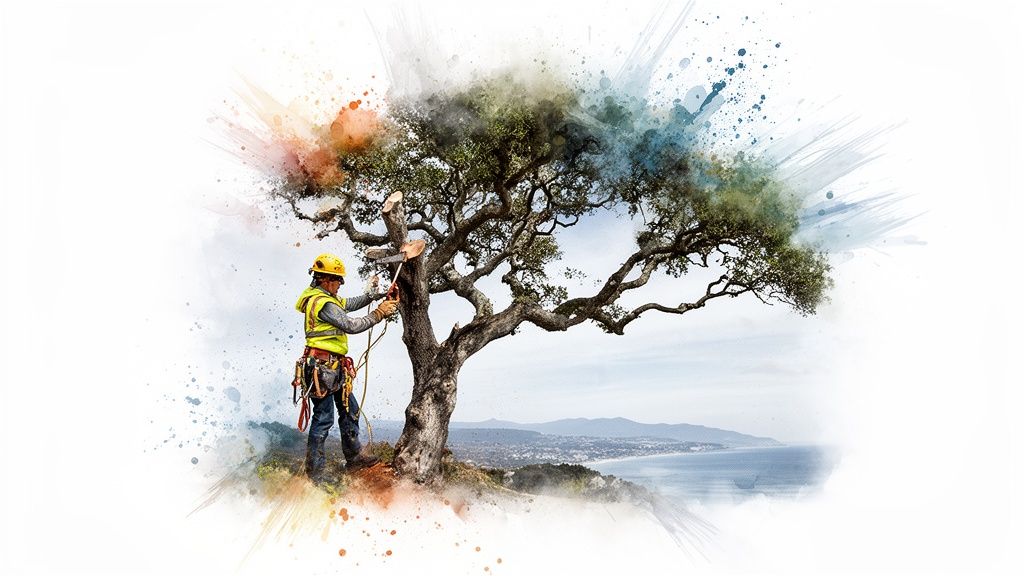
In our coastal environment, from the bluffs of Big Sur to the neighborhoods of Seaside, trees endure constant wind and salt spray. Strategic pruning allows this wind to pass through the canopy rather than push against it, drastically lowering the risk of branch failure or uprooting in saturated winter soils. By improving a tree's structure and reducing its wind load, you are actively fortifying it against the next atmospheric river.
Why Strategic Pruning is a Non-Negotiable in Monterey County
Proper pruning directly addresses the primary threats our local trees face during winter. It's a targeted solution for common storm-related failures. Consider these local examples:
- Salinas Valley Oak Trees: The sprawling canopies of mature Valley Oaks can become dangerously heavy, especially when wet. Professional crown thinning and lifting removes excess weight from the ends of long branches, reducing leverage and preventing limbs from snapping over homes and driveways during high winds.
- Coastal Pine and Cypress Trees: In Carmel and Pacific Grove, Monterey Pines and Cypresses are constantly exposed. Thinning their canopies improves airflow, reducing the force of wind gusts and minimizing the risk of failure in areas where property values are high and space is limited.
- HOA and Commercial Properties: Many neighborhoods from North Salinas to Marina feature mature trees planted decades ago — beautiful, but often overdue for structural pruning. After a wet winter, these trees carry added weight and weakened branch unions, increasing failure risks near driveways, fences, and rooftops. Explore how targeted care can protect shared spaces by reading more about our approach to commercial tree maintenance. Learn more about the comprehensive commercial tree maintenance process here.
Actionable Tips for Your Pruning Plan
To ensure your pruning efforts enhance safety rather than harm your trees, follow these professional standards. These are some of the most essential tree safety tips for Monterey County storm season:
- Timing is Key: Schedule pruning for late summer or early fall (before November). This allows the tree's wounds to heal and compartmentalize before the stress of winter storms arrives.
- Know the Right Techniques: Insist on 'structural pruning' or 'crown thinning' from a certified arborist. Never allow "topping," a harmful practice that weakens a tree's structure and makes it more hazardous in the long term.
- Follow the 25% Rule: A professional will never remove more than 25% of a tree's living canopy in one season. Over-pruning induces stress and can compromise the tree's health.
- Hire a Certified Professional: Ensure your arborist is ISA (International Society of Arboriculture) Certified and follows ANSI A300 pruning standards. This guarantees the work is based on safety and tree biology, not guesswork.
Expert Insight: For large, overgrown, or long-neglected trees, a single pruning session is often not enough. Ask your arborist about creating a multi-year pruning plan to gradually restore the tree's structural integrity and safety without causing undue stress.
Proper pruning is a critical investment in your property's safety. It directly reduces the physical forces that cause trees to fail during storms, transforming a potential liability into a resilient and beautiful asset.
3. Removal of Dead, Diseased, and High-Risk Trees
While proactive inspection is the first line of defense, some trees are simply too compromised to save. The targeted removal of dead, diseased, or structurally unstable trees is a non-negotiable step in securing your property against storm season. These trees are ticking time bombs; their weakened structures make them exceptionally vulnerable to the combination of high winds and saturated soil common in Monterey County winters, posing a direct threat to homes, vehicles, and utility lines.
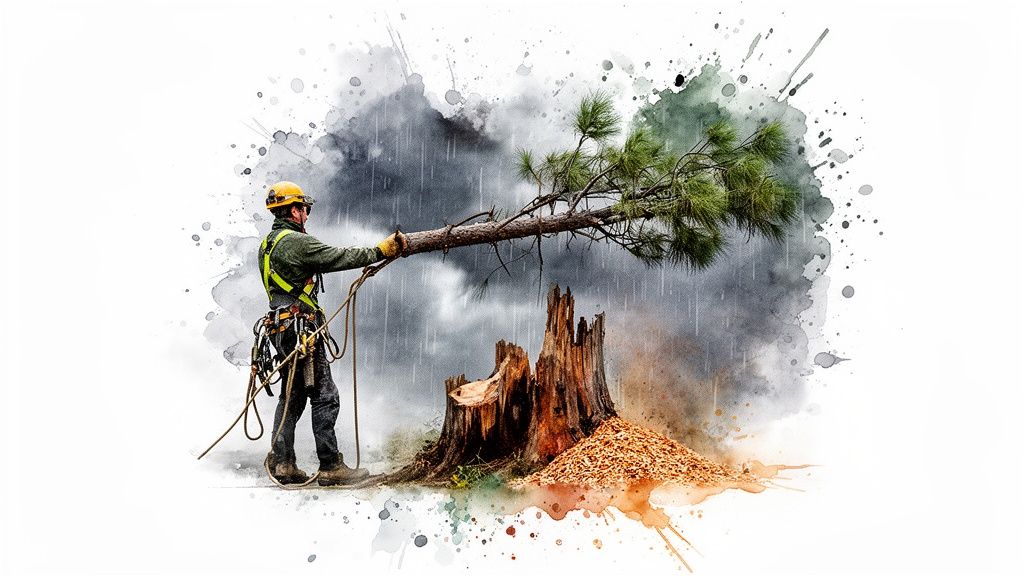
Removing a high-risk tree is not a failure of maintenance; it is the ultimate protective measure. It eliminates the potential for catastrophic failure before a storm arrives, preventing devastating damage and ensuring the safety of your family and property. This is particularly crucial in our region, where specific diseases and environmental stressors create unique hazards that demand decisive action.
Why Timely Removal is Critical in Monterey County
Delaying the removal of a hazardous tree is a gamble against nature. Once a storm is imminent, it's often too dangerous and too late for crews to work safely. Consider these local scenarios:
- Carmel and Big Sur: Properties in these areas often contend with Monterey Pines and Cypress trees. When these iconic trees die, they quickly become brittle and are prime candidates for snapping or uprooting during fierce coastal gales, threatening valuable real estate and scenic views.
- Inland Valleys like Salinas and Carmel Valley: These regions are susceptible to diseases like Sudden Oak Death (SOD). An oak infected with SOD can decline rapidly, becoming structurally unsound. Removing it not only mitigates a physical hazard but also helps prevent the disease from spreading to other cherished heritage oaks in the community.
Actionable Tips for High-Risk Tree Removal
Approaching tree removal strategically is one of the most vital tree safety tips for Monterey County storm season:
- Don't Wait for a Storm: The best time to remove a dead or dying tree is as soon as it's identified. Waiting for the storm season to begin dramatically increases the risk and can limit the availability of professional services.
- Document and Insure: Before removal, take clear photos of the hazardous tree, especially any visible decay, cracks, or dangerous leans. This documentation is crucial for liability protection and can support insurance claims if another tree causes damage later.
- Plan for Replacement: Discuss a replacement plan with your arborist. Removing a large tree can change your landscape's sun exposure and aesthetics. Planting a storm-resistant, native species like a Coast Live Oak can restore beauty and ecological balance.
- Confirm Debris Management: Ensure the removal service includes chipping and hauling all debris. A clean site is a safe site, and leaving large logs or branches behind can create new hazards.
Expert Insight: When a tree is removed due to disease, ask your arborist about preventative treatments for surrounding healthy trees. Infections like oak wilt or other fungal pathogens can spread through root systems or via insects, so a proactive treatment plan is essential to protect the rest of your landscape.
Removing a compromised tree is a definitive action that provides immediate peace of mind. It transforms a major liability into a managed, controlled project, safeguarding your property from the worst-case scenarios that Monterey County storms can deliver.
4. Mulching and Soil Management to Improve Tree Stability
A tree’s resilience during a storm begins below the ground. Proper mulching and soil management are foundational practices that directly enhance a tree's anchorage by fostering a deep, healthy root system. This is far more than a cosmetic touch; it's a strategic effort to improve soil structure, retain moisture, and protect roots from temperature extremes, making the entire tree more stable against Monterey County's powerful winter storms.
For our region, where soils can range from sandy loam along the coast to heavy clay in inland valleys like Salinas, this step is crucial. Healthy soil allows roots to penetrate deeper and wider, creating a robust anchor that resists the immense force of high winds on a saturated tree canopy. By managing the soil environment, you reduce the risk of waterlogging, root rot, and ultimately, catastrophic tree failure during an atmospheric river event.
Why Soil Health is Critical for Storm Preparedness in Monterey County
A well-anchored tree is a safer tree. Investing in the soil around your trees is one of the most effective, long-term tree safety tips for Monterey County storm season.
- Carmel and Pebble Beach Properties: High-value mature trees in these coastal areas often face soil compaction from foot traffic and landscape maintenance. A proper mulching program can alleviate compaction, allowing critical oxygen and water to reach the root zone, strengthening these irreplaceable trees against coastal gales.
- Newer Developments in Salinas: For newly planted oak and pine trees, establishing a strong root system quickly is vital for long-term survival. Amending clay-heavy soils and applying a protective mulch layer gives these young trees the foundation they need to withstand their first few storm seasons and grow into healthy, stable assets.
- HOA Communities: Implementing a community-wide mulching program is a cost-effective strategy to improve the health of all community trees, reduce landscape maintenance costs, and enhance overall property safety by mitigating the risk of windthrow in common areas.
Actionable Tips for Effective Mulching and Soil Care
To maximize the benefits of mulching for tree stability, follow these professional guidelines:
- Apply the Right Amount: Spread a layer of organic mulch, like wood chips or bark, 3 to 4 inches deep. Create a wide ring around the tree, extending at least 3 to 6 feet from the trunk, or even out to the drip line for young trees.
- Avoid the "Mulch Volcano": Critically, keep mulch from piling up against the tree trunk. Pull it back 6 to 12 inches from the bark to prevent moisture buildup, which can lead to bark rot, disease, and pest infestations.
- Improve Poor Drainage: In areas with heavy clay soil, consider incorporating organic compost into the top few inches of soil before mulching. This will improve aeration and drainage, preventing the saturated conditions that weaken root systems.
- Time Your Application: The best time to apply or refresh mulch is in the fall, as it helps insulate the soil and retain moisture before winter rains arrive.
Expert Insight: Think of mulch as a protective blanket for the root system. It moderates soil temperature, suppresses weeds that compete for resources, and slowly releases valuable nutrients as it decomposes. This creates the ideal environment for the fine, absorptive roots that are essential for a tree’s stability and vigor.
By focusing on the health of the soil, you are directly investing in your tree’s ability to withstand the harshest weather our region experiences. To learn more about creating a resilient landscape, you can explore our guide to weather-proofing your yard. Discover more about smart landscaping tips for Salinas and Monterey homeowners here.
5. Cable and Bracing Systems for Compromised but Valuable Trees
Sometimes, removing a structurally compromised tree isn't the only option, especially when it holds significant aesthetic, historical, or sentimental value. Professional cable and bracing systems offer a sophisticated solution to support and preserve such trees. These systems involve installing high-strength steel cables or rigid rods to provide supplemental support to weak branches, split trunks, or overextended limbs, reducing the risk of failure during high winds and heavy rains.
In Monterey County, this technique is invaluable for preserving our iconic landscape, which is rich with mature heritage oaks and majestic Monterey pines. An arborist installs these systems to redistribute structural stress, preventing weak points from worsening under the intense pressure of a winter storm. This proactive support can extend a tree's life by decades, transforming a potential liability into a safely managed asset that continues to grace your property.
Why Cable and Bracing is Essential for Preserving Heritage Trees
Installing support systems is a specialized task that must be done correctly to be effective and safe. It's not a DIY project; it requires an ISA-Certified Arborist's expertise to assess the tree's structural dynamics and install the appropriate hardware without causing further harm.
- Historic Monterey and Carmel Estates: Many older properties feature magnificent, centuries-old coast live oaks. When these trees develop codominant stems (split trunks) or heavy, horizontal limbs, cabling can prevent them from splitting apart during a powerful storm, preserving the historic character of the landscape.
- Storm-Damaged Pines in Pebble Beach: After a severe wind event, a valuable Monterey Pine may suffer a partial split but remain largely intact. Instead of removal, a combination of bracing rods and dynamic cables can stabilize the damaged areas, allowing the tree to heal and withstand future storms.
- HOA Heritage Trees in Salinas: A mature heritage tree in a common area with weak branch angles poses a significant risk. Stabilizing these limbs with cables is a key preventative measure, protecting residents and property while complying with local preservation ordinances.
Actionable Tips for Tree Support Systems
To ensure your valuable trees receive the right support, consider these essential tree safety tips for Monterey County storm season:
- Consult a Certified Arborist: Only an ISA-Certified Arborist has the training to properly design and install support systems. Improper installation can damage the tree or provide a false sense of security.
- Combine with Strategic Pruning: Cabling is often most effective when paired with crown reduction or thinning. This reduces the weight and wind-sail effect on the supported limbs, decreasing the overall stress on the system.
- Schedule Regular Inspections: Support systems are not a "set it and forget it" solution. They must be inspected annually by a professional to check for tension, hardware integrity, and how the tree is growing around the system.
Expert Insight: Modern cabling systems are often dynamic, allowing the tree to flex and bend naturally to build strength, while static systems provide more rigid support for splits. An arborist will determine the correct system based on the tree's specific needs, age, and species.
By investing in a professional support system, you can protect a priceless natural asset from the predictable violence of our coastal winter storms. It is a targeted, effective strategy for managing risk while preserving the beauty and value of your most important trees.
6. Emergency Response and Storm Cleanup Services
When a severe storm hits, the aftermath can be overwhelming, with fallen trees and massive limbs blocking access, damaging property, and creating immediate safety hazards. Having a pre-established plan for professional emergency response and storm cleanup is a critical safety net. This service involves rapid-deployment teams of certified arborists who can safely handle hazardous tree removals, clear debris, and restore access to your property during or immediately after a storm.
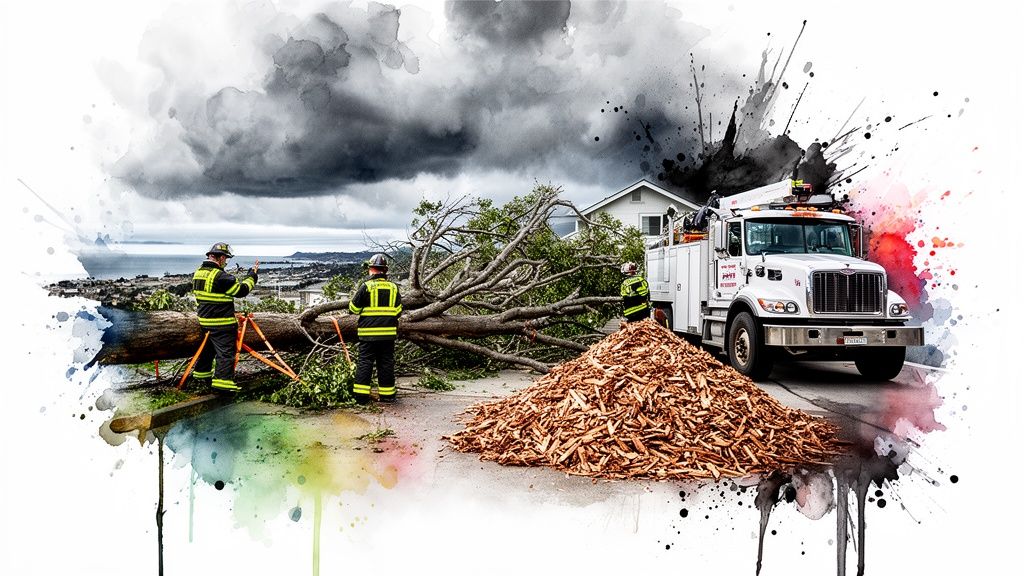
In Monterey County, where atmospheric rivers can topple even mature coastal pines and cypress trees, a swift response is not a luxury; it's a necessity. Professional storm cleanup crews are equipped with the heavy machinery and specialized skills to manage dangerous situations, such as trees entangled in utility lines or precariously balanced on rooftops. Attempting to clear this level of damage yourself is extremely dangerous and can lead to severe injury or further property damage.
Why a Rapid Response is Critical in Monterey County
Waiting for help after a major storm can prolong a dangerous situation. The goal is to mitigate hazards and begin recovery as quickly as possible. Consider these common local scenarios:
- Blocked Driveways in Carmel and Pebble Beach: A single large, fallen Monterey Pine can trap residents in their homes, preventing access for emergency vehicles. A rapid-response service can clear these vital access routes within hours, restoring safety and mobility.
- HOA-Wide Damage in Salinas and Marina: When a storm impacts an entire community, a coordinated cleanup effort is essential. A professional service can work with HOA boards to efficiently clear common areas, private properties, and roadways, ensuring the entire neighborhood is safe and accessible.
- Commercial Operations in Seaside: For businesses, storm damage means costly downtime. Emergency cleanup services help retail centers and commercial properties reopen quickly, clearing parking lots and entryways to minimize financial losses.
Actionable Tips for Emergency Preparedness
To ensure you are ready when a storm hits, follow these guidelines, which are among the most essential tree safety tips for Monterey County storm season:
- Establish a Relationship Early: Don't wait for a storm to find a tree service. Identify and save the contact information for a reputable, 24/7 emergency tree service provider before the winter season begins.
- Document All Damage: As soon as it is safe, take clear photos and videos of any damage to your property and trees. This documentation is crucial for insurance claims.
- Prioritize Safety and Access: When you call for service, clearly describe the most immediate hazards, such as trees blocking your only exit, leaning on your home, or tangled in power lines. This helps crews prioritize their response. For communities recovering from severe weather events, securing adequate funding is a critical component of rebuilding. Understanding how to access resources like these can significantly aid in recovery efforts, as detailed in discussions around disaster supplemental grants.
Expert Insight: Never approach a downed power line. If a tree has fallen on or near utility lines, notify your utility company and the emergency tree service immediately. Professional crews are trained to work safely in these high-risk environments.
A reliable emergency partner provides peace of mind and ensures a safe, efficient recovery process. Knowing who to call when disaster strikes is a fundamental part of any comprehensive storm safety plan. To learn more about what is involved in professional post-storm cleanup, you can review this guide to emergency services. Learn more about professional storm damage tree cleanup here.
7. Selective Tree Planting and Species Selection for Storm Resilience
The most enduring strategy for long-term tree safety is planting the right tree in the right place from the very beginning. Selective planting involves choosing tree species that are naturally adapted to withstand Monterey County's unique environmental pressures, including high coastal winds, salt spray, and saturated winter soils. This proactive approach builds resilience directly into your landscape, ensuring that new trees develop strong root systems and flexible structures capable of weathering seasonal storms.
In Monterey County, this means looking beyond generic nursery stock and focusing on native and climate-appropriate species. By selecting trees that evolved to thrive here, you cultivate a landscape that is not only more storm-resistant but also supports local ecosystems and requires less long-term maintenance. A well-chosen tree becomes a permanent asset, whereas a poor choice can become a recurring liability, especially during the intense atmospheric rivers that define our winters.
Why Strategic Planting is Critical in Monterey County
Choosing storm-resilient species is a forward-thinking investment in your property's safety. Consider these common local scenarios:
- Coastal Monterey and Carmel Properties: Homeowners replacing a storm-damaged tree should opt for native species like Coast Live Oak or California Bay Laurel. These trees are genetically programmed to handle salt-laden winds and sandy soils, developing deep, anchoring roots that provide superior stability compared to non-native alternatives.
- Inland Salinas and Prunedale: Properties in these warmer, drier inland areas can benefit from Valley Oaks and California Sycamores. These species are adapted to our clay-loam soils and have strong, flexible wood that can bend under high winds rather than snap, making them ideal near homes and driveways.
Actionable Tips for Storm-Resilient Planting
To ensure your new trees are prepared for future storms, follow these guidelines, which are among the most essential tree safety tips for Monterey County storm season:
- Choose the Right Species: Consult local resources like the UC Santa Cruz Arboretum or the California Native Plant Society to identify trees suited for your specific microclimate. Avoid weak-wooded species like Eucalyptus or Acacia that are known to fail in high winds.
- Plan for Mature Size: Before planting, visualize the tree's full-grown size. Ensure it is located a safe distance from your home, power lines, and underground utilities. For those considering new plantings to enhance their yard's resilience, understanding a homeowner's guide to precision digging can ensure safety around underground utilities.
- Establish Strong Roots: Plant during the fall or early spring (October–March) to allow the root system to establish before summer heat stress. Proper planting depth, minimal soil amendment, and consistent watering for the first 2-3 years are critical for developing storm-proof roots. Avoid staking the tree unless absolutely necessary, as natural movement helps the trunk develop strength.
Expert Insight: The goal is to create a tree that is self-sufficient and structurally sound. By choosing a native species and planting it correctly, you are minimizing the need for future interventions like drastic pruning or cabling, ultimately saving money and reducing storm risk.
A strategically planted landscape is your best defense against future storm damage. It transforms your property into a more robust and self-sustaining environment. To explore beautiful and resilient plant choices for our area, you can review some popular native plant ideas. Learn more about native plants for your yard here.
FAQs: Monterey County Tree Storm Safety
Q1: What are the most common signs a tree is a storm risk in Monterey County?
Look for leaning trunks, cracks in major limbs, dead or hanging branches, mushrooms growing on the trunk or at the base, and soil heaving around the root zone. Our saturated winter soils make even a slight lean a more significant concern.
Q2: When is the best time to have my trees inspected for storm season?
The ideal time is late summer or early fall (August to October). This gives you ample time to schedule any necessary pruning or removal before the winter storm season begins in earnest. A follow-up check mid-winter can also identify new issues.
Q3: Are Monterey Pines and Cypress trees more dangerous in storms?
While iconic to our coast, these species can become hazardous if not maintained. Their shallow root systems and dense canopies make them susceptible to uprooting in saturated soils and high winds. Regular inspection and strategic pruning are crucial.
Q4: Can I handle storm cleanup myself?
For minor debris like small twigs and leaves, yes. However, for any fallen branches larger than a few inches in diameter, or for any tree that has fallen on a structure or near power lines, you must call a professional. The risk of injury from unstable limbs or electrocution is extremely high.
Q5: How does a professional tree assessment work?
California Landscape & Tree Pros adapts its Tree Safety inspections specifically for the Central Coast’s climate. We assess soil saturation levels, wind-exposure zones, species-specific vulnerabilities (like brittle eucalyptus), and storm-stress indicators common in this region to provide a comprehensive risk report.
Your Proactive Storm Safety Partner
The ultimate benefit of embracing these tree safety tips is long-term peace of mind. By investing in professional assessments and timely maintenance, you are not just preventing immediate property damage; you are preserving the health and beauty of your valuable trees. According to CAL FIRE, thousands of trees weakened by drought and subsequent storms continue to pose a significant fall risk across the state, making proactive care more important than ever. (Source: CAL FIRE, Tree Mortality Information). A healthy, well-maintained tree is an asset that appreciates over time; a neglected one is a liability waiting to happen. Taking decisive action now is the most effective way to protect your home and contribute to a safer, more resilient community landscape.
If you live in Salinas, Monterey, Seaside, Marina, or surrounding communities, our team can perform a local, climate-specific tree safety evaluation to protect your home before the next storm front arrives.
Don't leave your property's safety to chance this winter. The experts at California Landscape & Tree Pros specialize in local, climate-specific tree safety evaluations tailored for the unique conditions of Monterey County. Visit California Landscape & Tree Pros or call us today to schedule a professional assessment and ensure your trees are secure before the next storm arrives.