
The big shift in outdoor living for 2026 isn't just about nicer patios; it’s about a fundamental reevaluation of the backyard. We're seeing spaces once reserved for occasional get-togethers become essential, functional extensions of the home. Homeowners are now demanding multi-purpose outdoor 'rooms' for everything from cooking and working to socializing, making these areas a crucial factor in both property value and daily quality of life.
The Shift: Your Backyard is Now Core Living Space
Welcome to a genuine evolution in how we live. By 2026, the backyard is no longer an afterthought—it's a fully integrated part of the home. Homeowners are finally seeing their patios, decks, and gardens as valuable square footage, spaces that need to do a lot more than host a simple barbecue. This shift means outdoor areas are now expected to be versatile, comfortable, and usable all year long.
This isn't just a fleeting trend. Current market data shows a significant shift: homeowners view outdoor living spaces as essential extensions of the home. According to the National Association of Realtors, 75% of recent homebuyers prefer a property with outdoor living areas. Outdoor areas are no longer luxury add-ons; they’ve become core living space that influences buying, renovation budgets, and long-term property value.
The Impact: Redefining Functional Square Footage
This shift affects customer decisions in several ways. Buyers now evaluate outdoor layouts as part of functional square footage, scrutinizing them with the same critical eye they use for kitchens and master suites. Demand is rising for multi-use spaces that can handle cooking, working, and socializing, often all in the same day.
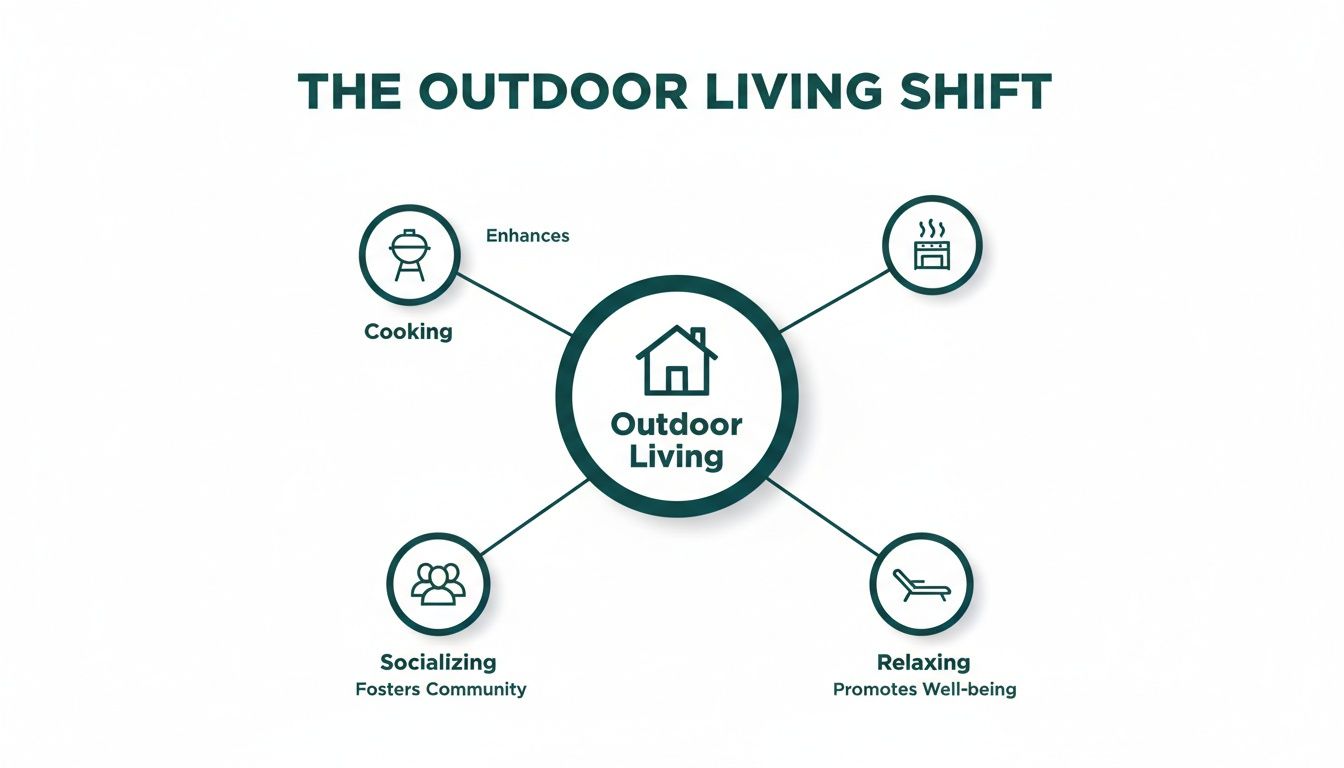
As the graphic shows, today's outdoor spaces are being designed as true multi-purpose hubs. Renovation budgets skew more heavily toward hardscape and outdoor living features like kitchens, and homeowners are prioritizing year-round usability with heaters, shade, and lighting. In short: outdoor functionality is now a driver of home equity and lifestyle quality. As you start thinking about your own backyard's transformation, understanding the essential outdoor kitchen layout ideas for 2026 is a great first step.
The Gap: Why Aesthetics-Only Designs Fail
Contractors who focus only on aesthetics or simple patio installs miss critical market needs. Their designs often fail seasonal usability tests, lack integration with irrigation and drainage, and show no long-term planning for material durability and ROI. This results in missed upsell opportunities, lower customer satisfaction, and homeowners turning to higher-authority competitors.
For homeowners in unique climates like Monterey Bay and Salinas, this gap is even more pronounced. Smart, professional planning is key to creating spaces that are comfortable and beautiful in every season. You can learn more by exploring our guide on creating high-end outdoor living areas that work year-round.
The Solution: An Integrated Approach to Outdoor Living
The big shift we're seeing in outdoor living for 2026 isn't just about nicer patio furniture. It's a complete reimagining of what a backyard is for. Homeowners are no longer thinking about a deck for summer barbecues; they're creating a genuine, functional extension of their indoor living space, with dedicated "rooms" for dining, working, and relaxing.
This all comes down to a desire for versatility. California Landscape & Tree Pros delivers integrated outdoor living design that blends hardscape, landscape, lighting, and arborist oversight. Our tech-driven design walkthroughs allow customers to visualize real-world use and ensure the layout supports year-round comfort and functionality.
Building for Multi-Use Functionality
Today's backyard has to be a jack-of-all-trades. A single patio might need to function as a quiet breakfast spot, a productive home office, and a cozy lounge for friends at night. This demand for flexible, multi-use layouts is at the very heart of the outdoor living shift why 2026 redefines how homeowners use their space.
Pulling this off requires smart, intentional design. Here’s what we're seeing work best:
- Zoned Layouts: Distinct areas for different activities, like a cooking zone with a built-in grill, a separate lounging area around a fire pit, and a dining spot under a pergola.
- Flexible Furnishings: Modular, weather-resistant furniture that can be easily reconfigured to suit any occasion.
- Integrated Technology: Outdoor-rated Wi-Fi extenders, discreet charging stations, and integrated sound systems to make the space truly livable.
This move toward multi-functionality is changing how people budget for renovations, with more flowing into hardscaping and built-in features that expand usable square footage.
Prioritizing All-Season Comfort
For an outdoor space to feel like a real room, it has to be comfortable twelve months a year. This is where strategic, climate-aware design becomes non-negotiable, especially for those of us in places like Monterey Bay and Salinas. The goal is to transform a seasonal amenity into a permanent, reliable part of the home.
The market is responding to this demand. The U.S. outdoor living market was valued at over $33 billion in 2023 and is projected to keep growing. This growth is fueled directly by homeowners' desire for functional outdoor rooms. Learning the 5 ways to boost outdoor comfort in 2026 is a great starting point for making smart, durable choices.
The essential elements for long-term usability include:
- Covered Structures: Pergolas and pavilions are becoming standard for protection from sun and rain.
- Integrated Heating and Cooling: Built-in radiant heaters and outdoor ceiling fans are extending usability into colder and warmer months.
- Advanced Lighting Systems: Layered lighting makes the space inviting and functional long after sunset.
Building The Smart And Sustainable Backyard Of Tomorrow
The modern outdoor space is no longer just a patch of grass. It’s an intelligent, efficient, and environmentally conscious extension of the home. Technology and sustainability are redefining what homeowners expect, creating high-performance, future-ready landscapes that are easier to manage and gentler on the planet.
With smart-home device adoption blowing past 300 million connected homes worldwide, it was only a matter of time before that convenience migrated outdoors. You can read more about these global trends and how they are shaping the future of outdoor living spaces.
Integrating Smart Home Technology Outdoors
The magic of outdoor technology is how it layers in convenience and ambiance without effort. It makes your space more responsive to your needs. Imagine tweaking your landscape lighting from your phone to set the perfect mood for a dinner party.
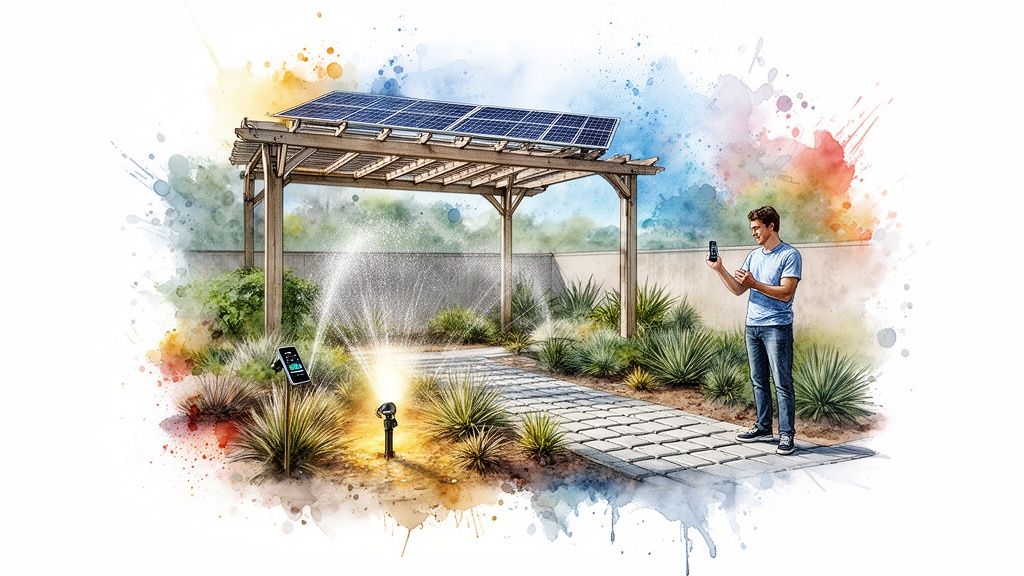
Here are a few of the most impactful smart integrations we see:
- Automated Irrigation Systems: Smart systems tap into local weather forecasts, automatically adjusting watering schedules to save water and ensure plant health.
- App-Controlled Landscape Lighting: Smart lighting gives you total control over brightness, color, and scheduling from a simple app.
- Weather-Resistant Audio and Entertainment: Seamlessly integrated speaker systems provide background music while blending discreetly into the landscape.
Embracing Sustainable And Eco-Friendly Practices
Hand-in-hand with technology is a growing demand for sustainability, which makes sense here in California. Homeowners want outdoor spaces that aren’t just beautiful but also responsible. This forward-thinking approach creates a resilient landscape that works with nature, not against it, a core theme in our guide on 4 ways to build a climate-smart yard in 2026.
Sustainability in modern landscape design is about choosing materials that last, plants that belong, and systems that conserve precious resources. The table below highlights how modern solutions are replacing outdated approaches.
Future-Proofing Your Outdoor Space
A comparison of traditional outdoor features versus their modern, tech-enabled, and sustainable counterparts for 2026.
| Traditional Feature | Modern 2026 Equivalent | Key Benefit |
|---|---|---|
| Standard Sprinklers | Smart, weather-based irrigation | Drastically reduces water waste and lowers utility bills. |
| Concrete Slab Patio | Permeable pavers or recycled composite decking | Allows rainwater to return to the soil, reducing runoff and erosion. |
| Imported, Water-Thirsty Plants | Drought-tolerant native plants and grasses | Requires less water and maintenance while supporting local wildlife. |
| Halogen Floodlights | Low-voltage, app-controlled LED lighting | Offers superior energy efficiency, longevity, and customizable ambiance. |
By weaving intelligent technology with sustainable practices, homeowners create an outdoor living space that isn't just ready for 2026 but is built to provide enjoyment, value, and peace of mind for decades.
Avoiding the Pitfalls of a Disconnected Design
Homeowners are pouring more excitement and money into their backyards than ever, but that enthusiasm can lead to expensive missteps. The single biggest trap is a disconnected design, where a backyard gets built piece by piece, with no unified vision. One contractor puts in a patio, another a kitchen, and a third handles the plants. While each part might look great, they often don't add up to a cohesive, functional space.
This piecemeal approach is a recipe for frustration. Think of a gorgeous outdoor kitchen that’s unusable most evenings because it gets blasted by coastal winds. These aren't just minor annoyances; they're a huge waste of your investment.
The Problem with an Aesthetics-Only Focus
The root of the problem often lies with contractors who only see one piece of the puzzle. This narrow focus creates a massive gap between what looks good on day one and what actually works for your family year-round. This is exactly why a holistic, integrated design process is so critical. The goal is to create a space where every element is planned from the very beginning to work in perfect harmony.
To learn more about building for the long haul, check out our advanced guide to building outdoor spaces that last. A truly successful project demands a deep understanding of how hardscape, landscaping, irrigation, drainage, and lighting all interact. Only then can you build an outdoor space that’s not just beautiful, but built to perform for decades.
The Benefit: Gaining a High-Performance Outdoor Asset
A well-designed outdoor space is a smart investment that pays you back in both lifestyle and property value. As the outdoor living shift why 2026 redefines how homeowners use their space, the distinction between a simple backyard and a high-value asset has never been clearer. Strategic thinking turns renovation dollars into real equity.
The benefits for contractors and homeowners are clear:
- Higher property value and stronger resale appeal
- Outdoor spaces that perform in all seasons
- Reduced maintenance issues thanks to integrated design planning
- A more predictable return on investment for renovation dollars
Our tech-driven design walkthroughs let you virtually step into your future backyard, making sure the layout and features are perfectly aligned with your goals before we break ground. Explore how we bridge the gap between ideas and results in our guide on smarter landscape design choices for lasting beauty and function.
Local Tie-in: Mastering the Monterey Bay Climate
For Monterey Bay and Salinas homeowners, coastal wind, fog, and microclimates make professional outdoor living planning essential. CLTP helps residents build spaces that remain comfortable and beautiful through all four seasons. Our deep expertise means your investment stays protected and enjoyable, delivering a superior return that truly lasts. You can even calculate the potential return on investment for sustainable backyard additions to get a clearer idea of how these features can pay off.
Frequently Asked Questions About the Outdoor Living Shift
As homeowners rethink their yards, many questions come up. To help you plan with confidence for the outdoor living shift why 2026 redefines how homeowners use their space, we've answered the questions we hear most often.
1. How does an integrated design process save me money?
An integrated process prevents costly mistakes. By planning for drainage, irrigation, lighting, and material durability from day one, we eliminate the need for expensive rework later on. This ensures your budget is used efficiently to create a functional, long-lasting space that adds real value to your home.
2. What are the most important features for a year-round space in Monterey Bay?
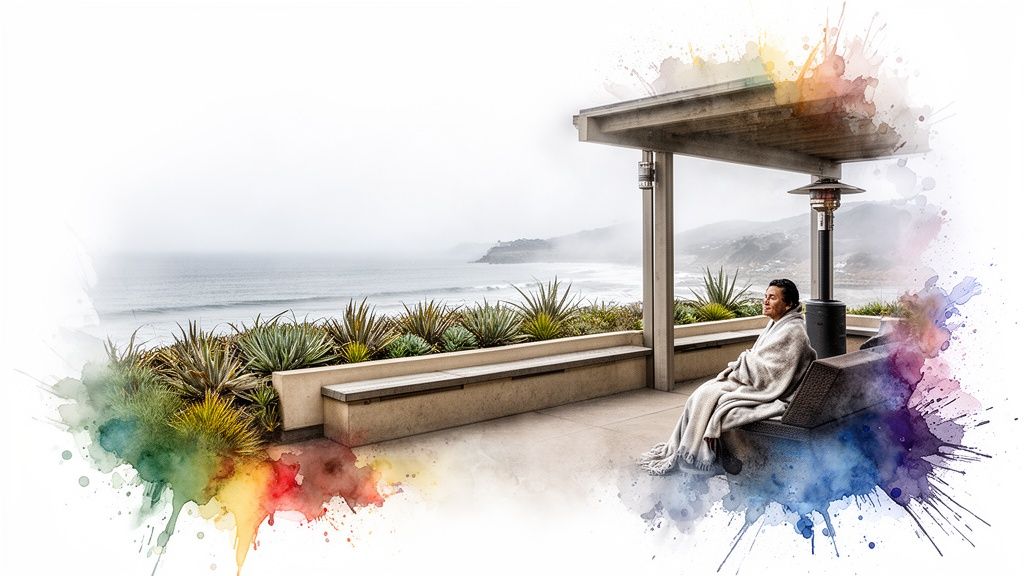
For our coastal climate, the key features are strategic windbreaks (using a mix of hardscape and plantings), covered structures like pergolas to shield from fog and sun, and integrated heating sources like radiant heaters. These elements work together to create a comfortable microclimate you can enjoy in any season.
3. How does a professional design increase my property value?
A professionally designed outdoor living space increases your home's functional square footage and curb appeal. Buyers today see these areas as essential living space, not just a backyard. A cohesive, high-quality design is a major selling point that can lead to a higher resale value and a quicker sale.
4. What is the difference between an aesthetic design and an integrated design?
An aesthetic design focuses only on how the space looks. An integrated design considers how the space functions. It ensures that every element—from the patio material to the plant selection and drainage system—works together harmoniously to create a durable, low-maintenance, and truly usable outdoor room.
5. What's the first step to planning my new outdoor space?
The first step is a consultation to define your goals. We discuss how you want to use the space, your lifestyle needs, and your budget. This conversation forms the foundation of a custom plan that ensures the final result is a perfect fit for you and your family.
Ready to transform your property with an outdoor living space built for the future? The team at California Landscape & Tree Pros specializes in creating integrated, year-round environments that add value and joy to your home. Visit us online at https://californialandscapeandtreepros.com to schedule your consultation today.
Sources:
- National Association of Realtors. (2023). Remodeling Impact Report: Outdoor Features. https://www.nar.realtor/research-and-statistics/research-reports/remodeling-impact-report-outdoor-features
- Statista. (2024). Smart Home – Worldwide. https://www.statista.com/outlook/dmo/smart-home/worldwide
- Grand View Research. (2024). Outdoor Living Structures Market Size, Share & Trends Analysis Report. https://www.grandviewresearch.com/industry-analysis/outdoor-living-structures-market