
For California homeowners, the idea of a "green" yard is transforming in 2025. Smart landscaping now starts with water-wise design, moving beyond the iconic, thirsty lawn toward beautiful, sustainable yards that thrive in our unique climate. It’s all about integrating native plants, drip irrigation, and smart controllers to build landscapes that are both resilient and resource-efficient.
Sustainability is Shaping Home Landscapes
Across California, homeowners are increasingly prioritizing eco-friendly yards that use less water and support local ecosystems. With ongoing droughts and a collective push for ecological responsibility, this shift isn't just a trend—it's becoming a way of life. A modern, water-wise yard isn’t a compromise; it’s a significant upgrade that adds value and beauty.
This new approach supports the local environment and leaves you with a stunning landscape you can enjoy year-round. It’s time to break the cycle of endless mowing and watering. The future is a yard that's as resilient and vibrant as California itself.
By blending native plants, intelligent irrigation, and sustainable hardscapes, you can create a cohesive, low-maintenance oasis. This isn't just about saving water; it's about crafting a landscape that works in harmony with our environment.
A New Era of Eco-Conscious Yards
Yards that use less water and support native wildlife are the new standard. The core elements of this movement are straightforward and highly effective:
- Native Plants: Choosing plants naturally adapted to California’s climate results in a garden that needs less water, fewer pesticides, and provides a welcoming habitat for local pollinators.
- Drip Irrigation & Smart Controllers: These tools are game-changers. They deliver water directly to the plant's roots and adjust schedules based on real-time weather, practically eliminating waste. Find more details in our guide to Monterey County landscape maintenance and plant care.
- Permeable Hardscapes: Using materials like decomposed granite or permeable pavers allows rainwater to soak into the ground, recharging our precious groundwater instead of running off into storm drains.
Water-Wise Landscaping Boosts Property Value
Integrating drought-tolerant features isn’t just responsible—it’s a smart financial decision. A thoughtfully designed, sustainable yard significantly enhances curb appeal and can increase your home's resale value. In fact, studies show that nearly all homeowners recognize that a well-maintained, sustainable yard enhances both curb appeal and resale value.
In a state where water conservation is always top of mind, a low-water landscape is a huge selling point. With a significant portion of residential water going to outdoor landscaping, a water-wise design shows foresight and financial savvy. You can learn more about the state's official standards for water efficiency in landscaping to see how seriously this is being taken.
Designing for Climate Resilience
With shifting weather patterns and regional droughts, homeowners are turning to landscapes that adapt. A thriving, low-water landscape doesn’t happen by accident; it starts with a smart plan tailored to your specific property. Smart landscaping starts with water-wise design, and this initial phase sets you up for a beautiful, low-maintenance yard.
The first step is a thorough site analysis. This involves mapping the unique microclimates across your property—identifying hot, sunny spots, cool shady corners, and how wind moves through the space. Understanding your soil type is also crucial for guiding plant selection and irrigation setup.
The Power of Hydrozoning
A pro strategy that makes a massive difference is hydrozoning. This involves grouping plants together based on their water needs. By creating separate zones for plants with low, medium, and high water needs, your irrigation can be incredibly precise, ensuring each area gets exactly what it needs without waste.
A well-planned landscape can reduce outdoor water consumption by 50% to 75%. It's not just about choosing drought-tolerant plants; it's about putting the right plant in the right place with the right amount of water.
This infographic captures the journey of transforming a classic lawn into a sustainable, beautiful landscape.
As you can see, moving from a high-maintenance lawn to a vibrant, low-water garden is a straightforward process built on a foundation of thoughtful design. Homeowners are also incorporating fire-resistant materials and pollinator-friendly plants for lasting value and safety. If you want an expert to handle the details, exploring professional Monterey County landscape design and construction services can make the process seamless.
Innovation Meets Aesthetic Appeal: Your Plant Palette
Sustainable doesn’t mean sacrificing style. Choosing the right plants is where your landscape’s personality shines, combining smart irrigation with elegant lighting, organic shapes, and low-maintenance greenery. This is about more than just grabbing "drought-tolerant" tags; it’s about diving into the world of California native plants.
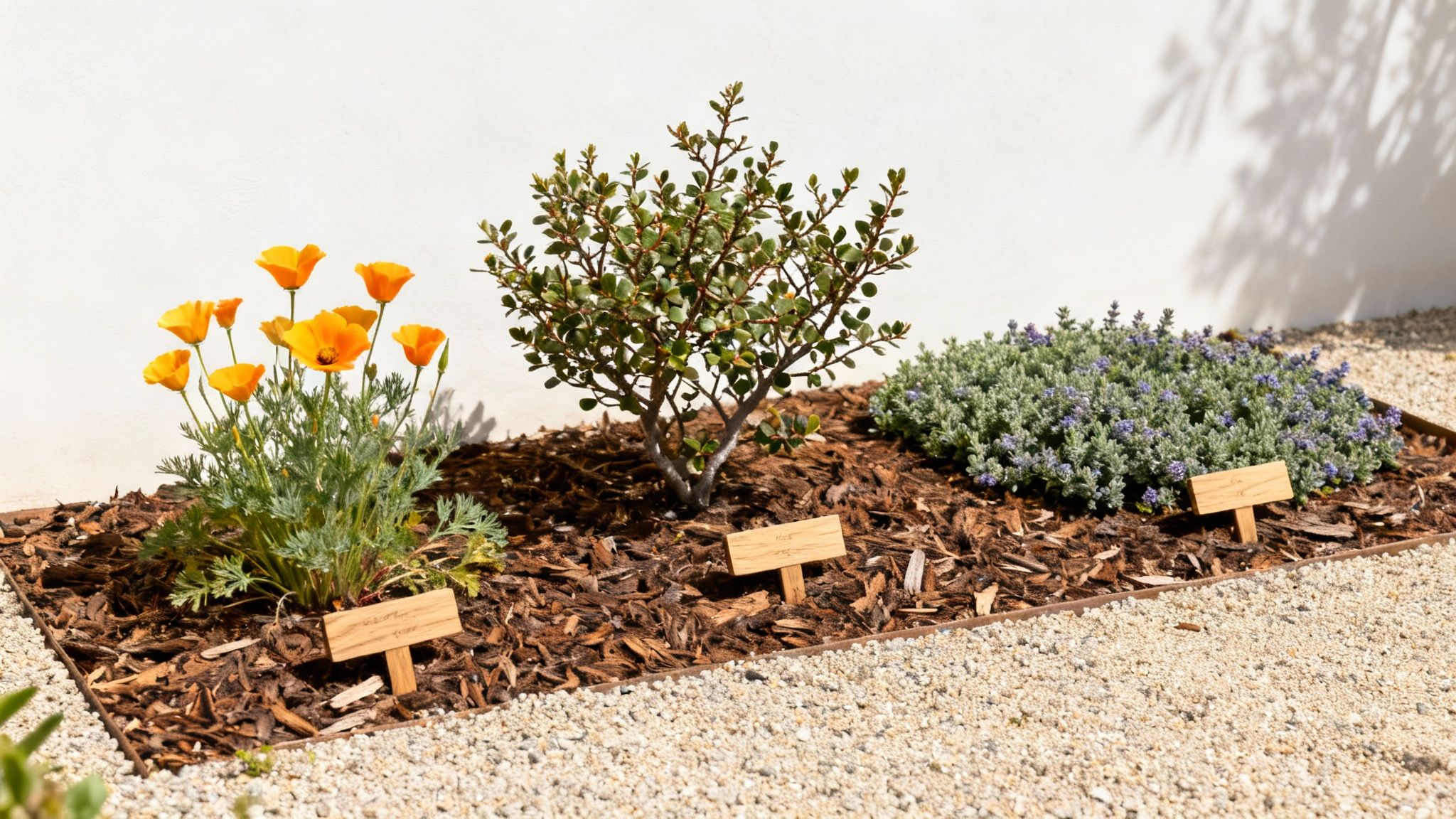
A low-water garden does not have to be a sparse scene of rocks and cacti. A thoughtfully designed, water-wise yard can be incredibly lush, layered, and full of vibrant color and texture year-round. Smart landscaping starts with water-wise design, and that means using a rich variety of plants to create a space that feels dynamic and inviting.
Creating Year-Round Interest with Native Combinations
The goal is a garden that looks fantastic no matter the month. This takes planning to ensure a succession of blooms and interesting foliage.
Here are a few combinations that work wonders in Monterey County and Bay Area gardens:
- For Sunny Spots: Combine the brilliant orange of the California Poppy with the deep purple blooms of a Cleveland Sage for a stunning color contrast.
- For Partial Shade: Pair the delicate, fern-like leaves of Coral Bells (Heuchera) against the bold, evergreen foliage of Coffeeberry.
- For Groundcover: Instead of turf, consider a living carpet of Dwarf Coyote Bush or a creeping Ceanothus (California Lilac).
CLTP’s Expertise in Eco-Conscious Design
The real secret to a landscape's long-term success is its irrigation system. This is where modern technology makes it clear that a smart landscape truly starts with a water-wise design. California Landscape & Tree Pros integrates advanced irrigation systems, native planting, and design technology to create outdoor spaces that are both beautiful and resource-efficient.
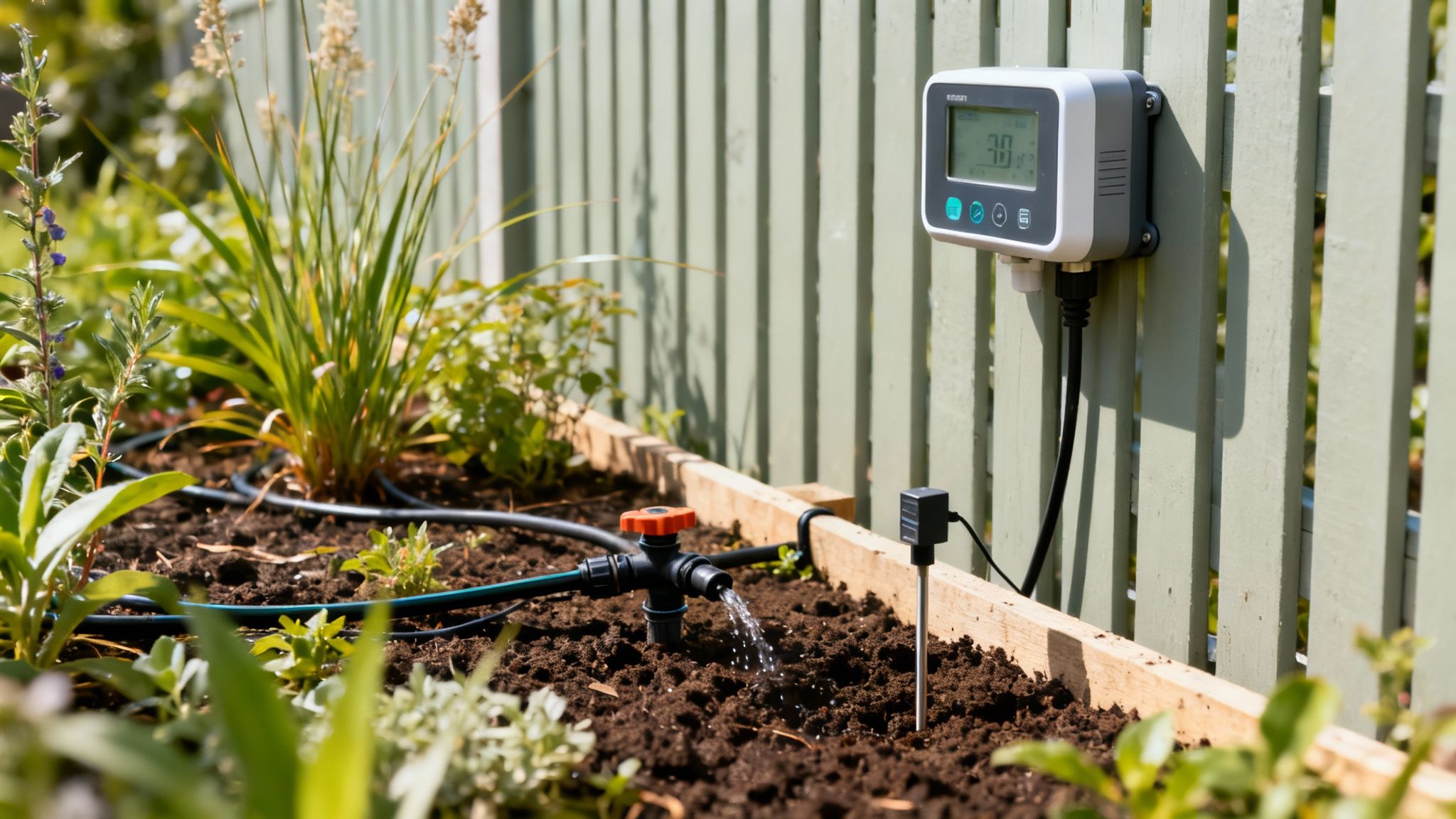
Our tech-driven approach ensures every project is customized to local climate conditions, from smart controllers to precise water delivery.
- Smart Controllers: Connected to the internet, these controllers pull real-time weather data. If a heatwave is coming, the system waters deeper; if rain is forecast, it skips a cycle.
- Drip Irrigation & High-Efficiency Nozzles: Drip systems deliver water directly to the root zone, eliminating evaporation. For other areas, high-efficiency rotator nozzles release thicker streams of water that soak deep into the soil.
This intelligent, adaptive approach ensures your garden gets exactly the water it needs. Local agencies like the Bay Area Water Supply & Conservation Agency (BAWSCA) champion this technology; you can read about their successful conservation programs and partnerships to see the impact. When you pair this tech with features like elegant outdoor lighting, you create an outdoor space that’s stunning and efficient. Learn more about our approach to Monterey County irrigation and outdoor lighting.
Weaving in Sustainable Hardscapes
A stunning yard is about balance. Hardscaping—patios, walkways, and other non-living elements—gives it structure. A smart landscaping starts with water-wise design mindset extends to these materials, creating outdoor living areas that are gorgeous and responsible.
Modern, sustainable designs utilize permeable hardscapes that allow water to filter through, reducing runoff and naturally hydrating your landscape.
- Decomposed Granite (DG): A fine, gravel-like material that creates a firm yet natural-looking surface for paths and patios.
- Permeable Pavers: Designed with small gaps filled with fine gravel, allowing water to pass directly through to the soil below.
- Gravel or Pebbles: A cost-effective and highly permeable option for secondary pathways or accent areas.
Living in California also means planning for fire safety. Fire-resistant materials like pavers, gravel, and concrete create a natural firebreak that can slow a wildfire's spread, especially in the "immediate zone" five feet from your home. For durable and safe outdoor features, exploring professional Monterey County hardscape and outdoor structures offers peace of mind.
Your Top Questions About Smart Landscaping, Answered
Making the switch to a sustainable yard is a big step. Here are answers to some common questions.
1. How long does it take for a water-wise garden to look "finished"?
You'll see significant growth in the first year, but the real magic happens in years two and three as plants mature and fill out. A native garden only gets more beautiful and resilient with time.
2. Is a drought-tolerant landscape expensive to install?
The upfront cost can be similar to a traditional project, but the long-term savings are substantial. You drastically cut your water bill and eliminate costs for fertilizer, aeration, and weekly mowing. Plus, local "cash for grass" rebates can cover a significant portion of the initial installation, as detailed in reports about how water-efficient landscaping lowers bills and upkeep.
3. Does "water-wise" mean a yard full of rocks and cacti?
Not at all! This is the biggest misconception. A smart landscape can be lush, green, and bursting with color from a huge palette of gorgeous California native plants like Salvias, poppies, and Ceanothus.
4. Can I still have a play area for kids and pets?
Absolutely. A well-designed landscape is zoned for how you live. We can create dedicated play areas using hardy, drought-tolerant turf, a soft native groundcover, or a zone with wood mulch or permeable pavers.
5. How much maintenance does a smart landscape require?
It’s less about how much maintenance and more about what kind. You trade constant chores like mowing for smarter, seasonal tasks like occasional pruning, checking drip lines, and topping up mulch once a year.
Homeowners in Monterey County and the Bay Area looking to transform their outdoor spaces can explore local, sustainable landscape design options with trusted professionals who understand California’s unique climate and aesthetic goals.
The team at California Landscape & Tree Pros has been designing and building beautiful water-wise gardens for years. Explore our landscape design services to learn how we can bring your vision to life.