
Homeowners across California are shifting toward low-water, climate-resilient landscapes, driven by ongoing drought concerns and a desire for beautiful, pollinator-friendly yards. In 2026, sustainability is a key part of curb appeal, with water-wise features and native plantings directly boosting property value. According to the Environmental Protection Agency, a household with an automatic irrigation system can use up to 50% more water outdoors than one without, highlighting the urgent need for smarter landscaping solutions that align with California's environmental priorities.
This guide provides specific, actionable insights into transforming your outdoor space with 3 native plant ideas for California yards in 2026 that are perfectly suited to the Monterey County climate. You'll learn not just what to plant, but how to integrate these species for maximum visual impact, ecological benefit, and water efficiency. Get ready to discover how the right native plants can redefine your yard.
1. California Poppy (Eschscholzia californica): The Golden Standard
As California's state flower, the California Poppy is a quintessential choice, embodying the golden spirit of the state. This resilient wildflower is celebrated for its brilliant, cup-shaped golden-orange blossoms that create a dazzling display from spring through early summer. It’s an annual or short-lived perennial that readily self-seeds, promising a reliable return of color year after year with minimal effort, making it a cornerstone for water-conscious gardeners.
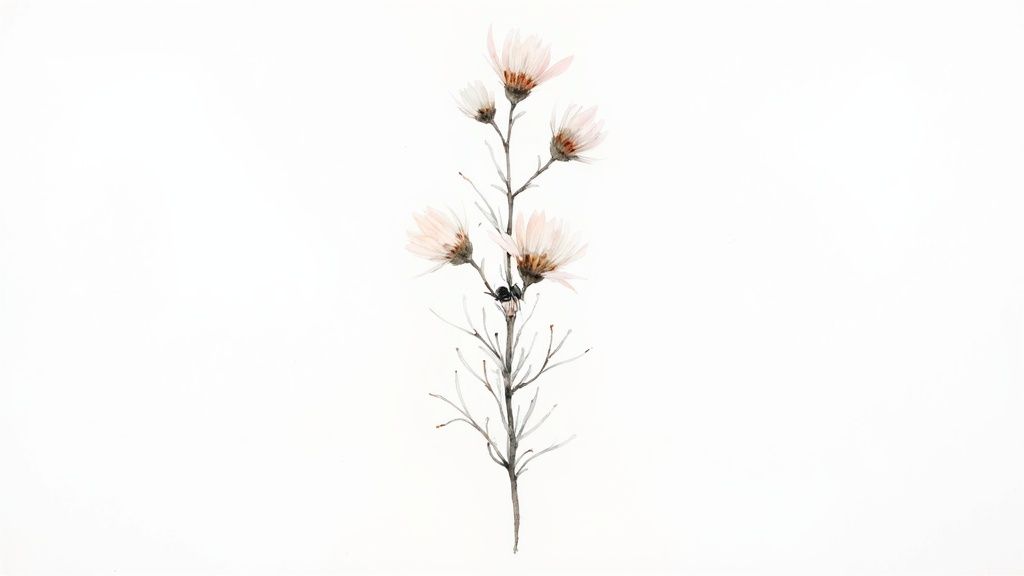
This plant's adaptability makes it one of the top native plant ideas for California yards in 2026. It thrives in conditions that challenge many other species, including poor, sandy, or rocky soil and full, blazing sun. This toughness aligns perfectly with the growing demand for sustainable, climate-resilient landscapes that reduce water consumption and support local ecosystems.
Why It Thrives in Monterey County
For homeowners in the Monterey Bay Area, the California Poppy is an exceptional choice. It is perfectly adapted to the region's Mediterranean climate, requiring very little summer water once established. Its ability to flourish without supplemental irrigation makes it a powerful tool for creating a beautiful, low-water garden that complies with local water regulations. Beyond its drought tolerance, this vibrant wildflower is a magnet for pollinators like native bees and butterflies, boosting your yard's biodiversity and contributing to the health of the local ecosystem.
Planting and Maintenance Tips
- Sowing: Direct sow seeds in late fall or early winter to take advantage of winter rains for germination.
- Location: Choose a spot that receives at least six hours of direct sunlight per day.
- Soil: Excellent drainage is the only key requirement; it thrives in average to poor soil.
- Watering: Water newly sown seeds lightly until they germinate. Once established, they require minimal to no additional water.
- Maintenance: No fertilizer is needed. Let many flowers go to seed at the end of the season to ensure a vibrant display the following year.
Exploring these drought-tolerant landscaping approaches can help you integrate poppies into a cohesive, sustainable design that is both beautiful and environmentally responsible.
2. California Buckwheat (Eriogonum fasciculatum): The Pollinator Powerhouse
California Buckwheat is a foundational shrub for any authentic California native garden, celebrated for its resilience and exceptional value to local wildlife. This hardy, evergreen perennial produces masses of delicate white-to-pink flower clusters from spring through fall. As the seasons change, these blooms gracefully transition to a rustic, coppery-brown, providing multi-season visual interest and making it one of the top native plant ideas for California yards in 2026.
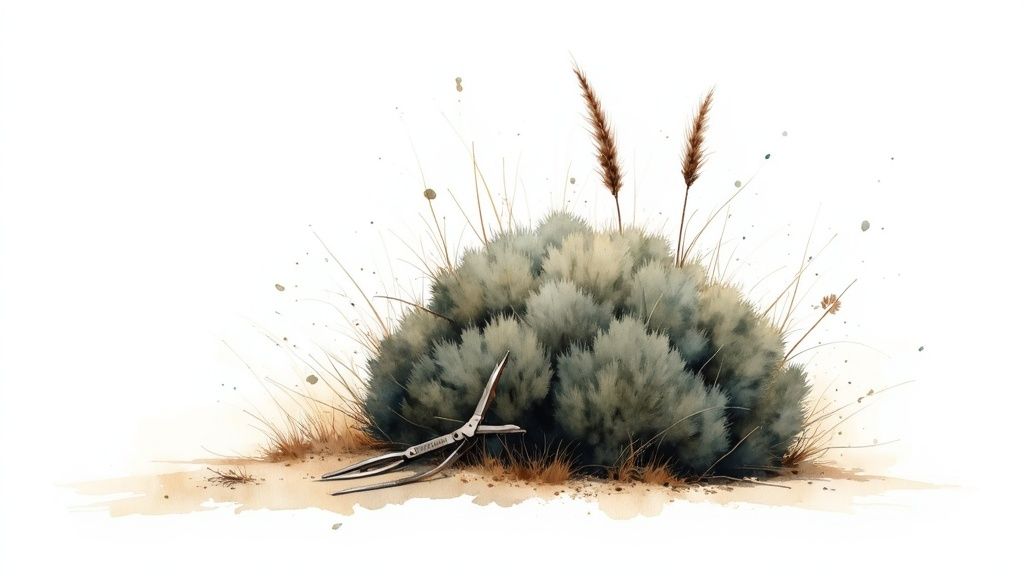
This plant's ability to thrive with virtually no maintenance once established makes it a cornerstone species for sustainable landscaping. It is incredibly drought-tolerant and perfectly suited to California's dry summers, embodying the shift toward climate-resilient gardens that are both beautiful and environmentally responsible.
Why It’s a Smart Choice for Local Yards
For property owners in Salinas and Monterey, California Buckwheat is an indispensable choice. It is naturally adapted to the region’s chaparral ecosystems, requiring no summer water after its first or second year. This remarkable drought tolerance aligns perfectly with the need for water-wise design and helps homeowners comply with tightening local water regulations. More than just a water-saver, California Buckwheat is a biodiversity superstar, providing critical nectar for countless native pollinators and seeds for birds in the fall.
Planting and Maintenance Tips
- Location: Plant in full sun for most of the day.
- Soil: Excellent drainage is essential. This plant thrives in sandy, rocky, or loamy soil.
- Watering: Water regularly during its first year to help it establish a deep root system. Afterward, it requires no supplemental summer irrigation.
- Maintenance: No fertilizer is needed. For a denser shape, you can prune it lightly in the late fall or winter.
Integrating foundational plants like buckwheat is a key part of any water-wise design strategy for California homeowners.
3. Manzanita (Arctostaphylos spp.): The Evergreen Architect
Manzanita is an iconic California native, celebrated for its striking sculptural form, smooth mahogany-colored bark, and delicate urn-shaped flowers. This diverse genus includes everything from low-growing groundcovers to elegant tree-like shrubs, offering a solution for nearly any landscape need. Manzanitas are exceptionally drought-tolerant and provide evergreen structure, making them a top choice for a beautiful, low-maintenance, and fire-resistant garden.
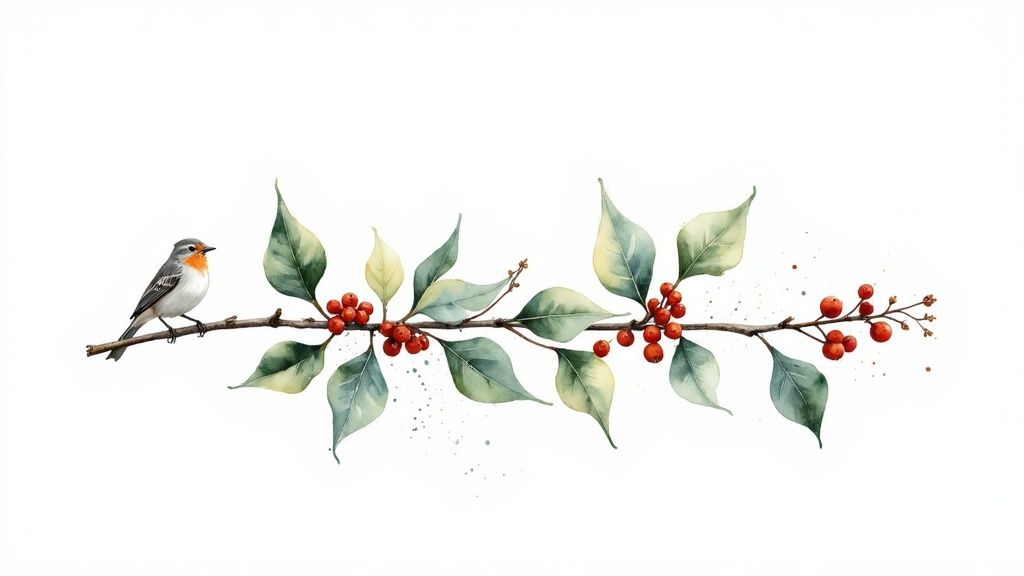
This plant's resilience makes it one of the most important native plant ideas for California yards in 2026. It thrives with almost no supplemental water once established, aligning perfectly with the increasing need for water-conscious and fire-wise landscapes that support local ecosystems without demanding constant care.
Why It’s Perfect for Future-Proofing Landscapes
For property owners in Monterey County, Manzanita is an indispensable asset. It is perfectly suited to the coastal and inland climates, tolerating drought with ease. Its extreme water-wise benefits help homeowners create beautiful, functional landscapes that adhere to local water regulations. Beyond conservation, Manzanita is a keystone species for local wildlife. Its winter-to-spring flowers provide a critical early-season nectar source for hummingbirds and native bees, while its berries feed birds and other animals.
Planting and Maintenance Tips
- Timing: Plant in the fall to allow the plant to establish roots with winter rains.
- Location: Plant in a location that receives full sun to light shade. Excellent drainage is critical.
- Soil: It adapts to most soil types but requires good drainage. Avoid planting in heavy clay soils that remain waterlogged.
- Watering: Water regularly during its first year. Once mature, it is exceptionally drought-tolerant and rarely needs supplemental water.
- Maintenance: Manzanita requires very little pruning. Avoid fertilizers and summer water, which can harm the plant.
Understanding how to integrate foundational plants like Manzanita is a key part of how sustainable landscaping is transforming California yards.
Building a Resilient Yard with Smart Technology and Hardscapes
Creating a truly sustainable landscape goes beyond just plants. Homeowners in 2026 are also embracing smart irrigation and climate-resilient hardscapes. With local water regulations tightening, smart controllers and drip systems are must-have upgrades that can dramatically cut waste. Permeable pavers and gravel pathways are also growing in popularity, as these materials support better drainage, meet regional environmental priorities, and pair well with modern outdoor-living trends. These smarter landscape design choices for lasting beauty and function future-proof your outdoor space against drought and fire risks.
Frequently Asked Questions (FAQs)
1. Why should I choose native plants for my California yard?
Native plants are adapted to the local climate, soil, and rainfall patterns. This means they require less water, fertilizer, and pesticides than non-native species. They also provide essential food and shelter for local wildlife, such as pollinators and birds, boosting your yard's biodiversity.
2. How much water do these native plants really save?
Once established (typically after 1-2 years), native plants like Manzanita and California Buckwheat require little to no supplemental water, even during dry summers. This can significantly reduce your outdoor water consumption compared to a traditional lawn, which is one of the largest water users in a typical household.
3. When is the best time to plant California natives?
The best time to plant most California natives is in the fall. This allows the plants to establish their root systems with the help of winter rains, giving them a strong start before the dry heat of summer arrives.
4. Can I still have a colorful garden with drought-tolerant plants?
Absolutely. Many California natives offer spectacular seasonal color. California Poppies provide brilliant orange and yellow in the spring, while California Buckwheat offers delicate white-to-pink blooms for months. Other natives like Ceanothus (California Lilac) and various salvias offer stunning blues, purples, and reds.
5. How do native plants help with fire-wise landscaping?
Many native plants, when properly maintained and irrigated during establishment, can be fire-resistant. They often have higher moisture content in their leaves than non-native, water-intensive plants that can dry out quickly. Choosing appropriate native species is a key part of creating defensible space around your home. For more detailed winter prep, check out these smart landscaping tips for Monterey homeowners this winter.
Your Next Step Toward a Sustainable California Landscape
The journey toward a vibrant, resilient, and eco-conscious California yard is a forward-thinking investment in your property's future. By choosing hardy, low-maintenance natives, you are creating a habitat that supports local pollinators, conserves precious water, and reduces the need for chemical interventions. The result is a garden that not only looks beautiful but also functions as a self-sustaining ecosystem, saving you time and money.
Ready to make your landscape more water-efficient in 2026? Homeowners in Salinas, Monterey, Seaside, and surrounding areas can explore local, climate-smart options by connecting with a professional landscape designer familiar with California’s drought-resilient best practices. Contact California Landscape & Tree Pros to learn how we can help you create a beautiful, sustainable outdoor sanctuary.
Sources:
- Environmental Protection Agency (EPA), "WaterSense."
- California Native Plant Society (CNPS), "Why Natives."