
Winter and early-spring storms have left many trees in Monterey County structurally compromised, creating hidden risks for homeowners. State emergency officials warn that storm-weakened trees can shed limbs or fall unexpectedly long after the weather clears, making proactive tree care essential. For residents in Salinas, Seaside, and across the Monterey Peninsula, a professional tree assessment is the first step toward protecting your property.
Why Proactive Tree Care is No Longer Optional in Monterey County
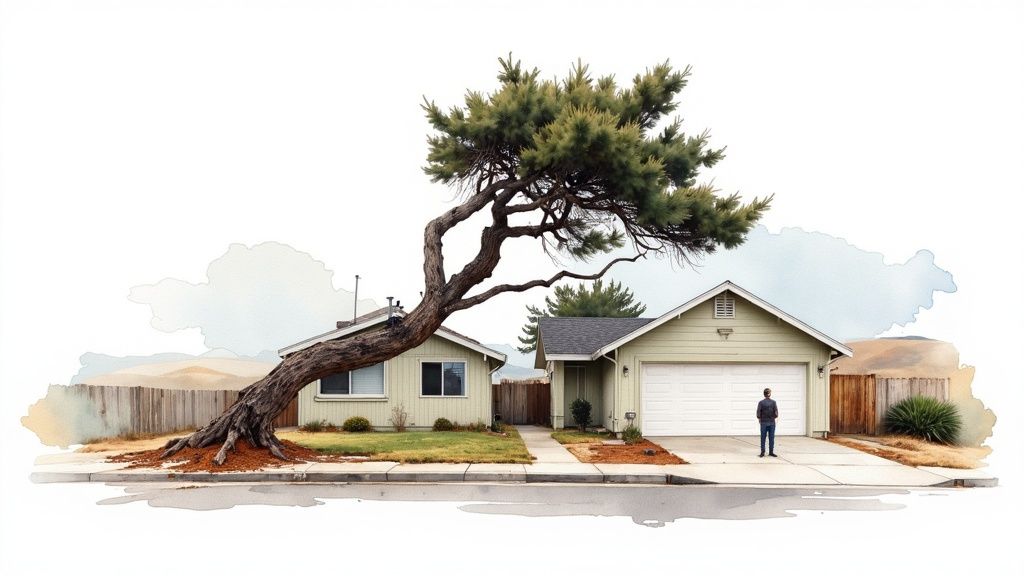
The very nature of storm risk has shifted. Years of drought weakened tree root systems, followed by powerful atmospheric rivers that saturated the soil, creating a perfect storm for tree failure. The historic storms from December 2022 to January 2023 were a massive wake-up call for the entire region.
That season dumped a staggering 20 to 35 inches of rain on our coastal peaks and brought wind gusts that topped 100 mph, according to the National Weather Service. This combination of drought-stressed trees, super-saturated soil, and hurricane-force winds was a literal "recipe for disaster," causing trees to come down all over the county. The official government report on the 2022-2023 atmospheric river events paints a vivid picture of the damage.
The Hidden Threats Still Lurking on Your Property
For homeowners from Salinas to Seaside, the effects are still being felt. Many trees that survived those storms are now structurally compromised, posing hidden dangers. As awareness increases, residents are taking a more proactive approach to managing tree health before storms intensify.
This new reality creates very real impacts for local residents:
- Higher Property Risk: Homes, vehicles, and fences face an increased risk of damage from falling branches or entire trees.
- Urgent Safety Concerns: An unstable tree can suddenly block a driveway or fall near play areas, creating a serious hazard.
- Unexpected Financial Burdens: Emergency tree removals and property repairs are often costly and stressful.
Shifting to a Proactive Storm-Season Plan
The good news is that you can get ahead of these risks. The key is shifting from a reactive "wait-and-see" mindset to a proactive one. This is more than just raking leaves; it’s about understanding the health of every significant tree on your property. We cover key strategies in our guide on how to weatherproof your landscape this storm season.
Your best defense is a seasonal plan. A certified tree assessment can identify hazardous limbs, decay, or structural instability that you might miss. Preventive pruning reduces the risk of branch failure during high winds, while professional storm cleanup clears debris safely and efficiently. By taking these steps, you can secure your property and gain peace of mind.
How to Spot a Hazardous Tree Before the Next Storm
After a rough storm season, it’s easy to assume the trees still standing are safe. The reality is that many are structurally compromised. As Monterey County preps for storm-season tree risks, your best defense is learning to spot the warning signs yourself.
You don't need to be an arborist to see the most obvious red flags. A quick walk around your property can reveal a tree's health and stability before the next big storm puts it to the test. Knowing what to look for helps you protect your home and tells you when it’s time to call in the professionals.
Look Up for Dead or Broken Branches
The most immediate hazards are often right above your head. Scan the tree canopy for dead or broken branches that are still hanging. Known as “widowmakers,” these are precariously attached and can come crashing down without warning in high winds.
An entirely dead tree is another urgent problem. If it has no leaves during the growing season or its branches are brittle and lifeless, it has lost its structural integrity and is far more likely to snap or fall.
Check the Trunk for Cracks and Decay
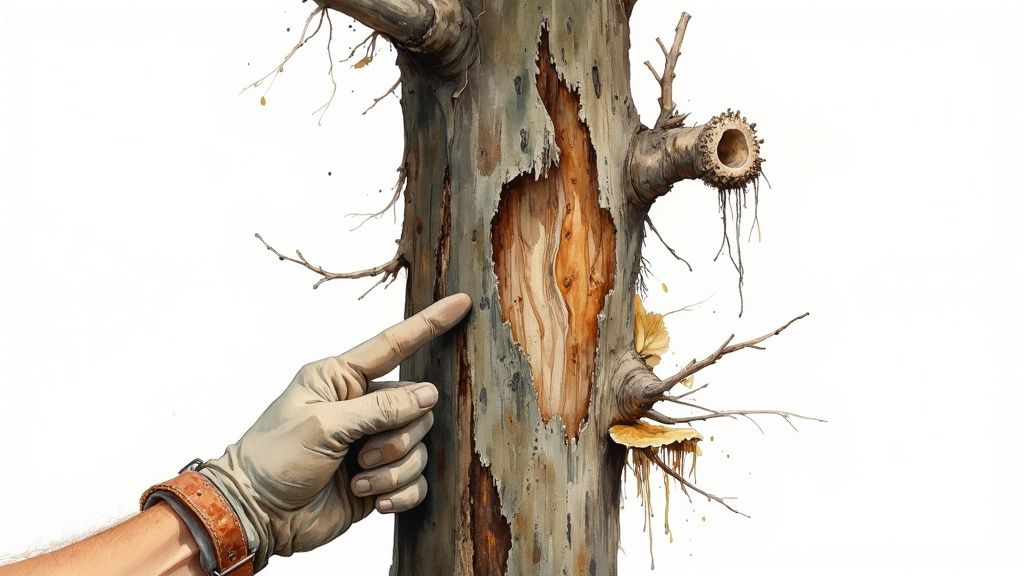
Think of the trunk as the tree's backbone; any major damage there is a serious problem. Look closely for deep cracks or splits that go beyond the bark and into the wood itself. This can be a sign the tree is starting to fail and could split apart under stress.
Also, keep an eye out for large patches of missing bark or sunken, dead-looking areas called cankers. These are classic signs of decay that severely weaken the tree from the inside out.
Expert Insight: State officials have emphasized that many trees remain hazardous months after severe weather. It’s a common misconception that if a tree survived one storm, it's safe. Regular check-ups are a homeowner's most critical task for long-term safety.
Inspect the Base and Root System
A tree is only as strong as its foundation. Check the soil and the base of the trunk for any signs of trouble. If you see mushrooms or other fungi growing on or near the trunk, that’s a huge red flag for internal rot.
Look at the ground around the tree. Is the soil heaving or are roots suddenly exposed on one side? This could signal a failing root system. A tree that has suddenly started to lean is one of the most dangerous warning signs—it means the tree could be ready to topple.
Homeowner's Tree Hazard Checklist
Use this quick reference guide to identify common warning signs that a tree may be a risk during a storm.
| Warning Sign | What It Signals | Recommended Action |
|---|---|---|
| Dead Hanging Branches | Immediate falling risk, known as "widowmakers." | Call a professional immediately for safe removal. |
| Deep Trunk Cracks | The tree is structurally compromised and may split. | Schedule an expert assessment to determine the severity. |
| Fungus at the Base | Significant internal decay and root rot. | This often indicates a tree is beyond saving; consult an arborist. |
| Sudden Leaning | The root system is failing or has been damaged. | High fall risk; seek emergency professional evaluation. |
Spotting these issues early is a crucial part of storm preparation. While this checklist helps you identify potential dangers, only a certified arborist can provide a definitive diagnosis and recommend the right course of action.
Your Best Defense: A Proactive Tree Care Plan
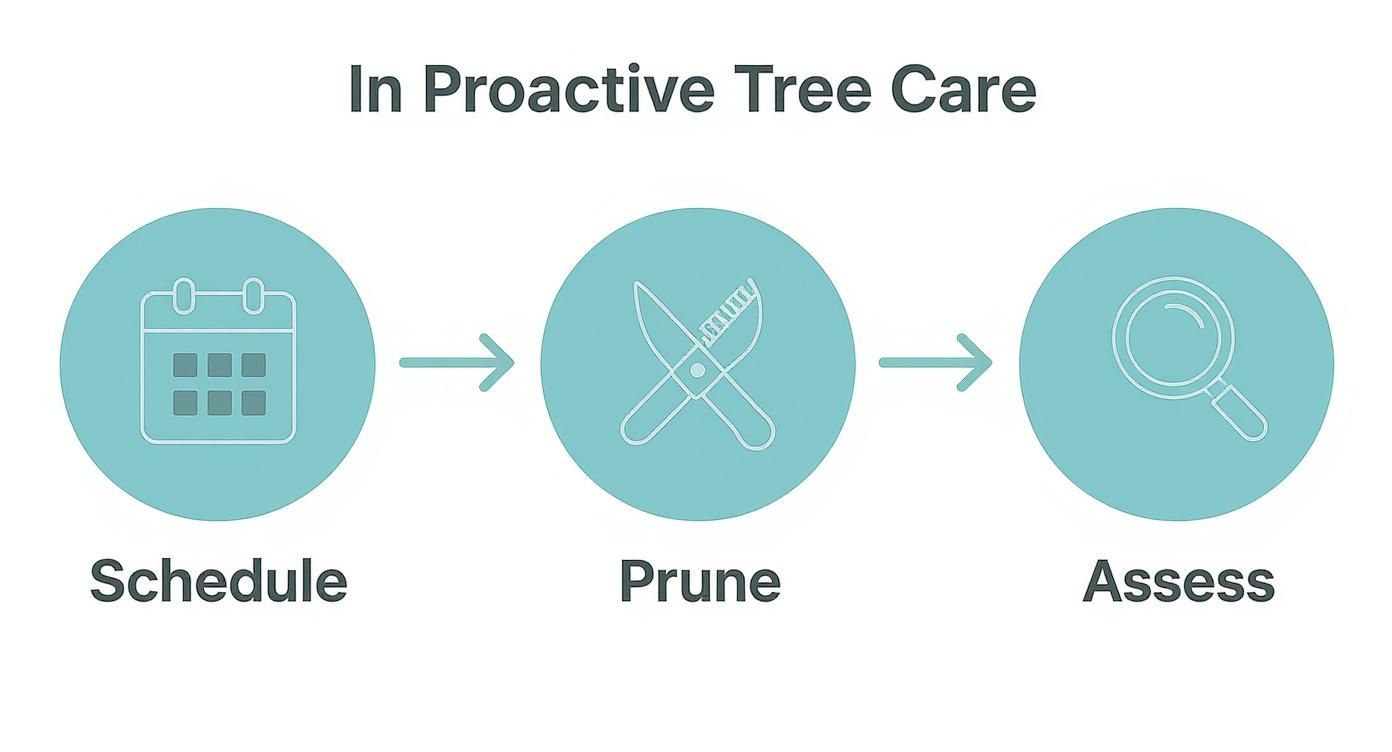
The best way to handle storm damage is to prevent it from happening in the first place. For homeowners in Monterey County, thinking ahead about tree care isn't just about curb appeal—it's the single most effective way to protect your property from the chaos and cost of storm season.
Professional pruning is a science focused on improving a tree's structural integrity. A certified arborist strategically thins the canopy and removes specific limbs, which dramatically reduces wind resistance. This allows powerful gusts to flow through the tree instead of hitting it like a solid wall, massively lowering the risk of failure.
Smart Pruning Before the Storm Hits
A professional arborist will assess your tree's species, age, and health before recommending a specific pruning strategy. Key techniques for storm-proofing include:
- Crown Cleaning: This is the baseline for tree safety. It involves removing the dead, dying, or broken branches ("widowmakers") that are the first to fall in high winds.
- Crown Reduction: For trees with long, heavy limbs overhanging your roof or driveway, an arborist might suggest crown reduction. This process carefully shortens branches to reduce weight and leverage, making them far less likely to snap.
Attempting this work yourself can backfire. Improper cuts can invite disease or weaken the tree's structure.
When to Schedule Tree Work for Maximum Impact
While you should never wait to address an obvious hazard, routine structural pruning is best performed in late summer or early fall. The trees are entering dormancy, so the work causes less stress and prepares them perfectly for the winter storm season.
Recent winters are a stark reminder of our trees' vulnerability. We've seen widespread flooding and downed trees, leaving Monterey County residents on edge. You can find more details on local preparedness at the Ready Monterey County website. A proactive plan is your best defense against this growing risk. For more tips, see our guide on smart landscaping tips for Salinas and Monterey homeowners.
A Proactive Approach Saves More Than Money
A pre-storm tree assessment is an investment in your peace of mind. A small, manageable cost today can prevent tens of thousands of dollars in property damage, insurance claims, and the incredible stress of an emergency clean-up.
Working with a professional crew ensures the job is done right and safely. As Monterey County preps for storm-season tree risks, partnering with a certified, insured team is a critical step in safeguarding your home and family.
Making the Call: When Tree Removal is the Only Safe Option
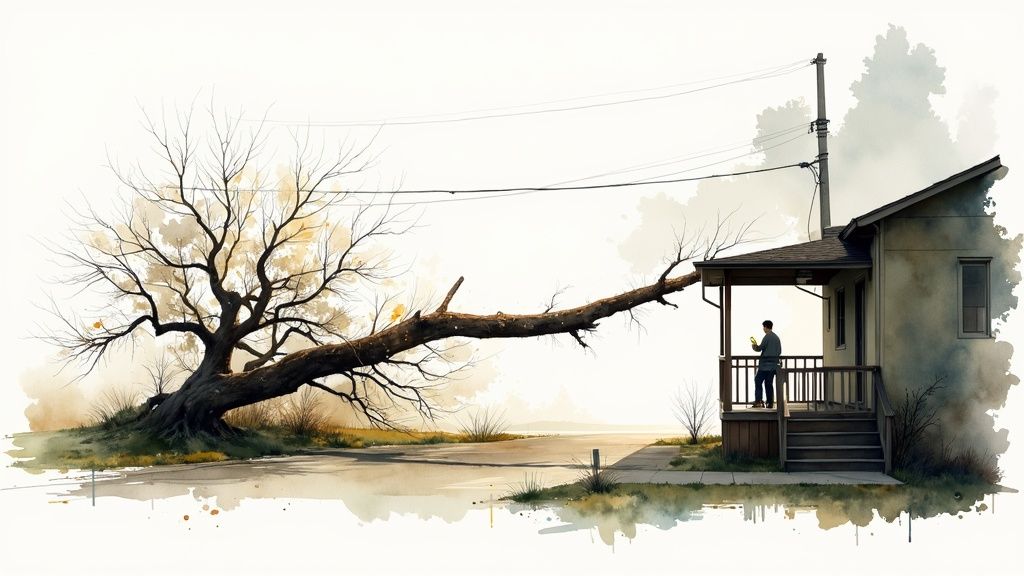
While pruning is the first line of defense, some trees are too damaged or decayed to be saved. Deciding to remove a tree is never easy, but when safety is on the line, it’s a necessary decision. For homeowners in Monterey County, learning to spot the signs of a high-risk tree is a crucial piece of storm preparation.
An irreversible decline is often visible to a trained eye. If more than 50% of the tree is dead or damaged, it likely lacks the structural integrity to survive a serious storm. Significant decay in the trunk, especially near the base, is another major red flag.
When Removal Is the Only Choice
Some situations elevate a tree from a "watch list" item to an immediate threat, making removal the only responsible choice.
- A Serious Lean: A tree leaning more than 15 degrees from vertical is a hazard, especially if it's pointing toward a house, driveway, or power lines.
- Major Root Damage: Recent construction, trenching, or even heavy equipment driving over the root zone can sever major roots, compromising the tree's anchoring system.
- Deep Cracks and Splits: Look for large, deep cracks in the main trunk or where major limbs fork. These are weak points that can easily fail under the strain of high winds.
A Word From the Field: Never attempt to remove a large or hazardous tree yourself. It's a dangerous job that requires specialized equipment, complex rigging, and a deep understanding of tree physics to prevent catastrophic damage or injury.
What to Expect With Professional Tree Removal
Once the decision is made, hiring the right crew is essential. A professional, insured company develops a clear, safe plan for felling the tree, managing debris, and protecting your property.
Be mindful of local rules. Certain areas in Monterey County have ordinances protecting native trees, like our iconic oaks, which may require a permit for removal. A qualified tree service will help you navigate the permitting process. You can learn more about our certified Monterey County tree pruning and removal services.
Ultimately, removing a hazardous tree isn't a failure—it's smart property management. It is one of the most important steps you can take to keep everyone and everything safe.
Your Storm-Ready Partner: California Landscape & Tree Pros
As recurring extreme weather patterns impact the Central Coast, Monterey County residents increasingly value professional expertise in managing climate-related risks. Choosing the right tree care company is one of the most important decisions you'll make. It's about safety, quality, and protecting your home.
California Landscape & Tree Pros (CLTP) is uniquely positioned to help local property owners mitigate storm-season risks. Our commitment to safety, insurance-backed protection, and compliant equipment reinforces our professional reliability.
Here's how our expertise addresses local needs:
- Certified Tree Assessments: We identify hazardous limbs, decay, and structural instability before they become emergencies.
- Preventive Pruning: Our strategic pruning reduces branch failure during high winds and protects your property.
- 24/7 Emergency Response: We are on call around the clock for downed or dangerous trees that require immediate attention.
- Storm Cleanup Services: Our crews clear debris safely and efficiently, restoring order to your property.
This comprehensive approach aligns with regional needs and reinforces CLTP’s reputation as a trusted, safety-first provider for homeowners from Salinas to the Monterey Peninsula. You can find more details about our emergency services here: Monterey County emergency tree services. For help with local regulations, we also specialize in tree health reports and permits.
Sobering Statistics: The atmospheric river events from December 2022 to January 2023 caused an estimated $80 million in damages in Monterey County alone. The state recorded over 500 landslides during that period, highlighting the immense power of these storms and the need for preparedness. You can read more about the monumental widespread storm recovery efforts our communities faced.
Frequently Asked Questions About Storm Season Tree Safety
As Monterey County homeowners prepare for storm season, many have the same important questions. Here are clear, practical answers to help you make informed decisions.
1. What are the most common signs of a hazardous tree?
Look for dead or hanging branches ("widowmakers"), deep cracks in the trunk, fungus growing at the base of the tree, heaving soil around the roots, and any sudden leaning. These are all red flags that indicate potential structural failure.
2. Is it too late to prune my trees once the rainy season has started?
Ideally, major structural pruning should be done before storm season. However, it is never too late to address an obvious hazard. If you spot a cracked limb or a leaning trunk, call a professional immediately. A certified crew can safely work in various weather conditions to mitigate an emergency risk.
3. My large oak tree looks healthy. Should I still have it inspected?
Yes. Large, mature trees, especially those near your home or power lines, should be inspected regularly. Many serious issues like internal decay, hollow trunks, or root rot are not visible from the outside. A professional risk assessment provides peace of mind that your tree is structurally sound.
4. How can I tell if a tree service company is reputable?
A reputable company will always provide proof of three things: a valid California Contractor's License (CSLB), general liability insurance (to protect your property), and worker's compensation insurance (to protect you from liability). Also, ask if they have an ISA Certified Arborist on staff. Avoid any company that pressures you for a quick decision or demands cash upfront.
5. A large branch fell in my yard. Can I clean it up myself?
If it's a small branch you can easily carry, then yes. For anything larger—a limb that is too heavy to lift, wedged in another tree, or near power lines—call a professional. Fallen branches can be under extreme tension, and a wrong cut can cause them to spring or roll, leading to serious injury or property damage.
Don't wait for the next storm to reveal the weak points in your landscape. Residents in Monterey County can protect their homes and businesses with a quick, professional tree evaluation. Create a seasonal plan for ongoing tree and landscape maintenance to prevent avoidable storm damage.
The team at California Landscape & Tree Pros is here to help. Our certified arborists provide expert safety inspections, preventive care, and 24/7 emergency support. Contact us today to schedule your assessment.