
Quick Answer
A smart sprinkler system is an irrigation setup that adjusts watering based on conditions such as weather, soil moisture, and plant needs instead of running on a fixed timer. For Monterey County homeowners, that usually means less wasted water, healthier landscaping, and better alignment with California water rules. For a broader water-wise approach, see smart landscaping starts with water-wise design.
You’re probably looking at one of three problems right now. Your water bill keeps climbing, parts of the yard are too dry while others stay soggy, or your current timer waters on schedule whether the ground needs it or not.
A smart sprinkler system fixes that by replacing guesswork with measured control. It operates much like a smart thermostat for your yard. It responds to actual conditions instead of blindly following the same program every week.
What a Smart Sprinkler System Does and Why It Matters
At a Monterey County home, I often see the same pattern. The timer is set once in spring, then it keeps watering through foggy mornings in Pacific Grove, windy afternoons in Salinas, and hot inland stretches in Carmel Valley as if every week were the same. That is where waste starts.
A traditional controller only follows the clock. A smart sprinkler system adjusts watering based on current conditions. Depending on the setup, it uses local weather data, soil moisture, evapotranspiration inputs, or a combination of those signals to decide whether a zone should run, how long it should run, and when it should stay off.
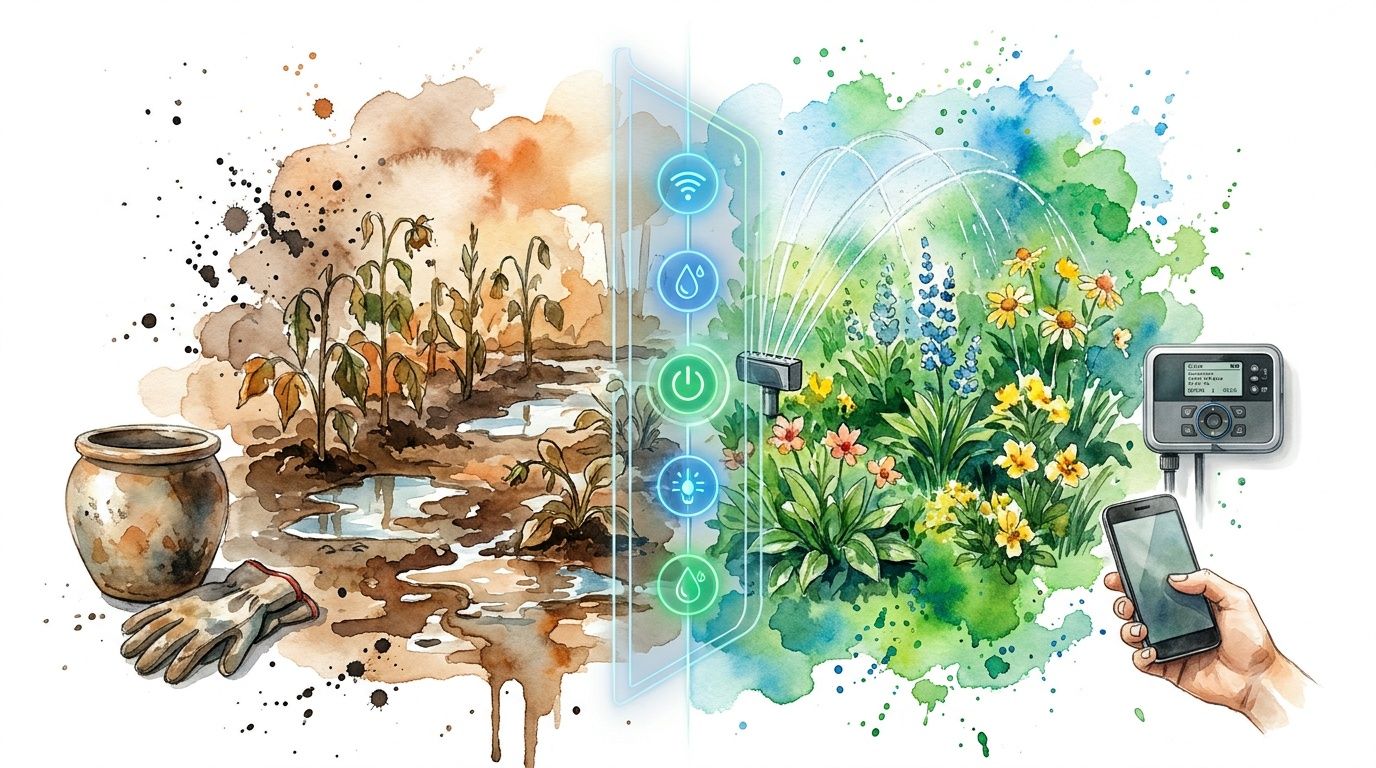
For California homeowners, the value is not the app or the gadget factor. The actual value is better control over water use, fewer compliance problems, and less time spent correcting a system that keeps making the same mistakes.
It cuts avoidable watering problems
Residential irrigation waste usually comes from routine scheduling errors, not dramatic breakdowns. Spray zones run after a cool, damp morning. Slopes get watered too long and start sending water into the street. Shrubs receive the same schedule as turf even though they dry out at a different rate.
A smart controller addresses those mistakes automatically, but only within the limits of the system it is connected to.
Practical rule: A smart controller will not correct poor head spacing, mismatched nozzles, broken valves, or zones that were grouped wrong in the first place.
That trade-off matters. If the hardware is sound, smart control improves performance. If the yard has coverage problems or bad zoning, the controller helps less than homeowners expect.
It improves plant health by matching water to real conditions
Too much water causes its own set of problems. Roots stay shallow. Soil stays soggy longer than it should. Fungus pressure goes up, and weaker growth follows.
Plants hold up better when watering matches soil type, sun exposure, and plant category. Grass, shrubs, trees, and drip areas should be scheduled as separate irrigation zones whenever possible. On mixed plantings, that is usually the difference between a system that functions and one that waters correctly.
It makes California compliance easier to manage
Monterey Bay Area homeowners are dealing with more scrutiny around runoff, overspray, and general water efficiency than they were a few years ago. A fixed timer makes it easier to fall out of step with those expectations. A properly configured smart system makes it easier to stay within them, especially when seasonal conditions shift fast.
If you want local context on how those requirements are changing, see our article on new water rules forcing a rethink of landscape design in Salinas.
For some properties, this is also the point where professional installation becomes worth it. Homes with slope, mixed sun exposure, older valves, drip and spray on the same property, or pressure issues usually need more than a controller swap. At CLTP, we see the best results when the controller, zone layout, and hardware are evaluated together. That is how a smart sprinkler system turns into a practical water-saving upgrade instead of another timer with better marketing.
The Core Benefits for Your Landscape and Wallet
The biggest reason homeowners switch is practical. They want the yard to look good without paying to water pavement, overwater shaded areas, or keep adjusting the timer by hand.
Modern smart irrigation systems can reduce outdoor water use by up to 59% compared to traditional timers, while also cutting runoff, based on HydroPoint’s overview of smart irrigation evolution. Not every property will hit the high end of that range, but the direction is clear. Better control means less waste.
Weather-based controllers
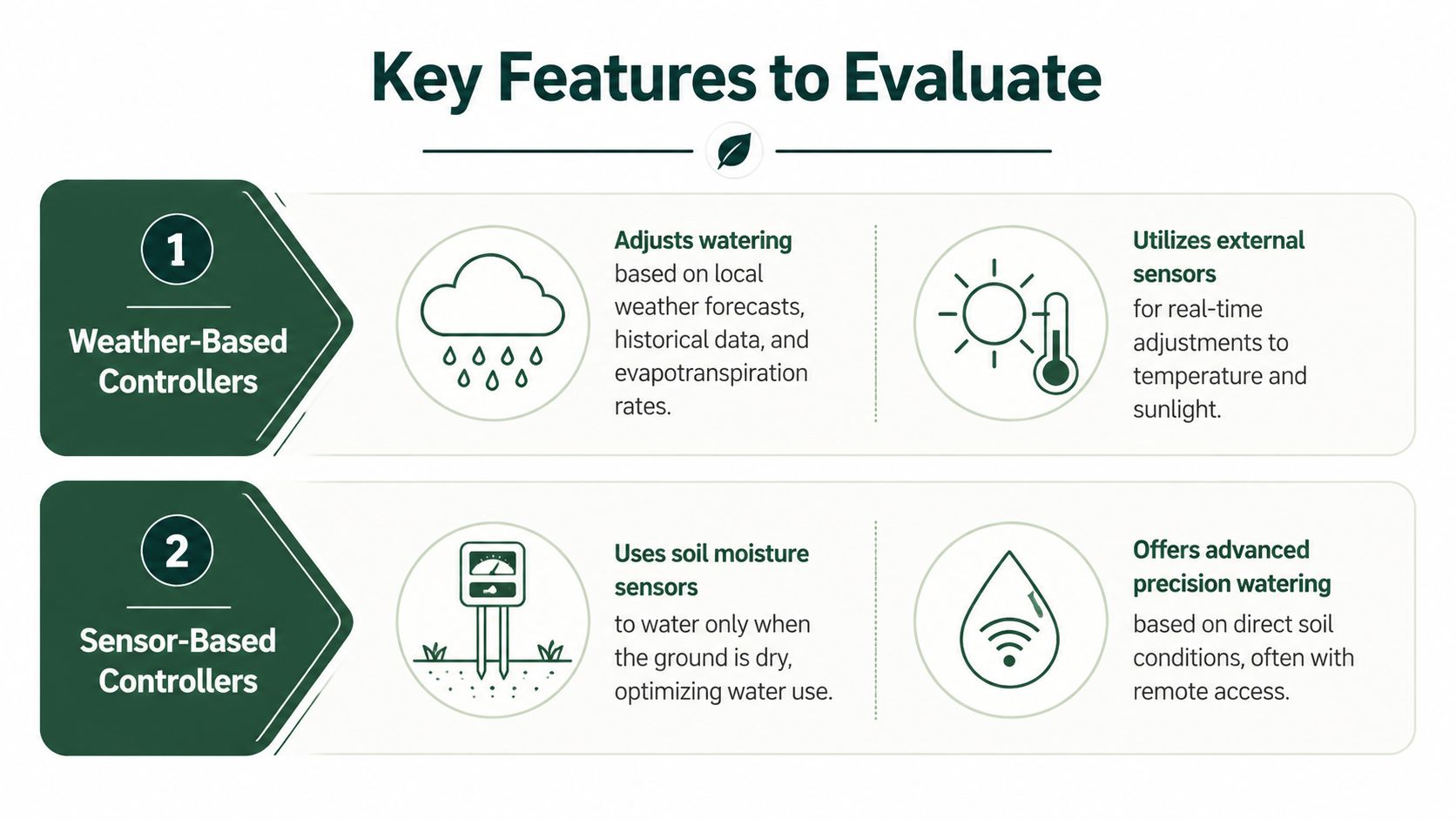
A weather-based controller adjusts watering from local weather inputs and ET data. On the Central Coast, that matters because a schedule that makes sense inland may be too much near the coast, especially on cool or foggy mornings.
The upside is convenience. Once it’s set up correctly, the controller keeps adapting without constant manual changes. The downside is that it still depends on good zone design and realistic programming.
Soil moisture-based controllers
A soil moisture setup responds to what’s happening in the ground, not just what the weather says should be happening. That can be useful on properties where soil type, shade, slope, and planting density vary a lot from one area to another.
These systems can be very effective, but placement matters. A poorly placed sensor can cause the whole zone to react to a spot that doesn’t represent the rest of the area.
A controller should follow the landscape, not force the landscape to follow the controller.
App control is useful, but it’s not the main value
Phone access gets attention because it’s easy to understand. Yes, it’s convenient to pause watering, make seasonal changes, or check alerts from anywhere. That helps, especially for second homes, HOA common areas, and busy households.
Still, app control alone doesn’t make a system smart. Its intelligence lies in how the system decides when not to water.
Better irrigation protects the rest of the project
If you’re investing in patios, planting, lighting, or designing luxury outdoor spaces, irrigation needs to support that work instead of undermining it. Hardscape edges, decorative planting beds, and outdoor living areas all suffer when spray drifts, runoff forms, or one schedule treats every zone the same.
For local property owners moving toward lower-water outdoor areas, our piece on why Salinas homeowners turn to drought-smart landscaping connects the irrigation side with the broader design decisions.
Key Features to Evaluate in a Smart Sprinkler System
A smart controller earns its keep by making better watering decisions, catching waste early, and fitting the way the property is built. In Monterey County, that also means helping a homeowner stay aligned with California water-efficiency expectations instead of relying on a timer that runs the same program week after week.
Controller logic and data source
Start with the decision engine. Some controllers adjust from local weather data. Others rely on soil moisture sensors. Some use both, which can work well on properties with uneven sun exposure, coastal fog, and changing soil conditions.
The right choice depends on how consistent the site is. A weather-based controller usually fits a property where the zones are already separated properly and conditions stay fairly uniform. A sensor-driven setup tends to justify the extra effort where one area stays wet, another dries out fast, or the irrigation layout has to serve very different planting types.
For Monterey Bay homes, I usually look hard at microclimates first. A front yard near pavement and reflected heat will not behave like a fenced backyard that holds morning moisture.
Zone flexibility
Good smart irrigation still depends on clean zoning. If spray, drip, trees, and lawn are grouped together, even a good controller will make compromised decisions.
Look for a system that allows:
- Different run logic by zone: Drip and spray need separate scheduling.
- Adjustment by plant type: Lawn, shrubs, and trees should not share the same assumptions.
- Manual control where needed: Automatic schedules help, but a contractor should still be able to fine-tune soak times, cycle-and-soak settings, and seasonal changes.
- Expansion options: Extra zones, a master valve, or flow sensing can matter later if the property is upgraded.
This is also where professional design starts to matter. If a homeowner is designing luxury outdoor spaces, the irrigation system has to protect paving, planting beds, and gathering areas instead of overspraying them.
Leak awareness and system feedback
Flow monitoring is one of the most useful features to pay for. It helps flag leaks, stuck valves, broken heads, and unusual water use before the monthly bill shows the damage.
This feature is more important than people expect. Small underground leaks often run for weeks without a clear wet spot, especially in larger yards or second-home situations.
For California homeowners, that protection is not just about convenience. It is part of controlling waste, reducing runoff risk, and keeping the irrigation system in a condition that can be adjusted to local water rules instead of constantly fighting hidden problems.
App quality and owner usability
A good app should make simple tasks easy. Pause watering. Change start times. Approve seasonal adjustments. Review alerts. That is enough for many homeowners.
The deeper settings still need to be set correctly at install. I see plenty of systems with decent hardware and poor results because the app let someone create a bad schedule in five minutes. Ease of use is helpful, but clear programming, local code awareness, and correct zone setup are what protect the long-term return. For a broader look at where efficient irrigation is heading, see five water-wise irrigation trends homeowners should watch.
Estimating Costs and Calculating Your Return on Investment
A Monterey County homeowner usually faces the cost question after a summer bill spikes or a wet curb keeps showing up in front of the house. The controller price matters, but the better question is how much water the current system is wasting, and what it will take to bring that system into line with your yard type, planting style, and local watering rules.
A smart sprinkler upgrade can be a simple controller replacement. It can also involve valve repairs, wire troubleshooting, head changes, drip conversion, zone regrouping, pressure correction, and coverage repairs. Those are different scopes of work, and the return changes with them.

What affects the investment
The biggest cost drivers are usually the number of zones, controller compatibility, site layout, and the condition of the existing irrigation system.
Then there is the part many homeowners do not see at first. A smart controller only pays off if the zones are grouped correctly and the hardware can apply water evenly. If one valve serves sunny turf, shaded shrubs, and a drip line at the same time, the controller has limited room to improve efficiency. In that case, some of the budget needs to go toward correcting the system so the scheduling works.
Properties around the Monterey Bay Area often have extra variables. Wind exposure, slopes, sandy soils near the coast, and mixed planting styles can all affect how fast payback happens. California compliance also matters. If runoff is leaving the property or overspray is hitting pavement, fixing those issues is part of the return because it reduces waste and lowers the chance of ongoing violations during drought restrictions.
How to estimate payback realistically
The clearest way to calculate return is to compare annual water cost before and after the upgrade, then weigh that against the installation cost and any repairs that should be done at the same time.
Use these factors:
| Factor | Why it matters |
|---|---|
| Current water use | Higher waste usually means more room for savings |
| Yard type | Turf areas often cost more to irrigate than low-water planting areas |
| System condition | Leaks, runoff, clogged nozzles, and bad coverage reduce the benefit of a controller alone |
| Local water rates | Higher rates improve the financial return on every gallon saved |
| Available rebates | Water agency incentives can reduce upfront cost |
For many properties, the fastest return does not come from the controller by itself. It comes from pairing the controller with a few targeted corrections, such as fixing a leaking valve, converting the wrong spray heads to drip, or separating plant material with different water needs into their own zones.
Homeowners who want a better sense of where this kind of upgrade is heading can review these water-wise irrigation trends California homeowners should watch.
When professional design changes the math
A controller swap is sometimes enough. That is usually true when the wiring is sound, the zones already make sense, and coverage is consistent.
The math changes when the yard has dry spots, soggy areas, mismatched nozzles, poor pressure, or runoff onto hard surfaces. In those cases, a low install price can be misleading because the system keeps wasting water after the upgrade. A more thorough correction costs more upfront, but it often produces the savings homeowners expected in the first place.
California Garden & Tree Pros handles irrigation upgrades through site consultation, design review, installation, and walkthrough. That process matters because the equipment, scheduling, and repairs need to match the property, the planting style, and the local compliance requirements.
DIY Installation Versus Professional Smart Sprinkler Services
Some smart sprinkler upgrades are reasonable DIY projects. Others become expensive trial and error the minute you move beyond a controller swap.
The dividing line is not whether you’re handy. It’s whether the existing system is already sound.
When DIY can make sense
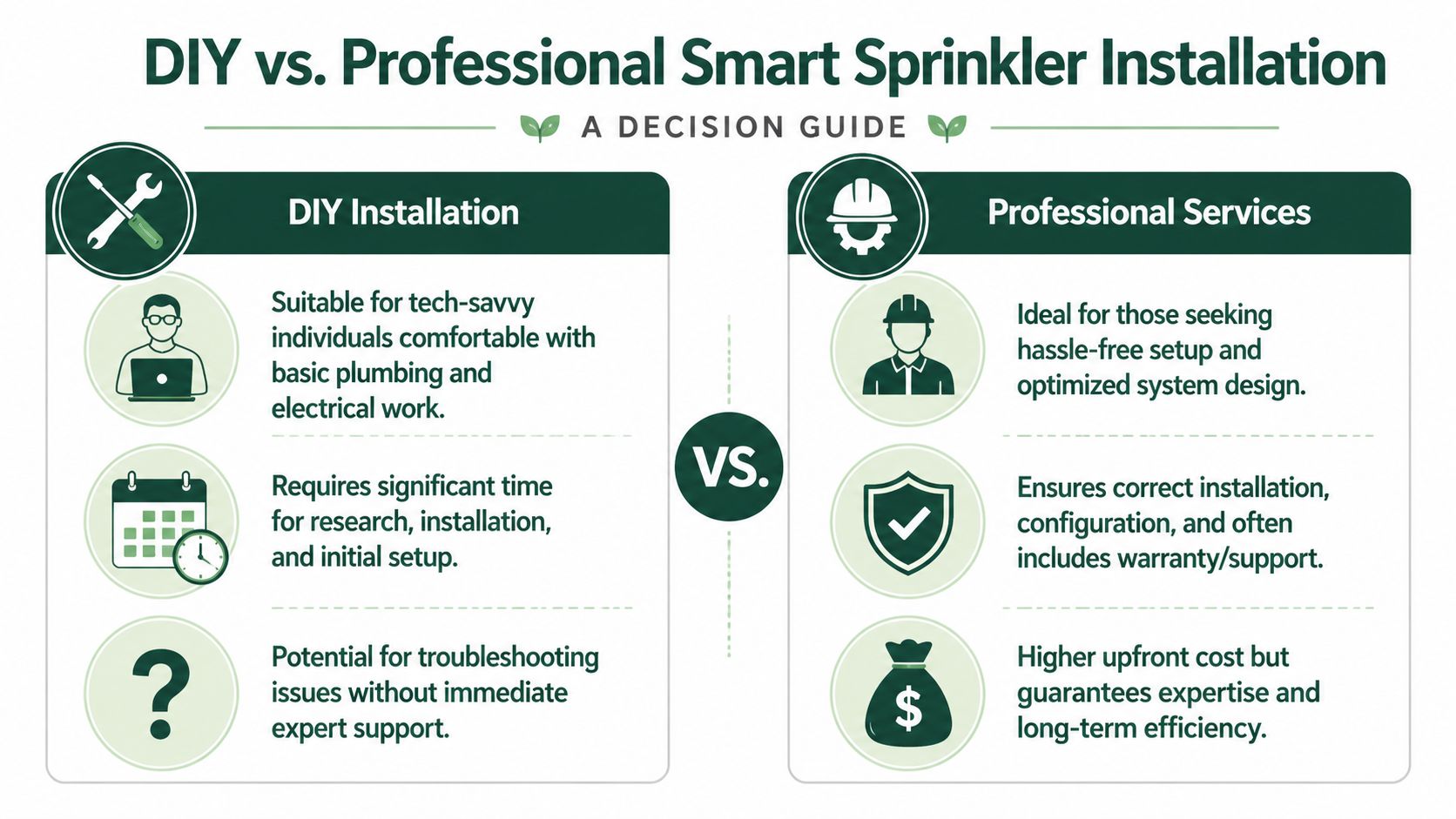
If you already have a working irrigation system with clearly labeled zones, stable wiring, decent coverage, and no major pressure or leak issues, replacing the controller may be manageable. Homeowners who are comfortable with wiring, app setup, and scheduling logic can often handle that kind of update.
DIY also makes sense when your goal is limited. If you’re only adding remote access or replacing an outdated timer with a compatible smart controller, the risk is lower.
When professional installation is the better call
Once the project includes trenching, new lines, valve work, pressure checks, drip conversion, head spacing corrections, or a redesign of how zones are grouped, it moves into professional territory. The same goes for outdoor areas with slope, mixed sun exposure, mature planting, hardscape edges, or recurring runoff.
A smart controller can’t correct poor head placement or undersized infrastructure. It can only manage the system it’s connected to.
A lot of bad irrigation performance gets blamed on the controller when the actual problem is coverage, pressure, or zoning.
The compliance side matters too
California irrigation work isn’t just about convenience. Water waste, runoff, and inefficient scheduling can create avoidable problems. Professional installation helps when the goal is to make the system perform properly and stay aligned with water-use expectations.
If you’re comparing repair versus full upgrade, a practical outside reference is Shady Deal’s guide to sprinkler repair. It’s not Monterey-specific, but it does a good job showing how small irrigation issues can point to bigger system problems.
A simple way to decide
Use this checklist:
- Go DIY if: You’re replacing a controller on an otherwise healthy system.
- Bring in a pro if: Coverage is uneven, zones are mixed badly, or leaks keep coming back.
- Bring in a pro if: You want a new layout, drip conversion, or water-wise redesign.
- Bring in a pro if: You’re trying to protect planting, hardscape, and long-term water efficiency.
For local homeowners, our article on what Salinas homeowners should know before changing their irrigation system covers the planning side in more detail.
Frequently Asked Questions About Smart Sprinklers
Will a smart sprinkler system work with my existing irrigation lines
Often, yes. If the pipes, valves, and heads are in decent condition, a smart controller can usually be added to the existing setup. If the system has poor coverage, old leaks, or badly grouped zones, the controller may work but the results still won’t be good until those issues are fixed.
What happens if my Wi-Fi goes down
Most systems keep their programmed schedule even if internet access drops. What you usually lose is remote access, live weather syncing, or app-based changes until the connection returns. That’s one reason the base programming still needs to be set up properly from the start.
Are smart sprinklers worth it for a smaller yard
They can be, especially if the current timer is overwatering or the property is in a higher-cost water district. The question isn’t just yard size. It’s how much waste the current setup creates and whether better scheduling will protect the planting and reduce runoff.
Do smart controllers help with California water rules
They can help a lot because they make it easier to avoid obvious waste such as watering during the wrong conditions or running the same schedule year-round. They don’t replace proper design, though. Overspray, runoff, and bad zoning still need to be corrected physically.
Do I still need maintenance after installation
Yes. Smart doesn’t mean hands-off forever. Heads still clog, valves still fail, drip lines still shift, and settings still need review as plants mature.
Can a smart sprinkler system handle lawns and drip zones together
Yes, but only if they are separated into proper zones. Turf and drip irrigate very differently. If they’re tied together, even a good controller has to make a bad compromise.
Get a Professional Assessment for Your Property
A smart sprinkler system is most useful when it matches the site, the planting, and the way your property behaves through the year. In Monterey County, that usually means accounting for fog, wind, slope, plant mix, and California water expectations, not just installing a controller and hoping for the best.
If you want a clear recommendation for your yard, it helps to start with an on-site assessment of the current system, coverage, zoning, and upgrade options.
If you’d like a practical evaluation of your smart sprinkler system options, contact California Landscape & Tree Pros for an estimate or consultation. Call (831) 998-7964 in Salinas or (831) 905-8018 in Monterey, or visit 1184 Monroe St., Suite 6, Salinas, CA 93906.