
A Salinas homeowner usually starts with a simple question: what should outdoor space design and installation cost in salinas ca? The honest answer depends less on yard size than on how the project is planned before any crew starts demolition, grading, irrigation, concrete, or planting.
In practical terms, design fees often range from a modest planning scope for a smaller yard renovation to a much larger investment for a full set of build-ready plans, material selections, drainage layout, and permitting coordination. Installation costs can also vary widely once walls, paving, lighting, drainage corrections, or irrigation replacement enter the scope.
The part many homeowners miss is process. A design-build approach puts the layout, construction details, and budget decisions in the same workflow, which usually gives a clearer price range and fewer change orders. Hiring a separate designer and installer can work, but only when both parties coordinate tightly and the plans are detailed enough to price accurately. Skipping design altogether is where costs often drift.
That is why durable outdoor planning matters. Projects hold together better when the design is created with construction, drainage, and long-term performance in mind, as outlined in design that lasts.
For Salinas homeowners, cost clarity starts with one question. Is the project being priced as a connected design-build job, or as a series of separate decisions that will be figured out in the field?
Planning Your Salinas Outdoor Investment
A Salinas homeowner calls after getting two very different prices for the same backyard. One installer priced a patio, some planting, and irrigation changes from a quick site walk. Another proposed a full design-build process that started with drainage, grading, circulation, materials, and permit review before any construction numbers were finalized. The lower quote looks attractive at first. It is also the one more likely to grow once the crew starts finding conflicts in the field.
That is the budgeting problem most property owners are trying to solve. The question is not only what the yard improvement should cost. A better question is whether the price was built from a coordinated plan or assembled from partial decisions.
Outdoor construction in Salinas involves more than surface finishes. Drainage has to work with paving. Irrigation has to match planting. Access, demolition, grading, lighting, and material selections all affect one another. If those choices are made separately, allowances stay vague and change orders become more likely.
Why homeowners lose control of the budget
Budget problems usually start when design is treated as a sketch instead of a build-ready process. Homeowners often hire a drafter for ideas, then ask an installer to fill in the missing details during construction. Others skip plans altogether and rely on field decisions. Both approaches can work on a very small refresh. They create risk on a meaningful renovation.
I see the same pattern repeatedly. A patio layout gets approved before anyone studies how people will move through the space. Planting is selected before irrigation zones are mapped. Drainage is postponed until after concrete, pavers, or walls are already priced. At that point, the contractor is not refining the job. The contractor is correcting it.
A design-build process controls cost because the same team is pricing what it intends to build. Site conditions, use patterns, construction details, and material choices are resolved in the same workflow. That does not guarantee the cheapest number. It usually produces the clearest one.
For the long term, homeowners should understand the framework for developing design that lasts. In Salinas, that also means planning for compliance, irrigation efficiency, and changing state requirements around water use, as covered in these California water rule changes that affect outdoor design planning.
A lower starting quote often means key decisions were deferred, not solved.
What a good budgeting process feels like
A solid budgeting conversation answers practical construction questions before demolition starts.
- How will the yard be used for dining, pets, children, privacy, access, or entertaining?
- What site constraints exist such as slope, drainage trouble, tight access, removal of old concrete, or retaining needs?
- Which materials are selected now and which are still provisional allowances?
- How will irrigation and water use be handled under current California conditions?
- What is included in the contract scope and what will be priced separately if conditions change?
When those answers are clear, the budget usually holds. When they stay loose, crews end up making expensive decisions on site, and the homeowner pays for that uncertainty.
Understanding Typical Outdoor Project Costs in the Salinas Area
A Salinas homeowner might start with a simple goal. Replace a tired front yard, add a patio, fix the irrigation, clean up drainage, and make the whole property easier to maintain. By the time those pieces are priced correctly, the budget usually looks very different from the first rough guess.
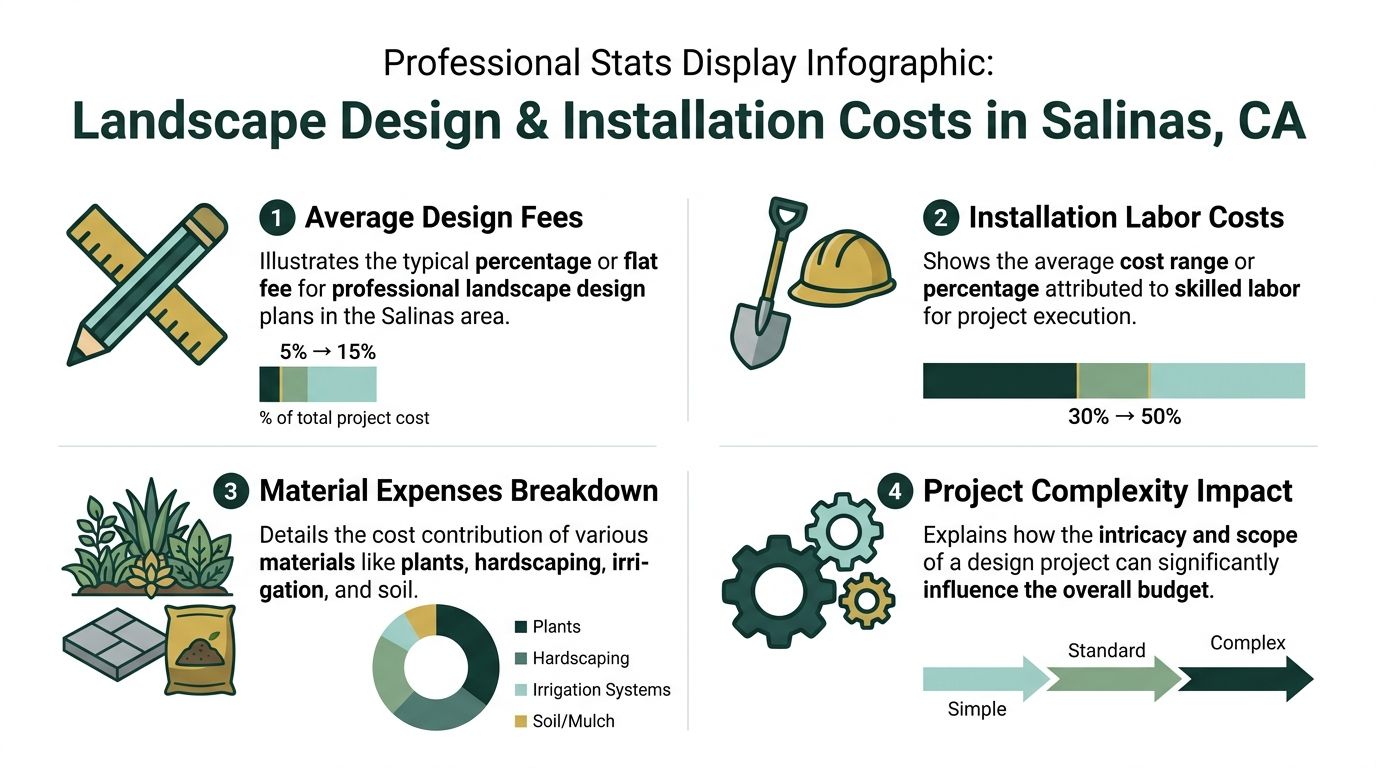
That shift is normal. Outdoor project costs in Salinas are shaped by site conditions, material choices, access, water requirements, and how much problem-solving happens before construction begins. The design-build process matters here because it prices the full scope early, instead of leaving crews and homeowners to make expensive decisions during installation.
What those ranges usually mean
A small yard improvement can stay modest if the work is limited to planting updates, mulch, minor irrigation revisions, and cleanup. Costs rise fast when the project includes demolition, drainage correction, grading, retaining, paving, lighting, or new utility runs.
That is why square footage only tells part of the story.
A 1,200 square foot yard with poor drainage and failing concrete can cost more than a 2,500 square foot yard that already has good grading and clear access. Homeowners who skip design often miss that distinction. They compare installer bids line by line without knowing whether each contractor priced the same scope, the same base preparation, or the same finish level.
Common project categories and why totals stack up
In Salinas, homeowners often ask for one improvement and end up needing three. A new patio may require subgrade repair, drainage work, irrigation rerouting, and new border planting to make the space look finished. A front yard refresh may also include pathway replacement, soil work, lighting, and water-efficient planting.
These combinations are what move a project from a simple cosmetic update into a full yard improvement.
Typical categories include:
- Front yard improvements
- Backyard patios and seating areas
- Planting plans and garden beds
- Water features
- Retaining walls
- Lawn replacement and irrigation upgrades
The cost-control advantage of design-build shows up here. Instead of pricing each item in isolation, the contractor can coordinate layout, drainage, irrigation, and material transitions as one construction plan. That usually reduces change orders and avoids the common problem of one installer undoing another installer’s work.
A practical benchmark for larger projects
For major renovations, many homeowners are surprised by the total because they picture only the visible finishes. The hidden work often drives the budget. Demo and haul-off, base preparation, compaction, drainage infrastructure, sleeves under paving, irrigation zoning, and permit-related corrections all cost money before the first paver or plant goes in.
In practice, a substantial outdoor overhaul often lands closer to a remodeling project than a simple yard cleanup.
That does not mean every property needs a large budget. It means homeowners should match their expectations to the actual construction scope. If the plan includes hardscape, water management, lighting, planting, and new irrigation, the numbers need to reflect that full package.
Why Salinas prices land where they do
Local labor rates are one factor. Material delivery, disposal fees, and scheduling pressure also affect pricing in Monterey County.
Water planning is another. Many projects now call for drip irrigation, hydrozoning, soil improvement, and planting selections that can handle drier conditions with less waste. Homeowners considering that route should review modern drought-tolerant yard planning ideas for California homes and this discussion of California water rule changes that affect outdoor design planning.
Expectations have also gone up. Clients in Salinas often want pavers, steel edging, low-voltage lighting, better drainage, clean material transitions, and planting that still looks finished year-round. Those choices improve performance and appearance, but they also require more planning and labor.
Local reality matters more than broad averages
National pricing can help with early orientation, but it does not price a specific property in Salinas. A thorough budget needs site review, design decisions, and a clear scope. That is the difference between a rough guess and a number that can hold through construction.
If one bid comes in far below the others, check the omissions first. In this trade, a cheap number often means unresolved scope.
Breaking Down Your Outdoor Project Budget
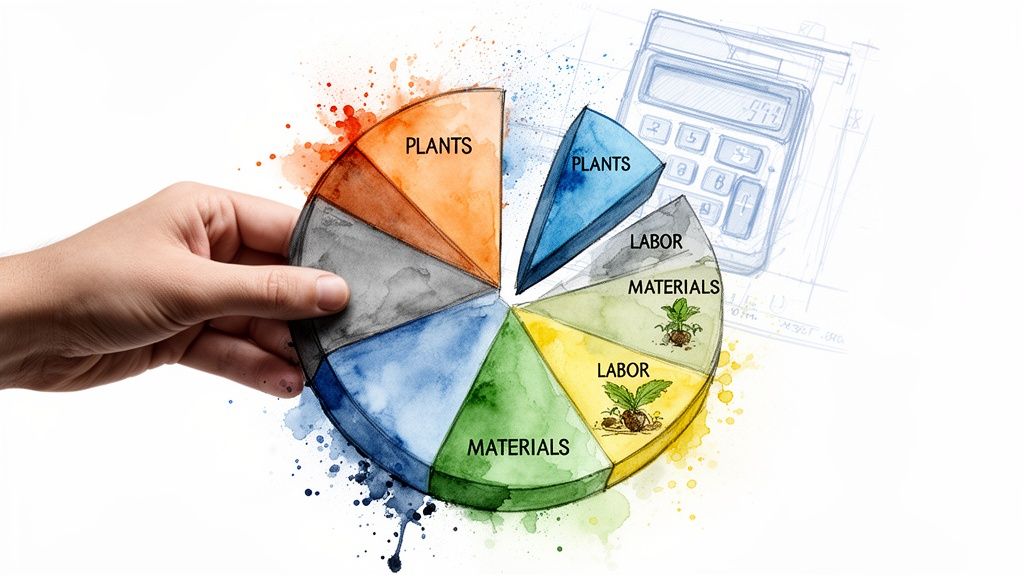
A workable budget starts with scope, then assigns dollars to each decision. In Salinas, the owners who stay closest to budget usually follow a design-build process that resolves layout, materials, drainage, planting, and sequencing before installation starts. Owners who skip that step or hire design and construction separately often get a lower early number, then spend more on revisions, change orders, and field fixes.
 landscape design and installation project costs.” />
Design fees and pre-construction planning
Design is not just a drawing fee. It is the stage where the project team decides what gets built, how it drains, where materials transition, what irrigation supports the planting plan, and whether the scope matches the budget.
According to Angi’s outdoor designer cost guide, outdoor design fees can range from $300 to $600 for a basic 2D plan to over $3,500 for complex 3D renderings. For a simple yard refresh, a basic plan may be enough. For a larger design-build project, pre-construction work prevents the expensive version of decision-making, which happens after demolition is done and crews are waiting.
That planning stage also helps owners choose where higher-end work pays off. For example, outdoor living upgrades that can support home value are usually the result of good layout decisions first, not just upgraded materials.
Hardscape usually changes the budget fastest
Patios, walkways, steps, seat walls, and other built surfaces push cost faster than any other category because every finish choice carries labor, base prep, cutting, and edge work with it.
The Angi source notes that standard pavers might cost $3 to $20 per square foot, while premium natural stone can be $8 to $50 per square foot. Installed cost depends on more than the material. Access to the yard, excavation depth, compaction, border details, pattern complexity, and the number of cuts all matter.
The cleanest way to control this category is to lock in a few decisions early:
- Surface type, such as broom-finish concrete, pavers, decomposed granite, or natural stone
- Pattern and layout, because simple grids cost less to install than multi-size or curved patterns
- Edge details and transitions, especially where paving meets planting areas, gravel, or existing concrete
- Actual square footage, since many projects grow once the family starts planning furniture, circulation, and entertaining space
Planting, irrigation, and soil work
Planting work can look modest on paper and still carry real cost. Soil amendment, root-zone preparation, irrigation updates, turf removal, and finish grading all sit in this part of the budget.
In Salinas, the strongest yards are planned as systems. Plant selection affects irrigation zoning. Irrigation layout affects trenching and controller scope. Soil conditions affect plant performance and water use. Splitting those decisions between separate designers and installers often creates mismatches that get corrected later at added cost.
Homeowners who want lower-water planting should review this detailed guide to modern drought-tolerant planting design in California yards. It explains the planning logic behind durable, lower-maintenance selections.
Permeable materials and the cost-performance trade-off
Some upgrades cost more at the start because they solve a site problem better.
Permeable paving is a good example. The Angi source states that permeable pavers can reduce stormwater runoff by up to 40%, but they may increase material and installation costs by 15% to 25% over traditional concrete. On a property with drainage pressure or runoff concerns, that added cost may make sense. On another property, standard paving with correct slope and drainage collection may be the better use of funds.
The right material fits the soil, drainage pattern, traffic level, and maintenance expectations of the property.
Budget categories homeowners often overlook
Quote gaps usually show up in work that is necessary but easy to miss during early pricing. I tell owners to read this part of the proposal slowly.
Look for:
- Demolition and hauling for old lawn, concrete, planting beds, roots, or debris
- Rough grading and drainage corrections before finish materials go in
- Irrigation changes when the existing system does not match the new yard plan
- Lighting sleeves, conduit, and wire runs before paving is completed
- Permit coordination and revisions when walls, drainage features, or structural elements need review
A structured design-build process keeps these costs visible from the start. It gives the homeowner one scope, one sequence, and one team accountable for how the pieces fit together.
Example Salinas Outdoor Project Budgets Small Medium and Large
The easiest way to make pricing feel real is to tie budget to scope. Most homeowners are not buying “outdoor improvements.” They are buying a specific combination of function, finish level, and site correction.
Below is a simple comparison using the local cost ranges already established in this article. These are not promises or flat-rate packages. They are planning examples that help you match your goals to a realistic budget band.
Sample Outdoor Project Budgets in Salinas 2026 Estimates
| Project Tier | Typical Scope of Work | Estimated Cost Range |
|---|---|---|
| Small | Front yard refresh with new planting, mulch, basic garden bed work, and limited irrigation improvements. This often aligns with small residential yards or simpler curb appeal upgrades. | $2,000 to $8,000 |
| Medium | Backyard or combined front-and-back update for a yard around 1,000 to 5,000 square feet, often including a patio or walkway, planting, irrigation, and moderate layout improvement. | $8,000 to $20,000 |
| Large | Full-property redesign for a yard over 5,000 square feet, often involving extensive hardscape, retaining work, larger planting plans, drainage coordination, and multiple outdoor-use zones. | $20,000 to $50,000 |
Small project example
A small project in Salinas often focuses on curb appeal and cleanup. The homeowner wants the front yard to feel intentional, not overbuilt.
That could mean removing tired plant material, reshaping beds, installing fresh mulch, adding drought-tolerant plants, and improving a few irrigation zones. If the layout is simple and access is easy, this category can stay relatively efficient.
Medium project example
This is the range where many family backyards land. The space needs to function better, not just look better.
A typical medium scope might include a paver patio, a lawn or low-water open area, planting beds, irrigation improvements, and better transitions from the house into the yard. If a homeowner is asking what should outdoor space design and installation cost in Salinas CA for a meaningful backyard transformation, this is often the most relevant budget band.
For many people, this project type also ties directly to resale and everyday use. If you are weighing budget against property value, this discussion of whether building an outdoor living area increases home value is worth reading.
Large project example
A large project is usually not just an installation. It is a coordinated redesign.
The homeowner may be replacing multiple old surfaces, introducing retaining walls, reworking circulation, adding feature areas, improving drainage, and rebuilding the property with a more cohesive water-wise strategy. These jobs have more moving parts, more sequencing concerns, and more opportunities for cost drift if planning is weak.
That is why large projects benefit the most from integrated design-build thinking. When the design, review, and installation path is disconnected, a large yard tends to expose every gap in coordination.
Big projects do not fail because the yard is large. They fail because too many important decisions are deferred until construction has already started.
Key Factors That Raise or Lower Outdoor Project Costs
Two projects with the same square footage can price very differently. The difference usually comes from site difficulty, not just design taste.
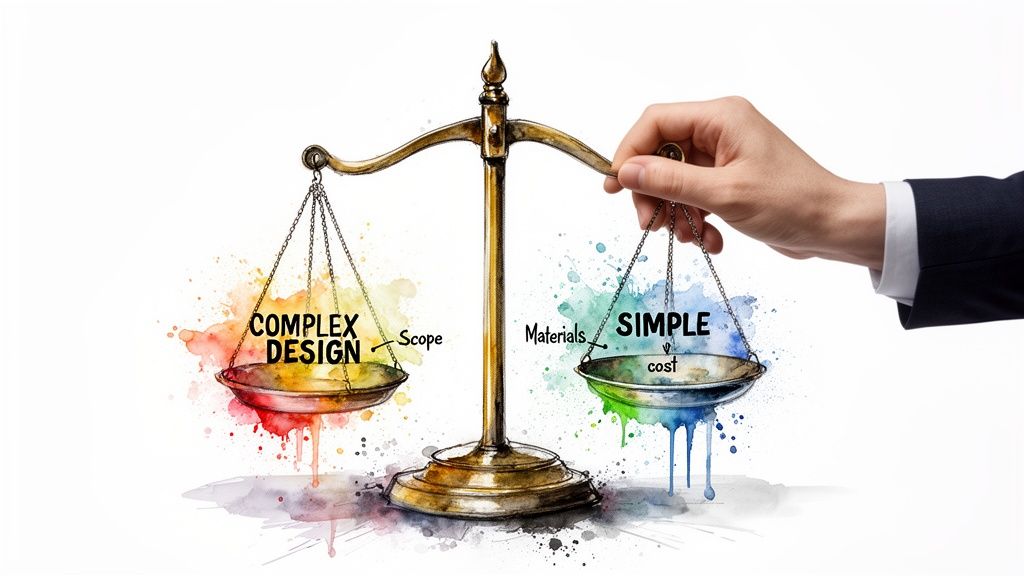
According to Salinas outdoor installation cost data, a basic project on a flat, accessible lot might start at $10 to $15 per square foot, while a complex project on a sloped site with poor access could exceed $30 to $50 per square foot because of grading needs, manual labor, and structural work. The same source notes that retaining walls alone can cost $4,000 to $12,000.
Site access changes labor fast
Access sounds minor until the crew has to move materials through a side gate, around tight corners, or by hand over long distances.
A machine-accessible yard is one thing. A property where every paver, shovel of base, and plant container has to be hand-carried is another. Labor time rises quickly when equipment cannot do the heavy movement.
Slope and drainage are not optional line items
Flat yards are simpler. Sloped yards are not impossible, but they require more thought and more budget discipline.
The expensive mistake is treating grading and drainage like add-ons. If water movement is wrong, the project may still look good at completion and then start failing later through erosion, settlement, runoff, or saturated planting zones.
Material choice can either simplify or complicate the build
The material itself matters, but so does how it installs.
A straightforward surface with clean geometry usually costs less to execute than a premium material with custom cuts, multiple elevations, curved borders, and tight finish tolerances. Homeowners sometimes focus on the price of the paver or stone and miss the labor complexity attached to their preferred layout.
Existing conditions matter more than most homeowners think
A quote often changes after a site walk because the property contains hidden work, such as:
- Old concrete or buried debris that must be removed
- Poor soil structure requiring amendment before planting
- Failing irrigation that cannot support the new plan
- Tree roots or grade conflicts near hardscape areas
- Previous patchwork installations that do not align with the new design
None of that is glamorous, but all of it affects cost.
If two contractors see the same property and one asks far more questions about grading, access, and irrigation, that is usually a sign of better estimating, not upselling.
Choosing the Right Contractor and Getting Accurate Quotes
The quote is not just a price. It is a preview of how the project will be managed.
If a contractor gives a vague number after a quick walkaround, you have learned something important. The project may be treated loosely from start to finish. That is how homeowners end up chasing callbacks, clarifying scope mid-job, or trying to resolve disagreements about what was “included.”
Why design-build usually protects the budget better
A structured design-build process keeps the same team responsible for concept, review, and execution. That matters because the people who price the job understand what is being built, and the people building it are working from an agreed plan instead of guesswork.
The alternative is fragmented. One person designs. Another bids. A third installs. Details get interpreted instead of confirmed. Scope gaps appear between trades. The homeowner becomes the project manager by default.
A reliable process should include these elements:
- On-site consultation that studies goals, access, grading, and existing conditions
- Design development with a clear layout or visual presentation before construction
- Scope review so materials, features, and exclusions are identified early
- Installation planning with sequencing and timeline expectations
- Final walkthrough to confirm the finished work matches the agreement
That structure is one reason many homeowners prefer teams that handle the work from concept to completion rather than assembling separate parties on their own.
What to ask before you sign
Do not settle for “we can do anything.” Ask specific questions.
- Are you properly licensed in California? Licensing matters for accountability and compliance. A contractor operating under a C-27 classification, such as license #1107800, reflects that the business is set up for outdoor contracting work.
- Who is creating the design and who is installing it? If those are different people, ask how changes are communicated.
- What exactly is included in the quote? Look for demolition, haul-off, irrigation, drainage, material specs, and finish details.
- How are changes handled? There should be a defined process, not casual verbal approvals.
- Can you show similar completed work? Portfolio review tells you more than promises do.
What accurate quotes usually have in common
Good quotes are rarely the shortest. They are the clearest.
They define materials, note assumptions, identify areas that may require field adjustment, and explain what could trigger change orders. If you want to compare professionals in a more serious way, start by requesting a quote that is detailed enough to evaluate on scope, not just price.
The right contractor is not just someone who can install plants or lay pavers. It is someone who can remove uncertainty from the process.
Your Outdoor Project Cost Questions Answered
Below are the questions homeowners usually ask once they move from browsing into actual planning.
Frequently Asked Questions
| Question | Answer |
|---|---|
| How much should I expect to spend on maintenance after installation? | Maintenance depends on the design choices you make. A low-water planting plan with appropriate mulch, spacing, and efficient irrigation is usually easier to manage than a yard with high-pruning plants, thirsty lawn, and complicated seasonal color. Ask your contractor to explain the maintenance profile of the design before you approve it. |
| Do outdoor projects in Salinas need permits? | Some do, especially when the project includes structural elements, drainage modifications, retaining work, or other improvements that may trigger local review. Permit requirements vary by scope and site conditions, so this should be addressed during estimating, not after work starts. |
| How long does a project usually take from design to completion? | Timelines depend on complexity, material availability, weather, municipal review when needed, and crew scheduling. A simple refresh moves faster than a full redesign with hardscape and drainage work. The best way to avoid timeline surprises is to get a defined sequence before signing. |
| Is drought-tolerant planting worth the investment? | In Salinas, it often is. The practical benefits usually include lower water demand, better alignment with California conditions, and easier long-term management when the planting and irrigation are designed together. The upfront cost can be higher if the project includes irrigation upgrades or full reworking of the yard, but the design usually performs better over time. |
| Can I phase a large project over time? | Yes, if the phases are planned correctly. The mistake is breaking the project into parts without a full master plan. That often leads to rework. A better approach is to design the whole property first, then install in stages that preserve drainage logic, circulation, and future tie-ins. |
A few final practical answers
Homeowners also ask whether they should collect multiple bids. The answer is yes, but only if the bids are based on comparable scope. Three prices for three completely different project definitions will not help you choose intelligently.
Another common question is whether a cheaper installer can build from someone else’s design. Sometimes. But if the installer did not participate in the planning, expect more field interpretation and more chances for disconnect.
The best quote is not the one with the lowest number. It is the one that tells you exactly what will happen, what it will cost, and how problems will be handled if conditions change.
Start Your Salinas Outdoor Transformation with Confidence
A Salinas homeowner approves a low bid, starts construction, and then the change orders begin. Drainage was not fully addressed. Material allowances were too loose. The planting, hardscape, and irrigation plan were never coordinated on paper. That is how outdoor projects get expensive.
A structured design-build process keeps those problems from driving the budget. The design defines scope first, the build team prices the actual work, and the homeowner can make decisions before labor and materials are committed. That approach gives far better cost control than hiring separate installers or skipping design and trying to solve details in the field.
If you are still asking what should outdoor space design and installation cost in salinas ca?, start with a site-based plan, not a rough guess. The right budget comes from your actual property conditions, your material priorities, and a construction sequence that is clear before work starts.
For homeowners who want a defined process from concept through final walkthrough, contact California Outdoor & Tree Pros. Their team serves Salinas and Monterey County with licensed design-build services, structured planning, and clear quoting that helps homeowners invest with confidence.