
Rising storm damage is changing how homeowners prepare in 2026 by forcing a massive shift from reactive cleanup to proactive risk management. For Salinas and Monterey Bay residents, waiting for a storm to pass before taking action is no longer just risky—it’s dangerously outdated, as intensifying weather makes emergency tree work a year-round necessity.
The New Reality: How Storms Are Reshaping Homeownership

If you live in Salinas or anywhere around Monterey Bay, the idea of a predictable "storm season" probably feels like a distant memory. The market data reveals a significant shift: severe weather events are on the rise, with Marin County officials recently handling 60 downed trees in a single day during an atmospheric river storm. This isn't just a feeling—it's a documented trend with serious financial consequences, pushing emergency tree work from a seasonal service to a year-round planning necessity.
The constant threat of less predictable and more destructive storms is fundamentally changing homeowner behavior. Events like the impact of recent rain storms are a harsh reminder of just how destructive modern weather can be.
The Impact on Homeowner Behavior
This shift is creating new demands and expectations from consumers, who now expect providers to be available, insured, and capable of documenting risk before something fails. We are seeing:
- More demand for pre-storm assessments to spot hazards like vulnerable trees.
- Increased urgency for rapid response after high-wind events.
- Higher insurance scrutiny on tree risk and maintenance records.
- Faster decision-making around critical tree removals and pruning.
The table below breaks down this crucial change in thinking. It’s a move from dealing with the aftermath to actively preventing it.
The Shift From Reactive Cleanup To Proactive Defense
| Area of Concern | Outdated Reactive Approach | Modern Proactive Strategy |
|---|---|---|
| Trees & Limbs | Calling for removal of a fallen tree after it hits the roof. | Annual arborist inspections; preventative pruning and removal of high-risk trees. |
| Water & Drainage | Dealing with a flooded basement or yard after heavy rain. | Installing French drains; regular gutter cleaning; grading landscape away from the foundation. |
| Insurance Claims | Scrambling to find proof of property condition after damage occurs. | Taking "before" photos and videos annually; keeping digital records of all maintenance. |
| Emergency Help | Frantically searching for available contractors when they are in high demand. | Having a pre-vetted professional on standby; establishing a relationship beforehand. |
This isn't just about preventing a headache; it’s about building genuine resilience for your property and gaining peace of mind in a climate that feels increasingly unpredictable.
The modern homeowner understands that preparing for a storm begins months, not hours, before it hits. Proactive landscape fortification and professional tree assessments are no longer optional—they are essential components of responsible homeownership in 2026.
For Salinas and Monterey Bay homeowners, where winter storms and coastal winds continue to intensify, securing a professional risk assessment and emergency response plan is no longer optional—it’s the smartest way to protect property and avoid expensive surprises in 2026.
Why Waiting Is No Longer A Viable Strategy
Not too long ago, you could get away with treating storm prep as a seasonal chore. That time is over. The old, predictable storm seasons are gone, replaced by a year-round threat that forces us to stay on our toes. Globally, severe thunderstorms now account for a staggering $70 billion in insured losses, a figure that has more than doubled in the past decade. You can dig into the global financial data yourself over at Munich Re.
The Widening Gap in the Contractor Market
This shift has created a major gap in the market. Contractors who continue to treat emergency tree removal as a purely reactive service are failing their clients and their bottom line. By not planning and staffing for storm surges, these companies become invisible when demand spikes, leaving homeowners with long, dangerous wait times.
This reactive approach causes them to lose:
- Critical peak-season revenue.
- Homeowners who now prefer proactive risk mitigation.
- Insurance-referred work that requires certified evaluations.
- Trust from clients who need them most during an emergency.
The reality is that this constant state of alert is fundamentally changing how people approach property care. Homeowners are no longer just focused on cleaning up after a storm; they’re demanding action before it hits. A huge piece of this puzzle is knowing how to spot the hidden tree risks before storm season begins, as detailed in our comprehensive local guide.
Insurance Scrutiny and the Maintenance Paper Trail
The biggest change, however, is happening behind the scenes with insurance companies. As storm-related claims continue to pile up, carriers are no longer just taking your word that your property was in good shape. They are digging for proof of responsible, ongoing maintenance.
Think of a large, uninspected tree near your home as a ticking clock. In the past, it was just a part of the landscape. In 2026, it's a potential liability that your insurance company is watching closely, and proactive care is the only way to defuse the risk.
This new level of scrutiny means having a certified arborist's evaluation in your records is becoming non-negotiable. Without that documented proof of professional tree care, homeowners could easily find themselves facing:
- Trouble getting or renewing a policy.
- Denied claims for damage that insurers believe was preventable.
- Higher premiums to reflect the unmanaged risk on their property.
Your First Line of Defense: Proactive Tree Care
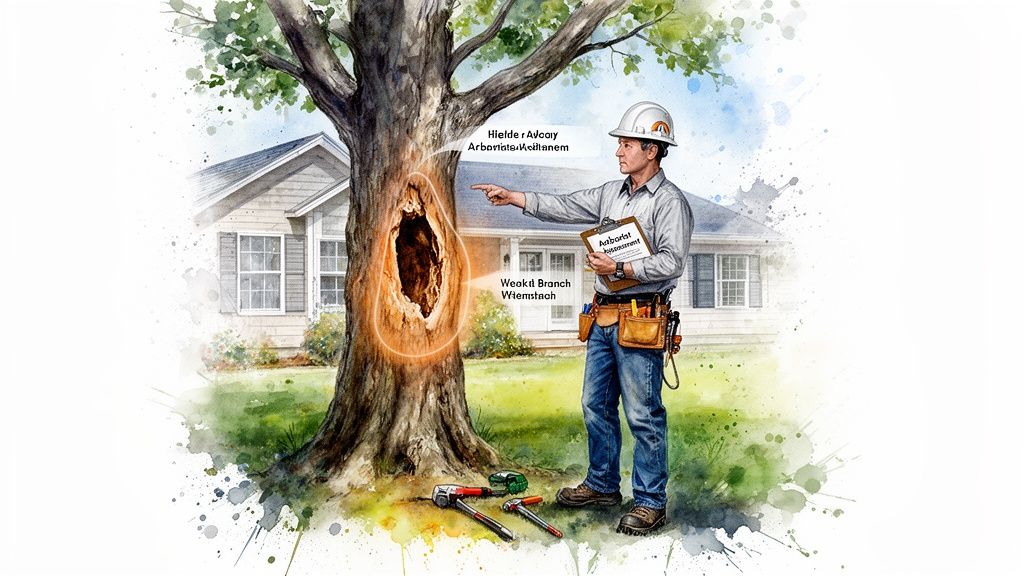
When we talk about preparing for bigger storms in 2026, our thinking needs a major shift. It's no longer just about cleaning up after a storm; it's about getting ahead of it. The single most important place to start is with the biggest features on your property: your trees.
That's why getting a professional's opinion is non-negotiable. A Certified Arborist is trained to see what we can’t—the subtle clues and hidden weaknesses that pose a direct threat to your home.
What a Certified Arborist Can See That You Can’t
Think of a professional tree assessment like a specialized medical exam. An arborist is trained to diagnose problems long before they become life-threatening emergencies, looking for dangers that are practically invisible to the average homeowner.
Here’s what a real expert is trained to spot:
- Internal Decay: Using specialized techniques, they can find rot and cavities deep inside a trunk that looks perfectly solid on the outside.
- Compromised Roots: An arborist can identify signs of root heave, decay, or damage from nearby construction that could make the entire tree unstable.
- Weak Branch Unions: They know how to spot poorly attached limbs, included bark, and tiny stress cracks that are prime candidates for snapping off in high winds.
- Disease and Pests: Catching an infestation or disease early can not only save the tree but also prevent the structural weakness that leads to storm failure.
Getting a handle on these hidden issues is the first and most critical step. If you want to get into the weeds on this, our advanced guide to tree risk assessment explains what your yard really needs.
Strategic Pruning: Your Smartest Investment
Once a potential problem is found, the answer isn't always cutting the whole tree down. Often, the most effective and wallet-friendly solution is strategic pruning. This is a science, not just hacking off branches. It's about carefully shaping the tree to make it more resilient.
Proper pruning reduces the tree’s “sail effect.” It allows wind to flow through the canopy instead of pushing against it like a solid wall. This takes a huge amount of strain off the trunk and roots, dramatically lowering the risk of the tree toppling over. It’s an investment in your safety that easily pays for itself by preventing a massively expensive and dangerous emergency later.
In the face of intensifying storms, proactive pruning transforms a tree from a potential liability into a fortified asset. It's the difference between managing risk on your own terms and dealing with a disaster in the middle of a storm.
Fortifying Your Landscape Beyond The Trees
Taking care of your trees is the first, most crucial step, but a truly storm-proof property requires a broader defense strategy that covers your entire landscape. The same powerful atmospheric rivers that batter your trees can also unleash a torrent of water on your yard, leading to flooding, erosion, and even damage to your home's foundation. For anyone living in the Monterey Bay area, managing water is every bit as important as managing wind.
A smart approach means thinking of your yard not as a collection of separate parts, but as a single, integrated system designed to handle whatever nature throws at it. The objective is simple: control where the water goes, keeping it away from places where it can do real harm.
Mastering Water Management With Smart Drainage
When a big storm rolls in, your landscape has to cope with a sudden, massive volume of rain. If it can't, that water will always find the easiest path—which is often straight toward your foundation. This is where effective drainage becomes your best line of defense.
Properly designed drainage systems are all about channeling that excess water away from your home and other critical areas. Common solutions include French drains, catch basins, and proper grading to slope the ground away from the house.
The Structural Power Of Well-Designed Hardscapes
Don't mistake your retaining walls, patios, and walkways for mere decoration. These hardscape elements are functional workhorses in a storm-ready landscape. A professionally built retaining wall, for instance, is actively fighting erosion, holding back soil that would otherwise wash away in a downpour and threaten to undermine your foundation. For more ideas, take a look at our guide on how to weatherproof your landscape and safeguard outdoor spaces this storm season.
In 2026, the smartest landscape designs are those that blend beauty with resilience. Your patio isn't just for summer barbecues; it's part of a system designed to manage winter downpours.
Anchoring Your Yard With Native Plants
The final piece of your landscape defense strategy is plant selection. Native and water-wise plants have deep, tough root systems that create a natural web, locking the soil in place and preventing erosion. Their deep roots also provide a much stronger anchor, making them far less likely to be ripped out of the ground during a storm.
And as you think about your landscape, don't forget the house itself. Modern solutions like specialized hurricane protection window film can add a crucial layer of defense against high winds and flying debris. When you combine a fortified home with a resilient landscape, you’re creating a multi-layered defense system.
Your 2026 Storm Preparedness Blueprint
Knowing the risks is one thing, but actually doing something about them is what really matters. It’s time to move from simply being aware to having a solid plan. Think of this as your blueprint—a clear, step-by-step guide to making your property tougher against today’s wild weather.
This isn't about that last-minute panic when a storm warning flashes on the screen. It's about building resilience into your property all year round so you can face any forecast with confidence.
Step 1: Schedule Your Annual Arborist-Led Assessment
First thing's first: get a professional to look at your trees. A Certified Arborist is trained to spot hazards you’d never see, like hidden internal decay or a dangerously weak root system. This assessment is the bedrock of your entire storm defense strategy.
Step 2: Create A Dedicated Storm Preparedness File
In today's insurance world, paperwork is king. Create one central file—a binder or a digital folder—to keep all your important records like arborist reports, maintenance invoices, and annual before-and-after photos of your property.
Step 3: Vet and Establish An Emergency Response Partner
When a big storm hits, the last thing you want to be doing is frantically Googling for a reputable tree company. The time to build that relationship is now. Do your homework on local companies like California Landscape & Tree Pros that have a solid reputation for storm response, then save their number in your phone.
Step 4: Conduct A Yearly Insurance Policy Review
Your homeowner's insurance policy isn't something you can just set and forget. Sit down with your agent once a year to make sure your coverage for rebuilding costs, debris removal, and tree damage is adequate for 2026 and beyond.
The frequency of billion-dollar disasters has increased dramatically, averaging one such event every three weeks now, compared to every four months in the 1980s. You can learn more about the growing frequency of these costly events by reviewing the disaster data on USAFacts.org. This simple process flow shows how the key pieces of your property's physical defenses fit together.
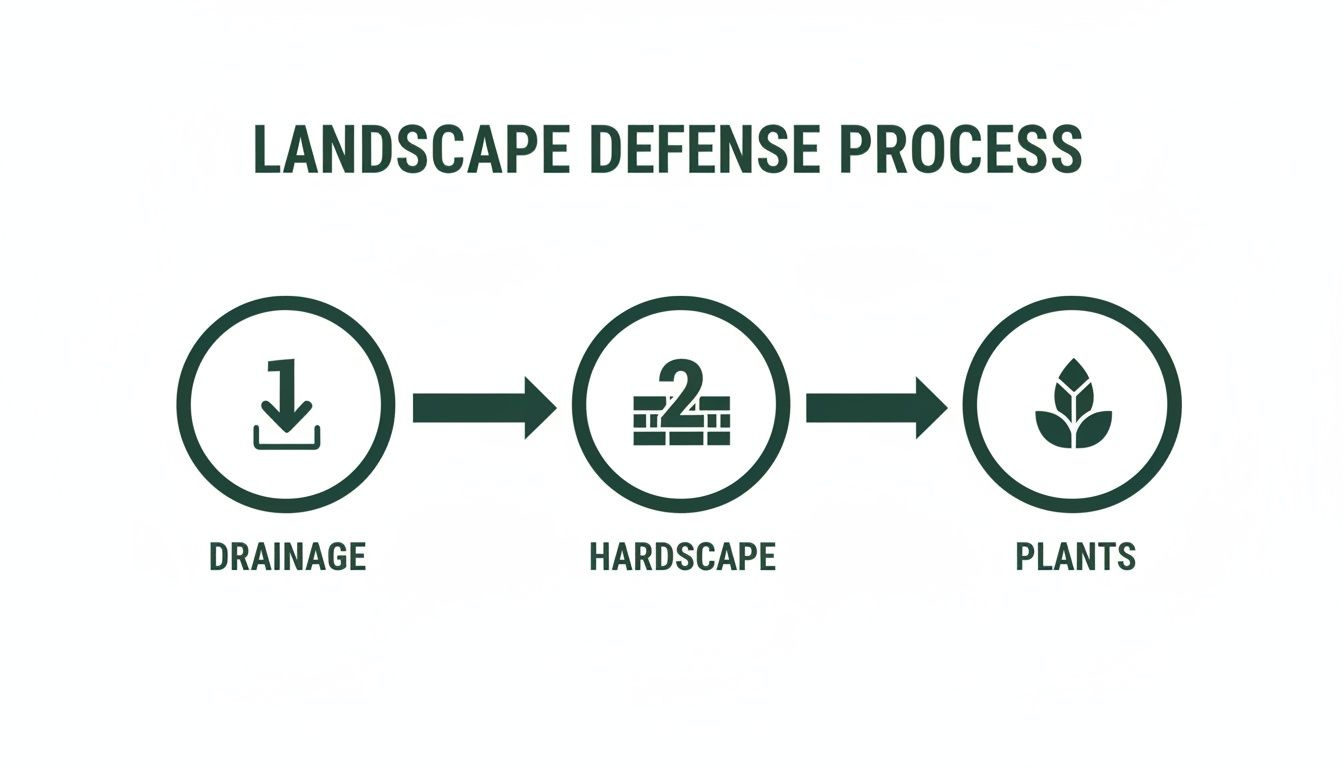
The big takeaway here is that each element—drainage, hardscaping, and smart plant choices—reinforces the others. Together, they create a complete system that manages both wind and water, effectively turning your yard into a protective buffer for your home.
Partnering For Peace Of Mind In Monterey Bay And Salinas
The old routine of anxiously watching the weather, crossing your fingers, and then scrambling for help after the damage is done just doesn’t work anymore. It’s a recipe for long waits, huge bills, and a ton of stress. For 2026, the only way to break that cycle is to get ahead of it with a proactive partner.
The Solution: A Proactive Safety Partner
California Landscape & Tree Pros provides rapid-response emergency crews trained for storm conditions and certified arborist assessments to identify hazards before failure occurs. This positions us not just as an emergency responder, but as a preventative safety partner for homeowners.
When you work with us, you gain significant benefits:
- Reduced likelihood of property damage through proactive care.
- Faster recovery after storms with priority service.
- Better insurance outcomes with documented risk assessments.
- Peace of mind knowing a qualified team is on call during peak weather events.
For local residents, having one trusted partner for both preventative care and urgent response is the single most effective way to safeguard your property. To get a better sense of how our teams work when a storm hits, you can learn more about our dedicated Monterey County emergency tree services.
Securing a professional risk assessment and having an emergency plan in place is no longer optional—it’s the smartest investment you can make to protect your property and avoid expensive surprises in 2026.
When you partner with a licensed, insured, and qualified local team, you take back control. It’s time to end the cycle of storm-season anxiety and schedule a professional consultation with our team today.
Common Questions About Protecting Your Home From Storms
As we see storm damage becoming a bigger issue for homeowners in 2026, a lot of the same questions keep popping up. Here are some straightforward answers from what we see in the field every day.
What’s the very first thing I should do to get my property ready?
Get a professional tree risk assessment from a Certified Arborist. Hands down, this is the most critical first step. Your trees pose the greatest risk to your house, and an arborist can spot dangers you'd never see, like hidden decay or weak branches.
How often do my trees need to be inspected?
In high-risk coastal areas like Salinas and Monterey Bay, an annual inspection is the professional standard. This ensures new problems like disease, pest damage, or structural weaknesses are caught and addressed before the next major storm hits.
Why is keeping records so important for insurance?
Because insurance companies are scrutinizing storm damage claims more closely. They want proof that damage wasn't caused by neglect. Having a file with arborist reports and maintenance receipts shows you've been a responsible homeowner, which can prevent claim denials and speed up payment.
Can't I just call for tree service when a storm is in the forecast?
That’s a gamble you don’t want to take. The moment a big storm is announced, every reputable tree company's phone rings off the hook. They become swamped, prioritizing existing clients and emergency calls. By then, it’s too late to book preventative work, leaving your home exposed.
What should I look for when hiring an emergency tree service?
First, confirm they are licensed and fully insured, with both workers' compensation and general liability coverage. Beyond that, a truly professional service will have a Certified Arborist on staff and crews specifically trained for rapid-response storm work, ensuring they can handle dangerous situations safely and efficiently.
The next storm warning is not the time to start planning. The team at California Landscape & Tree Pros provides certified arborist assessments and has emergency crews on standby to give you real peace of mind.
Take the first step to securing your home's safety. Visit us at https://californialandscapeandtreepros.com to schedule a consultation today.