
A lot of homeowners ask what does a garden designer do that I can’t?** It’s a fair question. On the surface, landscaping looks visual and approachable. You can sketch a patio, pick plants online, and feel like you’ve got a solid plan.
The problem is that most outdoor project failures don’t start with bad taste. They start with things you can’t really see on day one. Grading, drainage, irrigation layout, soil conditions, code requirements, and plant spacing all decide whether the yard still works a few years from now. In Monterey County, where coastal weather, variable soils, and water rules all matter, that gap between a good idea and a durable result gets expensive fast.
Quick Answer
An outdoor designer does a lot more than choose plants and draw layouts. A professional starts by analyzing how your property works, including soil, drainage, sun exposure, access, irrigation needs, code requirements, and long-term maintenance. That early planning is what prevents common problems like dead plants, standing water, cracked hardscape, poor drainage, wasted water, and layouts that look good at first but become difficult to maintain. In places like Salinas and Monterey County, that technical planning matters even more because coastal conditions, local soils, and California regulations can turn a simple DIY project into a costly redo.
Introduction
If you’re standing in your yard with screenshots, rough sketches, and a weekend plan, the question is: what does a garden designer do that I can’t?** usually comes down to risk. Most homeowners can absolutely make a yard look better for a while. Fewer can plan one that drains properly, survives local conditions, and holds up through installation and years of use.
That difference matters in Salinas, across Monterey County, and throughout the Monterey Bay Area. A professional design isn’t just a prettier drawing. It’s the work that happens before anything gets built, so you don’t end up redoing planting, moving drains, replacing irrigation, or tearing out hardscape that was placed in the wrong spot.
The Unseen Foundation of a Great Landscape
A yard usually fails below the surface first. Water sits where it should drain. Roots hit compacted soil. A patio settles because the base was guessed instead of measured. By the time the problem shows up, the money is already spent.
| Project area | Typical DIY approach | Professional design approach |
|---|---|---|
| Site review | Visual walk-through | Soil, drainage, topography, sun, wind, and use patterns reviewed together |
| Planting | Choose by appearance | Match plant to soil, exposure, water needs, and mature size |
| Water management | Add sprinklers later | Plan irrigation and drainage from the start |
| Hardscape | Lay out by feel | Account for slope, base prep, runoff, and structural needs |
| Long-term upkeep | Fix issues as they show up | Design for maintenance, access, and performance over time |
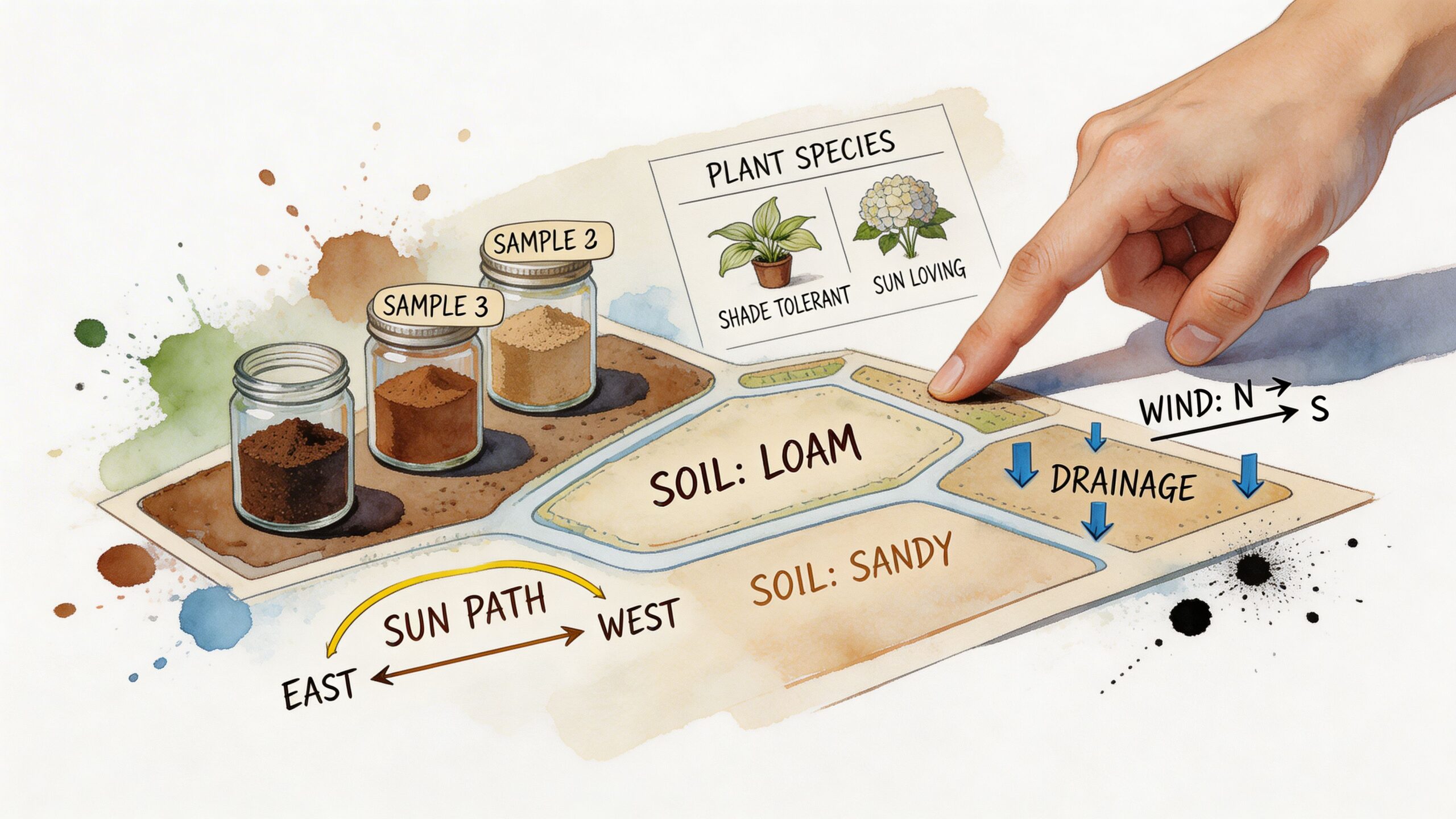
A durable outdoor project starts with site facts. Before anyone picks materials or plants, the work should answer a few basic questions. Where does runoff go during a winter storm? Which areas stay wet, dry out fast, or bake with reflected heat? How much usable root space is there once paving, utilities, and foot traffic are accounted for?
Design starts with site conditions, not style
Homeowners often start with photos they like. Professionals start with constraints that will affect cost, performance, and maintenance.
That means checking drainage rate, compaction, topography, wind exposure, sun patterns, and soil behavior before layout decisions get locked in. As noted by All Weather Services in “5 Essential Outdoor Design Skills”, good design work depends on reading site conditions accurately, not just arranging plants and features in a way that looks good on paper.
On the ground, that prevents expensive misses. Compacted soil can keep roots shallow and stressed. Clay-heavy areas common in parts of Monterey County can hold water long enough to rot plants that looked fine at install. A south or west-facing corner may need a very different plant palette and irrigation approach than a shaded side yard twenty feet away.
If a plan ignores drainage and mature plant size before installation, it is incomplete.
Monterey County punishes shallow planning
Local conditions are hard on guesswork. Coastal fog, afternoon wind, salt exposure near the bay, and sharp microclimate changes across the same property all affect what will hold up. In Salinas and nearby communities, I also see plenty of yards where heavy soil and minor grade issues turn into standing water against paving or foundations after a storm.
That is where DIY layouts often get expensive. A hedge chosen for fast privacy outgrows its setback and crowds a walk. A paver area sheds water toward the house because the slope looked flat enough by eye. A planting bed near hardscape dries out faster than expected because reflected heat and shallow soil were never accounted for.
Good planning handles function first:
- Drainage paths: Runoff needs a defined place to go that does not threaten the house, fence lines, or paving.
- Access and circulation: Gates, walkways, side yards, and service routes need enough width to use and maintain.
- Privacy and screening: Planting should be sized for mature height and spread, not nursery size.
- Maintenance realities: Crews and homeowners need room to prune, inspect irrigation, clean drains, and move equipment through the yard.
The visual side still matters. It just needs to be built on choices that can survive local soil, water limits, and real use. For a closer look at planning choices that hold up over time, see this guide to outdoor design that lasts.
From Concept to Construction-Ready Plans
A homeowner in Monterey County sketches a patio, a few planting beds, and low-voltage lights on graph paper. The crew shows up ready to build, then starts asking the expensive questions. Where does the runoff go after a winter storm. What is the finished elevation at the threshold. Where do irrigation sleeves cross under paving. How close can excavation get to existing roots, utilities, and footings.
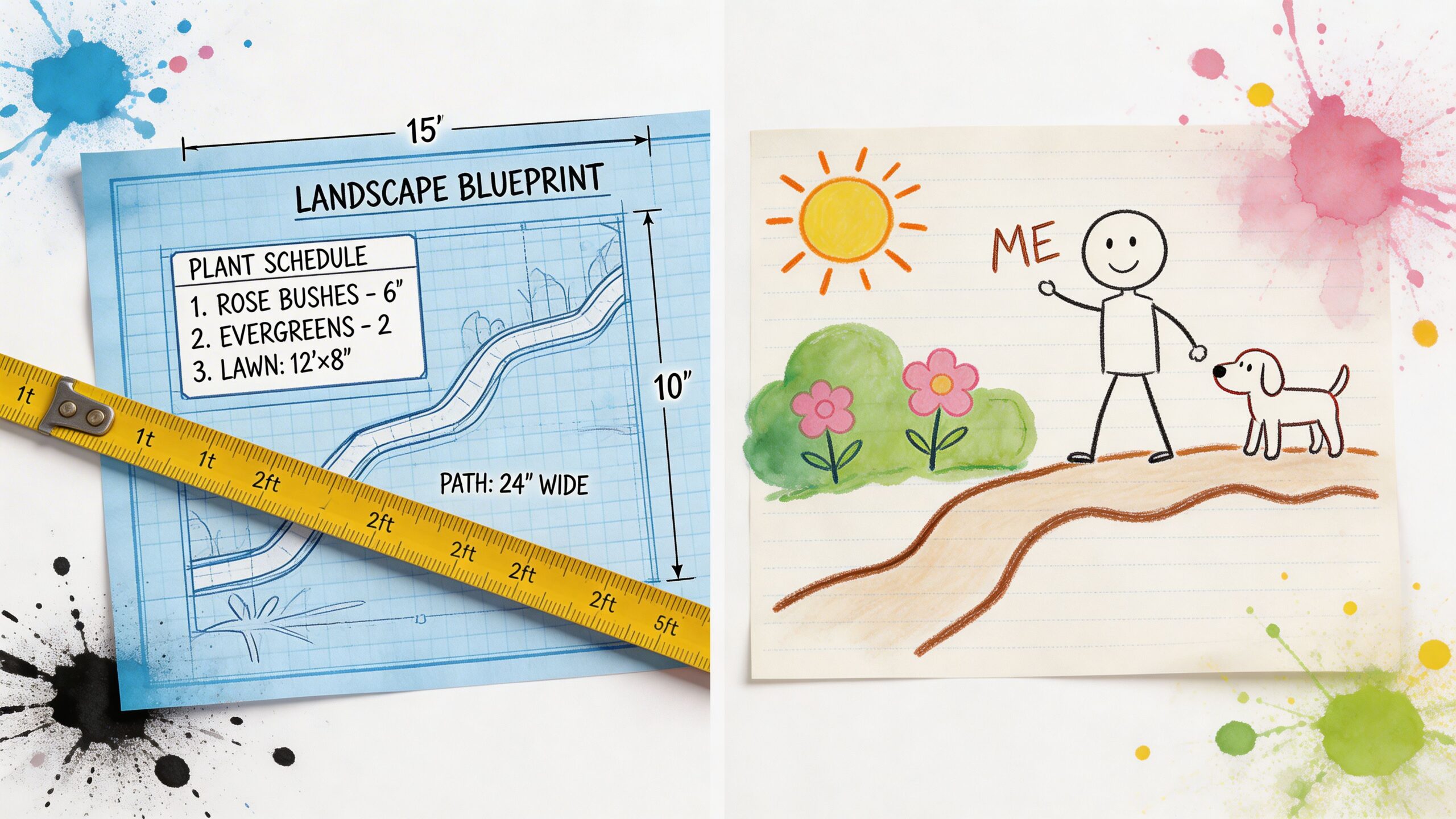
That is the gap between an idea and a plan a contractor can price and install without guessing.
A professional plan gives each trade clear instructions
Design software like AutoCAD, SketchUp, and GIS-based planning tools let professionals produce scaled drawings contractors can build from. As noted by Southern Botanical in “7 Skills an Outdoor Designer Needs to Be Successful”, professional drafting improves accuracy and helps contractors bid faster with fewer revisions.
On the jobsite, that means dimensions, elevations, slope direction, drain locations, fixture spacing, sleeve placement, and irrigation zoning are all shown before materials are ordered. In coastal and inland parts of Monterey County, that level of detail matters because sun exposure, salt air, and grade changes can shift material choices and installation methods even on the same property.
Crews still solve problems in the field. They should not be designing the job in the field.
Materials and layout have to work together
Homeowners usually focus on finishes first. Contractors have to deal with what sits underneath and what connects to it.
For example, if you’re exploring outdoor patio cement tile designs, the tile choice is only part of the decision. The base, drainage plane, joint spacing, edge support, adjacent elevations, and movement between surfaces all need to be resolved on the plan or the finish starts failing early.
I see the same pattern with outdoor renovations that combine paving, lighting, planting, and irrigation. One subcontractor installs exactly what was drawn, but the drawing did not show how their work affects the next trade. Sleeves miss the walkway crossing. Lighting lines conflict with excavation. A path lands too close to a tree that should have been protected. Those are planning failures, not labor failures.
A presentation drawing sells the idea. A construction set protects the budget.
If you want a field-level explanation of where attractive concepts break down during installation, read this article on why outdoor installation plans fail in California yards.
Navigating California Codes and Permit Requirements
A homeowner in Monterey County decides to add a patio, a short wall, and new planting over a few weekends. The sketch looks simple. Then runoff starts moving toward the neighbor’s lot line, the wall height changes after grading, and the irrigation plan no longer fits California water rules. That is the point where a yard project turns into a code, permit, and liability problem.
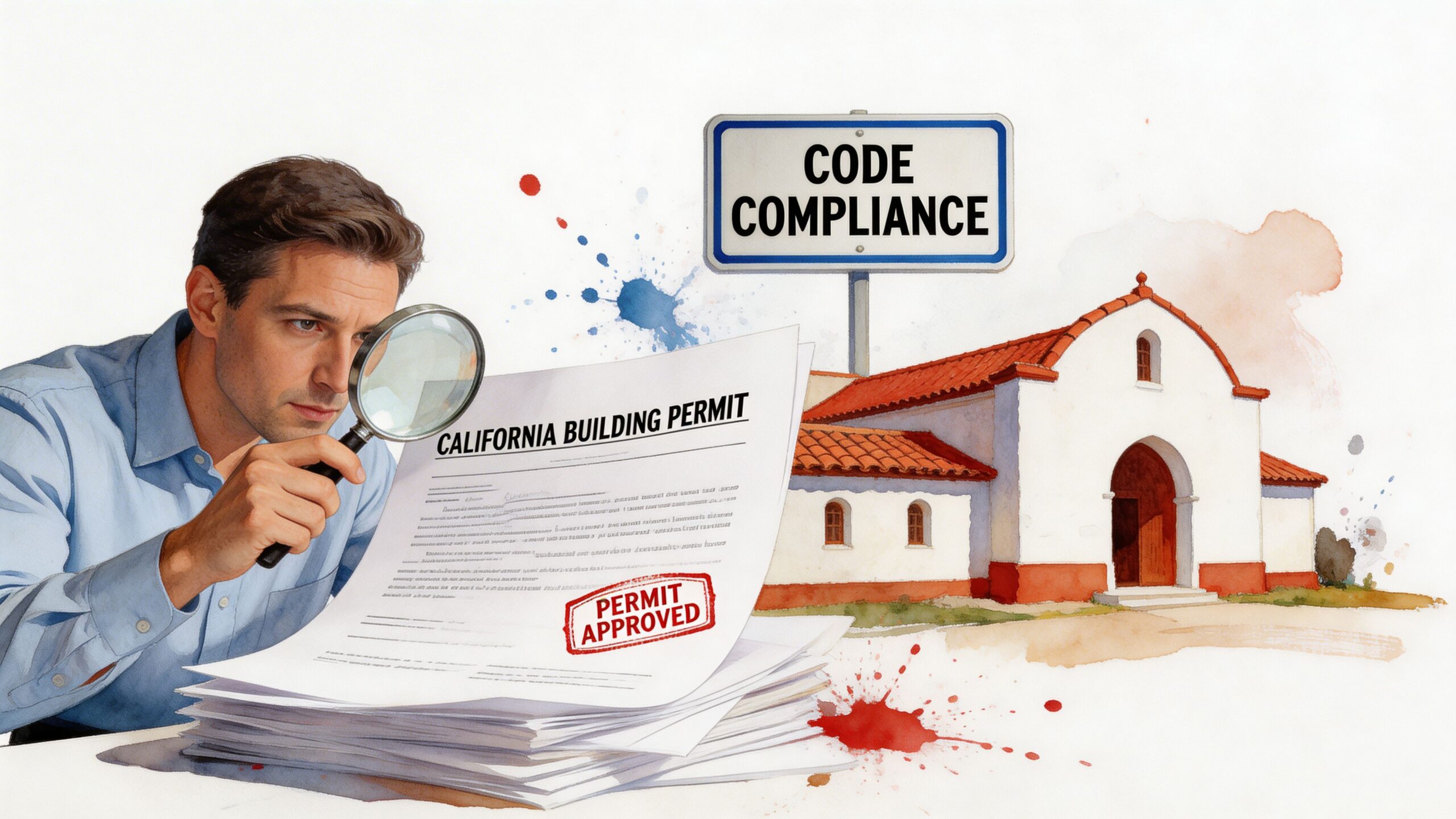
Some outdoor work creates legal and financial exposure
Retaining walls are a common example. In California, permit thresholds, engineering requirements, drainage details, and footing design can change quickly once wall height, surcharge, or grade conditions change. The problem is not just whether the wall stands up on install day. The problem is whether it handles soil pressure, water buildup, and movement over time.
I have seen homeowners price a wall as a simple masonry job and miss the key cost drivers. Drain pipe, backfill, geogrid, footing depth, setbacks, and inspection requirements are usually where the budget changes.
The same pattern shows up with drainage. A swale, catch basin, or area drain can solve one wet spot and create a runoff issue somewhere else if the discharge point, slope, and capacity were never worked out on paper. On a sloped property in Monterey County, that mistake can damage paving, stain walls, undermine planting areas, or send water where it should not go.
For a broader explanation of the gap between DIY work and professional planning, see What Does an Outdoor Designer Do That DIY Outdoor Work Cannot Achieve?.
Local review starts earlier than many homeowners expect
A patio or yard remodel can trigger more than one review path. Depending on the site, the work may involve setback limits, drainage control, protected trees, visibility at driveways, water-efficiency standards, or HOA rules layered on top of local requirements.
That is why experienced designers and contractors ask specific questions before layout is finalized:
- Will grading or wall height trigger plan review or engineering?
- Does the new work change how runoff leaves the property?
- Will the irrigation plan meet current California water-use requirements?
- Are there trees, easements, or property lines that limit excavation or root disturbance?
Even finish planning connects back to code and function. Homeowners looking for layout ideas may gather inspiration from articles on designing a captivating patio, but the built space still has to satisfy drainage, access, and clearance requirements on the actual site.
Field advice: If the project changes grade, adds a wall, reroutes water, installs gas or electrical lines, or works near trees, treat it like construction. Check requirements before materials are ordered.
Water compliance is another area where DIY plans often fall apart. In California, irrigation is not just a matter of placing heads near plants. Zone separation, precipitation rates, controller settings, and plant water demand all affect whether the system wastes water or stays within current rules. This local guide to new water rules changing outdoor design explains why that planning needs to happen before installation starts.
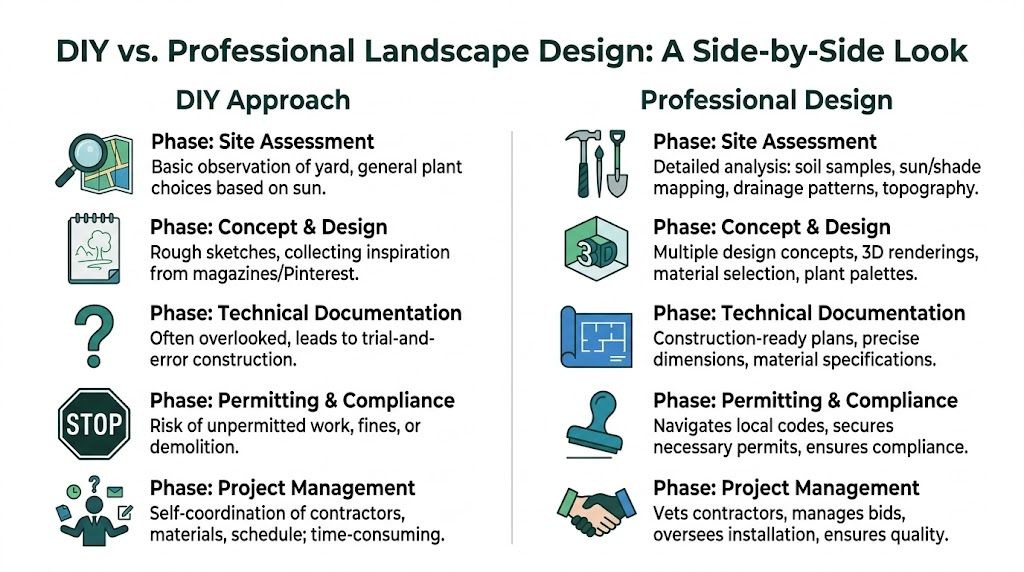
Comparing the Process DIY vs Professional Design
Plant selection
A DIY approach usually starts with appearance. People choose what looks good at the nursery, what they’ve seen online, or what fills space quickly.
A professional starts with placement logic. The question isn’t whether a plant looks good today. It’s whether it matches sun, soil, water demand, wind, root room, and the amount of pruning it will need to stay where it belongs.
Hardscape planning
DIY hardscape often focuses on shape and finish. That’s understandable. Patios, walkways, and walls are visual features.
Professional planning treats them as structural elements first. Surface slope, base preparation, drainage, transitions, edge detailing, and nearby roots all get considered before the first pallet of material arrives.
Irrigation design
Homeowners often install watering after the planting is done. That usually leads to mixed zones and uneven results.
Professional design puts irrigation on the front end. Plant groupings get matched by water needs. Coverage, pressure, and scheduling are thought through before the outdoor features are installed, which prevents overwatering one area to keep another alive.
Budgeting and sequencing
DIY budgets usually capture visible materials. Pavers, plants, mulch, maybe lighting.
Professional budgets are broader. They account for prep work, drainage, demolition, sleeves, access issues, waste hauling, revisions, and what happens if one phase has to wait for another. That’s one reason a pro-designed project is less likely to get rebuilt in pieces.
Long-term maintenance
The difference really shows up after a few seasons.
A DIY project often becomes reactive. Plants outgrow space. Drains clog because they were never easy to reach. Walkways narrow as shrubs spread. One irrigation valve box ends up buried behind growth. A designer plans so the outdoor space can still be maintained without fighting it.
Here’s the side-by-side view in plain terms:
- DIY works best when the scope is limited, the risk is low, and the site conditions are simple.
- Professional design makes sense when the project has to perform across drainage, irrigation, hardscape, code, and long-term upkeep.
A lot of homeowners start with a simple improvement and end up discovering they’re really doing a site redesign. If you’re weighing value as much as appearance, this article on smarter outdoor design choices for lasting beauty and functioncom/from-vision-to-value-smarter-landscape-design-choices-for-lasting-beauty-and-function/) is a useful next read.
When to DIY and When to Hire a Professional
You don’t need a designer for every yard task. Some projects are perfectly reasonable to handle yourself if you’re patient and realistic about the limits.
DIY is usually fine for smaller jobs like:
- Refreshing mulch: Straightforward, low risk, and easy to correct if you don’t like the result.
- Planting containers or a small ornamental bed: Good if drainage is simple and the area isn’t tied to larger irrigation or grading issues.
- Seasonal cleanup and light aesthetic updates: Swapping out tired plants, improving edges, or adding a few accents.
Bring in a professional when the job affects how the property works.
That includes drainage changes, new irrigation systems, patios, walkways, retaining walls, outdoor lighting tied to broader renovation, or any project where you want the whole yard to feel coherent instead of pieced together over time. The same goes for sites with slope, runoff issues, poor-performing soil, mature trees, or privacy needs that depend on plant growth over years.
If your goal is a low-maintenance outdoor space, the threshold gets even lower. Most low-maintenance failures come from planning mistakes at the beginning. People install plants that need too much pruning, group water needs poorly, or create access issues that make simple upkeep harder than it should be.
Coastal homes and inland Monterey County properties also behave differently enough that local planning matters. This guide to outdoor design made simple for coastal homes is helpful if your property deals with wind, salt air, or shifting exposure conditions.
The honest test is simple. If a mistake would be ugly for a month, DIY might be fine. If a mistake could affect drainage, structure, water use, permitting, or years of maintenance, hire it out.
Frequently Asked Questions About Landscape Design
Q: Is yard design mainly about appearance?
A: Appearance matters, but performance is what saves money. A plan has to account for drainage, irrigation coverage, finished grades, access, root space, and how plants will size out in a few years. In Monterey County, I also look at wind exposure near the coast, heavier clay in some inland areas, and water-use rules that affect what will hold up.
Q: Can I sketch my own yard and hire a contractor to build it?
A: Yes, if the plan is clear enough to price and build without guesswork. The trouble starts when drawings leave out elevations, drainage direction, fixture locations, material edges, or valve layout. Then the crew is making field decisions on your dime, and change orders start stacking up.
Q: What kinds of jobs need professional design work?
A: Any job that changes how the property functions. Patios, walkways, retaining walls, grading, drainage, irrigation, outdoor lighting, and larger planting plans all need coordination before work starts. One small mistake in layout can affect runoff, maintenance access, or code compliance.
Q: Why do DIY yards often look fine at first, then start causing problems?
A: The first year can hide bad planning. Roots are still small, drainage problems may not show until winter, and irrigation mistakes often appear after a hot spell. I see the same failures over and over: plants packed too tightly, gravel used where water should infiltrate, and paving set with the wrong slope near the house.
Q: Do water-wise yards still need professional planning?
A: Usually, yes. A low-water yard is not just rock, mulch, and a shorter plant list. It needs hydrozones that make sense, soil that drains the way the irrigation schedule assumes, and a layout that does not create heat, glare, or runoff problems. That matters even more in California, where water use and long-term maintenance both affect the value of the job.
Q: What is the biggest mistake homeowners make with patios and walkways?
A: They choose the finish before they solve the base. Compaction, subgrade prep, edge restraint, slope, and water movement decide whether hardscape stays flat and drains properly. The surface is the part you see. The base is the part you pay for twice if it is done wrong.
Q: Can a designer help me avoid permit or code trouble?
A: Yes. That is one of the strongest reasons to bring one in early. Walls over certain heights, drainage changes, electrical work, grading near structures, and some site conditions can trigger permit, engineering, or inspection requirements. Catching that before demolition is a lot cheaper than finding out after the work is underway.
Q: Is professional yard planning worth it for a small property?
A: Often more than on a large one. Small spaces have less forgiveness, so a bad path width, the wrong tree, or a poorly placed seating area creates problems every day. Good planning makes a compact yard feel usable instead of cramped.
Closing Section with USPs
A good outdoor project runs better when the process is clear. California Outdoor & Tree Pros follows a structured path from consultation and digital design through review, installation, and final walkthrough, so the client knows what’s being planned, what’s being built, and what to expect at each stage.
That matters even more in Monterey County, where soil conditions, coastal weather, and California water rules can change what will work on a property. California Outdoor & Tree Pros operates as a fully licensed and insured contractor under CSLB #1107800, with a practical understanding of design, installation, tree work, hardscape, drainage, and permit-related considerations that protect the job from expensive missteps later.
Sources
These references cover design skills and the difference between a homeowner-led project and a professionally planned one. They informed the general comparison points in this article, while local code, water-use, drainage, and buildability considerations should always be checked against current California and Monterey County requirements for the specific property.
All Weather Outdoor. "5 Essential Outdoor Design Skills." Year not provided. https://allweatherlandscape.com/general/5-essential-landscape-design-skills/
Southern Botanical. "7 Skills an Outdoor Designer Needs to Be Successful." Year not provided. https://southernbotanical.com/the-benchmark/7-skills-a-landscape-designer-needs-to-be-successful/
Outdoor Pro Phoenix. "What Does an Outdoor Designer Do That DIY Outdoor Projects Cannot Achieve?" Year not provided. https://www.landscaper-phoenix.com/blog/what-does-a-landscape-designer-actually-do-that-diy-landscaping-cannot-achieve/com/blog/what-does-a-landscape-designer-actually-do-that-diy-landscaping-cannot-achieve/
If you want a direct opinion on your own property before construction starts, California Outdoor & Tree Pros can help review the plan, spot likely problem areas, and give you a practical next step. Contact California Outdoor & Tree Proscom), call Salinas at 831-998-7964, call Monterey at 831-905…com), call Salinas at 831-998-7964, call Monterey at 831-905-8018, or visit 1184 Monroe St., Suite 6, Salinas, CA 93906 for a consultation or estimate.