
Quick Answer
Effective outdoor water conservation starts with a site assessment, not a plant list. The biggest gains usually come from reducing turf, grouping plants by water needs, upgrading to drip irrigation with smart controls, adding mulch, and maintaining the system properly so the outdoor area stays attractive, compliant, and less expensive to operate.
If you're dealing with higher water bills, tighter watering rules, or an outdoor space that always seems to look stressed by late summer, the problem usually isn't just the weather. It's often a mix of plant choice, irrigation design, and maintenance habits that no longer fit Monterey County conditions.
Good outdoor water conservation isn't about making a property look sparse. It's about building an outdoor space that holds value, performs better through dry periods, and wastes less water in the process. If you're researching how to create a low-water yard, the useful starting point is understanding how design, irrigation, and maintenance work together on your specific site. For additional local context, this overview of water-wise landscape planning for California homeowners is worth reviewing. Nationally, outdoor water use accounts for approximately 30% of total daily water consumption, with most of that tied to outdoor maintenance activities, according to this water-efficient landscaping reference.
Start with a Professional Site Assessment
A water-saving project should begin with diagnosis. On a Central Coast property, two yards on the same street can behave very differently because of slope, wind exposure, marine layer influence, soil condition, and how the irrigation was installed years ago.
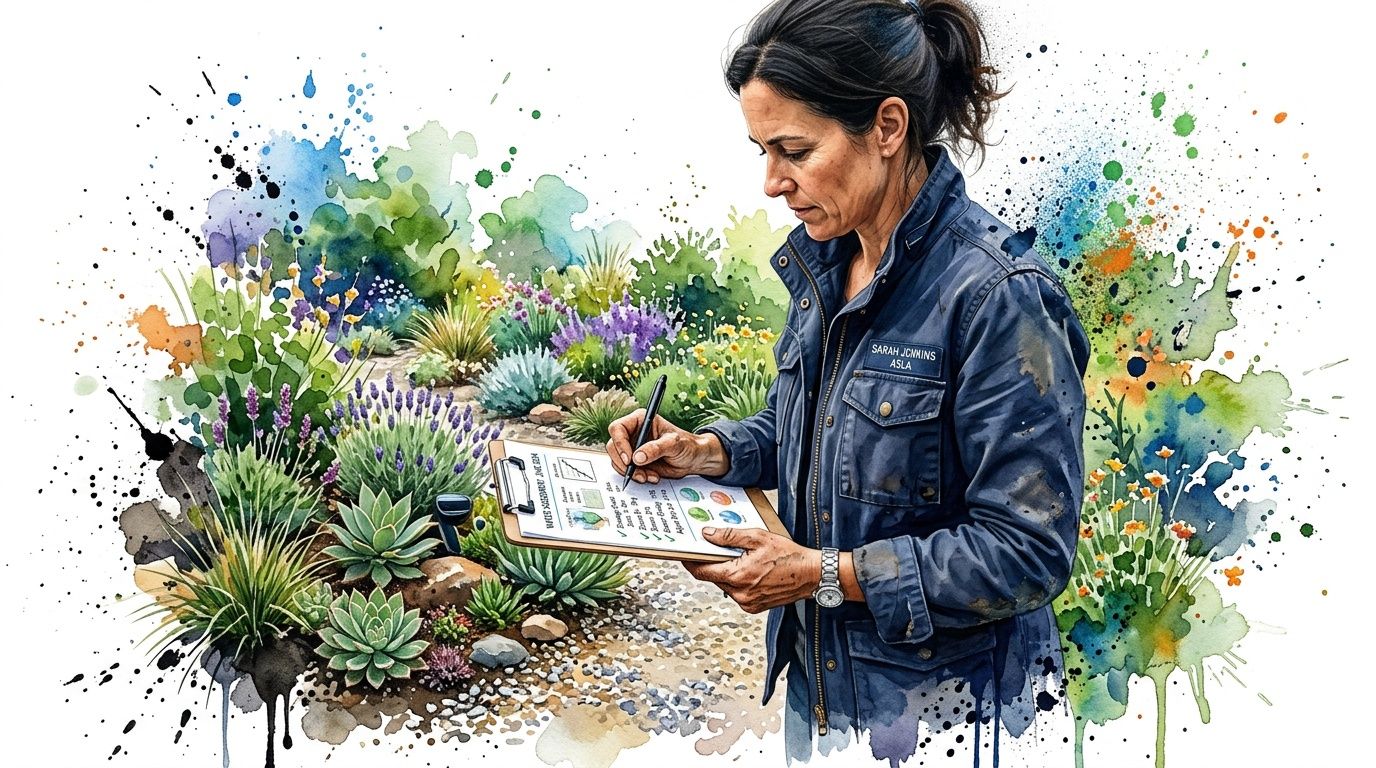
A real assessment looks past curb appeal. It identifies where water is being applied, where it should be applied, and where the property is carrying the wrong materials for the site. If you're planning a redesign, this guide to smarter landscape design choices pairs well with an irrigation audit.
What gets checked first
The first pass is usually physical site mapping. That includes:
- Sun and shade exposure across the day, especially near walls, paving, and reflective surfaces
- Slope and runoff points where spray heads throw water onto hardscape or downhill
- Soil behavior so you know whether water is infiltrating, ponding, or moving off too fast
- Plant grouping problems such as shrubs, turf, and perennials sharing one valve
- Irrigation hardware condition including clogged drip emitters, misaligned spray heads, and tired valves
Those details matter because hardware alone doesn't fix a poorly zoned area. A smart controller on a bad layout still waters a bad layout.
Practical rule: If turf, shrubs, and low-water planting are tied to the same schedule, the landscape is set up to waste water.
Old systems versus systems worth upgrading
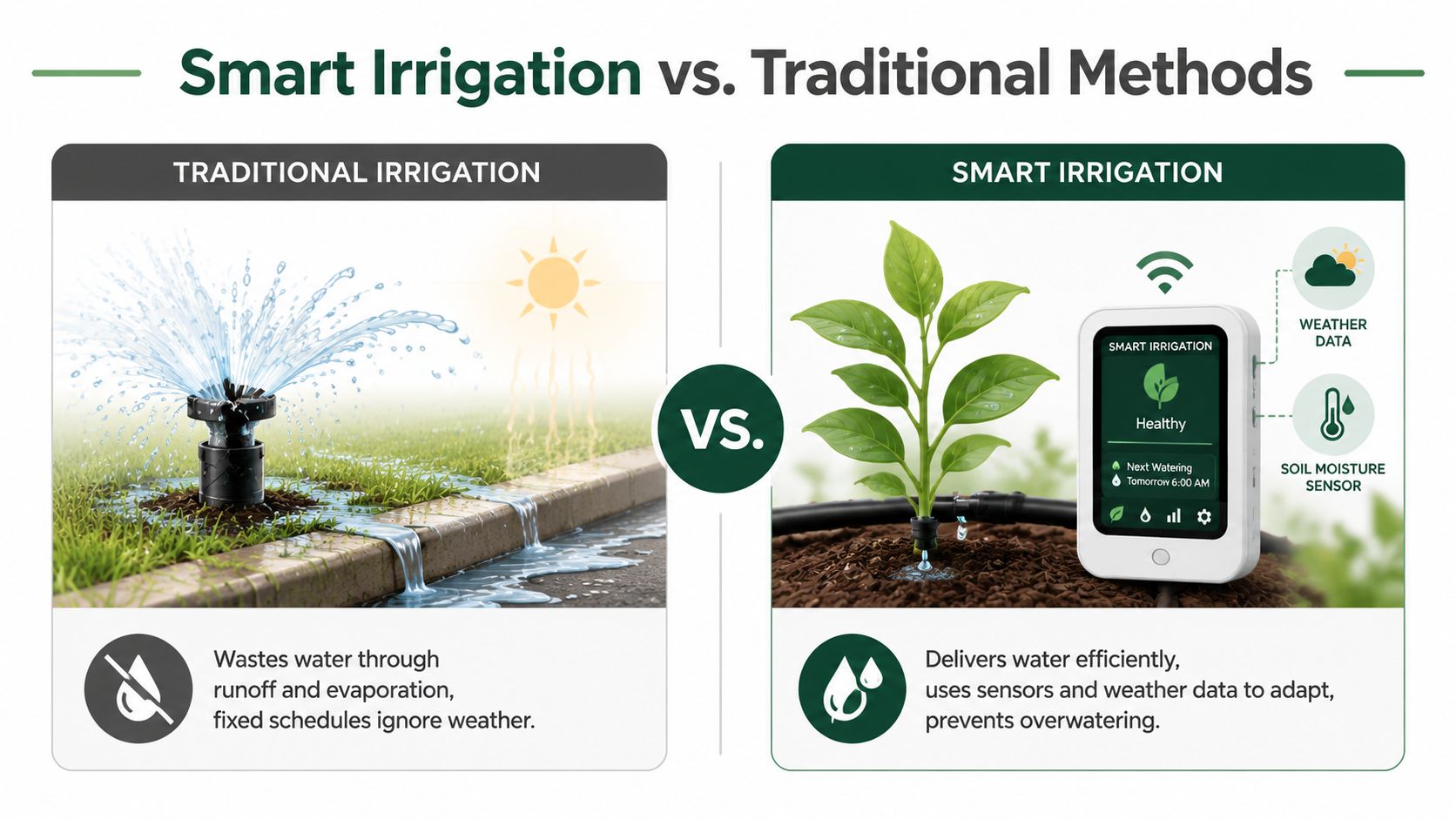
The common comparison isn't just sprinkler versus drip. It's fixed scheduling versus responsive scheduling.
| System type | Typical field issue | Better alternative |
|---|---|---|
| Manual timer | Same runtime regardless of weather | Weather-based controller |
| Standard spray heads | Overspray, wind drift, runoff on paving | Drip or matched low-precipitation application |
| One mixed valve for many plant types | Overwatering some plants to keep others alive | Separate hydrozones |
| No drainage planning | Standing water and shallow rooting | Integrated irrigation and drainage corrections |
In practice, older spray systems often water sidewalks, fences, and drive lanes almost as consistently as they water planting beds. Drip systems place water at the root zone, but only when zoning, filtration, and scheduling are handled correctly.
Why assessment protects ROI
Property owners usually want to know where to spend first. The answer depends on what the site is doing wrong now. Sometimes the strongest return comes from reducing irrigated turf. On another property, the faster payback is correcting broken scheduling and separating plant zones before touching anything else.
For larger homes, HOA entries, and commercial frontage, the assessment also helps avoid cosmetic upgrades that increase maintenance pressure. A clean design with the wrong water demand becomes expensive to own. A well-planned design usually costs less to run and holds its appearance more reliably.
The most expensive water feature on many properties isn't a fountain. It's an irrigation system that waters the wrong places on the wrong schedule.
Design Your Landscape with Water-Wise Plants and Soil
A Monterey County property owner usually sees the water bill first. The bigger cost often shows up later, when an outdoor plan needs repeated plant replacement, runoff repairs, or a redesign to meet current California water rules. Good plant and soil decisions prevent that.
On higher-value residential properties, design should be judged on ownership cost as much as appearance. If you're comparing sustainable yard landscaping options, focus on whether the planting plan fits your exposure, soil, drainage, and maintenance standard. This local discussion of modern drought-tolerant planting for California properties looks at that from a Central Coast project perspective.
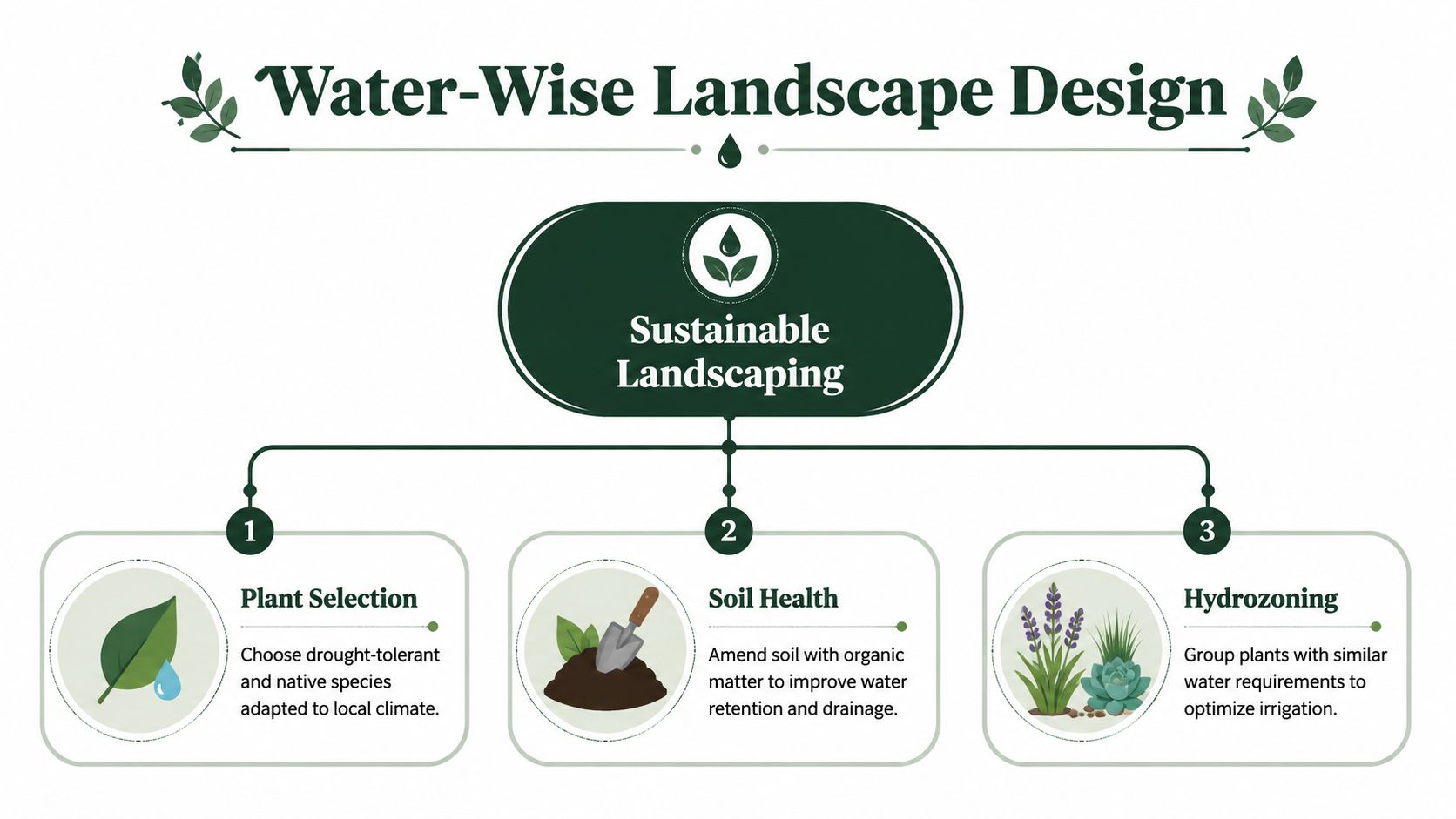
Use hydrozoning so each planting area gets the right amount of water
Hydrozoning groups plants by water demand, sun exposure, and soil conditions. That sounds technical, but the payoff is simple. Better plant performance, lower water use, and fewer service calls to correct decline caused by overwatering or stress.
A recreation lawn, a shaded foundation bed, and a native slope should not be treated as one planting area. If they are, irrigation gets set to keep the thirstiest zone alive, and every other zone pays for it. That is how properties end up with fungal issues in shade, weak root systems in shrubs, and unnecessary water expense.
The California Department of Water Resources explains in its Water Efficient Landscape Ordinance materials that water-efficient design relies on grouping plants with similar water needs and improving soil conditions before installation. For Monterey County owners planning a remodel or major upgrade, that matters for both compliance and long-term operating cost.
Limit turf to spaces that serve a real purpose
Turf has a place on some properties. It makes sense for active family use, pets, event space, or a formal front approach where the architecture calls for it.
It usually does not make sense in narrow side yards, steep banks, thin strips along drives, or decorative patches no one uses.
Those areas consume water and maintenance dollars without adding much function. Replacing low-value turf with planted areas, gravel transitions, decomposed granite, or stonework often improves circulation, reduces irrigation demand, and gives the property a cleaner finish. On luxury homes, that usually helps resale presentation as well because buyers notice whether an exterior feels intentional or patched together.
Build the soil before you install the planting
Soil preparation gets shortchanged on a lot of renovation work. On Central Coast properties, I regularly see compaction, mixed fill, buried construction debris, and grade problems that make even a good planting plan perform poorly.
Water conservation starts below grade. If water cannot infiltrate properly or roots cannot expand, owners end up compensating with longer run times, more frequent replacements, and extra fertilizer to push weak growth.
A sound soil plan usually includes:
- Testing and amending where needed so infiltration and moisture holding are more consistent
- Correcting grade issues to keep water away from foundations, paving, and low spots
- Setting plants at proper depth so crowns stay healthy and roots establish correctly
- Planning mulch coverage to protect exposed soil and reduce surface evaporation
This work is not glamorous. It does protect ROI.
Plants fail on expensive properties for predictable reasons. Wrong plant, wrong soil, wrong zone, then too much water used to compensate.
Match the plant palette to Monterey Bay conditions and the level of upkeep you want
A strong Central Coast plant palette usually draws from California native and Mediterranean-adapted species. That does not limit the style of the property. A low-water outdoor plan can read formal, contemporary, coastal, or estate-grade if the massing, spacing, and material selections are handled well.
The actual test begins after establishment. If a species needs extra summer water, constant shearing, or repeated replacement to stay presentable, it is reducing the return on the whole improvement. Property owners should judge plant choices the same way they judge finishes and hard materials. By performance, service life, and maintenance cost.
Hardscape decisions also affect water use, but the point here is balance. Patios, walks, retaining walls, and gathering areas should support how the property is used while reducing irrigated square footage where planting adds little value. That approach produces a cleaner outdoor plan, lower utility costs, and a property that is easier to maintain under California water restrictions.
Implement Smart Irrigation and Drainage Systems
Once the layout is right, the irrigation system has to deliver water accurately. Many expensive properties, however, still lose ground in this regard. Good planting with poor delivery still wastes water, stains hardscape, and causes uneven growth.
If you're preparing for an upgrade, this article on what to know before changing an irrigation system covers the practical side of planning and replacement.
Why drip and smart controls outperform older setups
Drip irrigation is designed to apply water where plants use it most. That matters on planting beds, slope transitions, and narrow spaces where spray heads tend to overshoot or run unevenly.
According to this technical guide on smart irrigation and mulch deployment, drip irrigation with soil moisture sensors and weather-based controllers can achieve 90% to 95% watering efficiency and produce average annual water savings of 43%, with over 90% savings in some seasons.
A professional system usually includes several parts working together:
- Dripline or emitters sized for plant type and spacing
- Filtration to reduce clogging and keep output consistent
- Pressure regulation so the system applies water evenly
- Weather-based controller logic that adjusts for actual conditions
- Soil moisture sensing where site conditions justify it
That combination is very different from a timer mounted in the garage that runs the same schedule every week.
Drainage is part of water conservation
Water conservation isn't only about applying less water. It's also about controlling where water goes when it does arrive. A property with poor drainage often gets overwatered because stressed plants appear dry, when the problem is root damage from saturation or runoff concentration.
On higher-end homes and managed properties, drainage corrections often sit next to irrigation work for a reason. Swales, area drains, catch basins, grading repairs, and proper transitions around patios or retaining walls protect both the grounds and the hardscape investment.
Ongoing adjustment is what makes the system work
This is the part owners often don't get told clearly enough. Installing good hardware is not the finish line. Scheduling is what converts equipment into savings.
The same controller needs different settings for coastal fog influence, inland heat, newly established plants, mature shrubs, and seasonal changes. A fixed summer schedule can quickly become wasteful after weather shifts.
One practical option for property owners in Salinas and Monterey County is to work with a contractor that installs smart irrigation systems and water-wise upgrades as part of a larger grounds plan. California Grounds & Tree Pros provides that as one service line among its broader design, hardscape, drainage, and maintenance work.
A smart controller that isn't reviewed seasonally becomes an expensive timer.
Use Hardscapes and Mulch to Reduce Water Needs
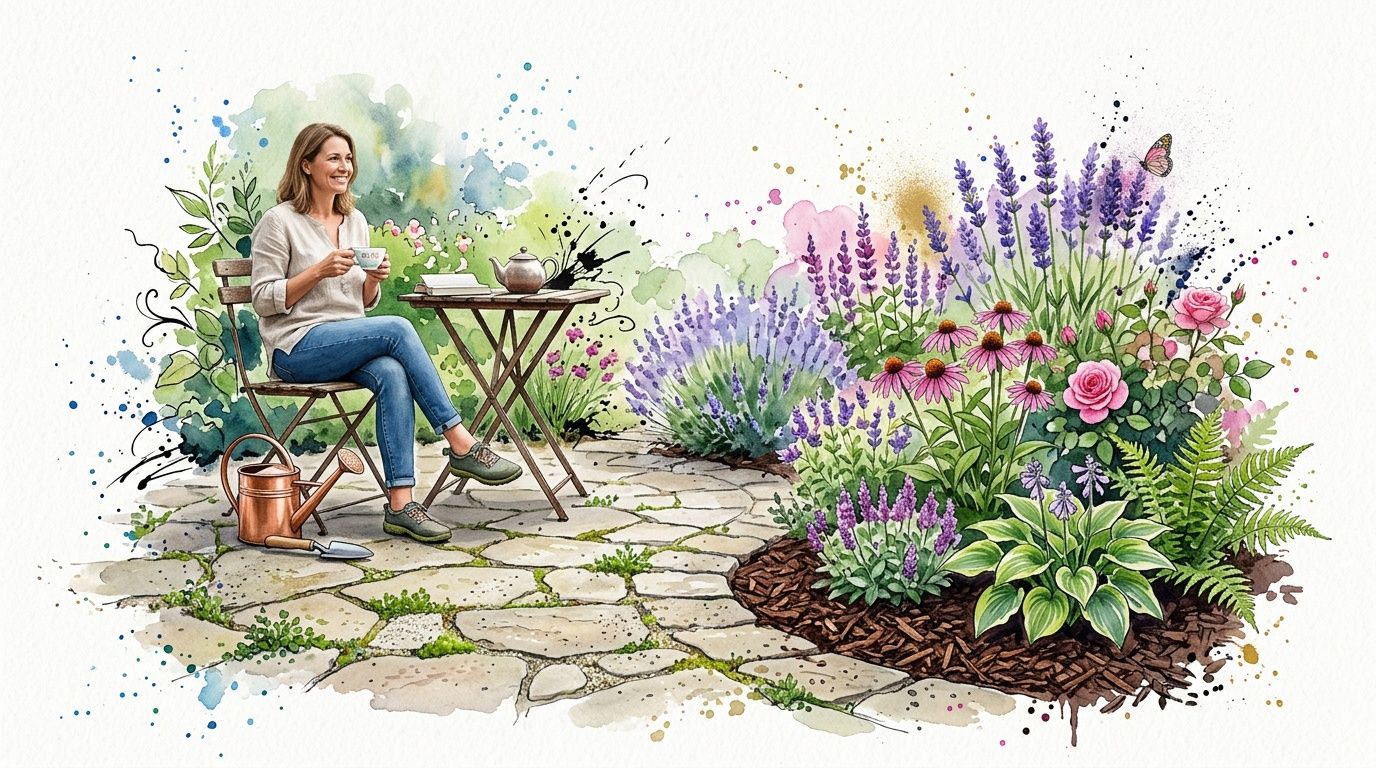
A Carmel Valley or Monterey property often has the same problem in two places at once. The owner is paying to irrigate square footage nobody uses, and that same square footage still looks tired by late summer. Replacing low-value planted areas with useful surfaces and protecting remaining beds with mulch fixes both issues. It cuts water demand, improves how the property functions, and usually strengthens resale appeal because the improvements are visible.
Where hardscape improves efficiency
Hardscape pays off when it removes irrigation from areas that never justified ongoing water use in the first place. On higher-end residential work, that usually means side yards, narrow strips along driveways, unused lawn panels, and slope sections that are costly to irrigate and maintain.
Good candidates include:
- Patios and seating areas in place of ornamental turf that serves no real purpose
- Walkways and decomposed granite paths through access routes that stay patchy, muddy, or compacted
- Retaining walls and terraces that turn difficult slopes into stable, manageable planting zones
- Permeable paving in areas where runoff control and infiltration matter
The trade-off is straightforward. Hardscape has a higher upfront cost than sod or groundcover, but it removes long-term irrigation demand, reduces weekly maintenance labor, and gives the property more usable square footage. On many Monterey County projects, that is a better capital improvement than continuing to water decorative areas that add little function.
Material choice matters. Permeable surfaces can help with drainage and runoff management, while large expanses of dark paving can increase reflected heat if they are used carelessly. The right solution depends on sun exposure, slope, soil, and how the space is used.
Before changing paved areas or irrigation layouts, owners should review what Salinas homeowners should know before changing their irrigation system, especially if the work affects coverage, drainage, or rebate eligibility.
Mulch protects the irrigation investment
Mulch is basic, but skipping it is expensive. Bare soil dries faster, weeds establish faster, and irrigation has to work harder to keep root zones stable.
A properly installed layer of organic mulch helps hold moisture, moderates soil temperature, reduces weed pressure, and gives planting beds a cleaner finished appearance. On estate properties and managed residential sites, that also lowers maintenance time because crews spend less effort chasing weeds and correcting stressed plantings.
Depth matters. Too little mulch does not protect the soil surface well. Too much mulch piled at trunks or crowns can hold excess moisture where it should not. In practice, the best results come from even coverage across open soil, with material kept back from the base of trees, shrubs, and perennials.
Hardscape and mulch should be planned together
Many water-saving projects often lose value. Owners remove turf, add paving, and leave scattered planting pockets exposed with no mulch plan, weak bed edges, or awkward transitions. The result looks pieced together and often performs that way.
A better approach is to treat paving, planting areas, drainage, and mulch as one property improvement scope. That produces cleaner lines, fewer wasted irrigation zones, and a finished appearance that supports property value rather than looking like a series of budget cuts.
A practical note on rebates
Some California rebate programs support turf replacement and irrigation-related upgrades, but owners should not assume every surface change qualifies. Program rules vary by water district, and documentation often has to be in place before demolition starts.
Keep records from the beginning:
- Site photos before any removal or construction
- Product information for approved equipment and materials
- Itemized invoices that clearly describe installed work
- Pre-approval confirmation if the local program requires it
A contractor can organize the documentation package, but the owner still needs to confirm current district requirements and timing. On compliance-driven projects, that step protects the rebate and avoids costly rework.
Maintain and Monitor for Ongoing Savings
A Monterey County property can look finished on installation day and still waste water for years if no one manages performance after turnover. The savings come from follow-through. That is what protects lower utility bills, keeps the site aligned with California water-use expectations, and preserves the value of the improvement work.
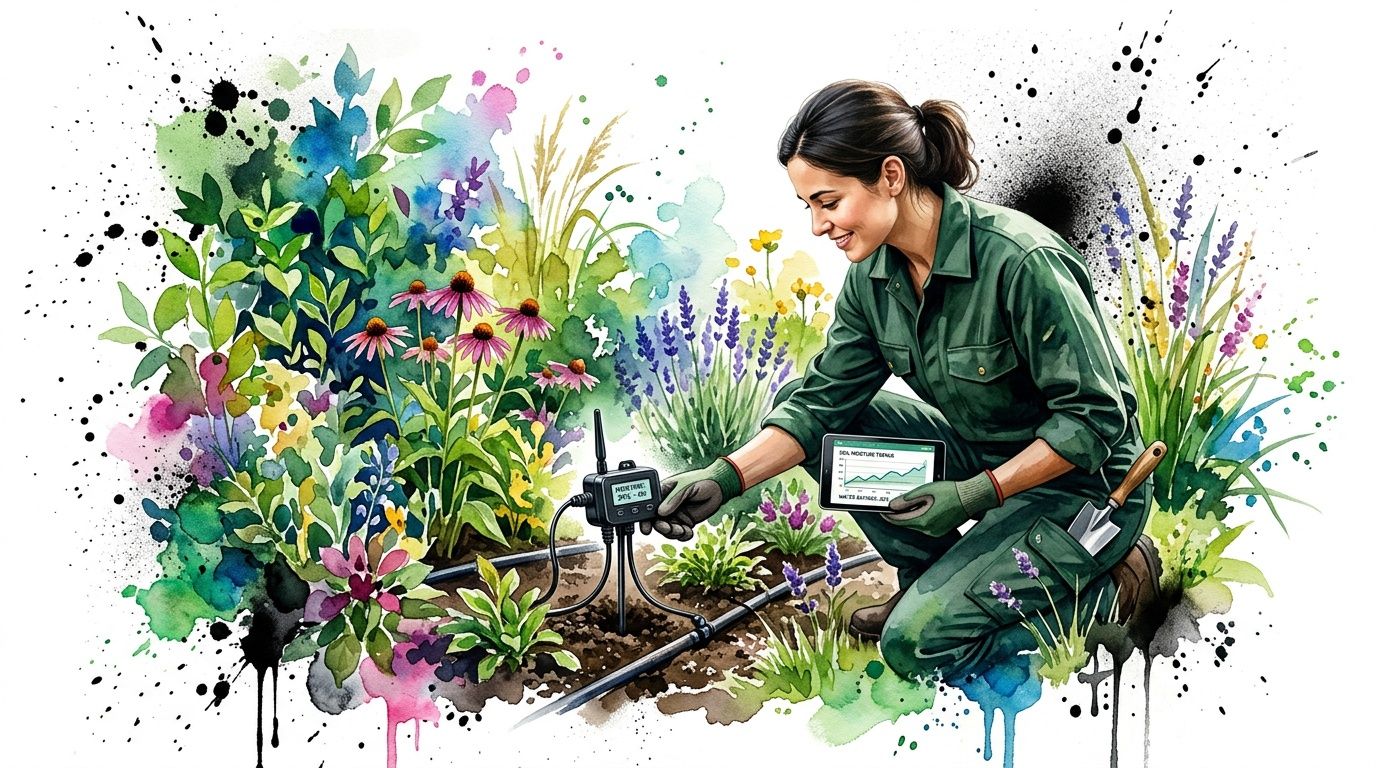
I see the same pattern on retrofit projects. The controller is left on an old seasonal program, drip emitters clog, plant mass fills in, and one wet corner starts getting hand-watered because no one corrected distribution. The owner keeps paying for water, but the property is no longer operating the way it was designed.
Scheduling drives the financial return
Equipment matters, but scheduling usually determines whether an owner gets the savings promised on paper. A University of California discussion of water conservation for outdoor areas cites a case study where multiple design changes produced limited savings until irrigation was separated by zone and scheduled accordingly. After turf and drip areas were put on distinct schedules, water use dropped much further.
That result matches field conditions. Separate schedules for separate plant zones are standard water management, not an upgrade feature. If a mature shrub bed, a new drip zone, and a small patch of higher-demand planting all run on one schedule, the owner usually pays for the mismatch through runoff, stress, or both.
What ongoing maintenance should cover
A low-water property needs a different service standard than a basic blow-and-go visit. Maintenance should focus on water performance, plant health, and risk prevention.
Key tasks include:
- Controller reviews to adjust runtimes for season, exposure, and plant maturity
- Emitter and nozzle inspection to catch clogs, breaks, misting, and poor coverage
- Valve and pressure checks so one failing component does not throw off an entire zone
- Pruning that respects plant form because aggressive shearing often increases water demand and weakens appearance
- Mulch replacement where coverage has thinned and soil is heating up
- Drainage inspection after storms, leaks, or grade settlement
For estate properties, HOA common areas, and commercial sites, this is asset management. It protects curb appeal, limits preventable water loss, and helps avoid the kind of visible decline that pulls down perceived property value.
How to monitor performance without overcomplicating it
Owners do not need a complicated reporting system to spot trouble early. A simple monthly review is usually enough.
| What to monitor | What it tells you |
|---|---|
| Monthly water bills | Whether outdoor water demand is trending down or creeping back up |
| Meter activity during irrigation cycles | Whether zones are running normally or drawing more water than expected |
| Smart controller history | Whether weather adjustments are actually changing runtimes |
| Plant response by zone | Whether watering matches real site conditions |
| Runoff on paving or at the curb | Whether precipitation rate or runtime is too high |
Frequent manual overrides are a warning sign. In most cases, the fix is not more water. The fix is correcting schedule logic, distribution, maintenance gaps, or drainage conditions before wasted water turns into higher bills, plant replacement, or compliance problems.
Accessing California Water Rebates
Rebate programs can make a conservation project easier to justify, especially when the work replaces unnecessary turf or updates outdated irrigation hardware. The catch is that every water district runs its own process, and requirements can change.
A good starting point is your local water provider or regional agency website. Look for current programs related to turf replacement, weather-based controllers, drip irrigation upgrades, or other approved conservation improvements. Before work begins, confirm whether the program requires pre-approval, specific product documentation, site measurements, or before-and-after photos.
For Monterey County property owners, the cleanest approach is to treat rebates as part of project planning rather than a last-minute add-on. This resource on why Salinas homeowners turn to drought-smart landscaping is a useful companion if you're weighing the broader value of a retrofit.
Contractors can usually help with scopes of work, site photos, controller documentation, and material records. The owner should still verify eligibility directly with the agency, because rebate approval depends on the district's current rules, not the contractor's estimate.
Frequently Asked Questions About Water-Wise Landscaping
A lot of Monterey County owners ask the same question after the first high summer bill arrives. Can a water-wise yard still look expensive, function well, and protect resale value. Yes, if the work is planned as a property upgrade instead of a simple cutback on irrigation.
Will a water-wise yard make my property look dry or minimal
A well-designed yard should look intentional, not stripped down. The best results come from matching plants, soil conditions, irrigation zones, and finished surfaces to the site instead of forcing a high-water look that fights our climate.
On higher-end properties, appearance matters as much as efficiency. Clean bed lines, strong plant structure, and the right mix of paving, gravel, and mulch usually produce a sharper result than overplanted areas that always look one repair away from decline.
Is it better to replace all my lawn at once or do it in phases
It depends on how the property is used and how the existing system is performing. Removing low-value turf first often makes sense on larger lots, especially in side yards, narrow parkways, or decorative areas that add cost without adding function.
A full renovation is often the better financial decision when the valves, heads, coverage, and grading are all dated. One coordinated project usually costs less than revisiting the same yard in stages, and it avoids the patchwork look that can hurt curb appeal.
How long does it take to see savings after an irrigation upgrade
Most owners notice the change once the new schedule is dialed in and the planting areas are watered according to actual need. Savings show up faster on properties that were previously overwatering turf, running spray heads into planting beds, or dealing with runoff.
The return is broader than the water bill. Lower waste means fewer soggy areas, less plant loss, and fewer repairs to stained walls, walkways, and fencing caused by poor coverage.
Do smart controllers need ongoing attention
Yes. A controller is a tool, not a set-it-and-forget-it fix.
Seasonal adjustments, plant growth, clogged emitters, broken heads, and changes in sun exposure all affect runtime. California watering rules also change how schedules need to be set, so the system should be reviewed by someone who understands both plant health and local compliance.
What's the biggest mistake property owners make with water conservation work
They treat it like an equipment purchase instead of a property plan. New hardware helps, but poor hydrozoning, compacted soil, unnecessary turf, and deferred maintenance will keep wasting water.
That is why the better approach is to tie conservation work to the full improvement plan for the yard. Owners who want a clearer picture of that bigger return can review these reasons Salinas homeowners choose drought-smart property upgrades.
Can I keep mature trees while reducing water use
Usually, yes. Mature trees are often the most valuable plant material on the property, and replacing them is expensive.
The irrigation layout has to respect root depth and canopy spread, especially during renovation. Trees usually should not be watered on the same pattern as shrubs or groundcover, and trenching near major roots needs to be handled carefully. On many Monterey County properties, protecting established trees is one of the smartest value-preservation decisions in the entire project.
Begin Your Landscaping Water Conservation Project
The right water-saving plan should lower waste, protect property value, and leave you with a yard that looks intentional year-round. If your current yard is expensive to maintain or difficult to keep within watering rules, it's time to assess the site and fix the underlying issues.
If you're considering a landscaping water conservation project in Salinas or anywhere in Monterey County, California Landscape & Tree Pros can help you evaluate the site, identify practical upgrades, and build a plan around irrigation, planting, hardscape, and maintenance. Call (831) 998-7964 in Salinas or (831) 905-8018 in Monterey, or visit 1184 Monroe St., Suite 6, Salinas, CA 93906 to discuss an estimate.