
Monterey County is seeing a strong shift toward drought-tolerant and climate-adaptive landscapes, driven by water restrictions and a growing desire for resilient outdoor spaces. Homeowners are increasingly seeking native plants, smart irrigation, and fire-resistant designs to create yards that are both beautiful and sustainable. This guide will walk you through creating a landscape that thrives in our local climate.
The Enduring Shift to Resilient Yards in Salinas
Across the Bay Area and Monterey County, the classic green lawn is being replaced by a more intelligent, water-wise vision. This isn't just a trend; it's a movement born from necessity. Persistent water restrictions, rising environmental awareness, and the realities of California's climate—drought, fire risk, and severe winter storms—are pushing residents to adopt landscapes that conserve water and withstand environmental stress.
According to the Public Policy Institute of California, droughts are becoming more frequent and intense, making water conservation a critical long-term strategy for the state. This reality directly impacts our local water supply. When you combine ongoing drought conditions with statewide water mandates, it's no wonder so many Salinas homeowners turn to drought-smart landscaping, swapping lawns for native plants and smart irrigation. For a closer look at the data, the drought status updates for California and Nevada paint a clear picture.
What This Means for Local Homeowners
This regional shift influences how homeowners approach landscape upgrades, with a new set of priorities shaping budgeting and planning decisions:
- Lowering Water Usage: Reducing monthly water bills and complying with local guidelines is a primary motivator for landscape changes.
- Reducing Maintenance: The demand is for beautiful yards that don't require constant mowing, fertilizing, and watering.
- Improving Storm Readiness: Protecting property from falling limbs and other storm-season tree hazards has become a top concern for many residents.
These preferences are shaping long-term property planning and increasing the demand for professional support from experts who understand climate-adaptive design. For more on this, see our article on the future of eco-friendly landscape design.
California Landscape & Tree Pros: Your Partner in Climate-Ready Design
This turn toward drought-smart landscaping is about more than just saving water; it's a proactive step toward creating outdoor spaces that work with our local ecosystem. California Landscape & Tree Pros supports these needs through a range of specialized services:
- Water-wise irrigation upgrades and system optimization
- Native and drought-tolerant landscape design and installation
- Climate-resilient hardscape solutions like permeable surfaces
- Tree pruning and hazard assessments for storm-related risks
Our proven five-step process and technology-driven planning tools ensure premium craftsmanship, safety, and transparent communication, aligning directly with what local homeowners are seeking.
How to Assess Your Landscape for a Water-Wise Future
Before you dig a single hole, the most important work happens with a thorough assessment of your property. It’s about understanding what you’re working with—the unique sun, soil, and water patterns of your own backyard here in Salinas. This initial walkthrough prevents expensive mistakes and sets your new landscape up to thrive.
This simple illustration shows the journey many of us are on—from a thirsty lawn to a smart, beautiful, and sustainable yard.
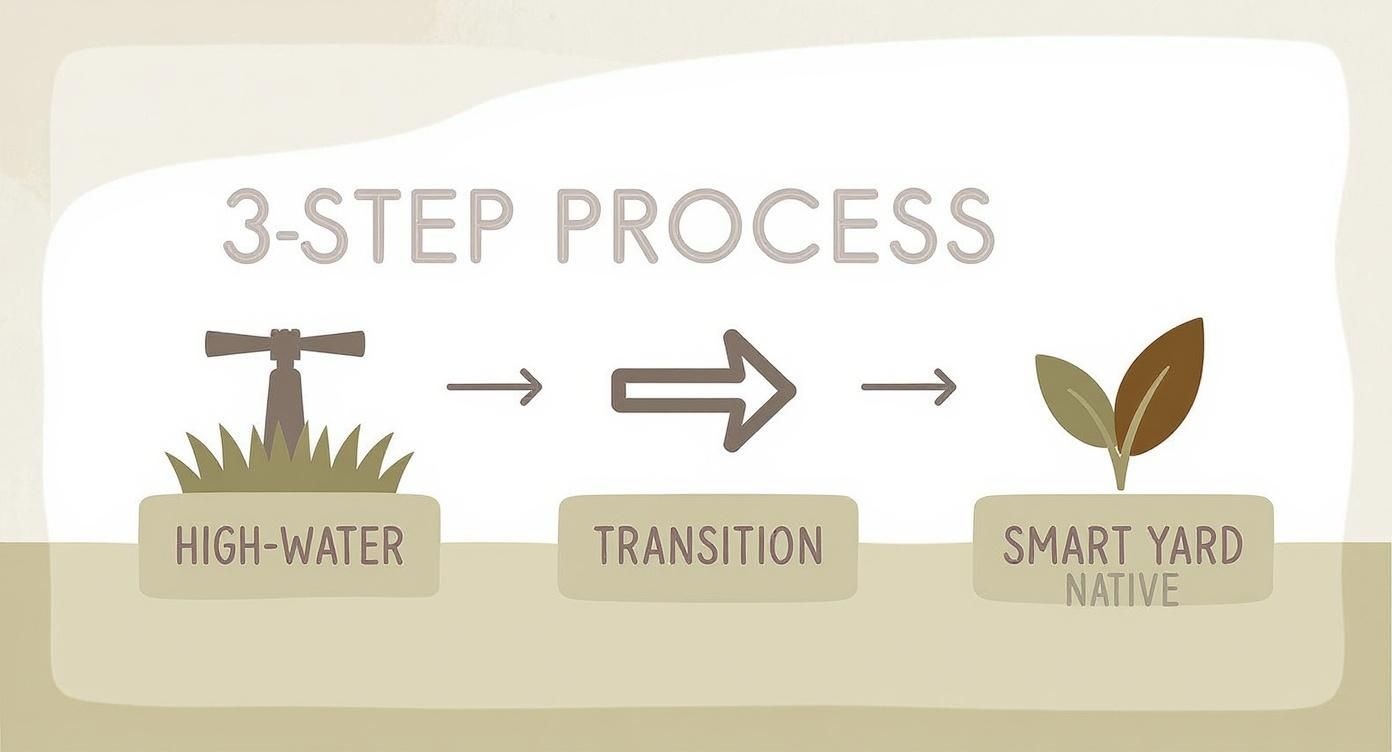
It’s a clear visual of the shift away from high-maintenance yards toward intelligent outdoor spaces that are ready for our climate.
Mapping Your Property’s Microclimates
Every yard has unique microclimates, or small zones with their own conditions. Grab a notepad and sketch a rough map of your property, noting where the intense afternoon sun hits, which spots get only gentle morning light, and areas blasted by wind. This simple map will become your most valuable tool for putting the right plant in the right place.
Understanding Your Soil and Water Flow
Soil composition across Monterey County varies widely. You can get a good idea of what you have with a simple "jar test." Fill a clear jar halfway with soil, add water, shake it, and let it settle for 24 hours. Layers will form—sand on the bottom, silt in the middle, and clay on top—giving you a snapshot of its texture.
Next, pay attention to water flow. Look for puddles where water stands after rain, indicating poor drainage, and find the dry spots that might have sandy soil. These aren't problems; they're opportunities to design features like rain gardens that work with your landscape's natural tendencies.
Understanding and working with your property's natural water flow is a core principle of sustainable design. Instead of fighting drainage issues, you can harness them to create a landscape that captures and utilizes every precious drop of rainwater.
Taking Inventory of What You Have
Finally, take an honest look at what’s already in your yard. The lawn is almost always the biggest water guzzler, and removing even a small section provides significant water savings. Make a list of existing trees and shrubs to decide what to keep, move, or replace with a more suitable, drought-tolerant alternative. This thoughtful assessment is the first step in designing outdoor spaces that truly work for you, giving you a clear roadmap for your project.
Choosing Plants That Flourish in the Salinas Climate
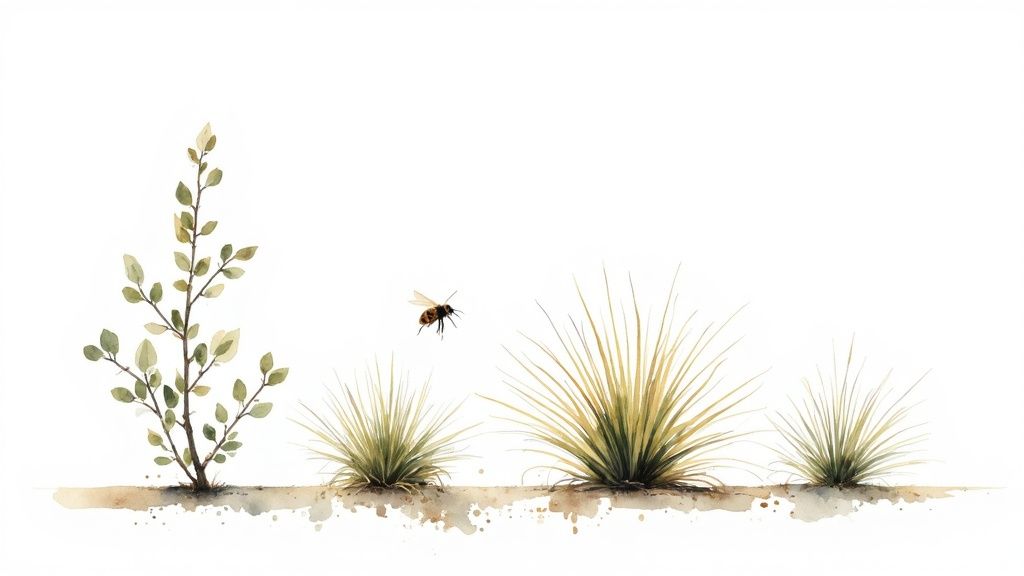
The secret to a stunning, low-maintenance garden in Salinas is embracing our climate, not fighting it. A resilient landscape starts with smart plant selection, and your most powerful tool is California native plants. They have adapted over centuries to our dry summers and mild, wet winters, so once established, they ask for very little while supporting local pollinators like bees and butterflies.
Top Drought-Tolerant Plants for Salinas Landscapes
Going drought-tolerant doesn't mean sacrificing beauty. It’s about creating a rich tapestry of plants that provide interest all year. Here are some fantastic options that do exceptionally well right here in Monterey County.
| Plant Type | Plant Name (Common/Scientific) | Water Needs | Sun Exposure | Key Benefit |
|---|---|---|---|---|
| Groundcover | Dwarf Coyote Bush (Baccharis pilularis) | Very Low | Full Sun | Excellent for weed suppression and erosion control. |
| Groundcover | Creeping Thyme (Thymus serpyllum) | Low | Full Sun | Fragrant, walkable, and great between pavers. |
| Perennial | Yarrow (Achillea millefolium) | Low | Full Sun | Attracts beneficial insects; feathery, fern-like foliage. |
| Perennial | Cleveland Sage (Salvia clevelandii) | Very Low | Full Sun | Intensely fragrant; produces stunning whorls of purple flowers. |
| Shrub | California Lilac (Ceanothus) | Very Low | Full Sun/Part Shade | Show-stopping blue or purple spring blooms. |
| Shrub | Manzanita (Arctostaphylos) | Very Low | Full Sun | Unique reddish bark provides fantastic winter interest. |
| Ornamental Grass | Deer Grass (Muhlenbergia rigens) | Low | Full Sun | Creates a dramatic, fountain-like architectural accent. |
Landscaping for Fire Safety
For any homeowner in California, fire-wise landscaping is a critical part of creating a defensible space. This means making strategic choices in what and where you plant to reduce flammable material and slow a wildfire's advance, especially within the first 30 feet of your home.
Here are the core principles we follow:
- Create "Lean, Clean, and Green" Zones: Keep the area immediately around your home (the first 5 feet) free of flammable materials. Swap bark mulch for non-combustible options like gravel or pavers.
- Choose High-Moisture Plants: Opt for plants less likely to burn, such as succulents and perennials with fleshy leaves.
- Space Everything Properly: Give your shrubs and trees enough room so a fire can't easily leap from one to the next.
- Prune Trees Wisely: Ensure no limbs are within 10 feet of your roof and prune lower branches to create a vertical gap between the ground and the tree canopy.
Integrating these practices will provide invaluable peace of mind. For more inspiration, explore the modern approach to drought-tolerant landscaping.
Upgrading to Efficient Irrigation Systems
Choosing the right plants is half the battle; the real water savings kick in when you start watering smarter. An old, inefficient sprinkler system is often the biggest culprit behind a high water bill, losing massive amounts of water to evaporation and runoff. Upgrading your irrigation is one of the most impactful changes you can make.
From Wasteful Sprays to Targeted Delivery
Modernizing your irrigation means stopping the broadcast of water into the air. Methods like drip irrigation and soaker hoses are far more effective, delivering water slowly and directly to the soil at the base of plants. This targeted approach minimizes evaporation, reduces weeds, and promotes healthier plants by keeping moisture off their leaves.
The Brains Behind the System: Smart Controllers
If you make only one change, swap your old irrigation timer for a smart irrigation controller. This device acts as the brain of your watering system, using real-time local weather data from sources like WeatherBug to make automatic adjustments. It will shorten or skip watering on cool, foggy days and increase hydration during a heatwave, taking the guesswork out of the process and cutting outdoor water use by up to 50%.
By pairing a smart controller with efficient drip lines, you create a responsive, self-adjusting system that provides exactly what your landscape needs to thrive without wasting a drop.
Integrating Beautiful and Functional Hardscapes
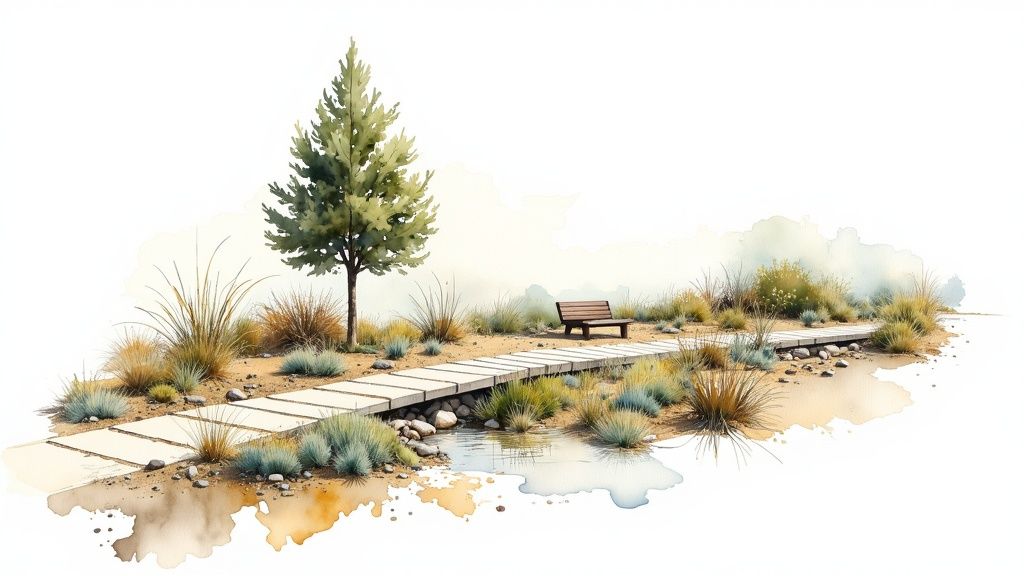
A stunning drought-smart landscape balances living greenery with thoughtfully designed hardscaping. For many in Salinas, replacing a thirsty lawn with a beautiful and useful hardscape is the single biggest move to cut water use. Modern, water-wise design uses permeable materials that allow rainwater to soak back into the ground, conserving water and recharging our local groundwater.
Choosing the Right Materials
Focusing on permeable options for patios and walkways is key to shrinking your irrigation needs while adding style and function.
- Decomposed Granite (DG): A fine, crushed rock that packs down to create a firm, water-friendly surface for paths or patios. It has a soft, natural aesthetic perfect for native plant gardens. Learn more about using crushed granite for driveways and paths.
- Gravel and Pebbles: An affordable and versatile option for filling gaps between flagstones or creating a relaxed seating area.
- Modern Pavers: Laying pavers on a bed of sand instead of solid mortar allows water to drain through the joints, giving a clean look without sacrificing permeability.
By swapping lawn for one of these materials, you immediately reduce maintenance while gaining a durable, stylish spot to relax.
Frequently Asked Questions About Drought-Smart Landscaping
As more Salinas homeowners turn to drought-smart landscaping, many questions come up. Here are answers to some of the most common ones.
1. What's the real cost to convert my yard?
The cost varies based on size, materials, and design complexity. However, it's an investment with long-term savings on your water bill and reduced maintenance time. Local turf replacement rebates can also significantly offset the initial cost.
2. Will my yard still look green and alive?
Absolutely! A common misconception is that "drought-tolerant" means a barren yard. The palette of California native and climate-friendly plants is incredibly diverse, allowing for designs that are overflowing with color, texture, and life all year round.
3. What kind of maintenance is required?
Once established, a water-wise garden is much less work than a traditional lawn. Maintenance typically involves light pruning to shape plants, refreshing mulch once a year to retain moisture, and occasional weeding as your new plants fill in.
4. How can I ensure my landscape is fire-safe?
Fire-wise landscaping involves creating a "defensible space" by choosing high-moisture plants and using non-combustible materials like gravel or stone pavers within the first five feet of your home. Proper spacing and tree pruning are also critical for reducing fire risk.
5. How can I prepare my yard for winter storms?
A resilient landscape is ready for both drought and downpours. In addition to water-wise plants and permeable hardscapes, proactive tree care is essential. Before winter, have a professional conduct a tree safety check to identify and prune weak branches that could become hazards in high winds.
For Monterey County homeowners looking to create a landscape that’s both beautiful and climate-ready, California Landscape & Tree Pros offers expert guidance, sustainable design, and full-service installation. Get in touch to schedule a consultation and see what's possible for your yard. Our team can help with everything from water-wise irrigation evaluations to full-scale design and installation.