
Quick Answer
A professional landscape irrigation system saves water, money, and keeps your plants healthy by delivering the right amount of water precisely where it’s needed. For properties in Monterey County, this means using a combination of drip lines for garden beds and efficient spray heads for lawns, all managed by a smart controller that adjusts to local weather.
A properly designed landscape irrigation system is more than a convenience—it is a critical investment for your property. Here in Monterey County, where water is a precious resource, moving beyond hand-watering or a simple timer is essential for saving money, complying with local water rules, and keeping your landscape healthy. A professional system is designed to stop waste and protect your property investment.
Why Professional Landscape Irrigation Is a Necessity
Have you ever seen a sprinkler head spraying more water onto the sidewalk than the lawn? Or watched water run down the gutter after a few minutes of watering? That is the problem with most basic or poorly designed systems. Inefficient watering leads to significant waste from runoff and evaporation, which shows up directly on your utility bill and puts stress on your plants.
A professional landscape irrigation system is designed to eliminate that waste. This isn't just a local concern; the global market for landscape irrigation was valued at USD 7.81 billion in 2025 and is projected to grow significantly as water scarcity becomes a more pressing issue worldwide. This shows that property owners and managers are recognizing the need for smarter solutions.
Key Benefits of a Modern System
Upgrading to a modern irrigation system designed for your specific property brings clear advantages. For anyone in the Salinas area trying to maintain a vibrant landscape without excessive water use, these benefits are significant.
- Serious Water Conservation: By delivering water exactly where plants need it, a professionally installed system dramatically cuts down on waste. Drip lines and smart controllers are especially effective at this.
- Healthier, More Resilient Plants: Consistent, deep watering encourages roots to grow downward, making your plants tougher and better able to handle dry spells and heat waves.
- A Boost in Property Value: A lush, well-cared-for landscape supported by an efficient irrigation system is a major asset for any property's value. It’s an feature that signals quality and care.
- Effortless Regulatory Compliance: As water restrictions become more common, an efficient system ensures you remain in compliance with local ordinances, helping you avoid fines.
For more information on the latest technology, see our guide on 5 water-wise irrigation trends homeowners should watch in 2026. Smart water management is the foundation of any thriving California landscape.
Choosing the Right Irrigation System for Your Property
The most important decision for your landscape's health is choosing the right irrigation hardware. A common mistake is thinking one system fits all, but your lawn has completely different watering needs than your flower beds or trees. Installing the wrong system leads to wasted water and stressed plants.
Comparison of Landscape Irrigation System Types
To help you visualize the best fit for your property, it is useful to compare the most common systems. Each has its own strengths and is designed for a specific purpose. The table below breaks down the key differences.
| System Type | Water Efficiency | Best For | Considerations |
|---|---|---|---|
| Drip Irrigation | 90-95% | Garden beds, shrubs, trees, vegetable gardens, and container plants. | Requires regular filter cleaning to prevent clogs. Not suitable for large turf areas. Initial setup can be more labor-intensive. |
| Spray Irrigation | 65-75% | Large, uniform turfgrass lawns and expansive groundcover areas. | Prone to water waste from wind, evaporation, and overspray if not perfectly designed and calibrated. Requires seasonal adjustments. |
| Subsurface | 95-98% | Lawns, athletic fields, and large garden areas where surface hardware is undesirable. | Higher upfront installation cost. Leaks are difficult to detect and repair since the system is buried. |
Most professionally designed landscapes use a combination of these systems, zoned appropriately for each specific area. This often means drip lines for garden beds and efficient spray systems for the lawn.
The Delivery: Drip vs. Spray Systems
Drip irrigation is a network of tubing with emitters that deliver water slowly and directly to the root zone of each plant. This is ideal for garden beds, trees, and shrubs where you want every drop to count. Its precision nearly eliminates water loss from wind and evaporation.
Spray systems, on the other hand, create controlled rainfall. Sprinkler heads pop up and cast water over a wide area, which is why they’re the standard for large, open lawns. Their efficiency depends entirely on a smart design to avoid wasteful overspray and runoff.
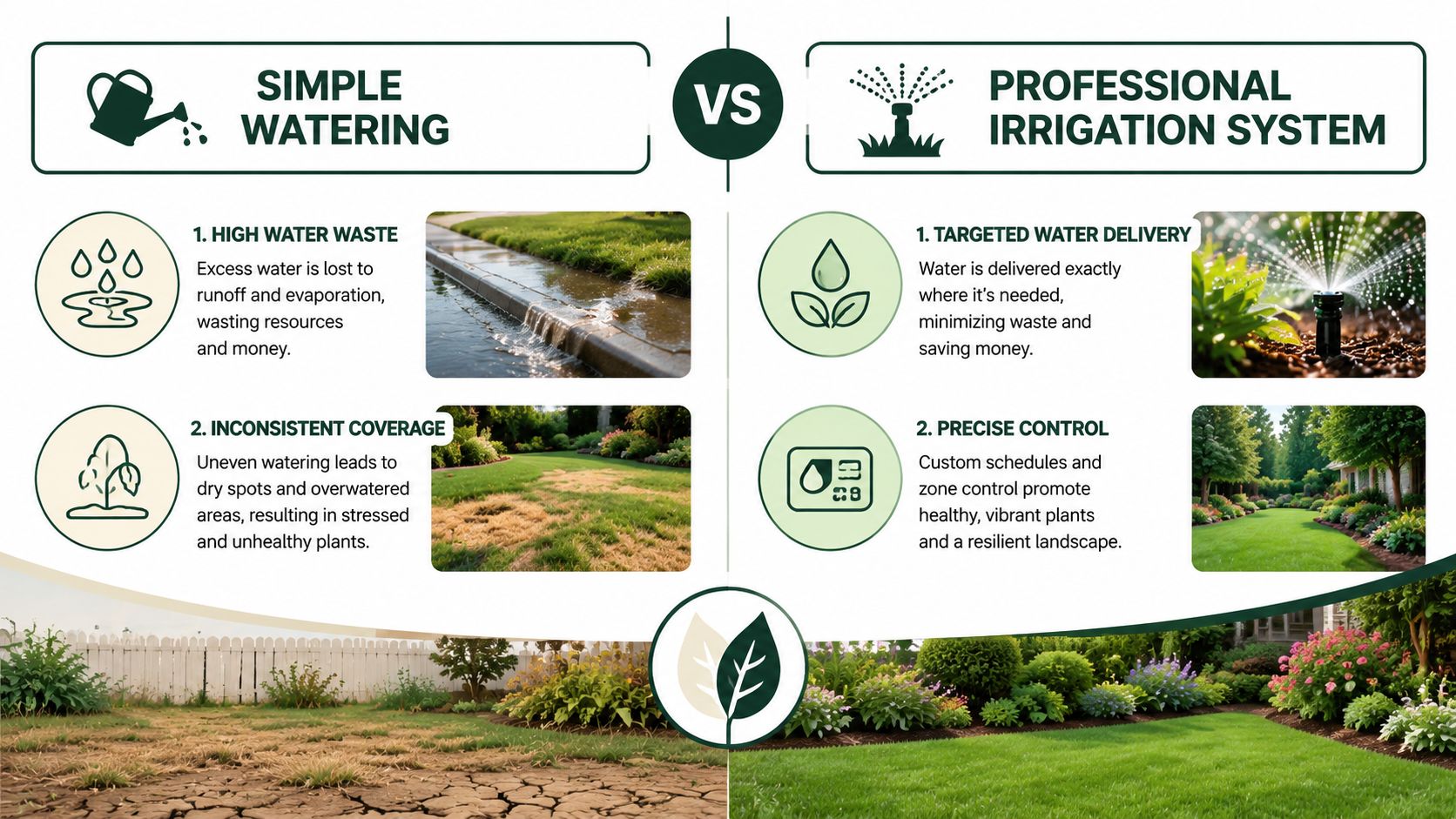
A professionally installed system's targeted approach saves a significant amount of water and money over time.
The Brains: Why Smart Controllers Are Essential
The core of a modern landscape irrigation system is the controller. A standard timer is just a clock—it runs for the same duration whether it's raining or 100 degrees. A smart controller gives your irrigation system a brain.
Smart irrigation controllers connect to local weather data via Wi-Fi and automatically adjust watering schedules based on real-time temperature, rainfall, and humidity. This technology ensures your landscape gets watered only when it needs it, removing the guesswork. You no longer have to run outside to turn off sprinklers during a downpour or remember to add watering time during a heatwave.
This intelligent automation saves an incredible amount of water and protects your plants from the stress of over- or underwatering. You can learn more about how to upgrade to a smart sprinkler system and its benefits for properties in the Monterey Bay Area.
The Hidden Costs of an Inefficient Watering System
A higher water bill is the most obvious sign of an irrigation problem, but an inefficient landscape irrigation system can drain your finances in other ways.
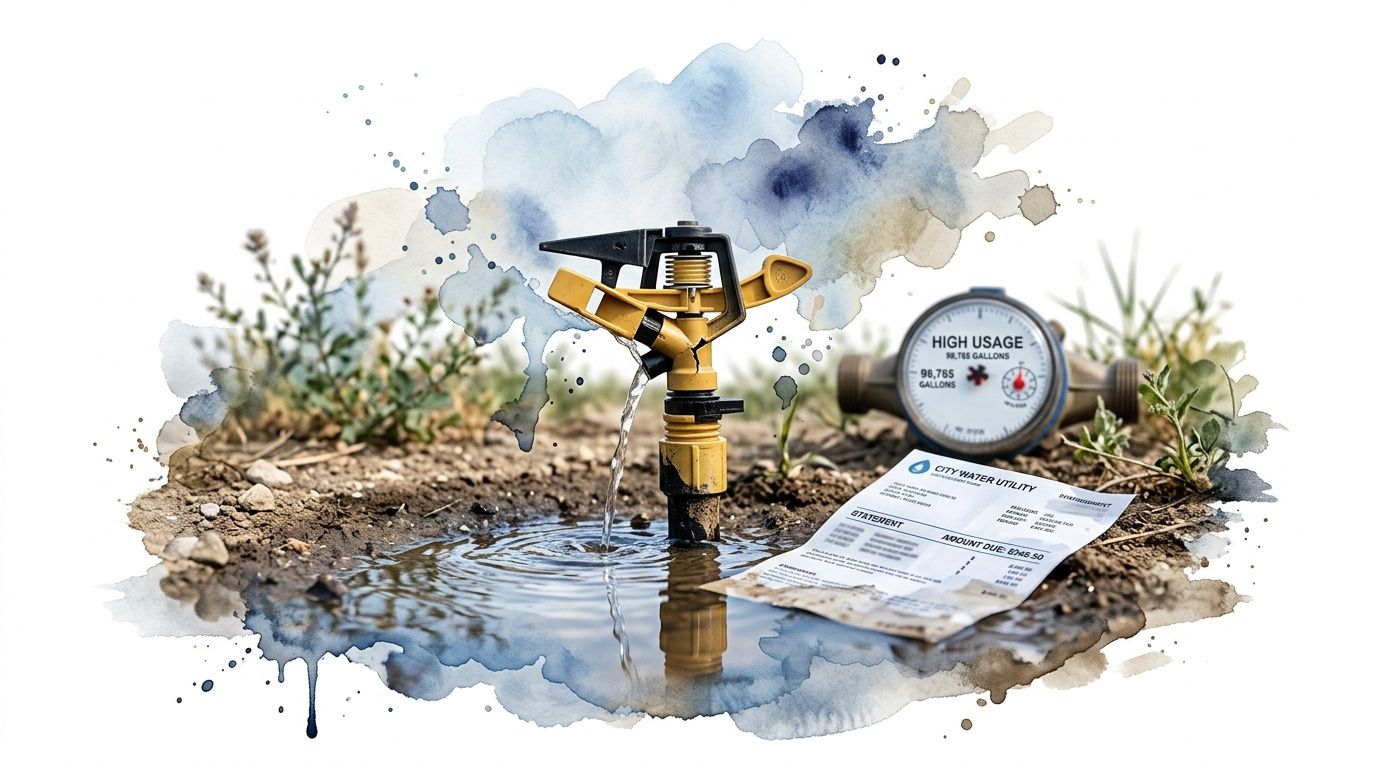
The EPA’s WaterSense program estimates that inefficient outdoor watering can cause households to lose up to 50% of their water to wind, evaporation, and runoff. For an average home with a poorly managed system, that waste can amount to 25,000 gallons each year.
Financial and Property Damage
The damage goes beyond your utility bill. Constant overspray can stain fences, siding, and hardscape features. Worse, undetected leaks can saturate the ground around your home’s foundation, leading to soil erosion and costly structural damage. A single broken sprinkler head can waste thousands of gallons over a single season, translating to higher bills and potential fines in water-restricted areas.
The Cost to Your Landscape Investment
Your landscape is an asset that adds value to your property. An inefficient irrigation system puts that investment at risk. Too much water drowns plant roots and creates a breeding ground for fungus and disease. Too little water stresses plants until they weaken and die. This inconsistency results in a patchy, unhealthy landscape that detracts from your home’s curb appeal.
Investing in a professional landscape irrigation system is a crucial step to prevent financial loss and protect your property. It is also important to understand how new regulations affect your watering strategy. Read our guide on what homeowners must plan for regarding new water rules.
Designing a Water-Wise System with Hydrozoning
The key to a truly efficient landscape irrigation system is a professional strategy called hydrozoning. This means grouping plants with similar water needs onto the same irrigation circuit. A thirsty lawn has completely different hydration needs than a bed of drought-tolerant native plants.
Key Factors in Proper Zoning
Watering everything with a single, uniform schedule is a recipe for waste. It inevitably leads to overwatering some areas just to keep others alive. A properly hydrozoned system accounts for the unique conditions of each part of your property.
- Plant Type: Lawns, shrubs, perennials, and trees all have different water requirements.
- Sun Exposure: A sunny, south-facing slope will dry out far more quickly than a shady spot.
- Soil Conditions: Sandy soils drain fast and need more frequent, shorter watering cycles. Heavy clay soils hold water longer, requiring less frequent, deeper watering.
- Slope: Watering on a hill requires a careful approach to ensure water soaks in instead of running off.
By creating separate zones based on these factors, a smart controller can deliver the precise amount of water each area needs.
Why Hydrozoning Is So Effective
A well-designed hydrozoning plan is the backbone of an efficient system. For example, your lawn might be on a spray zone set to run three times a week, while an adjacent bed of succulents is on a drip zone that only runs once a week.
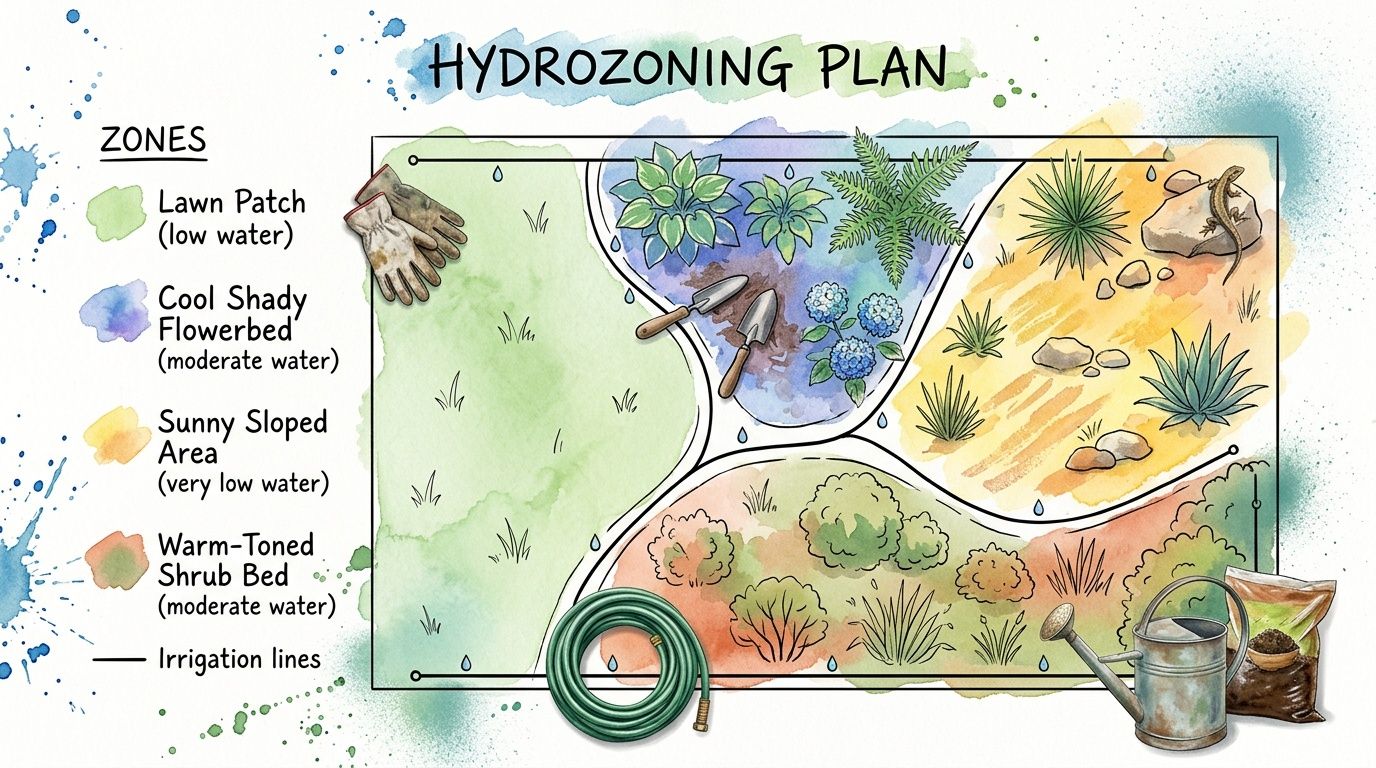
This level of control stops the problem of drowning an entire yard just to keep one section green. It ensures every plant gets the right amount of moisture, encouraging deep roots and making the landscape more resilient. This is a foundational strategy for landscaping water conservation.
Managing water runoff around your property is a crucial part of home maintenance. This principle extends beyond irrigation to include rainfall and drainage. As experts in protecting Utah homes from water damage emphasize, controlling where water goes is fundamental to preventing foundation issues and other expensive repairs.
Ultimately, hydrozoning does more than just save water. It helps create a healthier, more beautiful, and sustainable landscape that is built to thrive in the Monterey County climate.
Essential Irrigation System Maintenance
Installing a professional landscape irrigation system is an investment, but it is not a "set and forget" feature. It needs regular maintenance to run efficiently and avoid breakdowns. A simple seasonal routine is the key to protecting your landscape and keeping your system performing for years.
A Simple Seasonal Maintenance Checklist
To keep your system in prime condition, it helps to follow a seasonal schedule. Each season brings different demands, and a few timely adjustments will make a significant difference.
Spring Start-Up
As the growing season begins, it's time to bring your irrigation system out of its winter dormancy.
- Pressurize Slowly: When you first turn the main water valve back on, do it slowly. This prevents a "water hammer," a pressure surge that can damage fittings and valves.
- Inspect Each Zone: Turn on each station, one at a time, and walk your property to look for leaks, broken sprinkler heads, or damage to drip lines.
- Clean and Adjust: Clean debris from filters and nozzles. Ensure sprinkler heads are spraying on plants, not on hardscape.
Summer Adjustments
Summer is when your system works hardest. A few tweaks will keep your landscape healthy through the heat.
- Adjust Your Controller: As temperatures climb, your plants will need more water. You will likely need to increase watering times to encourage deep, strong root growth.
- Look for Dry Spots: Brown patches in your lawn can indicate a coverage problem, such as a clogged nozzle or a misaligned sprinkler head.
- Check for Leaks: High use can expose weak points. Look for soggy spots or unusual puddles every few weeks.
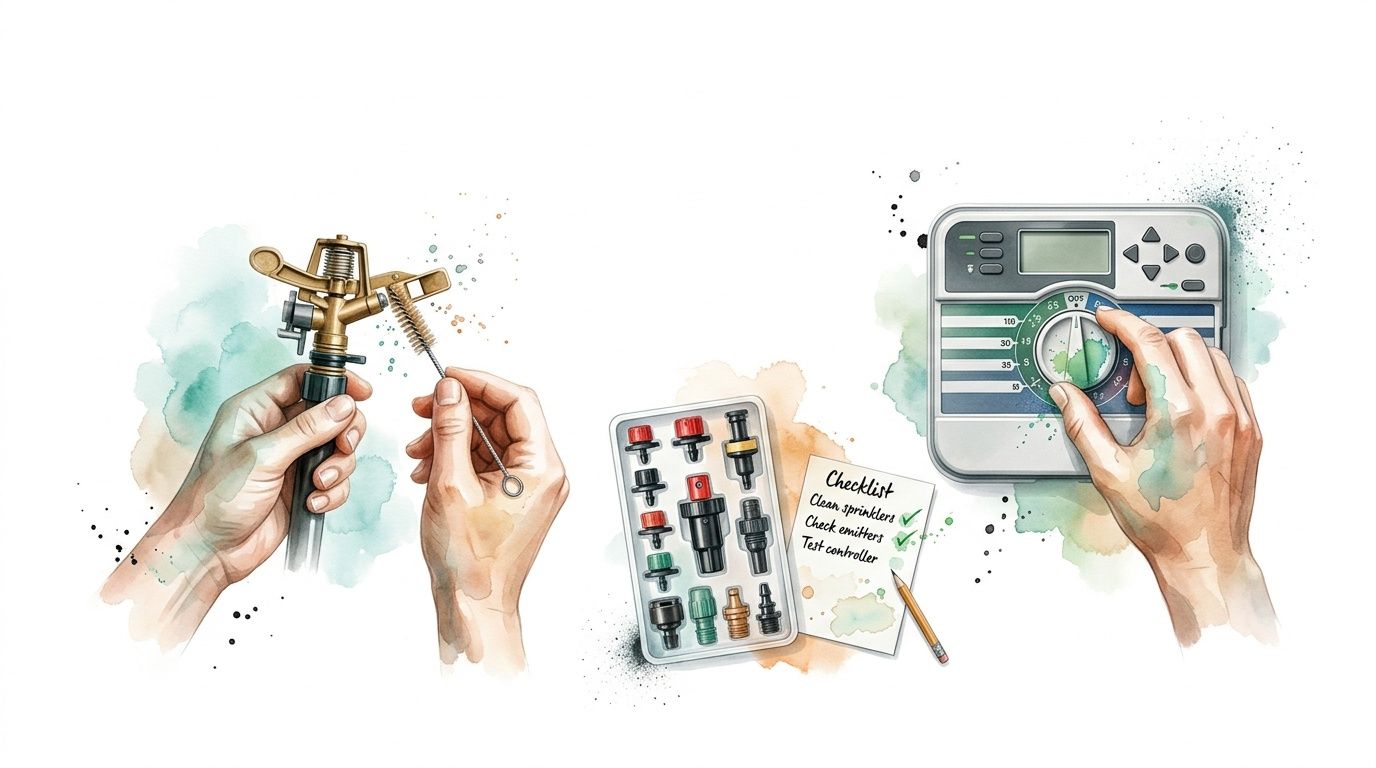
Fall and Winter Prep
When the weather cools, it is time to reduce watering and prepare the system for the dormant season.
- Reduce Watering: Your plants’ water needs will drop significantly. Adjust your controller to water less frequently as fall rains begin.
- Shut Down System: In our Central Coast climate, winterizing usually means turning off the controller and the main water valve. In areas with hard freezes, the system must be professionally winterized to prevent pipes from bursting.
A well-maintained landscape irrigation system is just one piece of the puzzle. If you have a water storage tank, keeping it in good shape is just as important as the irrigation lines themselves. For great tips on longevity, check out this USA Tank maintenance advice.
While you can handle many of these tasks, diagnosing a faulty controller or finding an underground leak often requires professional tools and experience. An annual inspection by a qualified technician is a smart move.
Hiring a Professional for Your Landscape Irrigation Project
It can be tempting to DIY a landscape irrigation project, but this is one area where hiring a professional pays off. An expert brings technical knowledge to ensure your system is efficient, compliant with local codes, and built to last. A seasoned pro can design a system that fits your property's unique slopes, soil, and plant needs.
What to Look for in an Irrigation Contractor
In California, always check for a valid C-27 Landscape Contractor license. This certification is your proof that the contractor has demonstrated expertise in irrigation, drainage, and planting. Beyond the license, ask for proof of general liability and workers' compensation insurance.
A reputable contractor will have a portfolio of finished projects, especially in the Salinas area, and will be happy to share it. They should start with a detailed site analysis and provide a clear, itemized proposal. Be cautious of anyone who offers a quote without a thorough evaluation.
For a deeper look at this process, see our guide on what Salinas homeowners should know before changing their irrigation system.
FAQ: Your Landscape Irrigation Questions Answered
How much does a new irrigation system cost?
The cost of a new landscape irrigation system depends on the size of your property, the complexity of the design, the types of plants, and the specific hardware used. We provide a detailed, custom estimate after a thorough site assessment so you understand all the costs involved.
Will a smart irrigation system really save me money?
Yes. A smart controller uses live weather data to prevent unnecessary watering, which significantly reduces water consumption. This leads to lower utility bills and helps you avoid potential fines for breaking water restrictions. Over time, the savings can often offset the initial installation cost.
Can you upgrade my existing sprinkler system?
Yes, we frequently retrofit older systems to improve water efficiency without requiring a full replacement. Common upgrades include swapping out old spray heads for modern rotary nozzles, adding dedicated drip irrigation zones for garden beds, and installing a smart controller.
How long does installation take?
For a standard residential landscape irrigation system, our crew can typically complete the installation in a few days. Larger or more complex properties may take longer. We provide a clear project schedule before work begins so you know what to expect.
Is drip irrigation better than sprinklers?
Neither is universally "better"; they are different tools for different jobs. Drip irrigation is the most efficient choice for garden beds, trees, and shrubs because it delivers water directly to the roots. Sprinklers are more practical for providing uniform coverage over large lawn areas. The best designs almost always use a combination of both.
Ready to ensure your landscape gets the right amount of water without the waste? The team at California Landscape & Tree Pros can design and install a professional landscape irrigation system tailored to your property. Contact us for a professional consultation.
Contact: (831) 998-7964 (Salinas) | (831) 905-8018 (Monterey) | 1184 Monroe St., Suite 6, Salinas, CA 93906 | californialandscapeandtreepros.com