
California's Air Resources Board now requires most new small off-road engines used in landscape equipment to meet zero-emission standards starting with model year 2024. For commercial properties and HOAs in Monterey County, this means contractors operating compliant equipment will run quieter, produce no direct exhaust on-site, and may schedule visits differently based on battery runtime. Property managers should confirm their contractor's equipment meets current CARB standards before renewing any maintenance agreement.
The statewide shift away from gas-powered landscape equipment presents a critical operational update for Monterey County’s HOA boards and property managers. California is the only state with equipment emission standards this specific, and this is not a future concern but a present-day operational reality that affects which contractors are running legally compliant equipment. For communities in Monterey, Pebble Beach, and Carmel, where noise-sensitive coastal neighborhoods make the transition more visible, understanding this change is essential for effective property management.
The primary risk isn't legal liability for the HOA, but operational and reputational blowback. A contractor still using outdated, loud gas equipment can generate a stream of resident complaints about noise and fumes, landing directly in the property manager's inbox and becoming a recurring HOA board agenda item. This guide provides a clear, actionable framework to vet new vendors and re-evaluate current ones, ensuring your community partners are equipped to deliver the quieter, cleaner maintenance your residents expect.
1. What percentage of your equipment meets CARB's zero-emission standards?
This question is the new bedrock of due diligence for any Monterey HOA board evaluating landscape contractors in 2026. Before discussing service scope or price, you must confirm the contractor is legally equipped to perform the work in California. This foundational step protects your community from the operational and reputational risks of using a non-compliant vendor. A professional contractor should be able to answer this question directly and provide specifics about their fleet.

The Hidden Risk for Property Managers
The risk for property managers is not legal liability—it is operational and reputational. A contractor running non-compliant gas equipment on an HOA property generates noise complaints, air quality concerns, and resident friction that lands in the property manager's inbox, not the contractor's. According to a 2021 report by the California Air Resources Board (CARB), operating a commercial gas-powered leaf blower for one hour can emit the same amount of smog-forming pollution as driving a 2017 Toyota Camry about 1,100 miles. Monterey County's coastal communities are particularly sensitive to this—residents notice equipment noise and exhaust in ways that become board agenda items.
An HOA board in Carmel successfully reduced noise complaints by 75% in the first quarter after switching to a contractor with a fully CARB-compliant electric fleet. The board cited the "dramatic reduction in early morning noise" as the primary driver of positive resident feedback.
Actionable Vetting and Documentation
When you're evaluating what Monterey HOAs should ask contractors about electric equipment, start with these non-negotiable verification steps.
- Ask for the Percentage: "What percentage of your equipment fleet meets CARB's 2024 zero-emission standards for small off-road engines?" A professional contractor should be able to answer this directly.
- Request an Equipment List: Ask for a general inventory of their primary equipment (mowers, blowers, edgers) and confirmation of its compliance status.
- Verify Professionalism: A contractor who is vague, dismissive, or unaware of the CARB regulations is signaling a lack of professional investment in their business and the California market.
- Check for Local References: Ask for a list of other HOAs or commercial properties they service in Monterey, Carmel, or Pebble Beach with their electric fleet. A confident, established contractor will have a portfolio of local work to share.
2. How do you manage battery runtime and staging on a property our size?
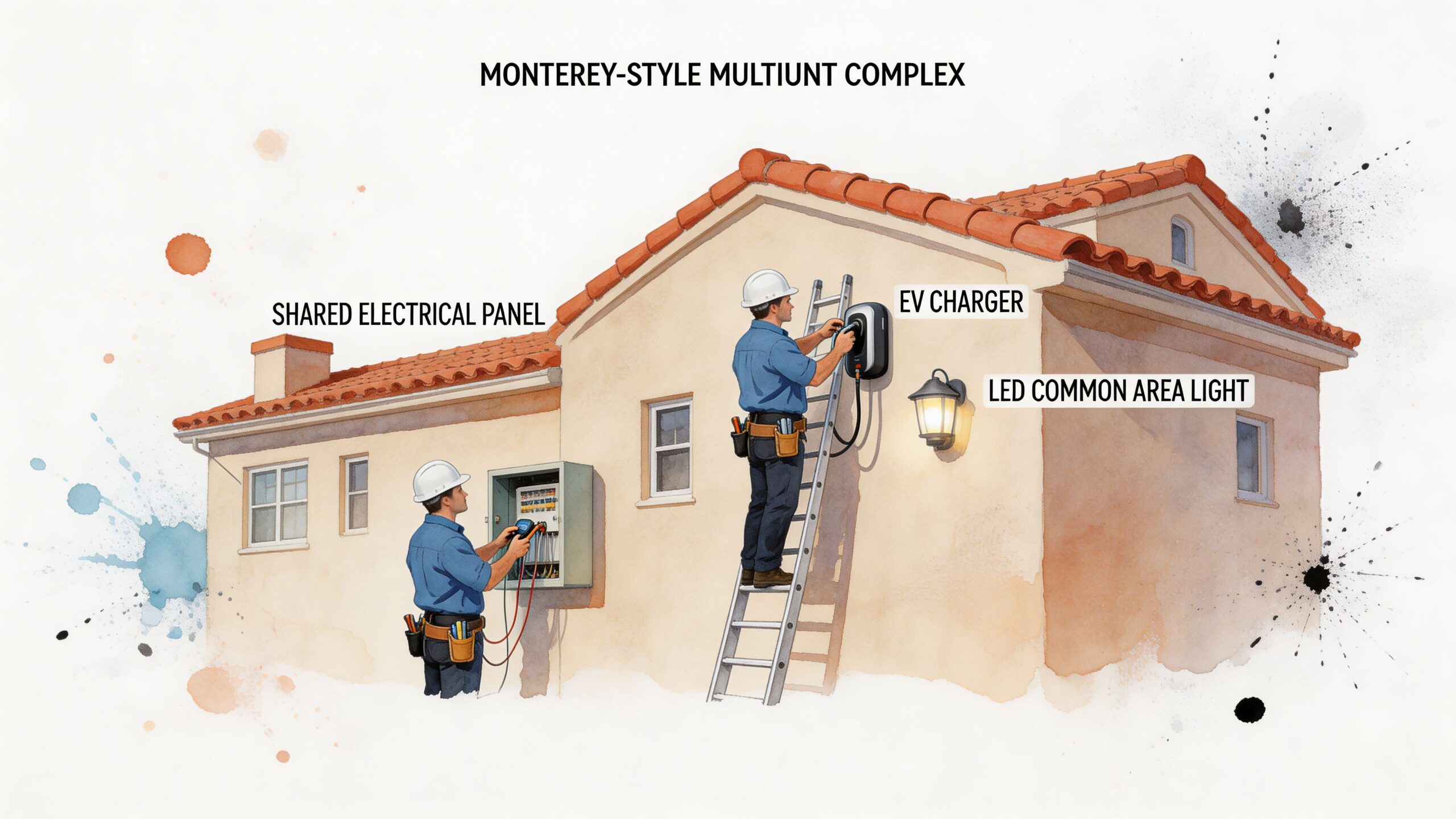
Not all contractors have made the transition to electric equipment at the same pace. This question reveals whether a contractor has truly operationalized their electric fleet or is still struggling with the logistics. Battery management is the core operational challenge of commercial electric landscaping. An experienced contractor will have a sophisticated system for battery rotation, on-site charging, and crew staging to ensure there is no loss of efficiency on your property.
Why It Reveals Operational Competence
A contractor experienced with electric equipment anticipates these challenges. They understand the need for a different crew workflow managed through battery rotation and staging. They will have invested in mobile charging solutions and a deep inventory of batteries to handle large commercial and HOA sites without interruption. Asking a contractor about their specific process for your property is a critical step to distinguish a prepared professional from one who might run out of power mid-job, causing delays and inconsistencies in service. This experience is essential when considering what Monterey HOAs should ask contractors about electric equipment, as it directly impacts service quality.
A large HOA in Monterey learned this lesson when their new "electric" contractor's crews repeatedly left sections of the property unfinished, citing dead batteries. The property manager discovered the contractor only had one set of batteries per tool, a system completely inadequate for a property of their scale.
Actionable Vetting and Documentation
Go beyond a simple "yes" or "no" answer. Dig into the contractor's history with properties that mirror your community’s needs.
- Ask About Their Process: "How do you manage battery runtime on larger commercial properties—what is your rotation and staging process?" This reveals whether the contractor has actually operationalized electric equipment.
- Inquire About Battery Inventory: Ask about the number of batteries they deploy per truck and their on-site or in-truck charging capabilities.
- Discuss Crew Training: Have their crews been trained specifically on managing battery life and the workflow for electric equipment to maintain efficiency?
- Assess Familiarity with Large Properties: Ask for examples of other large HOA or commercial properties they service and how their battery management system works there.
3. Can you provide documentation of your equipment compliance?
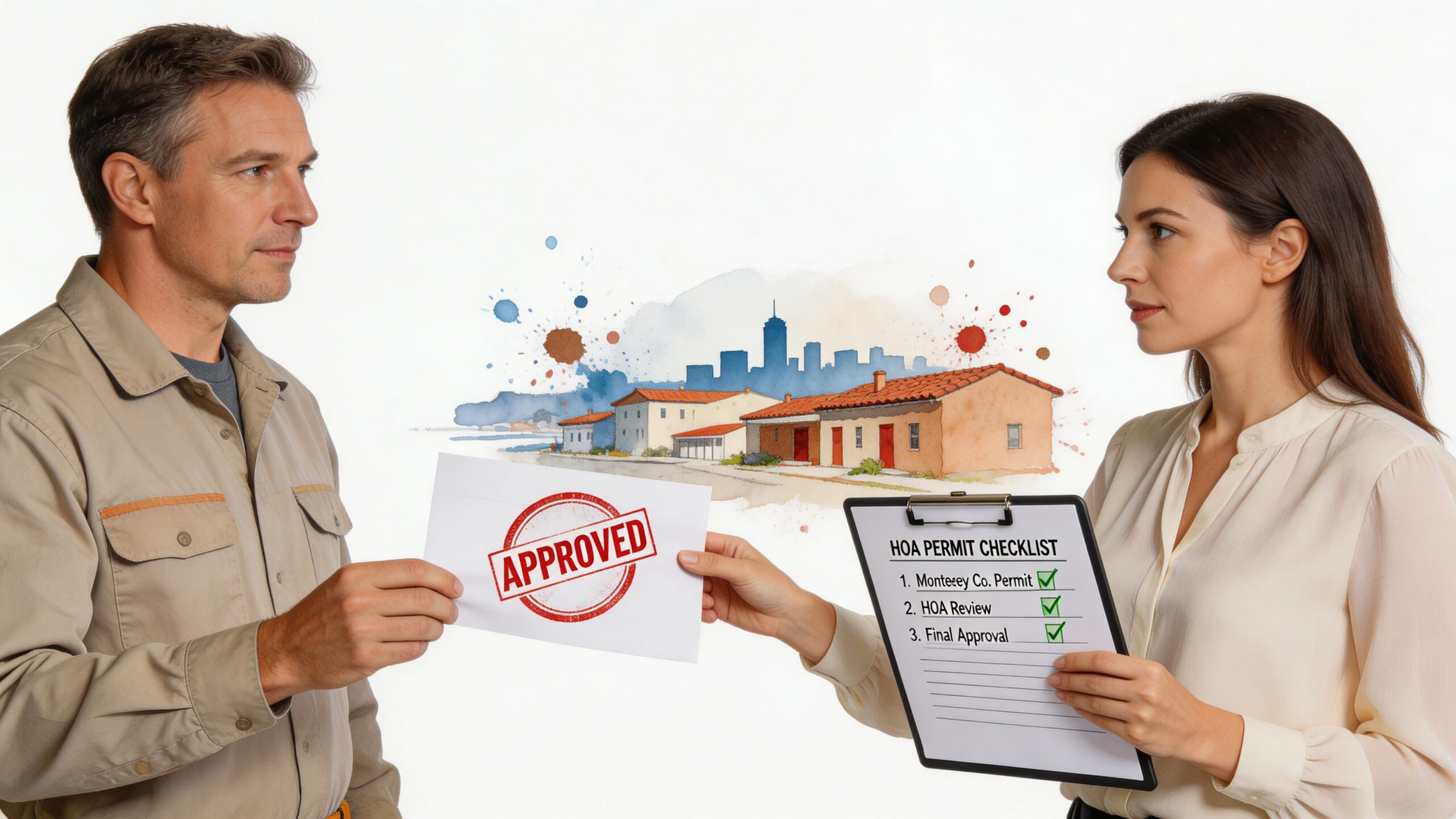
A contractor who has made the full transition to CARB-compliant equipment brings two operational advantages to your site: reduced resident complaints and a documented compliance posture that protects the property manager when questions arise. The ability to produce that documentation on request is a marker of contractor professionalism that goes beyond equipment alone. It shows they are organized, transparent, and take regulatory requirements seriously.
Why It’s a Critical First Step
A vague answer is a red flag. Professional contractors who have invested in a compliant fleet will be proud to document it. This isn't about the HOA enforcing the law; it's about the HOA ensuring their vendor is a professional operator. This documentation becomes a valuable asset if a resident or board member ever questions the contractor's operations regarding noise or emissions. It allows the property manager to provide a swift, definitive, and documented answer, resolving the issue immediately.
An HOA board in Carmel, facing resident questions about their new landscape provider, was able to immediately forward a letter from the contractor attesting to their fleet's 100% CARB compliance. This simple document ended the inquiry and reinforced the board's sound decision-making.
Actionable Vetting and Documentation
Before signing a contract, demand clarity on compliance. A contractor’s willingness to provide documentation demonstrates their professionalism.
- Ask for Written Confirmation: "Can you provide documentation of your equipment compliance if requested by the HOA board or property owner?"
- Request a Compliance Clause: Ask for a clause in the service agreement attesting that the equipment used on the property will be compliant with all current state and local regulations, including CARB standards.
- Define Communication Protocols: Establish that if the board or property manager receives an inquiry, the contractor will promptly provide a written statement or documentation of their compliance.
- Look for Proactive Communication: The best contractors will often mention their CARB-compliant fleet in their proposal materials as a key differentiator and benefit to the property.
FAQs About Electric Landscape Equipment in Monterey
1. Is the HOA legally liable if our contractor uses non-compliant gas equipment?
Generally, no. The legal responsibility for using compliant equipment falls on the operator (the landscape contractor). However, the reputational and operational risk (noise/air complaints) falls directly on the HOA and property manager.
2. Does electric equipment work as well as gas-powered equipment?
Yes. Modern professional-grade electric landscape equipment offers power and performance equivalent to gas counterparts. The primary operational difference is runtime management via batteries, which experienced contractors have mastered.
3. Will our landscape maintenance costs go up with a contractor who uses electric equipment?
Not necessarily. While compliant contractors have made a significant capital investment in their fleet, they also benefit from lower fuel and maintenance costs. Many find their pricing remains competitive, especially when factoring in the value of reduced noise and emissions.
4. Can our HOA require our contractor to switch to electric equipment mid-contract?
This depends on your contract language. Most standard agreements do not specify equipment type. The best time to make this a requirement is during the contract renewal or bidding process. Spring contract renewal season is the perfect moment to ask vendors about their equipment compliance before signing for another year.
5. What are the main benefits of a contractor using a fully electric fleet?
The key benefits for an HOA are significantly lower noise during operation (which reduces resident complaints), no exhaust fumes or smells, and the assurance that your vendor partner is a modern, professional, and compliant operator. This directly addresses friction points for boards that have dealt with resident complaints about gas-powered equipment.
Set the Right Standard for Your Community This Spring
For HOA boards and property managers in Monterey County evaluating landscape maintenance contracts this spring, equipment compliance is now a legitimate line item in vendor assessment—not a technical detail to leave for later. Spring is when contracts are renewed, crews are scheduled, and expectations are set for the season. Adding equipment standards to that conversation now avoids the resident complaints and board friction that surface when the question is raised mid-contract with no easy resolution.
Mastering this conversation is about more than just avoiding liability. It’s about setting a standard of quality and foresight for your community. When an HOA board knows what Monterey HOAs should ask contractors about electric equipment, it shifts the dynamic. You are no longer just a client accepting a bid; you are an informed partner capable of evaluating a contractor's true expertise and operational readiness.
Key Takeaways for Proactive HOA Boards
Your next steps should be methodical and documented. By integrating these questions into your procurement process, you create a clear, defensible, and transparent method for selecting the right partners for your community.
- Standardize Your Vetting: Create a formal checklist with these three key questions. Use it consistently for every landscape contractor you evaluate to ensure a fair comparison.
- Prioritize Documentation Over Promises: Verbal assurances are insufficient. A professional contractor should be able to provide written confirmation of their fleet's compliance status.
- Frame it as a Procurement Question: This isn't a sales pitch; it's an educational process. Informed buyers ask better questions. Add equipment compliance to your vendor evaluation checklist alongside licensing, insurance, and scope definition.
Ultimately, the goal is to build a resilient, modern, and peaceful community that meets the evolving expectations of your residents. The quiet hum of compliant electric mowers preserving early morning peace directly impacts resident quality of life. By asking the right questions now, your board is not just managing a contract; you are investing in your community's tranquility and value.
For HOA boards and property managers in Monterey County, partnering with a contractor who understands both the regulatory landscape and the practical demands of community management is essential. If you are evaluating your landscape maintenance contract, California Landscape & Tree Pros has already made the full transition to CARB-compliant electric equipment, delivering quieter, cleaner service that reduces resident complaints. Visit California Landscape & Tree Pros to learn how our documented compliance and professional crews can set a higher standard for your property.