
Quick Answer
The best plants for erosion control on slopes combine dense surface roots, deeper structural roots, and year-round ground coverage. In Monterey County, the strongest results usually come from layered planting, not a single species, with shrubs, grasses, groundcovers, and trees supported by proper drainage and slope-specific irrigation.
An eroding hillside usually shows up first as small rills, bare patches, and mulch washing downhill. Then it becomes a bigger problem. Soil starts moving, roots get exposed, drainage gets harder to manage, and the slope stops looking stable or finished.
If you're looking for the best plants for erosion control on slopes in the Monterey Bay Area, plant choice matters, but layout matters just as much. The strongest projects use plants that match the grade, soil, sun exposure, and water movement on the site, then tie that planting into drainage, irrigation, and sometimes hardscape work. If you're also dealing with imported soil or grade repair, quality topsoil for delivery affects how well those new plantings establish.
1. Coyote Brush
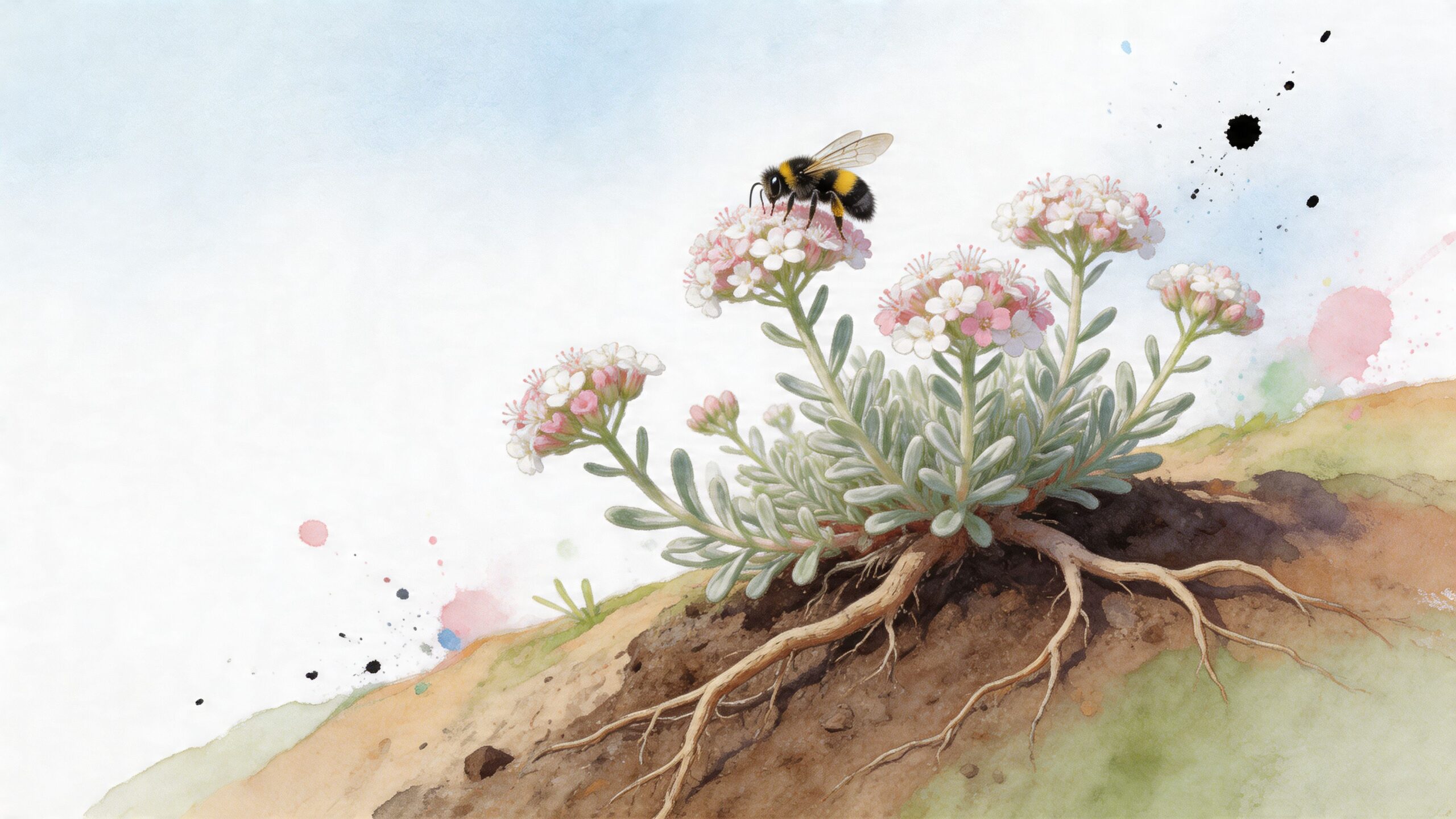
Coyote brush, especially Baccharis pilularis 'Pigeon Point,' is one of the most dependable slope shrubs we use for coastal and inland Monterey County conditions. It spreads low, covers bare ground well, and handles wind, lean soils, and reflected heat better than a lot of ornamental shrubs that look good in the nursery but fail on a bank.
On a visible slope, this plant earns its keep fast. Its dense, fibrous root system helps knit the upper soil layer together while the branching canopy cuts down raindrop impact and slows surface runoff.
Where it works best
Coyote brush is a strong choice for coastal lots, road-facing banks, dry hillsides, and slopes that need a native look without constant pruning. It's also useful where mowing is unrealistic and lawn keeps thinning out.
In the Monterey Bay Area, it works especially well on slopes that get marine influence but still dry hard in late summer. On hotter inland sites, it still performs well once it's established, as long as drainage is decent.
Practical rule: Use coyote brush to cover ground and lock the surface in place. Don't expect it to replace the long-term structural role of trees and larger shrubs.
A few site notes matter:
- Spacing matters: Tight spacing closes gaps faster and limits the bare soil that starts washing in winter.
- Establishment watering matters: Drip irrigation is usually the right move on slopes because overhead spray wastes water and can add runoff.
- Maintenance still matters: If you let old woody growth build up, coverage gets uneven and the planting stops looking intentional.
For property owners who want a native, lower-input slope planting, coyote brush fits well with broader sustainable landscaping approaches in California yards. It also pairs well with sedges, grasses, and a few deep-rooted anchors above or below it, instead of trying to make one shrub do the whole job alone.
2. California Live Oak
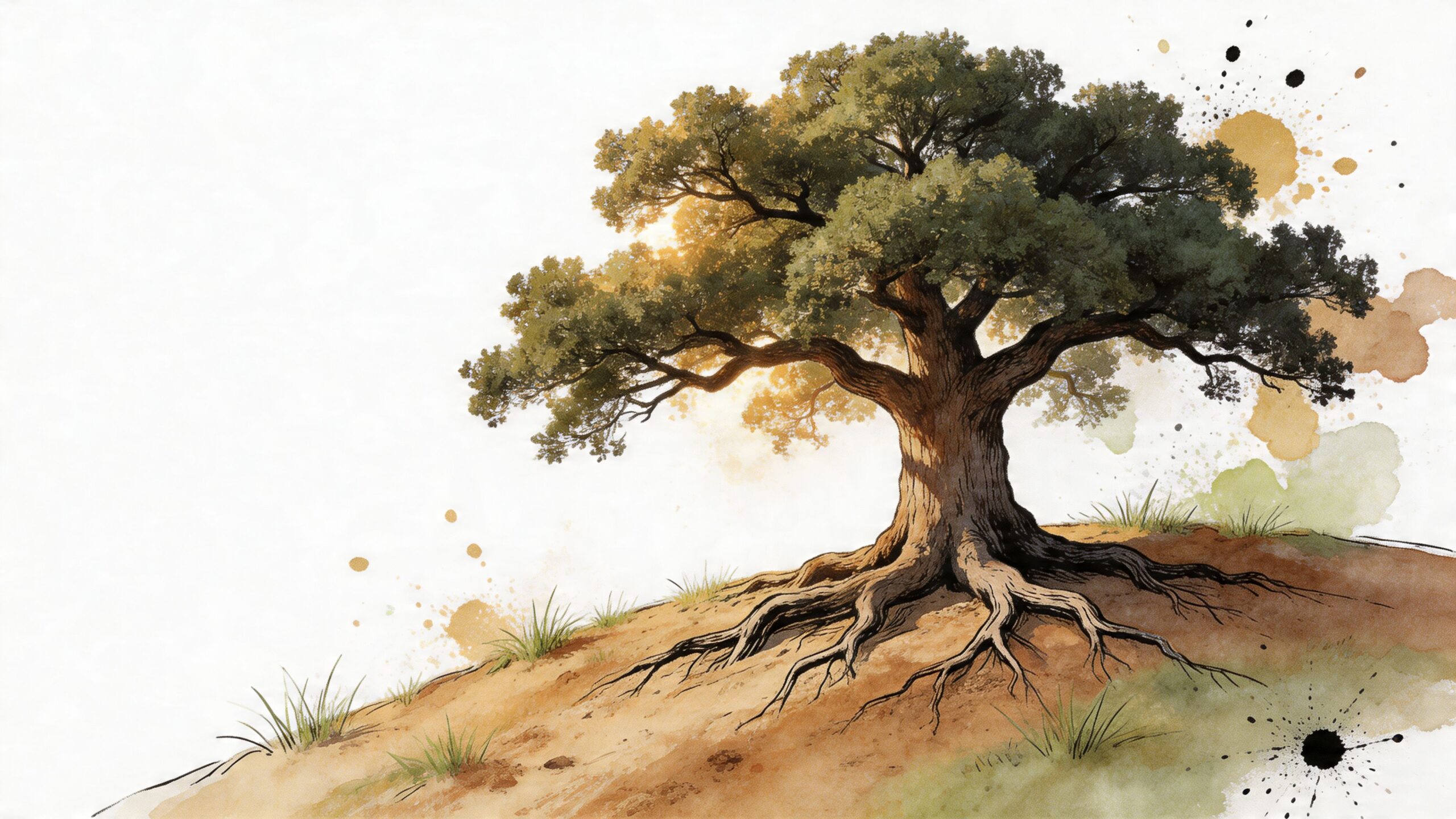
If the slope is large enough to support trees, California live oak is one of the best long-term structural plants you can add. It doesn't give you instant slope coverage, and that's the trade-off. What it does give you is deep, lasting root presence and canopy value that smaller plants can't match.
This is the kind of tree that makes sense on estate lots, larger residential sites, open-space edges, and broad slopes where you need permanence. It's native throughout much of Monterey County, and it belongs in serious erosion-control planning when room allows.
Why oaks are long-term slope plants
A good slope plan has different root jobs happening at once. Mixed planting of grasses, herbaceous and woody groundcovers, shrubs, and trees delivers the strongest stabilization approach when space allows, according to guidance summarized in native plant recommendations for steep slopes.
That point matters with oaks. California live oak isn't your fast-cover plant. It's your long-range anchor. It works best when understory plants handle near-term surface stability while the tree establishes.
Trees secure a slope over time. They don't solve exposed soil on their own during the first rainy season.
There are real trade-offs with live oak:
- Give it room: Don't crowd it into a narrow strip between hardscape and a bank.
- Protect nearby improvements: Sidewalks, walls, and paving need to be part of the planning conversation from day one.
- Plant for the next decade: This isn't a quick cosmetic fix. It's a structural site decision.
For fire-prone properties, oak placement also needs to respect access, canopy separation, and maintenance. That's especially important if you're planning around defensible space inspection requirements for Monterey homeowners. A mature oak can absolutely support a stable, valuable outdoor area, but only if the grade, drainage, and surrounding planting are designed around it.
3. California Buckwheat
California buckwheat is one of the better answers for slopes that need erosion control without looking heavy or overbuilt. It stays useful on visible banks because it has a lighter profile than many shrubs, works well in native-style plantings, and brings pollinator value instead of reading like a utility planting.
This is a strong plant for sunny slopes with decent drainage. It won't do the job of a tree, and it won't form the same thick mat as a creeping groundcover, but it fills an important middle layer on hillsides where you want root hold plus a cleaner look.
Best use on visible and mixed native slopes
Buckwheat works best woven through a broader slope planting, not massed as the only species. On Monterey County banks, that usually means combining it with lower spreaders and a few deeper-rooted shrubs or trees upslope.
It also earns a place in restoration-style planting because it handles dry seasons without looking like it needs constant rescue. On steep slopes where seeding is unreliable, container planting gives you better early control of spacing and coverage.
A lot of failed slope installations come from overvaluing appearance and undervaluing establishment. That's a common issue in California landscape installations that look finished before they're actually stable. California buckwheat does better when the site is prepared for drainage first, then planted with enough density to close the soil surface over time.
Use it when you want:
- A native look: It blends naturally with coastal and inland California palettes.
- Pollinator support: It adds ecological value to a functional slope planting.
- Moderate structure: It helps break up open soil without becoming visually bulky.
This isn't the plant I'd lean on for a raw, actively slumping bank by itself. It shines on slopes that are basically stable but losing surface soil, especially where appearance matters as much as function.
4. Toyon
Toyon is one of the most useful native shrubs for slope projects because it does more than one job well. It helps stabilize soil, builds vertical structure, screens views, and adds seasonal interest. That matters on residential properties where the slope isn't just a problem area. It's also part of what people see every day.
In Monterey County, toyon fits well on larger banks, perimeter slopes, and hillside plantings that need a stronger shrub layer than buckwheat or low groundcovers can provide. It's especially effective when the slope needs screening from a road, neighbor, or adjacent grade transition.
Where Toyon fits in a layered planting
Toyon works best as the middle or upper layer in a multi-level slope design. Ongoing guidance on mixed vegetation strategies points to the value of combining trees, shrubs, and groundcovers rather than relying on one planting type alone. On actual jobs, that's usually what separates a stable slope from one that still sheds soil between plants.
The root system helps, but so does the canopy. Once established, toyon shades the soil and interrupts runoff better than low annual color or shallow ornamental shrubs.
Plant toyon where you need shrub mass and slope function at the same time. It's not a tiny filler plant, and it shouldn't be treated like one.
A few practical notes:
- Don't overpack it: Crowded toyon loses airflow and becomes harder to maintain.
- Watch the fuel load: On fire-prone sites, thinning and cleanup matter.
- Use it with lower growers: Bare space beneath shrubs is where erosion often continues.
For coastal homes and high-visibility areas, toyon also fits naturally into coastal landscape design for California homes. It gives a slope some presence without forcing an overly formal look, and it holds up better than many soft ornamental shrubs that collapse under dry-season stress.
5. Coast Redwood
Coast redwood belongs on this list with a major qualifier. It's powerful on the right site and a mistake on the wrong one. For most Monterey County slopes, it isn't the first recommendation. For select cool, fog-influenced properties with room and long-term stewardship, it can be part of a serious slope strategy.
A redwood's lateral root system can help stabilize broad areas over time, but the tree's size, water needs, and mature footprint mean it has to be planned like major infrastructure. You don't tuck one into a tight slope because the nursery tag looks appealing.
When it makes sense and when it doesn't
On large coastal properties north of Monterey County, coast redwood can be a sound fit where fog, soil volume, and setback distance support it. On smaller residential lots, or warmer inland slopes, it often creates more complications than value.
The common problems are predictable. Roots conflict with paving and utilities, mature shade changes the planting palette below, and the tree outgrows the original intent of the project.
If you're dealing with storm exposure and slope runoff at the same time, broader site planning matters more than choosing an impressive tree. That's why redwood decisions should sit inside larger weather-focused landscape planning for Salinas and Monterey properties, not as a standalone planting choice.
Keep these limits in mind:
- Use it only on suitable microclimates: Cool coastal influence is important.
- Plan for mature scale: The tree will dominate the site if you don't.
- Protect infrastructure: Utilities, septic areas, and hardscape need generous separation.
For most local slopes, California live oak, toyon, coyote brush, and strong monocot ground layers are more practical. Redwood is a specialty answer, not a default answer.
6. Desert Marigold
Desert marigold is useful when the slope is hot, lean, and exposed, and you need plant coverage that doesn't ask for rich soil or regular summer watering. On inland Central Coast sites, south-facing banks, and dry shoulder slopes, it can be a smart filler plant in a water-wise mix.
It's not a Monterey Peninsula coastal native, and that matters. This is a better fit for inland conditions than for foggy or highly naturalized coastal areas where native plant continuity is the priority.
Best for dry inland slopes
Desert marigold handles tough surface conditions well, especially where other flowering perennials burn out or collapse after the first season. The taproot helps it hold position, and the mounded growth softens bare dirt without making the slope feel overplanted.
It works best mixed with other drought-tolerant perennials and shrubs rather than used as a full monoculture. That gives the slope visual variation and more varied root behavior below grade.
The biggest mistake with desert marigold is putting it on a slope that stays too wet or too cool. In those conditions it can look sparse, and sparse plants don't control erosion well because they leave too much exposed soil between crowns.
A few good uses include:
- South-facing banks: Strong sun and reflected heat don't usually bother it.
- Poor soils: It tolerates sites that frustrate fussier ornamentals.
- Water-wise transition areas: It can bridge between hardscape and native or drought-tolerant planting zones.
If the site is closer to Carmel, Pebble Beach, or a heavy marine layer, I'd usually steer back toward plants that better match that climate. But inland, desert marigold can help stabilize a slope while keeping irrigation demand restrained.
7. California Manzanita
California manzanita is one of the most useful native slope shrubs when the site is difficult. Poor soil, rocky grades, dry exposures, and a need for year-round structure all point toward manzanita. It's also one of the plants people often choose for looks first, then regret because they didn't match the species to the site.
The genus is broad, and that means selection matters. Some manzanitas stay low and spreading. Others get larger and woodier. On slopes, the right one can be excellent. The wrong one turns into a maintenance issue.
Strong plant with real fire trade-offs
Manzanita roots can help hold a bank effectively, but slope performance isn't the only issue on many Monterey County properties. Fire behavior matters too. Guidance summarized from 2025 CNPS trial information notes that woody shrubs like Arctostaphylos 'Emerald Carpet' can hold slopes effectively, but they increased flame length by 20% in ember-storm conditions compared to herbaceous monocots like Nafray® Pennisetum, as discussed in CNPS guidance on hot sunny slopes and the plants that hold them.
That doesn't mean manzanita should be avoided. It means it shouldn't be planted blindly on every fire-prone slope.
On a wildfire-exposed property, slope control and fire behavior have to be evaluated together. A plant can be good at one and still create trade-offs in the other.
Use manzanita when you need a native shrub that can handle difficult conditions and carry the look of the site year-round. Just balance it with lower, less woody layers and maintain it properly. If the slope sits near structures, access roads, or ignition-prone edges, the planting design needs to account for more than erosion alone.
8. Arroyo Lupine
Arroyo lupine is one of the best short-term helpers for slopes that need quick seasonal coverage and soil improvement while longer-lived plants establish. It's especially useful on restoration-style projects, raw ground, and disturbed soils where you need something to occupy space fast and start rebuilding the planting layer.
This isn't your forever framework plant. It's part of a succession strategy. On a practical slope plan, that's valuable.
Best for early cover and soil recovery
Arroyo lupine is effective on slopes where you're trying to reduce exposed soil and introduce a more natural plant community. It germinates and fills in faster than many woody natives, and it helps soften a bare bank while shrubs and structural plants are still small.
That role matters because early erosion often happens before the permanent planting matures. A seasonal native that establishes readily can buy time and improve how the slope functions during that vulnerable period.
If you're relying on seed, timing and surface prep matter. Seed thrown onto compacted, crusted soil right before runoff season usually disappoints. On steeper grades, plugs or container stock often produce a more dependable stand.
For mixed slope planting, arroyo lupine works well with:
- California buckwheat: Good for visible native banks.
- Lower grasses and sedges: Better surface hold as coverage thickens.
- Shrub anchors: Toyon, coyote brush, or selected manzanita to take over long term.
The key is expectation. Lupine helps start the system. It doesn't replace the permanent root structure of shrubs, trees, and durable ground layers.
Comparison of 8 Plants for Slope Erosion Control
| Species | Implementation Complexity 🔄 | Resource Requirements ⚡ | Expected Outcomes 📊⭐ | Ideal Use Cases 💡 | Key Advantages ⭐ |
|---|---|---|---|---|---|
| Coyote Brush (Baccharis pilularis) | Moderate, fast establishment; occasional pruning | Low, minimal water after 6–12 months; tolerant soils | Strong mid-term slope stabilization and year‑round cover | Coastal/inland slopes, erosion control projects, mass plantings | Native, drought‑tolerant, cost‑effective |
| California Live Oak (Quercus agrifolia) | High, careful planting; long establishment period | High initially, deep watering, space, transplant care | Superior long‑term, permanent stabilization and canopy structure | Large estates, permanent slope stabilization, ecological focal specimens | Unmatched root depth, longevity, high ecological value |
| California Buckwheat (Eriogonum fasciculatum) | Low, easy seed or nursery install | Very low, minimal irrigation once established | Good surface stabilization, strong pollinator support, seasonal blooms | Visible slopes, pollinator meadows, aesthetic drifts | Attractive flowers, low maintenance, excellent pollinator value |
| Toyon (Heteromeles arbutifolia) | Moderate, slower to fill in; may need staking | Moderate, supplemental water 12–18 months; well‑draining soil | Excellent slope stabilization with year‑round foliage and winter berries | Screening, mixed native plantings, wildlife‑friendly slopes | Year‑round interest, bird food, robust root system |
| Coast Redwood (Sequoia sempervirens) | Very high, climate/site specific; arborist recommended | Very high, cool coastal climate, space, long‑term management | Exceptional large‑scale stabilization and dramatic visual impact (site dependent) | Northern coastal estates with fog and ample space | Iconic scale, multigenerational value, massive root spread |
| Desert Marigold (Baileya multiradiata) | Low, simple planting and maintenance | Very low, highly drought‑tolerant; needs excellent drainage | Good erosion control on arid slopes with continuous flowering | Arid/semi‑arid slopes, water‑wise gardens, low‑maintenance sites | Low water needs, long bloom period, cost‑effective |
| California Manzanita (Arctostaphylos spp.) | Moderate, slow growth; species selection important | Moderate, initial water; needs good drainage | Excellent stabilization on poor or sandy soils; fire‑adapted | Difficult slopes, wildfire‑defensible landscapes, native restorations | Deep spreading roots, fire resilience, year‑round texture |
| Arroyo Lupine (Lupinus succulentus) | Low, easy direct seeding; seasonal species | Low, cost‑effective seed; occasional establishment water | Good short‑term stabilization + nitrogen enrichment; spring floral display | Restoration, degraded nutrient‑poor slopes, low‑cost seeding programs | Nitrogen‑fixing, rapid cover, strong pollinator support |
Develop a Comprehensive Erosion Control Plan
Choosing from the best plants for erosion control on slopes is only the first step. The slope has to be read correctly before anything goes in the ground. Grade, runoff patterns, soil condition, exposure, irrigation layout, and existing root competition all affect whether a planting will hold or fail.
On most Monterey County properties, the best results come from layered vegetation. That means low surface coverage, mid-level shrubs, and deeper structural roots where room allows. Research summarized in ongoing professional guidance supports that mixed approach, and some monocot species have shown especially strong soil-holding performance. In long-running field erosion studies, Nafray® Pennisetum achieved approximately 475% greater soil strength than bare soil, while Nyalla® Lomandra showed approximately 328% stronger soil stability than untreated areas, as reported in field erosion study discussion of strappy-leaf monocot performance. Those numbers reinforce what we see on real slopes. Dense fibrous root mats matter.
That said, even good plants won't fix a bad slope layout. If runoff is concentrated in one channel, water will cut through planting. If irrigation is overspraying, the slope can stay unstable. If a bank is too steep or already moving, plant roots alone may not be enough. That's where drainage improvements, grading corrections, retaining walls, and targeted hardscape become part of the answer.
A strong erosion-control project usually includes a few essential elements:
- Proper site preparation: Soil has to accept water without shedding it immediately.
- Irrigation that matches the grade: Drip zones usually outperform spray on slopes.
- Plant layering: Fast cover, medium-term fill, and long-term anchoring should all be represented.
- Drainage control: Water needs to be slowed, spread, or redirected before it starts cutting.
- Maintenance during establishment: Weed pressure, plant loss, and clogged emitters can undo a new installation quickly.
There are also fire and maintenance trade-offs to think through. On wildland-urban interface properties, one of the better-performing approaches uses diverse root mixes. CNPS-related guidance summarized in the verified material notes that diverse root mixes reduce erosion 50% better than monocultures, while maintenance still needs annual deadwooding for firewise compliance and irrigation weaning after year 2 to avoid shallow rooting. That's the kind of detail that changes whether a slope looks stable for one season or stays stable for years.
If you're weighing plants against walls, drainage, or other engineered slope stability solutions, the right answer is often a combination. A planting plan should work with the slope's structure, not compete with it.
Frequently asked questions
What are the best plants for erosion control on slopes in Monterey County
For most local sites, the best answer is a mix of plants instead of one species. Coyote brush, toyon, California buckwheat, selected manzanita, and structural trees like California live oak all have a place, depending on the slope, sun, and available space. On some slopes, grasses and strappy-leaf monocots belong in the plan too because they build dense root mats near the surface.
Can plants alone stop erosion on a steep slope
Sometimes, but not always. If the slope is shedding surface soil but the grade is otherwise stable, planting can do a lot. If the slope has concentrated runoff, active slumping, or a grade that needs structural support, drainage work or retaining walls may be necessary along with planting.
How long does it take slope plants to start working
Plants start helping as soon as roots begin to establish and foliage starts covering soil, but a new slope planting is still vulnerable early on. The first rainy season is the test. That's why site prep, irrigation, mulch control, and replacing weak plants quickly matter so much.
Should I use native plants for hillside erosion control
In most Monterey Bay Area projects, yes. Native plants are generally better adapted to local soils, wind, and dry-season patterns, and they fit well into layered slope plantings. That doesn't mean every non-native is wrong, but native species usually give you a better long-term fit on difficult slopes.
What doesn't work well on erosion-prone slopes
Shallow-rooted annual color, thirsty lawn on steep grades, and widely spaced ornamental shrubs usually disappoint. Loose mulch by itself also fails on many banks because it washes downhill. A slope needs roots, coverage, and water control working together.
Do erosion-control plants need irrigation forever
Usually not at the same level they need during establishment. Most slope plants need a careful establishment period, then irrigation should be reduced as roots go deeper. Keeping a slope too wet for too long can create weak, shallow rooting and more runoff problems.
Is this kind of project expensive
It depends on the slope size, access, drainage needs, and whether hardscape or wall work is involved. A simple planting job and a full slope stabilization project are very different scopes. The best way to get a real answer is to have the site looked at in person and priced as a complete plan.
Can you plant a slope and add drainage at the same time
Yes, and that's often the right way to do it. Planting without correcting runoff patterns can waste time and money. On many properties, drainage and planting need to be designed together so water doesn't undermine the new plantings.
Sources
CNPS. "Hot, Sunny Slopes and the Plants That Hold Them." 2025. https://www.cnps.org/gardening/hot-sunny-slopes-and-the-plants-that-hold-em-12972
Pro Horticultural Magazine YouTube channel. "Erosion studies discussion including Nafray® Pennisetum and Lomandra soil strength performance." 2025. https://www.youtube.com/watch?v=YaPa5PXU5eg
Sound Native Plants. "Native Plants for Steep Slopes and Soil Erosion Control." 2025. https://soundnativeplants.com/native-plants-for-steep-slopes-soil-erosion-control/
If you're trying to choose the best plants for erosion control on slopes and want a plan that fits your grade, drainage, and long-term maintenance, California Landscape & Tree Pros can help. We work with homeowners, HOAs, and property managers across Salinas and Monterey County on outdoor installation, drainage solutions, irrigation upgrades, retaining walls, and slope-focused planting plans. Call (831) 998-7964 in Salinas or (831) 905-8018 in Monterey, or visit us at 1184 Monroe St., Suite 6, Salinas, CA 93906.