
When a storm hits California, the standard advice is to have a 24/7 tree removal service on standby. But what if the real expertise isn't just cleaning up the aftermath, but preventing the disaster in the first place? Shifting from a reactive mindset to a proactive strategy is the key to protecting your property, saving money, and avoiding last-minute panic.
This guide goes beyond the basics, showing you how to identify high-risk trees before they fail and why a preventative approach is the smartest investment a California homeowner can make.
Shifting From Reactive Cleanup To Proactive Strategy
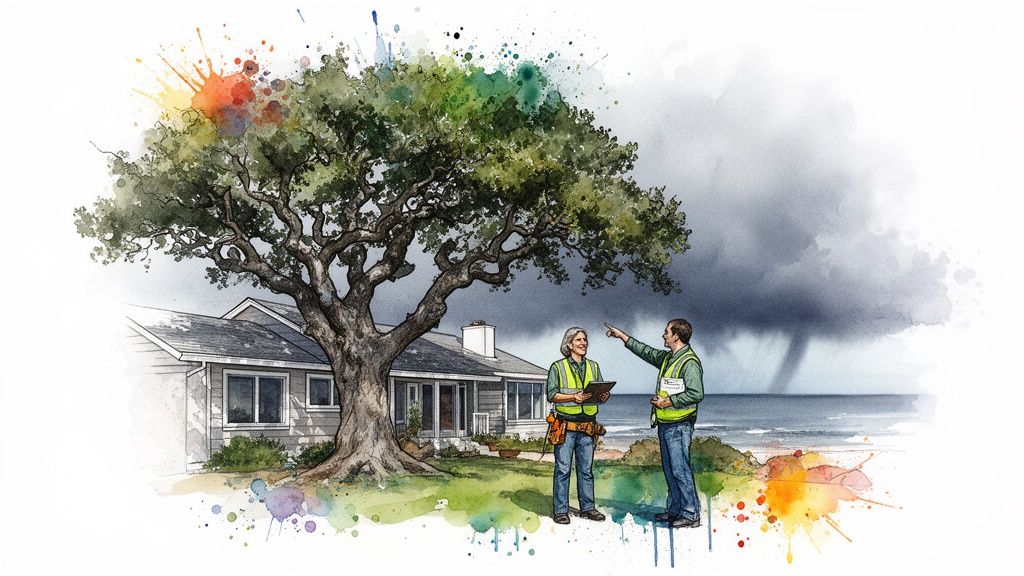
Most tree care companies emphasize their 24/7 availability and fast response times. While crucial, this industry-standard advice focuses almost entirely on cleanup after trees fall, keeping homeowners stuck in a reactive cycle of just managing messes.
The gap in this model is significant. Most providers fail to explain how many emergency situations are preventable through early risk assessments, strategic pruning, or selective removals. This leaves homeowners unprepared instead of empowered. The truth is, many tree failures are predictable, and avoiding the disaster altogether is the real goal.
The Expert Pivot to Prevention
At California Landscape & Tree Pros, we combine certified evaluations with emergency readiness. Our strategy is built around identifying high-risk trees before storms—not just removing them afterward. We believe in helping you prevent the disaster, not just cleaning it up. Think of it as a comprehensive health check-up for your trees, designed to find trouble before it finds your roof.
The need for this foresight is proven by data. During extreme weather, it's not uncommon for California counties to handle dozens of downed trees in a single day, causing demand for emergency services to surge. This highlights the high cost of waiting until failure occurs. If you wait until your tree is on the ground, you’re looking at inflated costs and long wait times. You can learn more about professional storm damage tree cleanup to see what separates the pros from the rest.
A preventative approach reduces emergency costs, limits damage to homes and vehicles, and gives homeowners clearer planning instead of last-minute panic.
To put it simply, you can either be prepared or be in a panic. The difference between these two paths is significant, not just for your wallet but for your peace of mind.
Reactive Cleanup vs Proactive Assessment
| Aspect | Reactive Emergency Cleanup | Proactive Tree Assessment |
|---|---|---|
| Timing | After a tree has already failed and caused damage. | Before storm season, identifying risks well in advance. |
| Cost | Significantly higher due to emergency rates and overtime. | A planned, budgeted expense that's far more affordable. |
| Stress Level | Extremely high; dealing with damage, insurance, and safety hazards. | Low; a calm, planned process that provides peace of mind. |
| Property Damage | Often extensive, affecting roofs, vehicles, and landscaping. | Minimal to none; problems are solved before they can cause harm. |
| Control | Little to none; you're at the mercy of the situation and contractor availability. | Complete control; you decide when and how to manage your trees. |
As you can see, investing a little time and effort upfront pays massive dividends when a storm finally rolls through.
Proactive Care for the Monterey Bay Area
For homeowners in Salinas and the Monterey Bay Area, a proactive mindset is essential. Our local weather patterns demand it. Proactive tree assessments before storm season can mean fewer emergencies, faster resolutions, and safer properties when severe weather hits. It's simply the smartest way to protect your home and family.
How to Identify High-Risk Trees Before a Storm
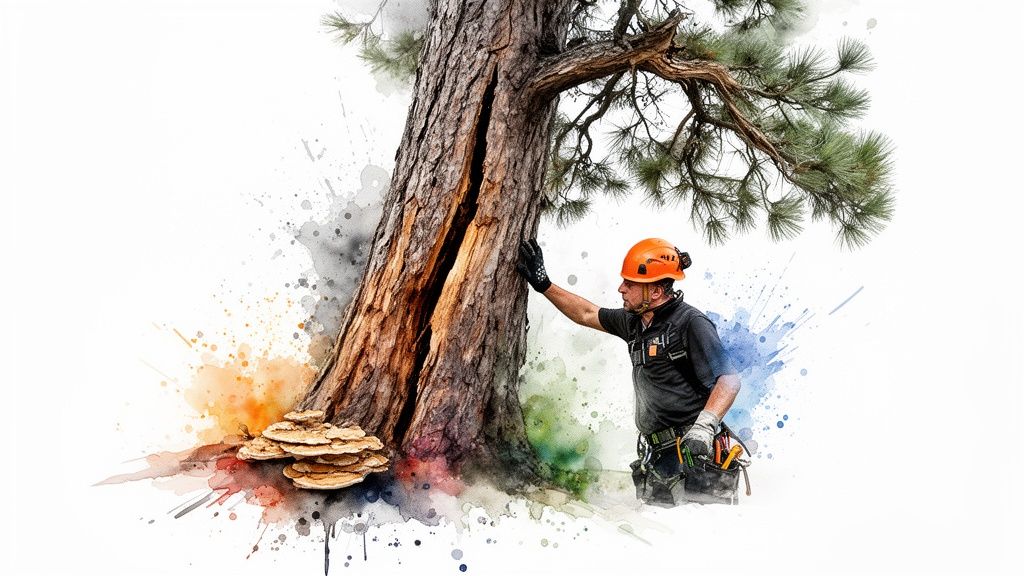
Knowing what turns a beautiful tree into a genuine hazard is the first real step in preparing for a tree emergency. Think of a professional tree assessment like a home inspection—it’s designed to uncover hidden problems before they turn into expensive, catastrophic failures.
A certified arborist doesn't just glance at a tree; they read its history. They see the subtle clues in its structure, health, and stability that most people would miss. This kind of proactive check-up lets you know the exact moment a tree crosses the line from being an asset to a liability. That way, you’re calling in an expert on your own terms, not in a panic during a storm.
Obvious Signs of Structural Weakness
Some red flags are pretty hard to miss once you know what to look for. These are the classic signs that a tree is under serious stress and might not hold up when high winds and heavy rains hit.
Start by just taking a look at the tree from a distance, then get a bit closer to inspect the trunk and main branches.
Key Visual Cues to Look For:
- A Significant Lean: Sure, some trees grow at an angle to find sunlight. But a sudden or severe lean is a different story, especially if you see mounded soil or exposed roots on the opposite side. That’s a classic symptom of potential root failure.
- Multiple Trunks: Trees with what we call “codominant stems”—where two or more main trunks grow in a tight “V” shape—are often weaker than they look. That V-shaped union can trap bark and moisture, creating a perfect environment for decay and splitting right down the middle.
- Dead or Hanging Branches: We call these "widow-makers" for a reason. Large, dead branches are one of the most immediate dangers, as they can snap and fall without any warning.
These are clear indicators of an unstable tree that needs a professional’s opinion, and fast. You can learn more about the details that go into a professional evaluation in our advanced guide to tree risk assessment.
Subtle Indicators of Poor Tree Health
Beyond the obvious structural problems, a tree's overall health is a huge factor in its stability. A sick or decaying tree is far more likely to come down in a storm. These signs can be a little sneakier, but they’re just as critical.
A healthy tree can bend and flex in a storm, while a compromised tree becomes rigid and brittle. Identifying underlying health issues is crucial for predicting how a tree will behave under extreme weather conditions.
Keep an eye out for signs of disease or decay, which often show up near the base of the trunk or on major limbs.
Signs of Disease and Decay:
- Cracks and Cankers: Deep cracks in the trunk are bad news. So are cankers, which are large wounds that just aren't healing properly. Both are open doors for decay to set in.
- Fungal Growth: If you see mushrooms or other fungi growing on the trunk, at the base, or on big roots, that's a sure sign of internal rot. The fungus you see is just the fruiting body of a much larger problem inside.
- Hollow Trunk: While some trees can survive for years with a hollow trunk, it seriously compromises their structural integrity. An arborist can measure the thickness of the remaining "shell" to determine if it's still safe.
California Specific Environmental Stressors
Living in California means our trees face some unique challenges. Prolonged droughts, intense heatwaves, and aggressive pest infestations all team up to weaken trees across the state, from Salinas to the Sierra Nevada foothills.
For instance, severe drought doesn't just make a tree thirsty; it makes it vulnerable to pests like bark beetles. That one-two punch has led to devastating tree mortality. According to the U.S. Forest Service, the number of dead trees in California skyrocketed from 27 million in 2015 to 62 million in 2016 alone, largely due to extended drought and subsequent bark beetle infestations. It's a stark reminder of why proactive hazard assessment is so critical here.
Understanding these regional pressures is key. Spotting these warning signs early empowers you to act decisively, protecting your home, family, and finances from the fallout of a preventable tree failure.
Navigating California Permits and Utility Line Safety
When a tree comes crashing down, the last thing on your mind is paperwork and regulations. But in California, navigating the rules around tree removal—especially near power lines—is just as critical as handling the tree itself. A misstep here can lead to hefty fines, legal trouble, or far worse.
In a true emergency, common sense usually prevails. If a tree poses an immediate threat to your home or safety, most local rules are relaxed to allow for immediate action. But knowing the difference between an "urgent" and a "convenient" removal is key. The best first step is always to document the danger with clear photos and call in a professional who understands the local ordinances inside and out.
Understanding Emergency Permit Exemptions
Think of it this way: if a tree is split down the middle or a massive limb is dangling over your roof after a storm, you’re almost certainly covered by an emergency exemption. Cities and counties across California, including here in the Monterey Bay Area, have provisions that let certified professionals get to work without waiting weeks for a permit.
The catch? It has to be a genuine emergency. Trying to use a storm as an excuse to take down a healthy but inconvenient tree is a recipe for trouble. This is where a certified arborist becomes your best asset. They can provide an official assessment that confirms the immediate risk, giving you the documentation needed to justify the work if the city ever asks. For a closer look at the local rules, our guide on Monterey County tree health reports and permits breaks it all down.
Interestingly, the core principles of navigating these rules—safety, compliance, and knowing who's in charge—are similar across different regulated activities, from tree work to understanding California permit rules for drone pilots.
The Critical Danger of Utility Lines
Let's be perfectly clear: a tree tangled in a power line is one of the most dangerous situations you can face. It's not just a property issue; it's a life-or-death hazard and a notorious cause of California wildfires.
Never, under any circumstances, should you or anyone who isn't a certified line-clearance professional attempt to touch, cut, or move a tree that is in contact with a utility line. It doesn't matter if the power seems to be out. That line can become re-energized in an instant, and the results can be fatal.
Your job here is simple and non-negotiable. First, call 911. Then, call your utility provider (like PG&E). They have specialized crews who will come to de-energize the line and declare the area safe. Only then can any tree work begin.
Proactive Management Is Wildfire Prevention
There's a reason California's utility companies are so aggressive about managing trees near their lines: it’s one of the most effective ways to prevent catastrophic wildfires. They aren't just trimming branches; they're actively reducing the fuel that could spark the next big blaze.
And it works. According to PG&E's 2022 Wildfire Mitigation Plan, enhanced vegetation management and other safety measures contributed to a 68% reduction in CPUC-reportable ignitions in high fire-threat areas compared to the 2018-2020 average. This statistic isn't just a number—it's proof that professional, proactive tree care is a critical part of keeping our communities safe.
Hiring a licensed and insured professional takes all of this off your shoulders. They handle the permit maze and coordinate with the utility companies, ensuring the job is done safely, legally, and correctly. It’s the only way to protect yourself from the enormous risks involved in an emergency.
The Financial Side of Tree Care: Prevention vs. Emergency
Waiting for a tree to fall isn't just a risk to your property; it's a massive gamble with your finances. The real story behind emergency tree removal costs in California goes far beyond what you pay the crew. It's about the domino effect of unexpected expenses that can drain your savings in a flash.
Think of proactive tree care as a planned, manageable investment—one that pays you back by preventing a financial catastrophe down the road.
The True Cost of a Tree Emergency
Why are emergency services so expensive? It's simple, really. Crews are called out at all hours, often in the middle of a storm, to do incredibly dangerous work. That commands a premium. Add in complications like tangled power lines, a crane needed to lift a limb off your roof, or a backyard full of debris blocking access, and the price tag can skyrocket.
But the removal bill is often just the opening act. The secondary costs are what truly catch homeowners off guard and turn a bad day into a long-term financial headache.
You might be on the hook for:
- Structural Repairs: Fixing a hole in your roof, replacing shattered windows, or rebuilding a crushed fence can easily cost thousands.
- Vehicle Damage: A car parked in the wrong spot can become a total loss in an instant.
- Landscape Restoration: A mature tree can wipe out years of landscaping work, forcing you to replace turf, plants, and even irrigation systems.
This reactive approach puts you on the defensive, forcing you to make huge financial decisions under incredible stress.
The Smart Money is on Proactive Care
Now, let's contrast that chaos with a proactive strategy. An annual tree health assessment is a predictable, budget-friendly expense. It’s like a yearly physical for your trees, catching small problems before they become big, expensive emergencies.
This puts you back in the driver's seat. You can schedule necessary work, like strategic pruning or a non-urgent removal, on your own timeline. No surprise fees. No after-hours surcharges. And best of all, no secondary damage to repair. You control the process and the cost from start to finish.
The financial argument is compelling, and you can learn more about how rising storm damage is changing homeowner preparedness in our in-depth guide.
Urban forestry studies consistently show a clear financial upside. For every $1 invested in tree maintenance, homeowners often see up to $3 in benefits, from higher property values to energy savings. (Source: Arbor Day Foundation)
Cost Analysis: Preventative Care vs. Emergency Response
The numbers tell a powerful story. While costs can vary based on the tree and location, this table gives you a clear picture of the financial difference between being prepared and being caught by surprise.
| Service | Average Cost Range | Key Benefits |
|---|---|---|
| Annual Tree Assessment | $150 – $400 | Catches risks early, prevents catastrophic failures, and provides peace of mind. |
| Strategic Pruning | $400 – $1,200 | Removes weak or dead limbs, improves tree structure, and lowers storm risk. |
| Emergency Removal | $1,500 – $5,000+ | High cost driven by hazard pay, specialized equipment, and extreme urgency. |
| Secondary Damage Repair | $2,000 – $20,000+ | The ultimate wild card—unpredictable costs for home, auto, and landscape fixes. |
When you look at it this way, the choice becomes pretty clear. You can either invest a small, predictable amount to protect your property or risk an unpredictable and potentially devastating expense later. For homeowners here in Salinas and across the Monterey Bay Area, investing in proactive tree health isn't just smart—it's the most financially sound decision you can make.
An Inside Look at a Professional Emergency Response
When a tree emergency hits, it feels like chaos. But for a professional crew, that’s when a calm, structured process kicks in. What separates a certified arborist from a random person with a chainsaw isn't just the shiny equipment; it's the disciplined approach that turns a dangerous mess into a controlled, orderly cleanup.
This isn't just about hacking up a fallen tree. It's a calculated procedure designed to stop any further damage to your property. A real professional operation is a mix of technical skill, strict safety protocols, and a commitment to leaving your property cleaner and safer than they found it.
Step 1: Initial Scene Assessment and Safety
The moment a pro team arrives, they don’t just fire up the chainsaws. The first thing they do is a thorough scene assessment. This is the most critical part of the job—they’re looking for every single hazard to keep your family, and their own crew, safe.
They’re trained to spot dangers you might miss in the heat of the moment:
- Hidden Utility Lines: Are there downed power lines, cable, or phone lines tangled in the branches? This is an immediate, life-threatening risk.
- Structural Instability: Is the fallen tree pushing against your roof, walls, or foundation? One wrong cut could make things much worse.
- Remaining Hazards: Are there any other massive, broken branches—we call them "widow-makers"—still hanging up in the canopy, just waiting to fall?
Once they’ve identified the risks, the crew sets up a secure work zone. They’ll tape off the area to make sure no one wanders into the danger zone. Only after the scene is completely secured does the physical work actually start.
Step 2: Strategic Dismantling and Rigging
You can't just attack a massive, fallen tree with brute force. It’s more like solving a complex puzzle in reverse. The crew has to figure out how to take the tree apart piece by piece, all without letting the trunk shift, roll, or crash into something else.
This is where specialized techniques and equipment come into play. Crews often use complex rigging systems—a whole network of ropes, pulleys, and friction devices—to control every single piece. This lets them lift sections of the tree off your roof or car before they cut them, preventing that awful grinding and scraping that can cause thousands in extra damage. It’s a methodical process that ensures every heavy piece is lowered safely to the ground.
Taking care of your trees ahead of time can make a huge difference. This quick infographic shows how a small investment in proactive assessment can lead to big savings.
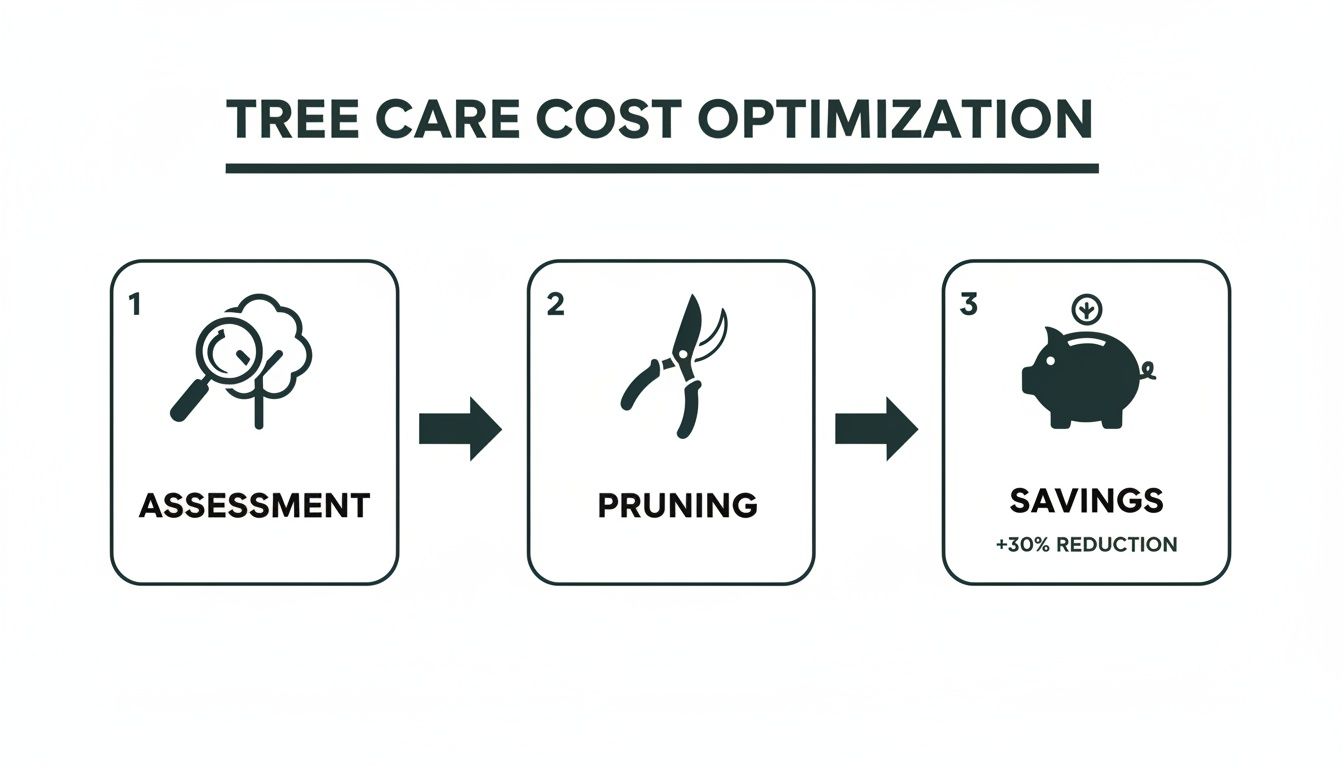
As you can see, preventative steps like a professional assessment and proper pruning are the best way to avoid those sky-high emergency costs down the road.
Step 3: Meticulous Cleanup and Final Inspection
The job isn’t done just because the tree is on the ground. A hallmark of a truly professional service is how they handle the cleanup. The crew will bring in wood chippers for the branches and then use rakes, blowers, and even magnets to clear your property of every last twig, leaf, and nail. To get a better sense of what a comprehensive response entails, check out our guide on 24-hour tree service.
Before they pack up, the team leader will do a final walkthrough with you. This is your chance to look over the work, ask any lingering questions, and make sure you're satisfied that your property is safe and restored. This is what defines an excellent emergency response—turning a moment of panic into a problem solved with skill and precision.
Building Your Proactive Tree Management Plan
Alright, let's move from theory to action. For anyone owning property in Salinas, Monterey, or our neighboring communities, the best defense against storm damage is a good offense. Building a proactive tree management plan is about taking control before the storm hits, shifting from a reactive scramble to a prepared, confident mindset.
A solid plan takes all those vague "what if" worries and turns them into a simple, concrete to-do list. Work through these steps before storm season arrives, and you'll dramatically lower your risk and be ready for whatever Mother Nature throws your way.
Pre-Storm Season Checklist
This isn't about creating more work; it's about handling things on your terms, not in a panic during a downpour.
- Schedule a Professional Assessment: The first step is to get an expert eye on your property. Hire a certified arborist to walk the grounds with you. They can spot trouble you might miss—identifying high-risk trees, diagnosing hidden diseases, and recommending specific actions like pruning or removal. This gives you a clear, prioritized roadmap for maintenance.
- Review Your Insurance Coverage: Don't wait until a tree is leaning on your roof to find out what your policy covers. Pull out your homeowner's insurance documents now. Look for the specific language on tree-related damage, how much they’ll pay for removal costs, and if debris cleanup is included.
- Establish a Professional Contact: When a tree comes down, the last thing you want to do is frantically search for a reputable company. Do your homework now. Find a trusted, insured tree service like California Landscape & Tree Pros and save their number in your phone.
Leveraging Technology and Funding for Better Planning
Modern tools are making it much easier to put these proactive plans into motion. For example, professionals often use specialized landscape takeoff software to map out projects and estimate costs with incredible accuracy. For homeowners, this means you get a much clearer, more transparent budget for any recommended pruning or removal work.
California is also stepping up its game at the state level. In the 2023 fiscal year alone, the Inflation Reduction Act set aside a massive $43 million for urban forestry projects right here in our state. This money helps fund proactive tree planting and maintenance, making our communities more resilient to climate change and the effects of widespread tree mortality. You can discover more insights about California's urban forestry initiatives to see how this work benefits everyone.
A comprehensive, long-term strategy doesn't just protect your own backyard; it helps build a stronger, safer community that can better withstand extreme weather events.
By pairing a professional assessment with a little bit of smart planning, you can make sure your property remains a safe haven. If you'd like a complete evaluation and a hand in building a personalized tree management plan, get in touch with a certified and experienced team.
Frequently Asked Questions (FAQs)
When you own property with mature trees in California, you're bound to have questions. Getting ahead of potential problems means having the right information before an emergency. Here are some of the most common questions we get from homeowners around Salinas and Monterey Bay, answered by our team of experts.
1. How often should my trees be inspected?
For healthy, mature trees, we recommend having a certified arborist perform a professional inspection every one to three years. This is the best way to spot subtle issues before they become major threats. However, you should always schedule an immediate assessment after a major storm, a prolonged drought, or if you notice any obvious warning signs like new cracks, a sudden lean, or large dead branches.
2. Will homeowners insurance cover emergency tree removal?
This is a big one, and the answer isn't always straightforward. In most cases, a standard homeowner's policy will cover the cost of removal if the tree falls on a covered structure—think your house, garage, or even a fence. Where it gets tricky is when a tree falls in your yard but doesn't hit anything. Some policies might offer limited coverage for debris removal (often capped at a specific dollar amount), but many don't cover it at all. The absolute best thing you can do is review your specific policy now, before you need it.
3. What’s the difference between a certified arborist and a tree cutter?
The difference is huge. A certified arborist is a trained professional who understands the science of tree health. They are like a tree doctor—they can diagnose diseases, assess structural risks, and create a plan to preserve a tree. A tree cutter specializes in the physical work of felling and removing trees. While that’s a crucial skill, you should always start with an arborist for risk assessments or any tree you want to save.
4. Can I remove a tree near a power line myself?
Never. This is one of the most dangerous situations you can encounter on your property, and trying to handle it yourself can be fatal. Trees tangled in power lines demand specialized professionals who are trained and authorized to work around high-voltage wires. Your first call should always be to your utility company. They will coordinate the work with a qualified line-clearance tree care company.
5. What are the most common high-risk tree species in the Monterey Bay Area?
While any tree can fail under the wrong conditions, we see some usual suspects here on the Central Coast, especially when winter storms bring high winds and saturated soil. These include Monterey Pine (prone to pests), Eucalyptus (known for dropping large limbs), and some older Oak varieties that can be susceptible to root decay or structural failure with age. A local arborist can give you a clear picture of the specific risks on your property.
Ready to stop reacting and start planning? A proactive tree safety assessment is the best way to protect your property and gain peace of mind. The certified experts at California Landscape & Tree Pros serve Salinas and the Monterey Bay Area, providing the expert evaluations you need before the next storm hits. Contact us today to schedule your consultation.