
Across California, commercial properties are rewriting their rulebooks for landscape maintenance, and for good reason. Requiring electric landscaping is no longer a "nice-to-have" for 2026—it's a critical business decision that reduces noise complaints, ensures compliance, and aligns properties with modern sustainability standards. This shift is rapidly becoming non-negotiable for HOAs, campuses, and office parks aiming to stay competitive.
The Mandate Is Clear: Why Electric Landscaping Is The New Standard
The move toward electric landscaping is a direct response to a perfect storm of new state regulations, tenant demands for quieter spaces, and corporate ESG (Environmental, Social, and Governance) commitments. Current market data shows a significant shift: California’s new emissions law banning sales of new gas-powered mowers, blowers, and trimmers starting in 2024 is accelerating the adoption of battery-powered equipment. According to the California Air Resources Board, operating a commercial gas-powered leaf blower for one hour emits as much pollution as driving a 2017 Toyota Camry about 1,100 miles.
For commercial properties—especially HOAs, campuses, and office parks—this means vendor requirements must be updated to meet new noise, emissions, and sustainability standards.
Here, we'll break down why property managers are making electric services a firm requirement—and how savvy contractors are using this to gain a major competitive advantage.
Regulatory Pressure Is Forcing The Switch
This regulation is changing buying and hiring behavior. Property managers now prioritize contractors who use electric equipment to reduce noise complaints, meet sustainability goals, and ensure compliance with state and municipal rules. On the flip side, contractors who haven’t modernized are being filtered out before bids even reach the review stage. You can see similar patterns in the key trends shaping the electric vehicle landscape.
Key Drivers For Electric Landscaping Mandates In 2026
| Driving Factor | Impact On Commercial Properties | Consequence Of Non-Compliance |
|---|---|---|
| State Regulations | New vendor contracts must specify battery-powered equipment to avoid legal and financial penalties. | Risk of fines, operational disruptions, and being seen as a non-compliant property. |
| ESG & Corporate Image | Adopting electric landscaping provides tangible proof of sustainability commitments, attracting eco-conscious tenants and investors. | Negative brand perception, difficulty attracting top-tier tenants, and potential loss of investment. |
| Tenant Demands | Quiet, zero-emission maintenance improves the living and working environment, leading to higher tenant satisfaction and retention. | Noise complaints, tenant turnover, and a reputation for being an outdated or disruptive property. |
This table shows a clear picture: the incentives to switch are strong, and the risks of sticking with gas-powered equipment are growing every day.
The New Standard For Commercial Properties
This change has drawn a clear line in the sand. The expectation for clean, quiet, and compliant service is now the baseline, and properties that don't update their vendor contracts risk everything from unhappy tenants to legal trouble. For contractors, the message is just as direct: adapt or get left behind. It's all part of a larger movement where eco-friendly design is now a necessity, not a trend.
Decoding California's Regulatory Push For Electric
The move to electric landscaping is a direct result of new environmental laws in California, creating a mandatory filter for every commercial landscaping contract. Any contractor still running a fleet of gas-powered equipment is now viewed as a potential liability, and that's fundamentally changing how property managers choose who to work with.
This legal framework is all about cutting down on pollution and noise to create healthier communities. For commercial clients, ensuring their contractors are compliant is now a critical part of managing risk. The potential for fines from hiring a non-compliant contractor has made 'eco-compliance' a non-negotiable line item on every RFP.
The New Rules of Engagement for Property Managers
You can see the impact of this regulatory push right now. Property managers are actively looking for contractors who use electric equipment not just for the green credentials, but as a sound business decision. They're looking to reduce tenant noise complaints, hit corporate sustainability targets, and—most importantly—stay on the right side of state and local laws. As a result, landscaping contractors who haven't updated their gear are being systematically weeded out of the bidding process. This regulatory shift feels a lot like how new water rules are changing landscape design, forcing property owners to adapt.
The procurement process has a new gatekeeper: compliance. A bid with the lowest price is now completely irrelevant if the contractor’s equipment doesn't meet the state’s environmental mandates.
How Eco-Compliance Became a Mandatory Checkbox
This legal push has created a two-tiered market: forward-thinking contractors who've already invested in electric fleets, and those who now represent a serious compliance risk. This dynamic has turned eco-compliance into a simple, powerful checkbox in the vendor selection process, allowing property managers to instantly disqualify providers who pose a risk. For commercial clients in Monterey County and Salinas, this isn't just about following the law—it's about protecting their investment and reputation.
The real-world consequences are stark:
- Automatic Disqualification: RFPs now routinely include clauses that demand the use of electric equipment.
- Increased Liability: Hiring a contractor using banned gas-powered equipment could transfer legal and financial risk directly onto the property owner.
- Damaged Reputation: Being associated with non-compliant vendors can tarnish a property's brand.
Ultimately, these regulations have mandated a change. As 2026 gets closer, the question is no longer if property managers should require electric landscaping, but how quickly they can lock in a compliant partner.
The Business Risks Of Sticking With Gas-Powered Services
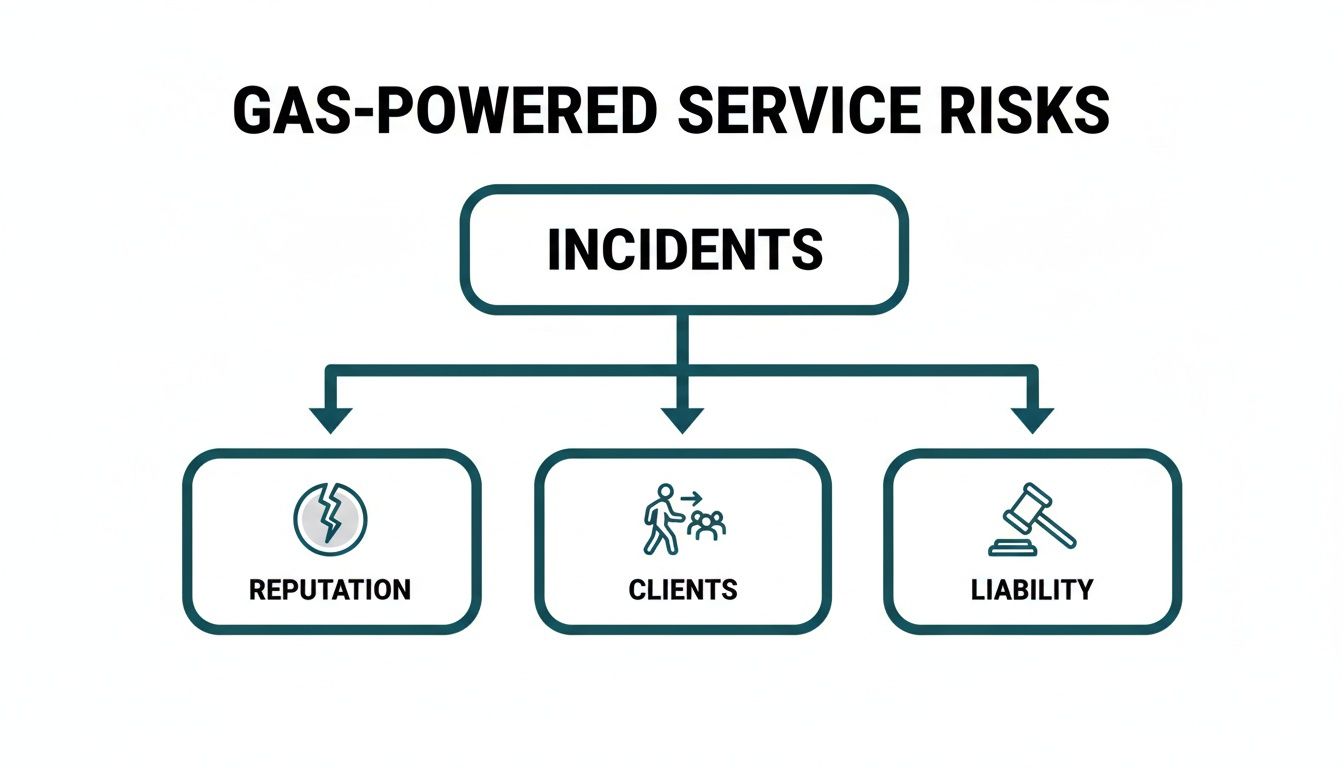
Failing to adopt electric practices creates immediate business risks. For property managers and landscape contractors, sticking with gas-powered equipment in 2026 will negatively impact the bottom line and public image. The market is already rewarding compliance, and standing still has become a liability.
The true cost of using gas-powered services goes way beyond fuel. It shows up as tenant churn, strained community relations, and a brand that looks behind the times.
The Growing Invisibility Of Non-Compliant Contractors
Procurement platforms and vendor directories that property managers use are quickly adding search filters like “eco-compliant” or “electric fleet.” Any contractor still running on gas becomes invisible to a huge pool of potential clients. This digital filtering means your bid isn't just being rejected—it's never even being seen.
If you haven't adopted electric practices, you're facing real risks:
- Losing commercial bids to “eco-compliant” competitors.
- Being viewed as outdated or non-compliant.
- Reduced visibility in procurement directories.
- Increased liability for violating noise or emissions standards.
Reputational Damage And Mounting Liabilities
Beyond losing bids, there's the growing risk to your reputation. A property known for loud, polluting maintenance becomes less attractive, potentially lowering occupancy rates and property value. For contractors, the liability is even more direct. Continuing to run gas equipment in cities with strict noise and emissions rules is asking for fines and legal trouble. Building a landscape that sidesteps these problems is the smartest move. You can learn more in our guide on 4 ways to build a climate-smart yard in 2026.
The decision to delay electrification is a bet against a future that has already arrived. The market is rewarding compliance and penalizing inaction, making the switch to electric a matter of business survival.
To see the financial upside, consider the long-term expenses covered in this electric vehicle vs. gas cost breakdown. The upfront investment in electric gear is often quickly balanced by massive savings on fuel, maintenance, and avoiding hidden operational and reputational costs.
How A Future-Ready Partner Turns Compliance Into An Advantage
A strategic partner helps you get out in front of new rules, turning a potential compliance headache into a genuine competitive edge for your commercial property as we head toward 2026. At California Landscape & Tree Pros (CLTP), we made a deliberate choice to invest in a fully electric fleet, positioning ourselves as the low-risk, high-value partner that commercial clients across Monterey County need.
CLTP has already invested in the shift, using electric equipment fleets that meet California’s environmental guidelines. Additionally, CLTP offers tech-driven maintenance plans that help commercial clients document sustainability compliance and reduce long-term operational costs.
Moving Beyond Simple Maintenance
Landscaping is no longer just an expense; it's a strategic asset. A forward-thinking partner understands that commercial property management is about managing risk, elevating your brand, and hitting business goals. When you choose a compliant partner, you effectively outsource the entire regulatory burden, gaining peace of mind and a powerful sustainability story to share.
The Advantage Of Proactive Partnership
Choosing a partner who has already made the electric transition pays off immediately. Our foresight means our clients were compliant long before the mandates became a pressing issue. We built our services to reduce your administrative workload while supporting your property's financial and environmental goals.
The benefits are straightforward:
- Reduced Administrative Load: No time wasted vetting vendors for compliance.
- Enhanced Tenant Relations: Quiet, fume-free maintenance means fewer complaints.
- Strengthened Brand Image: Your property becomes a visible example of modern, sustainable practices.
Our integrated approach to commercial landscaping services ensures your property not only looks fantastic but also operates in perfect sync with the new standards.
Gas Powered Vs CLTP's Electric Fleet A Comparison For Commercial Properties
| Feature | Traditional Gas-Powered Services | CLTP's Electric Landscaping Services |
|---|---|---|
| Regulatory Compliance | Uncertain; may use non-compliant equipment, creating liability for the property. | 100% compliant with California regulations, eliminating risk for clients. |
| Noise Levels | Loud and disruptive, often leading to tenant complaints and violating local noise ordinances. | Extremely quiet, allowing for flexible scheduling and a peaceful environment. |
| Emissions & Fumes | Produces harmful emissions and strong odors, negatively impacting air quality and health. | Zero on-site emissions, creating a healthier, more pleasant space for everyone. |
| Operational Transparency | Often provides basic invoices with little to no performance or compliance data. | Provides tech-driven reports and clear documentation for your ESG and compliance needs. |
| Brand Impact | Associates your property with outdated, polluting technology. | Positions your property as a modern, sustainable, and responsible community leader. |
A partnership with a future-ready firm isn't just about avoiding penalties. It's about leveraging compliance to build a more resilient, reputable, and profitable property.
The Real-World Payoff of Going Electric
By aligning with new regulations, contractors and the properties they serve gain a clear and measurable return on investment. This isn't about dodging penalties; it's about gaining a serious competitive edge.
Higher Bid Acceptance Rates and Rock-Solid Contracts
Requiring quiet, zero-emission equipment in your RFPs automatically filters out non-compliant vendors, leaving a curated pool of qualified, low-risk partners. This leads directly to higher bid acceptance rates and more predictable maintenance contracts. You get a reliable partner who understands the new rules and can keep your property compliant without drama. That stability is a huge operational win.
Choosing an electric-compliant contractor transforms your maintenance plan into a powerful statement about your property's commitment to modern standards.
Stronger Positioning with High-Value Clients
In today's market, high-value commercial clients are actively seeking properties that match their own Environmental, Social, and Governance (ESG) goals. Mandating electric services speaks directly to this premium audience, making your property a magnet for corporations with sustainability targets. This is how grounds maintenance becomes a core part of your marketing and tenant retention strategy.
Lower Operational Risk as Regulations Tighten
Perhaps the most important benefit is risk mitigation. The rules on noise and emissions will only get stricter. By requiring electric landscaping now, you build a defensive wall around your property, protecting it from future fines, legal headaches, and the operational nightmare of scrambling for a new vendor. This forward-thinking move drastically lowers your operational risk as regulations tighten into 2026 and ensures your investment is secure. For a deeper look, our guide on how sustainable landscaping is transforming California yards in 2025 provides more detail.
Gain Your Competitive Edge in Monterey County and Salinas
For commercial property managers and HOAs in Monterey County and Salinas, adapting to the electric equipment mandate isn’t optional—it’s now a competitive advantage. With 2026 just around the corner, the new baseline for grounds maintenance is quiet, clean, and fully compliant.
By mandating electric landscaping, you're making a strong statement: your property values a peaceful, healthy environment. Suddenly, your maintenance plan becomes one of your best marketing assets.
Partnering for Local Success
CLTP can help businesses stay compliant and win more commercial work through modern, quiet, eco-forward service methods. We live and work here, so we understand the unique expectations of properties in Monterey and Salinas. Our team is already equipped with an all-electric fleet to help you guarantee compliance and elevate your property's reputation.
In this market, compliance isn't just about avoiding fines—it's about building a premium brand. Choosing an electric-first partner demonstrates a commitment to quality that tenants and investors notice.
Your Path to a Future-Proof Property
The way forward to a quieter, cleaner, and more compliant property is straightforward. When you proactively team up with a partner who has already mastered electric landscaping, you’re not just meeting the 2026 standard—you’re setting a new one. This move secures your property’s value, improves the tenant experience, and removes the risks that come with non-compliant vendors. Don't wait for regulations to dictate your next move.
Frequently Asked Questions About Electric Landscaping
1. Why are commercial clients requiring electric landscaping by 2026?
Commercial clients are requiring electric landscaping to comply with California's new emissions laws, reduce noise complaints from tenants, meet corporate ESG (Environmental, Social, and Governance) goals, and avoid the legal and financial risks associated with non-compliant, gas-powered equipment.
2. Is electric landscaping more expensive than traditional gas-powered services?
While the initial equipment cost for contractors is higher, our operational savings on fuel and maintenance allow us to offer competitive pricing. For clients, the true value comes from avoiding fines, enhancing property value, and attracting premium tenants, making it a smarter long-term financial decision.
3. Can electric equipment handle the demands of a large commercial property?
Absolutely. Professional-grade battery-powered equipment is designed for large-scale commercial use, delivering power and runtime that rivals gas models. Our crews use mobile charging systems and carry an extensive inventory of batteries to service large campuses, HOAs, and office parks without interruption.
4. What are the main benefits for my tenants?
The primary benefits are a significantly quieter and healthier environment. The elimination of loud engine noise and harmful exhaust fumes leads to fewer complaints, higher tenant satisfaction, and better retention rates, which is a major selling point for any commercial property.
5. What happens if my current landscaper isn't compliant by 2026?
Continuing with a non-compliant landscaper exposes your property to significant risks, including fines for violating noise and emissions ordinances, increased legal liability, and reputational damage. Proactively partnering with a compliant provider like CLTP is the safest way to protect your investment and ensure uninterrupted service.
Making the switch to electric isn't just about following rules; it's a strategic move to future-proof your property. California Landscape & Tree Pros has the fleet, experience, and local know-how to make your property a leader in compliance and sustainability.
Ready to make the switch? Contact us today to discuss a compliant, tech-driven plan for your commercial property.
Sources:
- California Air Resources Board. (n.d.). Small Off-Road Engines (SORE). Retrieved from https://ww2.arb.ca.gov/our-work/programs/small-off-road-engines-sore