
You’ve either just had a stump ground down and you’re looking at a shallow crater full of chips, or you’re planning the work and trying to avoid a bad surprise after the crew leaves. The short answer to can i plant grass or a new tree where a stump was ground down? is yes, but only if you prepare the site for the specific use you want.
A ground stump area isn’t finished soil. It’s a disturbed zone made up of wood chips, sawdust, loosened soil, and the remaining root system below. If you understand that before the grinding starts, you can choose the right depth, the right cleanup plan, and the right next step.
Quick Answer
Yes, you can plant grass or use the area again after stump grinding, but you usually shouldn’t plant directly into the chip-filled spot as-is. Grinding typically goes 6 to 12 inches below grade, leaves roots underground, and creates a settling, wood-heavy zone that needs cleanup, fresh soil, and different prep depending on whether you want turf, a new tree, or hardscape.
Introduction
Most property owners ask this at the exact moment the stump is gone and the site looks unfinished. You expected a usable patch of ground. What you got is a depression with chips, sawdust, and loose soil that still needs work.
That confusion usually starts with the difference between grinding the stump and removing the entire root mass. If you want a simple explanation of the difference between stump grinding and stump removal, that comparison helps clarify why the area doesn’t come out of the process ready for planting by default.
In practical terms, think of the site in layers. The visible stump is cut down below grade, the grinding debris is left in the opening unless it’s removed, and the major roots remain below the surface and break down over time. Whether you’re in Salinas or elsewhere in Monterey County, the right plan depends on what you want there next.
What Your Yard Looks Like After Stump Grinding
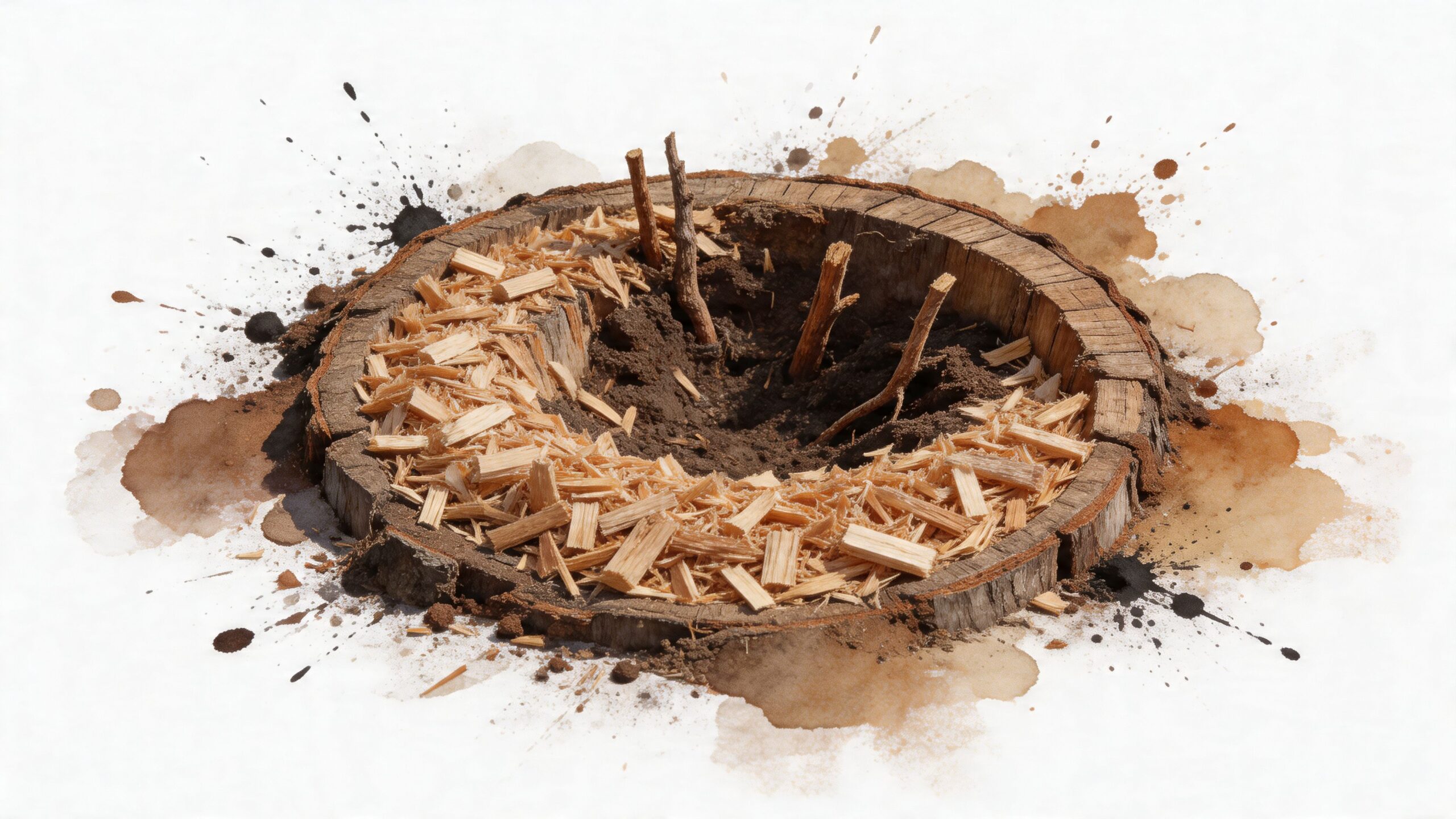
Right after grinding, the area usually looks unfinished because it is unfinished. You will see a shallow depression or a slightly raised patch made up of grindings, loose soil, and whatever cleanup level was agreed to before the work started.
That final appearance depends less on the grinder itself and more on the plan. A lawn area calls for one finish. A future tree planting calls for another. A patio or walkway usually needs deeper grinding, cleaner export of chips, and tighter compaction standards than either planting option. Property owners who want clear expectations up front should ask for the cleanup scope in writing, especially if they are comparing reliable stump grinding and removal in Salinas.
What you’ll usually see on the surface
Expect a patch that looks more like coarse mulch mixed with dirt than usable topsoil.
If chips are left in place, the site may sit high for a while. If material is removed, it often finishes as a bowl that still needs backfill. Both outcomes are normal. What matters is whether that surface matches the next use of the area.
On a turf job, I want the visible grindings kept out of the top growing layer or removed and replaced with soil. On a replanting job, I care less about how neat it looks that afternoon and more about whether there is enough real soil where new roots will need to grow. On a hardscape job, appearance matters least. Subgrade preparation matters most.
What stays underground
Grinding removes the stump wood near the surface. The main root system stays in the ground and breaks down over time.
That leftover root mass affects what happens later. The area can settle. The soil profile stays irregular. Some species may still send up suckers from surviving roots. None of that means the grinding was done wrong. It means stump grinding is a wood-reduction process, not full excavation.
Why the site still needs follow-up work
A fresh grinding zone is a transition area, not a finished planting bed. The material in that hole is usually a mix of wood fiber and disturbed soil, so it behaves differently from the surrounding yard.
Three practical problems show up over and over:
- The surface is inconsistent. Parts of the area drain, dry, and compact differently than nearby soil.
- The grade can change. As buried roots and leftover wood decompose, the spot may sink months after the job.
- The planting layer is weak. Grass, shrubs, and replacement trees establish poorly if their roots sit in heavy grindings instead of mineral soil.
That is why two stump sites can look similar on day one and perform very differently a season later. The deciding factor is usually the prep work chosen before grinding started.
The Hidden Risks of Planting in a Grinding Zone
A stump grinding area fails for different reasons depending on what you plan to do with it next. That is why I always want the end use decided before the grinder shows up. The right depth for turf is not the same depth I want if the owner plans to set pavers, and neither setup is a good planting pocket for a replacement tree in the exact same spot.
If you want grass
Grass usually fails from poor soil conditions near the surface, not from old roots deeper down. Seed or sod can start well enough, then turn patchy because the upper layer still holds too much wood fiber. Chips and sawdust dry differently, tie up nutrients as they break down, and leave the lawn uneven in color and density.
That problem starts before the grinding. If the plan is turf, the crew should grind with restoration in mind, then remove or reduce the loose chip layer so the new grass roots into soil, not shredded stump material.
If you want a new tree
Planting another tree directly over the old stump zone causes the most long-term trouble. The new root ball ends up in disturbed ground with buried wood, inconsistent moisture, and limited stable soil for anchoring. The site may look open and usable from the surface, but below grade it is still the old tree’s footprint.
Purdue University Extension advises against replanting a tree in the same spot after stump removal because the remaining root system and wood debris interfere with establishment. In practice, I recommend shifting the new tree out of that grinding zone whenever the site allows. Even a modest offset gives the new tree better mineral soil, better drainage consistency, and better long-term stability.
Planting a tree in the exact same spot is usually the choice that looks simplest and causes the most trouble later.
If the larger goal is a full yard update rather than one-for-one replacement, it helps to review a practical approach to drought-tolerant landscaping in Monterey County before you commit that space to another tree.
If you want hardscape
Hardscape has the lowest tolerance for leftover organic material. A lawn can survive some settling with topdressing and repair. Pavers, concrete edges, and walkways show every low spot.
I see this on older stump sites where grinding debris was left in place and covered over. As the wood breaks down, the base loses support and the finished surface starts to dip or move. If the area is headed for hardscape, the primary risk is not planting failure. It is subgrade failure.
The issue that keeps showing up later
Settling is the problem property owners underestimate most often. It may not show up right away, and that delay leads people to assume the site is stable when it is still changing below the surface.
Use this comparison to judge the risk before you reuse the space:
| Intended use | Main risk | What usually works |
|---|---|---|
| Grass or groundcover | Weak establishment in chip-heavy topsoil | Clear out loose grindings near the surface, add clean soil, and regrade |
| New tree | Poor rooting in disturbed, decaying soil | Move the planting location outside the old stump zone when possible |
| Hardscape | Settlement from buried organic material | Remove unsuitable material and rebuild the base with compactable fill |
A Decision Guide for Using the Reclaimed Space
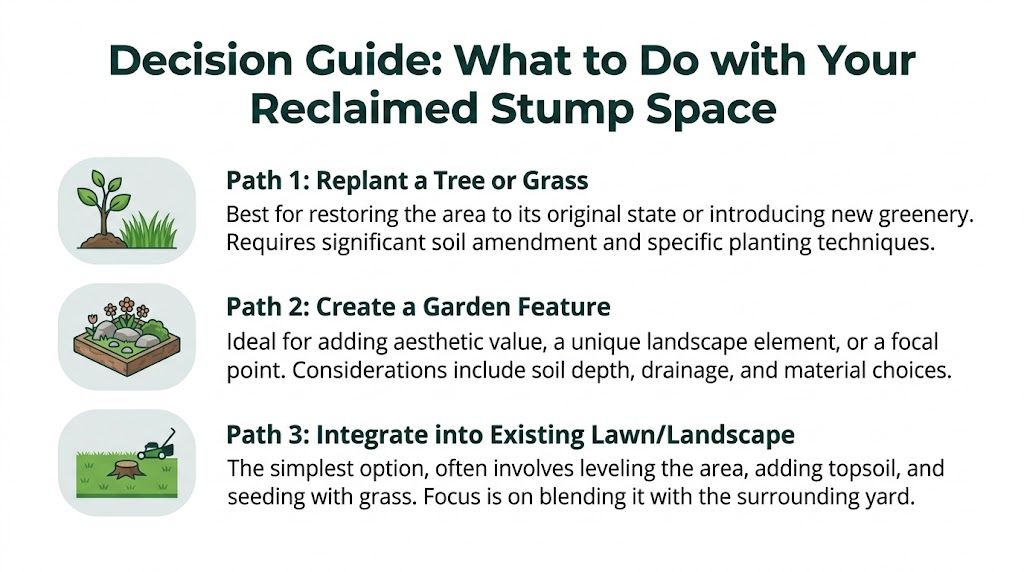
A lot of stump problems start before the grinder ever shows up. A property owner wants lawn back, a new tree in the same spot, or pavers over the area, but the stump gets ground the same way either time. That is where trouble starts. The intended use should set the grinding depth, whether chips stay or go, and what kind of soil or base gets brought back in.
If the goal is part of a bigger yard update, this guide to drought-tolerant planting choices for Monterey County can help you decide whether that old stump area should return to turf, shift to a planted bed, or become a lower-water feature.
Path for grass or groundcover
Grass is the easiest use for a reclaimed stump area, but only if the upper layer is cleaned up first. Seed or sod does poorly in loose grindings, and the surface often settles if too much woody material stays in place.
For turf, I want the stump ground far enough below finish grade to allow removal of loose chips, a layer of clean soil, and room to regrade properly. That usually means planning for restoration at the same time as the grinding, not treating it like a separate problem later.
If you are improving the soil before seeding or sodding, this primer on how to improve soil is a useful reference.
Path for a new tree or large shrub
Replanting in the exact center of the old stump site is usually the weakest option. The old root crown area is disturbed, uneven, and often full of residual wood that breaks down over time. New roots do better in stable soil.
When space allows, shift the new tree outside the old grinding zone. That gives the new root system cleaner soil and reduces the chance that the planting hole turns into a pocket of chips, water, or settling fill. In Monterey County soils, that difference shows up fast. A tree planted just a few feet over often establishes better than one planted right back into the old stump footprint.
Large shrubs give you more flexibility. They can work near the old site if the chip-heavy material is removed and replaced with real planting soil.
Path for hardscape or a feature area
Pavers, walkways, edging, and similar improvements need the most prep. The standard for this use is higher because buried wood does not make a stable base. If the site is headed for hardscape, the plan should include removing unsuitable material and rebuilding the area with compactable fill.
A decorative gravel section, dry creek detail, or planted focal point can also be a smarter use of the space than forcing a tree back into it. I recommend this approach fairly often on tight lots where the original tree outgrew the location and the owner wants a cleaner finish without betting on another tree in compromised soil.
Match the stump work to the end use
Ask these questions before grinding starts:
- Will this area be turf, a new tree, or hardscape? Each one needs a different finish.
- How deep should the stump be ground for that use? Shallow grinding may be fine for mulch cover, but it is not enough for many restoration plans.
- Are the chips staying on site or getting removed? That choice affects grading, soil volume, and future settling.
- Does the crew need to leave rough grade or restoration-ready grade? Those are different scopes of work.
- Are irrigation lines, utilities, roots from nearby trees, or existing concrete nearby? Those conditions limit how aggressively the stump can be ground.
For any excavation below the surface, call 811 before digging.
Preparing the Site for a Healthy New Start
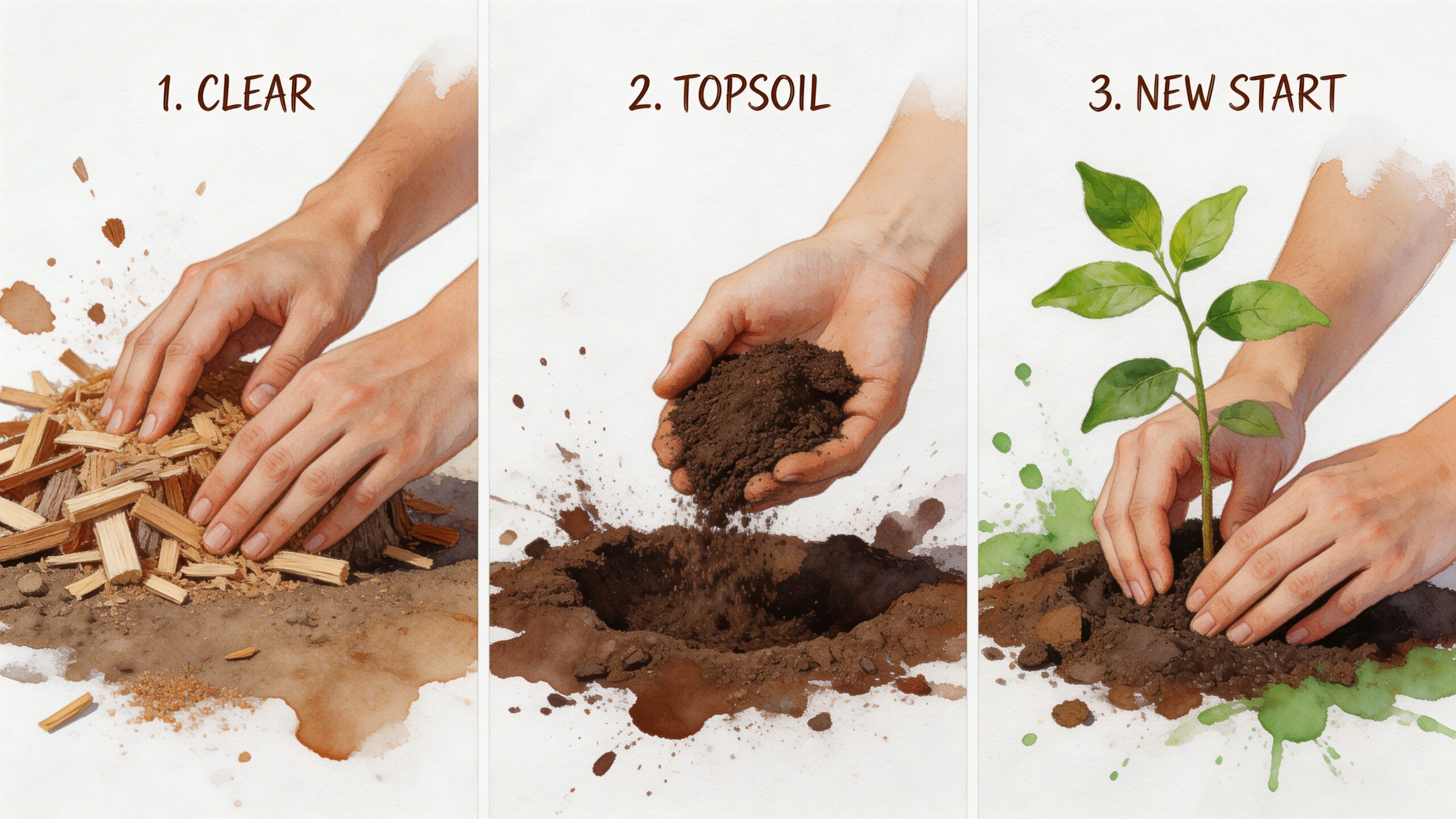
A lot of post-grinding problems start with one bad assumption. If the stump is gone, the site must be ready to plant. It usually is not.
The right prep depends on what you are putting back into that spot. A lawn can tolerate a broader repair area with clean soil added over it. A new tree needs a real rooting zone, not a pocket of chips and partially decaying wood. If I know the intended use before grinding starts, I can set the depth, cleanup, and finish grade to match it. If that decision gets made after the fact, the restoration usually costs more and takes longer.
Start by separating grindings from soil. Rake and shovel out loose chips, sawdust, and stringy wood from the upper layer until the area stops looking and feeling like mulch. What stays in place below grade will continue to break down over time, so the goal is to keep the planting layer above it clean and stable.
Then rebuild the site with actual planting soil. Use quality topsoil, and blend in compost if the native soil is tight or low in organic matter. For property owners who want a broader primer on how to improve soil, that guide is a useful companion.
For grass establishment
Grass does best when the old stump area is treated like a small grading repair, not a planting hole. Fill low spots with clean soil, lightly firm it, and leave the surface slightly proud because the area often settles as buried roots decay. Then seed or sod over an even finish.
The patch usually stands out for one of two reasons. The grade drops, or the turf roots into chip-heavy material and turns thin, pale, or uneven. Both problems are easier to prevent than to fix later.
For longer-term results after the repair, this guide on lawn maintenance for Monterey County homes is worth reviewing once the area is replanted.
For tree planting
Planting a new tree into the exact grinding zone is where I see the most avoidable failures. The hole looks open, but the surrounding area often still contains woody debris, voids, and old structural roots. New roots do not establish evenly in that kind of backfill.
If a replacement tree is going near the old stump, dig wider and inspect the soil as you go. Keep removing chip-rich material until you reach firmer ground with a more consistent soil profile, then rebuild that area with clean soil suited to the species and drainage conditions on the site. In Monterey County, that matters even more in compacted coastal soils and irrigated inland yards where drainage swings from too fast to too slow within a few feet.
One more practical point. If the old tree was removed because of decline, disease, or chronic stress, pause before planting the same species back into the same spot. Soil conditions, irrigation coverage, and root competition may have played a bigger role than the stump itself.
Yellow turf, weak new growth, and a sinking repair usually point back to the same mistake. Too much wood left in the rooting zone.
What not to use
Do not use pure grindings as backfill. Do not bury thick sawdust under sod. Do not plant directly into a loose mix that has not been cleaned out and rebuilt with soil.
Good results come from basic site prep done in the right order. Remove the woody waste near the surface, restore grade with suitable soil, and give the area time to settle where needed. That is what gives grass a fair start and keeps a new tree from struggling in a compromised root zone.
Troubleshooting Common Post-Grinding Problems
Most post-grinding trouble shows up after the repair is finished and the area starts getting used. The lawn gets watered, the weather heats up, or winter rain hits, and the weak point finally shows itself.
The new grass is yellow or patchy
Yellowing turf usually means the root zone still has too much woody material in it. Grass needs uniform soil near the surface. If part of that layer is still chips and sawdust, color and growth will be uneven.
Start by checking what lies under the top layer. If you can rake back an inch or two and still pull up stringy wood, coarse chips, or sawdust clumps, remove more of it. Then bring the area back up with clean soil and regrade it. If seed or sod was installed over a shallow cover of soil on top of grindings, reworking the area is often the faster fix.
The ground is sinking
Settling after stump grinding is common. The stump is gone, but old roots are still decomposing below grade, and the fill placed over that zone can drop over time.
For turf, add soil in lifts and restore grade before the low spot starts holding water or catching a mower wheel. For a future patio, walkway, or other permanent surface, a settling stump zone needs excavation and proper base preparation first. Covering it and hoping it stays put is how you end up tearing it back out later.
Shoots are coming back from the old roots
Root sprouts show up on some species even after the stump has been ground out. That is regrowth from stored energy in the remaining roots, not proof that the grinder missed the stump.
Cut the shoots early and keep after them. If they keep returning, use a targeted control method that fits the species and the surrounding planting. This matters even more on properties being converted to lower-water use, where irrigation changes can affect what comes back and what fails. Homeowners planning broader yard changes should also review how new water rules are changing what California property owners must plan for.
The area stays too wet or dries out too fast
This one gets missed a lot. The repaired spot can hold water if the backfill is too fine and compacted, or dry out faster than the rest of the yard if it was filled with loose, coarse material.
Check irrigation coverage and soil consistency together. If the spot stays soggy, loosen and rebuild the top layer with better-draining soil. If it dries out ahead of everything around it, the fix may be more soil correction than more water.
The new tree is struggling
A replacement tree that sits still, drops leaves, or puts on weak growth in the old stump zone is usually dealing with poor rooting conditions, not a lack of fertilizer. Dig carefully at the edge of the planting area and inspect the soil. If you still find chip-heavy fill or hollow pockets, the tree needs a better planting zone, not another round of guesswork.
The pattern is usually simple. Poor color, settling, sprouts, and uneven moisture all trace back to one problem. The site was not prepared to match the next use.
Planning Your Project in Salinas and Monterey County
A lot of stump jobs go sideways before the machine even shows up. The owner plans to plant sod, the stump gets ground for basic removal, and later they find out the cut was too shallow, the chips were left where the roots need to grow, and the area settles.
That is avoidable.
The right question in Salinas and Monterey County is not just whether grass or a new tree can go back in that spot. The primary question is what that area needs to become after grinding. Turf, a replacement tree, and a patio all require different depths, different cleanup, and different soil work. If that decision gets made after the stump is ground, the repair usually costs more and performs worse.
Spring and early summer are good times to line this up because soils are easier to work and there is still time to rebuild the area before the hottest, driest stretch makes establishment harder. Hardscape projects also benefit from that timing because the base can be excavated, compacted, and checked for settlement before finish materials go in.
On properties being converted to lower-water use, stump removal should be planned with the irrigation and planting changes, not as a separate task. Homeowners making those broader changes should also review what California's new water rules mean for yard planning.
Set the final use first. Then specify the grinding depth, decide whether chips stay or get hauled off, and plan the soil rebuild around that end use. That is how you avoid a weak lawn patch, a struggling replacement tree, or a future problem under pavers.
Frequently Asked Questions
Can I plant grass right after stump grinding?
You can re-establish grass fairly soon if you clean out the loose wood debris and rebuild the area with good soil first. Seeding or sodding directly into the grindings usually gives poor results.
Can I plant a new tree in the exact same spot?
Usually, that’s not the best choice. The old root mass and the remaining wood below grade can restrict rooting and create long-term stability problems, so shifting the planting location is safer when space allows.
How long should I wait before planting after stump grinding?
For tree planting near the area, waiting a short period for initial settling is often recommended before backfilling and planting. The larger issue isn’t just waiting. It’s replacing the chip-heavy material with suitable soil.
Will the ground keep sinking after the stump is gone?
Yes, it can. The buried roots remain and break down over time, so some settling is normal and should be expected.
Do I need to remove all the wood chips?
Not every chip on the property has to be removed, but the planting zone shouldn’t be mostly grindings. Chips can be useful as mulch in the right place. They’re a poor substitute for planting soil.
What if the old tree had disease problems?
Be more careful about what you replant there. It’s smart to avoid replacing it with the same species, and soil condition should be checked if the previous tree showed disease-related decline.
Get a Professional Plan for Your Property
If you want clear guidance before the work starts, get the stump grinding scope and the restoration plan figured out together. That matters whether your end goal is lawn repair, replanting, or a larger outdoor area renewal.
For property owners comparing next steps, it also helps to understand whether a certified arborist is worth it or just more expensive when tree decisions affect the rest of the yard.
Sources
This article relies on university extension guidance that aligns with what works in the field after stump grinding, especially for turf establishment and replanting decisions.
Purdue Extension. “Question Can I Plant Grass Over Newly Removed Stump.” 2023.
University of Illinois Extension. “Ask Extension Question Thread 15340.” 2018.
If you want a practical plan for can i plant grass or a new tree where a stump was ground down?, California Landscape & Tree Pros can help you evaluate the site, decide the best use for the space, and map out the right sequence for grinding, cleanup, soil restoration, and replanting. Call (831) 998-7964 in Salinas or (831) 905-8018 in Monterey, or visit 1184 Monroe St., Suite 6, Salinas, CA 93906.