
That towering oak in your client's yard might look like a straightforward trim job, but choosing between a general landscape crew and a certified arborist is a high-stakes decision. True tree work is about expertise, not just owning a chainsaw. One wrong cut can lead to property damage, massive liability issues, and permanent harm to a valuable tree, which is why it's time to stop the guesswork and understand why professional knowledge is non-negotiable.
The High Cost of Guesswork in Tree Care
Here in Monterey County, picking the right crew is a critical decision. Lots of landscape companies have the equipment, but they often lack the deep diagnostic training to use it correctly. This gap between having the tools and having the knowledge is where the real risk lies, turning what seems like a routine task into a potential disaster. The consequences of just "winging it" can be severe, hitting everything from client safety and property values to your professional reputation.
Understanding the Dangers
Let’s be clear: tree work isn't just another outdoor chore. It’s consistently ranked as one of the most hazardous professions in the country. Without a solid understanding of tree physics, hidden decay, and proper cutting techniques, things can go wrong fast. A poorly planned cut, for example, can cause a heavy limb to swing out of control, smashing through a roof or injuring someone on the ground.
These aren't just hypothetical scenarios; they are documented realities. The Tree Care Industry Association (TCIA) reports there were 243 fatal occupational injuries related to tree care in the US from 2020 through 2023. That's a chilling average of 61 deaths per year. The fatality rate for this work is estimated to be up to 11 times higher than the average for all other industries—a stark reminder of what's at stake.
The infographic below puts these serious risks into perspective.
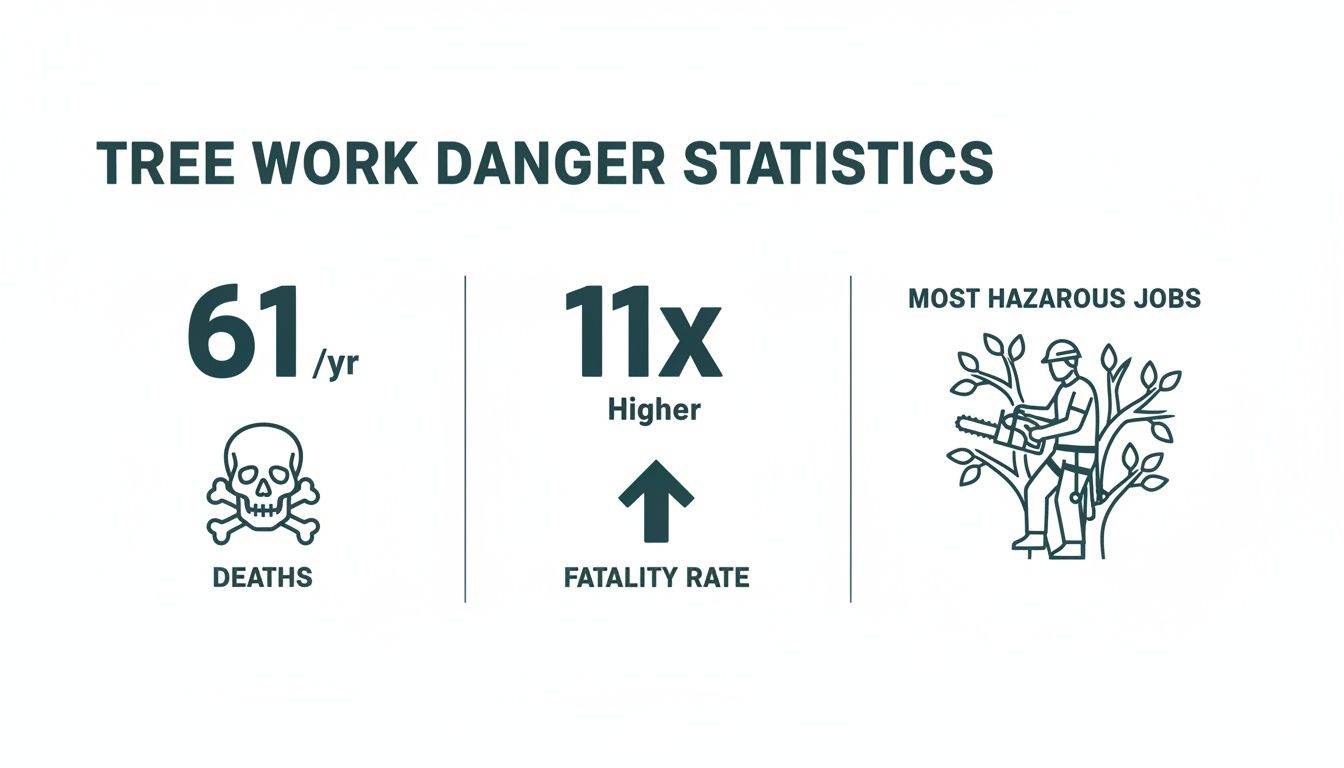
This data makes it obvious that handling tree work improperly isn't just a financial gamble; it's a serious safety hazard that demands certified expertise.
From Minor Cuts to Major Liabilities
A single bad cut does more than just scar a tree; it opens the door to long-term liability. An unbalanced canopy can make a tree dangerously unstable in the next big storm. Improper pruning wounds act as an open invitation for pests and diseases, which can rot the tree from the inside out.
These problems might not show up for years, but when that weakened limb finally snaps and falls on a car, the liability often falls squarely on the property owner and the original contractor. Ultimately, hiring an unqualified crew is a bet against your client’s most valuable landscape assets and the reputation of your business. If you're concerned about these kinds of risks, our guide on what to expect during a professional storm damage tree cleanup provides more insight.
To truly understand the difference, it's helpful to see a side-by-side comparison of what you get with a specialist versus a generalist.
Expert Arborist vs General Landscaper A Critical Comparison
| Factor | Certified Arborist | General Landscape Crew |
|---|---|---|
| Qualifications | ISA certification, extensive training in tree biology, physics, and safety protocols. | May have basic landscaping training but typically no formal arboriculture education. |
| Pruning Technique | Employs scientific pruning methods (e.g., ANSI A300 standards) to promote tree health and structural integrity. | Often makes improper cuts (topping, flush cuts) that can damage the tree and create long-term hazards. |
| Risk Assessment | Conducts thorough site and tree assessments to identify hidden dangers like decay or weak unions before work begins. | May miss critical warning signs, increasing the risk of accidents and property damage. |
| Equipment Use | Uses specialized equipment correctly, with a deep understanding of rigging, load limits, and safety procedures. | Has the tools but may lack the technical knowledge for safe operation in complex situations. |
| Insurance | Carries specific, high-limit liability and workers' compensation insurance for tree work. | Often has general liability insurance that may not cover high-risk arboricultural work. |
| Long-Term Outcome | Healthier, safer, and more beautiful trees that add value to the property. | Stressed or damaged trees that become future liabilities and may require costly removal. |
This table highlights a crucial point: while a general crew can mow a lawn, only a certified arborist has the specialized knowledge to protect the health, safety, and value of a mature tree.
What Real Tree Expertise Actually Looks Like
Contractors often wonder: “Why can’t any landscape crew handle tree work? Isn’t pruning just cutting branches?” This myth persists because many workers own the equipment—but not the training. It’s a common—and dangerous—assumption that completely ignores the science behind professional arboriculture.
However, recent insights show that homeowners fear unqualified providers because many “don’t know proper horticulture or safety” and cause unnecessary damage. The report also notes that demand for arborists has “skyrocketed” due to stricter tree ordinances and wildfire-related regulations. True expertise is about diagnostic skill, not just brute force. An arborist doesn’t see a tree as an obstacle to be hacked back; they see a complex, living system. They can spot the subtle signs of trouble, like included bark or root collar decay, that are totally invisible to the untrained eye. It's time to stop the guesswork and lean on proven knowledge.
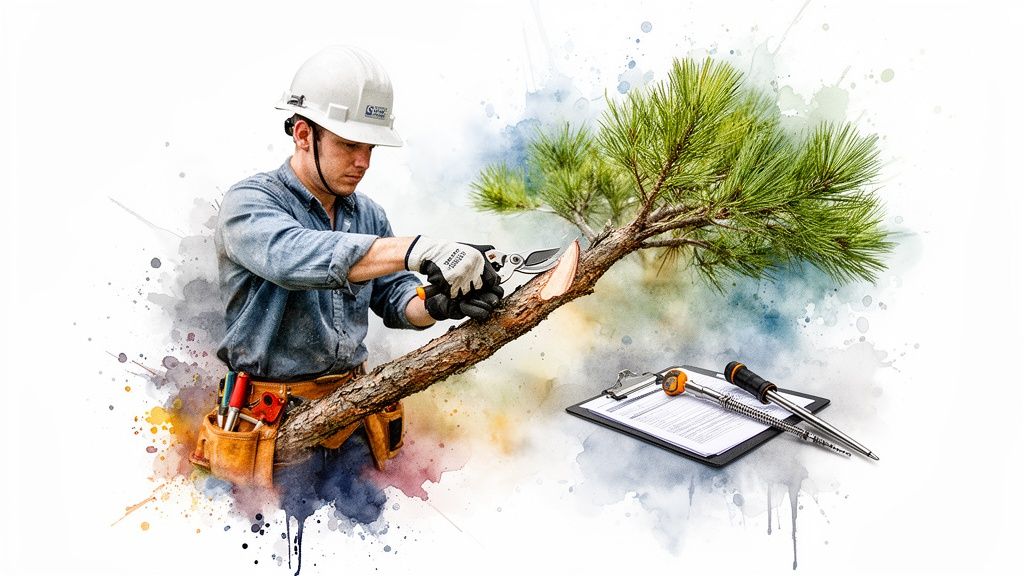
Beyond the Chainsaw: The Science of Arboriculture
What this actually means for you is that tree care is no longer a simple add-on service. It requires specialized skill that directly affects customer safety, insurance outcomes, and long-term property value. A huge part of that professionalism involves knowing precisely how to spot and handle potential dangers, which is why experts learn how to do a systematic risk assessment.
Genuine expertise in tree care stands on four foundational pillars:
- Knowledge of structural defects: Identifying weak branch unions, hidden cracks, and decay that scream "failure risk."
- Correct pruning standards (ANSI A300): Using science-backed techniques that actually help the tree heal and grow strong, rather than wounding it.
- Understanding of storm-risk indicators: Knowing how a tree's species, canopy size, and location make it a prime target during high winds and heavy rain.
- Awareness of local tree codes and liabilities: Understanding Monterey County’s specific ordinances to keep all work compliant and avoid hefty fines.
This deep-seated knowledge is the backbone of our entire approach to commercial tree maintenance and residential services.
A certified arborist doesn’t just see branches; they see leverage points, wind-load dynamics, and the long-term biological response to every single cut. This foresight is what prevents property damage and protects your investment.
Turning Knowledge Into Actionable Safety
Educate your clients by offering certified arborist risk assessments before performing any tree work. This proactive step brings hidden hazards to light—things an unqualified crew would walk right past, like a compromised root system on a Monterey Pine or top-heavy limbs on a Eucalyptus. This prevents costly callbacks, damage claims, and emergency removals caused by improper cuts or missed hazards.
At California Landscape & Tree Pros, this is fundamental to how we operate. CLTP provides ISA-certified arborist evaluations to arm you with a clear, expert opinion on your trees. We don't stop there. CLTP documents findings with photos and clear recommendations to simplify customer decisions. This transparent, evidence-based approach builds trust and guarantees the work is done right the first time, every time.
How to Spot an Unqualified Tree Service
It’s one thing to understand why you need an expert, but it's another thing entirely to pick one out of a lineup. Hiring the wrong tree service can turn into a nightmare of property damage, injured trees, and even legal trouble. The good news? You don't have to be a tree expert to spot an amateur.
Unqualified operators often hide behind a big truck and a powerful chainsaw, hoping you'll be too impressed to ask the right questions. But when you need to stop the guesswork and hire a real pro, a few tell-tale signs will give them away before they ever touch a single branch.
Credentials Are Not Optional
The first and most important gut check is credentials. A true professional arborist will be certified by the International Society of Arboriculture (ISA). This isn't just a membership card; it's proof they’ve passed a comprehensive exam covering everything from tree biology to complex rigging and safety protocols.
If a provider hesitates, makes excuses, or tries to tell you it doesn't matter, walk away. It’s the single biggest indicator that they lack the foundational knowledge required for safe, effective tree care.
Destructive Practices Are a Dead Giveaway
Listen carefully to the solutions they propose. Unqualified workers often recommend outdated, harmful techniques simply because they’re fast and require little skill.
If you hear the word "topping," show them the door. This practice, which involves lopping off the entire top of a tree, is one of the worst things you can do. It permanently damages the tree's structure, weakens it, and opens it up to pests and disease. A professional talks about crown reduction or thinning—methods that respect the tree's natural form.
Another major red flag is the use of climbing spikes or spurs on a tree that isn't being removed. Those spikes tear deep wounds into the living tissue of a tree, creating a perfect entry point for decay and insects. Professionals use non-invasive rope-and-saddle techniques to climb living trees, reserving spikes only for complete removals.
A vague quote is another sure sign of an amateur. A real arborist will walk your property, assess each tree, and provide a detailed, written estimate outlining the exact work to be done. A price scribbled on a napkin after a 30-second glance is a sign you’re not dealing with a professional.
Spotting a Pro from an Amateur
Knowing what to look for can save you a world of headaches. To make it even easier, here's a quick reference table to help you spot the red flags that separate a legitimate arborist from someone who just owns a chainsaw.
Warning Signs of an Unqualified Tree Service Provider
| Red Flag | Why It's a Problem | What to Look For Instead |
|---|---|---|
| No proof of insurance or license | If an accident happens, you could be held liable for damages or injuries. | A legitimate company will gladly provide a certificate of insurance for both general liability and workers' compensation. |
| Suggests "topping" a tree | This is a destructive and outdated practice that permanently harms the tree. | A qualified arborist will recommend proper pruning techniques like crown reduction, thinning, or raising. |
| Uses climbing spikes on healthy trees | Spikes create deep, damaging wounds that invite pests and disease. | Professionals use ropes and harnesses for pruning, reserving spikes only for trees being fully removed. |
| Vague, on-the-spot verbal quote | A lack of detail often leads to surprise charges and incomplete work. | Expect a detailed, itemized, and written estimate after a thorough on-site inspection. |
| Pressure to make a quick decision | High-pressure sales tactics are common among storm-chasers and untrustworthy operators. | A reputable service will give you time to review their proposal and check their references without pressure. |
| No mention of safety standards | This indicates a lack of formal training and a higher risk of accidents. | Look for a commitment to ANSI Z133 safety standards and regular crew training. |
Remember, a low price often reflects a low standard of work and a high level of risk. Taking a few extra minutes to vet your provider is the best investment you can make for your property and your trees.
Questions That Cut Through the Noise
Want to quickly separate the experts from the imposters? Ask a few direct questions and listen closely to their answers. Their confidence—or lack thereof—will tell you everything. As we head into storm season, knowing who to trust is more important than ever. You can learn more by reading about how to identify tree risks before storm season in Monterey County.
Here are three non-negotiable questions to ask any potential provider:
- "Can you provide a copy of your contractor's license and certificates of insurance?" A professional will have this ready without hesitation. If they can’t, it’s a deal-breaker.
- "What safety standards do you follow?" The right answer should include a reference to ANSI Z133 (the industry's safety bible) and a clear commitment to ongoing crew training and proper personal protective equipment (PPE).
- "What is your process for protecting my property during the work?" They should be able to describe exactly how they'll avoid damaging your lawn, driveway, and home—mentioning things like using ground mats for equipment, specialized rigging to lower heavy limbs safely, and a thorough cleanup plan.
Preventing Tree Emergencies Before They Happen
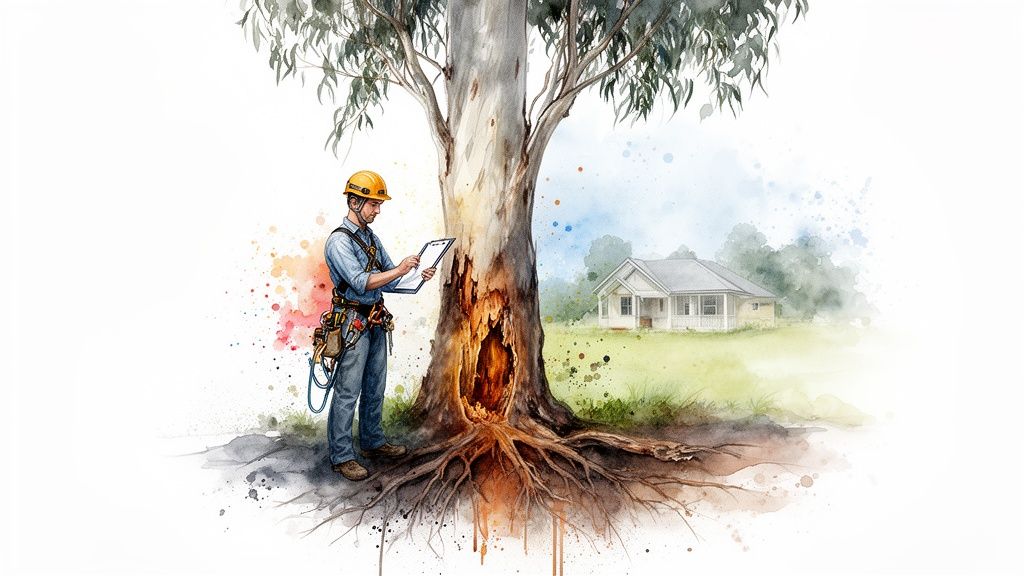
When a tree comes crashing down during a storm, it feels like a sudden, random act of nature. But the truth is, most tree failures are the final act of a long, slow decline. The real culprits are often pre-existing conditions—hidden decay, weak branch attachments, or damage from old, bad pruning jobs—that an expert could have spotted years ago. Most “emergencies” actually begin with unnoticed structural defects—something only a certified arborist can spot before failure.
This is exactly why it's time to stop the guesswork. There's a direct line between professional, proactive assessment and preventing a disaster. An untrained eye might see a lush, green canopy, but a certified arborist sees the subtle signs of structural weakness. It’s no surprise that demand for qualified arborists has "skyrocketed" as communities across California tighten up their tree ordinances and wildfire regulations.
The Real Cost of Ignoring the Warning Signs
A common and costly mistake I see contractors and property managers make is treating tree work like just another add-on service. They'll ask, "Why can't our landscape crew handle this? Pruning is just cutting branches, right?" This way of thinking hangs on because plenty of people own a chainsaw, but very few have the deep diagnostic training to use it correctly.
Real-world feedback shows homeowners are now genuinely afraid of unqualified crews, noting that many “don’t know proper horticulture or safety” and end up causing more harm than good. For you, this means that skimping on specialized knowledge isn't just a risk—it's a direct path to preventable disasters.
An "emergency" tree removal is often the final, expensive chapter of a story that began with a missed structural defect. Proactive assessment by a certified arborist can rewrite that ending.
Turning Proactive Insight Into Action
A professional arborist risk assessment is hands-down the best way to turn a potential catastrophe into a routine maintenance task. This isn't just an upsell; it's a fundamental part of responsible property management that hinges on expert knowledge of:
- Structural Defects: Spotting weak unions, hidden cracks, and hollow cavities that scream "high risk of failure."
- Pruning Standards (ANSI A300): Knowing how to make cuts that help the tree heal and seal the wound, rather than inviting disease and decay.
- Storm-Risk Indicators: Looking at a tree's species, its location on the property, and its overall structure to see how it will hold up to high winds and heavy rain.
- Local Tree Codes and Liabilities: Understanding the specific regulations here in Monterey County to keep your property compliant and avoid hefty fines.
The best thing we can do is educate our clients. Before a single branch is cut, we can offer a certified arborist risk assessment to head off expensive callbacks and property damage claims. At CLTP, we provide ISA-certified arborist evaluations for exactly this reason. We document our findings with photos and clear recommendations to make the decision-making process straightforward for property owners.
This approach doesn't just manage trees; it prevents emergencies and protects property. If you've already missed the window for proactive care, it’s still critical to understand essential tree safety tips for California homeowners to manage the immediate risks.
What You Get with a CLTP Certified Arborist Evaluation
When you’re dealing with your property’s trees, you need confidence, not guesswork. At California Landscape & Tree Pros, our ISA-certified arborist evaluations are all about giving you absolute clarity. We take complex tree problems and turn them into simple, straightforward solutions for homeowners and property managers throughout Monterey County. We don't just point out issues; we make sure you understand every step.
Our entire process is built on being open and transparent. It starts with a friendly consultation and a meticulous on-site evaluation, and it doesn't end until we do a final walkthrough to make sure you're completely satisfied. This isn't just a transaction for us—it’s about building a partnership dedicated to the long-term health of your landscape.
A Process Built on Evidence and Trust
We get it. Making decisions about large, valuable trees can be nerve-wracking. That’s why we document our findings with detailed photos and clear, straightforward recommendations. This evidence-based approach takes the anxiety out of the equation, empowering you with the same insights our arborists use to judge a tree's health and potential risks.
This level of detail is how we stop the guesswork that so often leads to expensive mistakes and property damage. By giving you a clear roadmap for care, we ensure the right work gets done the right way, the first time. To see exactly how we approach this, take a look at our advanced guide to tree risk assessment.
An Unwavering Commitment to Safety and Professionalism
Our dedication goes far beyond certifications—it’s woven into our safety culture. In an industry where a lack of experience can be fatal, we put rigorous training and proven safety protocols first. This is especially critical when you consider that over 66% of fatal tree care incidents involve workers with a year or less of experience.
A sobering study highlighted just how lax some companies can be: 60.2% of employers had no written safety plan, and a shocking 34.4% skipped job training entirely. You can learn more about the critical link between training and safety in tree care.
We stand firmly against that trend. At CLTP, we invest heavily in continuous education and strict adherence to ANSI standards. Our team's expertise translates directly into safer job sites, healthier trees, and total peace of mind for you. Choosing CLTP means you're partnering with a team that values your safety as much as you do.
Ready to Protect Your Property? Let's Talk.
When you invest in professional tree care, you're not just paying for a service—you're buying safety, protecting your property's value, and gaining genuine peace of mind. Hopefully, it’s now crystal clear why tree work requires real expertise, not just a chainsaw and a truck. The time for guesswork is over.
For contractors, property managers, and homeowners here in the Monterey area, the next move is simple: request a tree health and risk evaluation. It's the most straightforward way to get ahead of expensive emergencies, increase client trust, and show your community that you're serious about safety. After all, most catastrophic tree failures start as small, unnoticed defects—the kind of problems only a certified arborist is trained to catch before it's too late.
Don't wait for the next big storm to see what happens. We've seen the chaotic aftermath of tree failures, which we cover in our guide on what to do during emergency tree removal. The tough part is knowing that many of those situations were completely preventable.
A proactive tree health and risk evaluation is the single most effective step you can take to avoid preventable emergencies, protect your property, and increase client trust.
Reach out to California Landscape & Tree Pros today. You'll be partnering with a team of certified, insured, and experienced arborists who are committed to the highest standards in the industry. Let's make sure your valuable trees are in the most capable hands and take that next step toward a safer, healthier landscape.
Your Questions About Professional Tree Care, Answered
If you're a property manager or homeowner in the Monterey Bay Area, you've probably got questions about taking care of the trees on your property. It's a field filled with nuance, and it's easy to feel unsure about the right next step. Let's clear up some of the most common questions and get you on the right track.
Why Can't My Gardener or Landscaper Do Major Tree Pruning?
This is a great question, and it comes down to specialized training. Think of it like this: your general contractor is fantastic for overall home repairs, but for complex electrical work, you call a licensed electrician. It's the same with trees.
Your landscaper is a pro at ground-level care—lawns, shrubs, and gardens. An ISA Certified Arborist, on the other hand, is a tree specialist. They've been trained in the intricate biology of how trees grow, the physics of how they stand (and fall), and the complex safety protocols required to work high off the ground. A bad cut from an untrained person can do more than just look ugly; it can permanently damage the tree's structure, invite disease, and even kill a mature tree you've spent decades growing.
What Exactly Is an ISA Certified Arborist?
An ISA Certified Arborist isn't just a title—it's a credential that proves a high level of expertise. To earn it, a professional has to pass a tough, comprehensive exam that covers everything from tree biology and soil science to safe climbing techniques and pruning standards.
But it doesn't stop there. To keep their certification, they have to commit to ongoing education. This ensures they're always current on the latest research, safety practices, and techniques that keep trees healthy and strong.
Is Hiring a Certified Arborist Going to Cost More?
Looking only at the initial invoice, a certified arborist might seem more expensive than a general landscaper or an uninsured "tree guy." But that's a shortsighted view. Hiring a true professional is one of the smartest investments you can make for your property.
Proper tree care prevents incredibly costly problems down the road. We're talking about avoiding property damage from falling limbs, the high price of emergency tree removal after a storm, or the thousands of dollars it costs to replace a mature tree. Most importantly, a professional arborist carries the right liability and workers' compensation insurance. This isn't just a detail—it's what protects you completely from financial and legal risk if an accident happens on your property.
And the risks are very real. Tree work is one of the most dangerous jobs out there. Tree trimmers and pruners have a fatality rate that is 15 times higher than the average for all U.S. industries, with 80 deaths recorded in a single recent year. You can learn more about the patterns and risks in the tree care industry to understand why professionalism and insurance are non-negotiable.
What Happens During a Professional Tree Risk Assessment?
A professional risk assessment is a top-to-bottom health checkup for your tree. An arborist will perform a detailed visual inspection, looking at everything from the root zone and the base of the trunk all the way up into the canopy.
They're trained to spot subtle signs of trouble that most people would miss:
- Early-stage decay or fungus
- Weak branch attachments or structural defects
- Cracks or splits in the trunk
- Signs of pest infestation or disease
- Potential hazards to people, cars, or buildings below
After the inspection, you’ll get a clear, detailed report that outlines their findings and gives you prioritized, actionable recommendations.
How Often Should I Have My Trees Inspected?
For large, mature trees, a proactive inspection every 3 to 5 years is a good rule of thumb. This allows an arborist to catch potential issues before they become big, expensive emergencies.
However, you should call for an immediate assessment if:
- A major storm has just passed through.
- You notice any sudden changes, like the tree starting to lean.
- You see large dead or hanging branches in the canopy.
- You are planning any construction or digging near the tree's root zone.
Ready to move from questions to confident decisions? At California Landscape & Tree Pros, our certified arborists provide the expert evaluations you need to protect your property and ensure your trees thrive for years to come.